Artwork
Yvette Guilbert
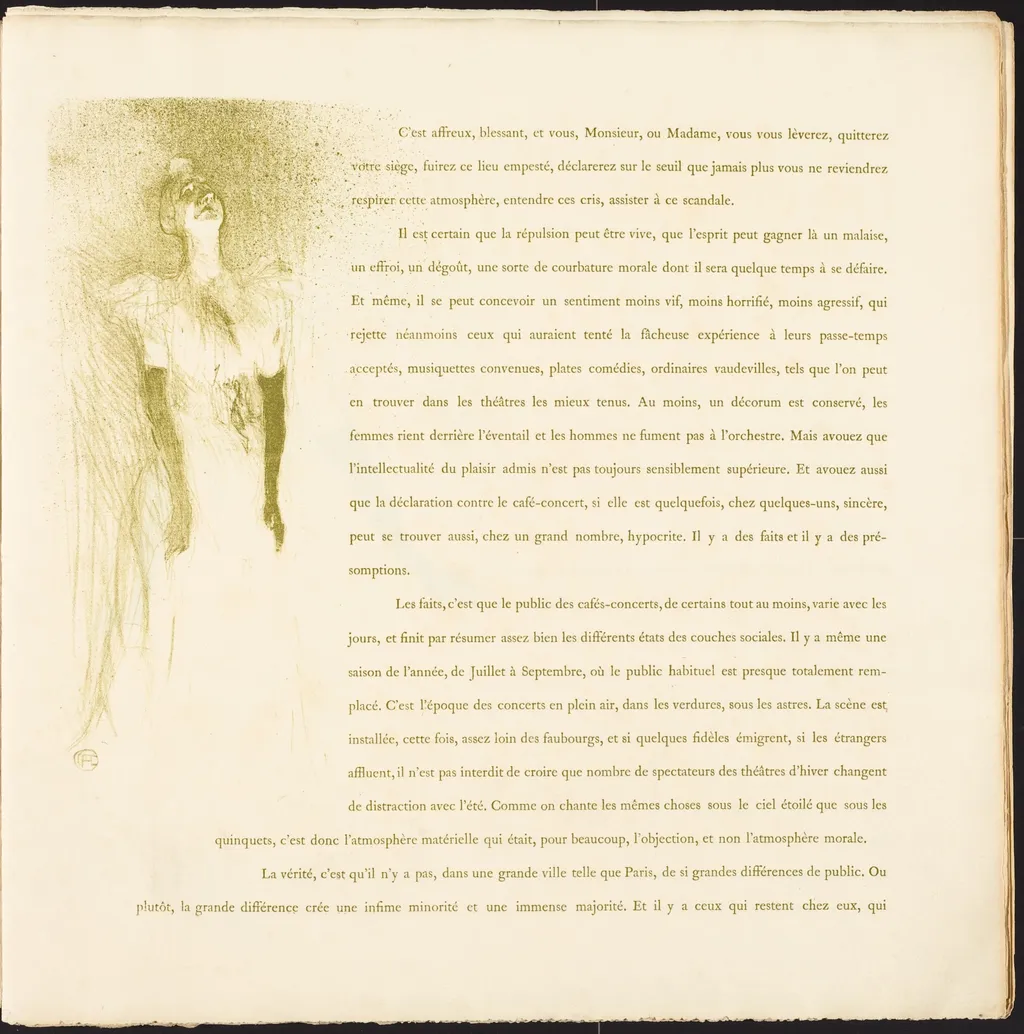
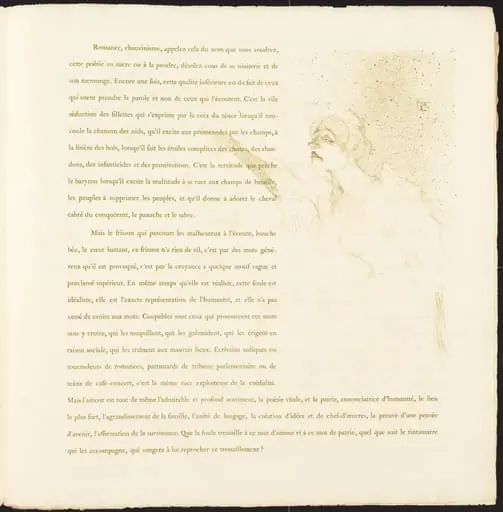
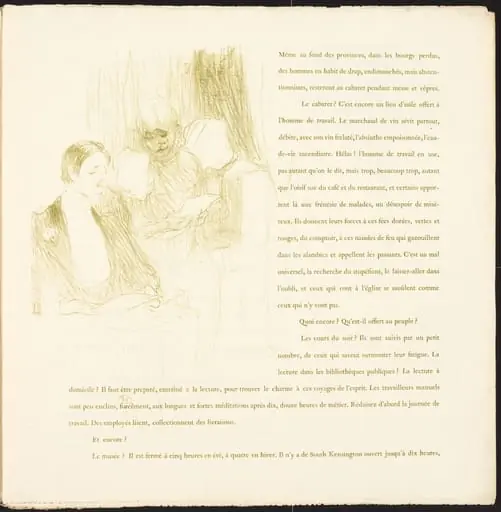
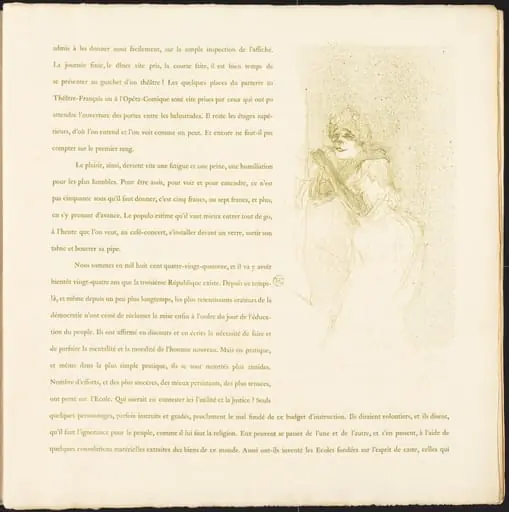
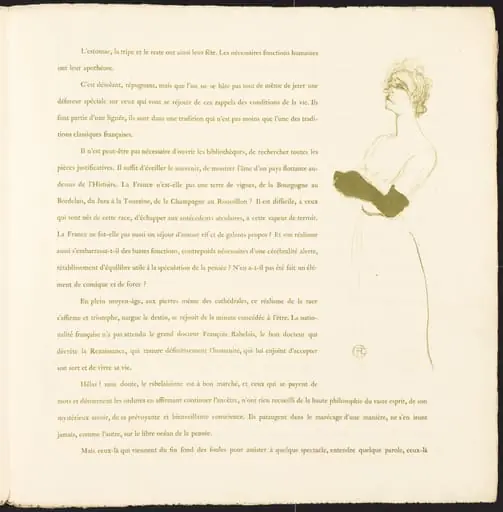
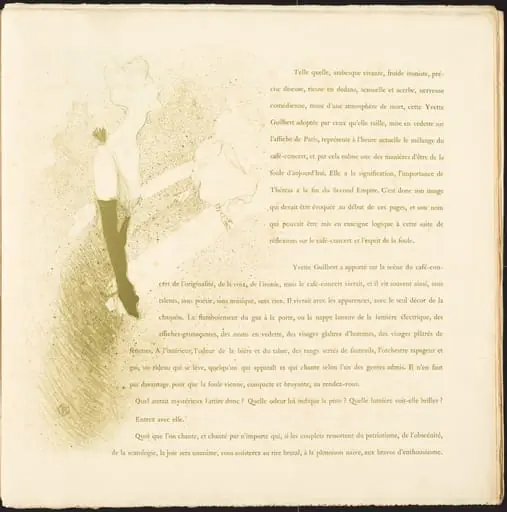
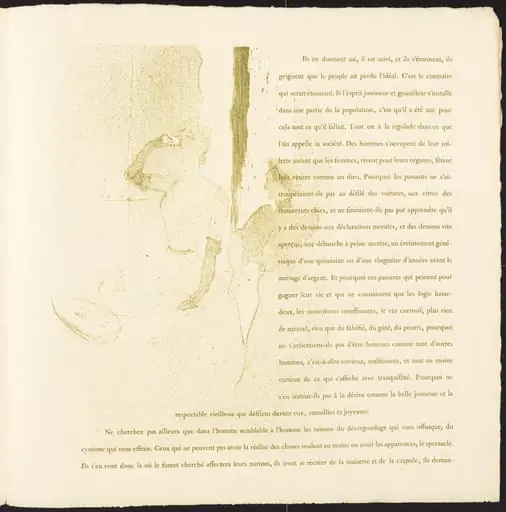
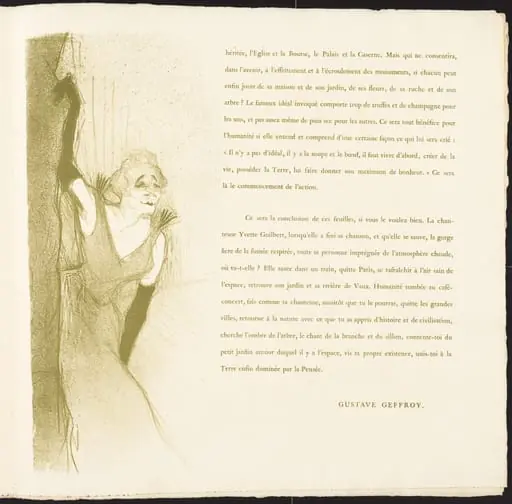
Yvette Guilbert is an ink print by the Impressionist artist Henri de Toulouse-Lautrec. It dates from 1894 and is held in the collection of the National Gallery of Art.
About this work
Overview
Lautrec, known for his engagement with Parisian entertainment culture, favored lithography for its capacity to convey spontaneity and texture.
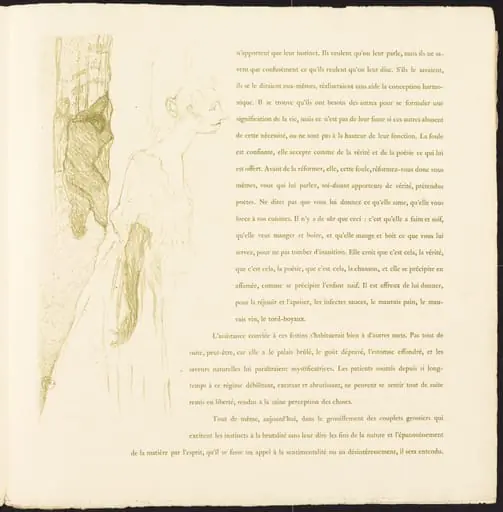
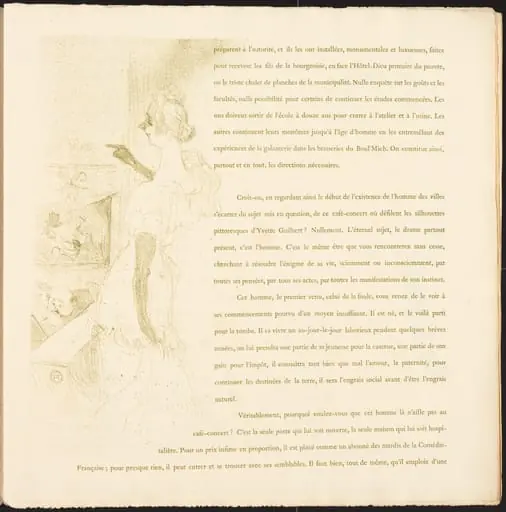
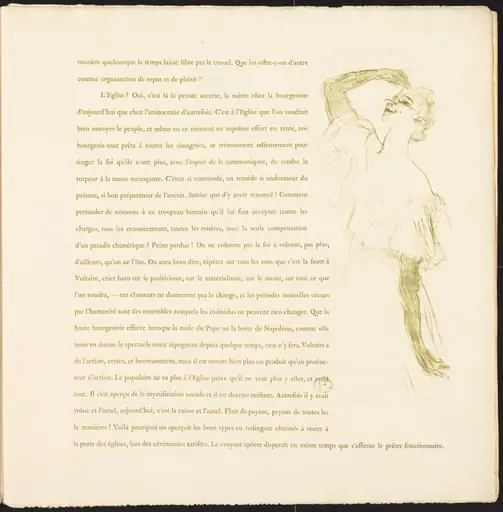
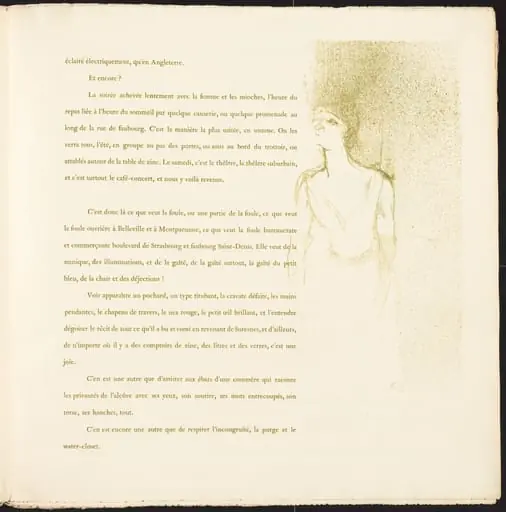
Created in 1894, this lithograph by Henri de Toulouse-Lautrec portrays the French cabaret performer Yvette Guilbert. Rendered in olive green ink, the print captures her in a moment of quiet intensity. Lautrec, known for his engagement with Parisian entertainment culture, favored lithography for its capacity to convey spontaneity and texture. The work reflects his interest in performers as complex individuals rather than mere spectacle.
Subject & Meaning
Yvette Guilbert was a celebrated singer known for her distinctive vocal style and theatrical presence. Lautrec depicts her not in full costume or motion, but as a poised, almost austere figure—her elongated neck and angular features emphasizing her unique stage persona. The slight turn of her head and restrained posture suggest introspection, shifting focus from performance to presence, hinting at the private self behind the public persona.
Technique & Style
Lautrec employed lithography to achieve a fluid, sketch-like quality, using loose, confident lines to define form without heavy detail. The olive-green tone, applied unevenly, creates a muted, atmospheric effect, allowing Guilbert’s silhouette to emerge from the background as if emerging from shadow. The minimalism of the composition—lack of context, sparse shading—heightens the psychological immediacy of the portrait.
History & Provenance
This print was produced during a period when Lautrec was deeply immersed in the Montmartre cabaret scene, frequently documenting its performers. It was likely part of a series of portraits commissioned or created for publication in periodicals or as standalone prints. While its early ownership is undocumented, it entered major collections in the 20th century as interest in Lautrec’s graphic work grew among modern art institutions.
Context
In 1890s Paris, lithography was a favored medium for artists seeking to reach broader audiences beyond traditional painting. Cabaret performers like Guilbert were cultural icons, and Lautrec’s depictions helped shape public perception of them. His approach—focusing on gesture and expression over glamour—distinguished his work from commercial posters, aligning it with emerging modernist interests in psychological realism.
Legacy
This lithograph exemplifies Lautrec’s influence on modern portraiture, demonstrating how printmaking could convey emotional depth with economy of means. His treatment of performers as subjects worthy of nuanced observation, rather than decorative figures, paved the way for later artists exploring identity and performance. The work remains a key example of how graphic art could transcend illustration to achieve artistic gravity.
Artist & collection
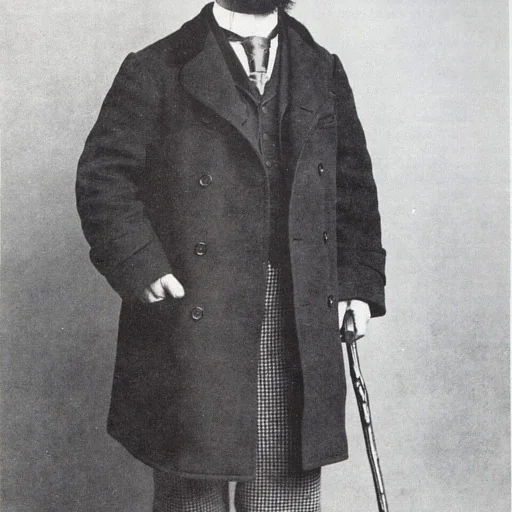
Artist
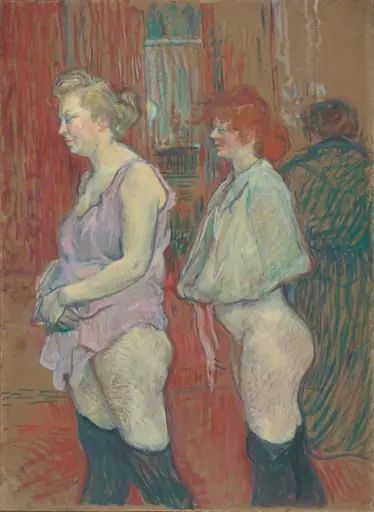
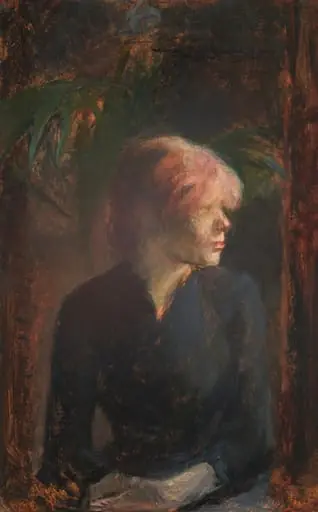
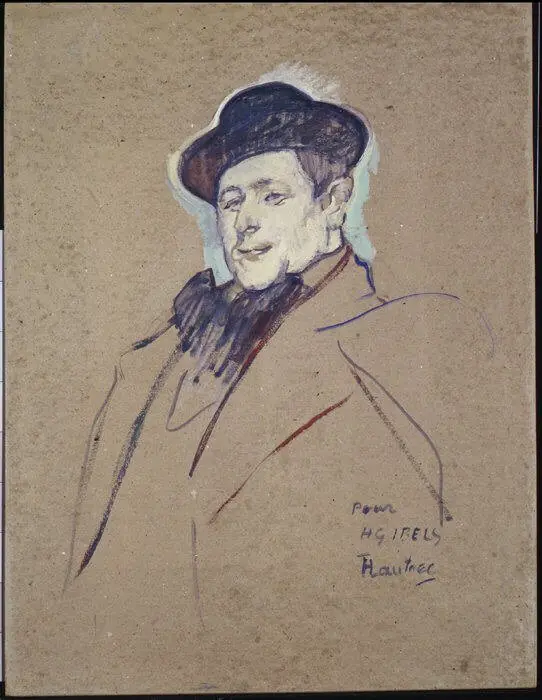
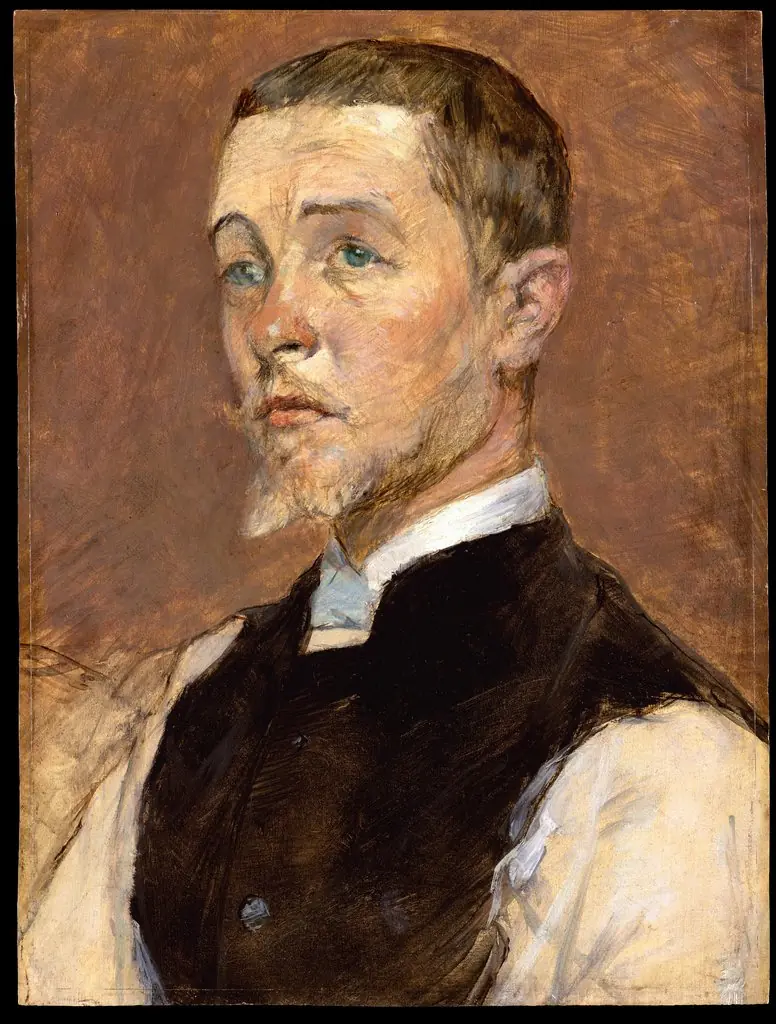
Comte Henri Marie Raymond de Toulouse-Lautrec-Montfa (24 November 1864 – 9 September 1901), known as Toulouse-Lautrec (French: ), was a French painter, printmaker, draughtsman, caricaturist, and illustrator.