Artwork
Yvette Guilbert
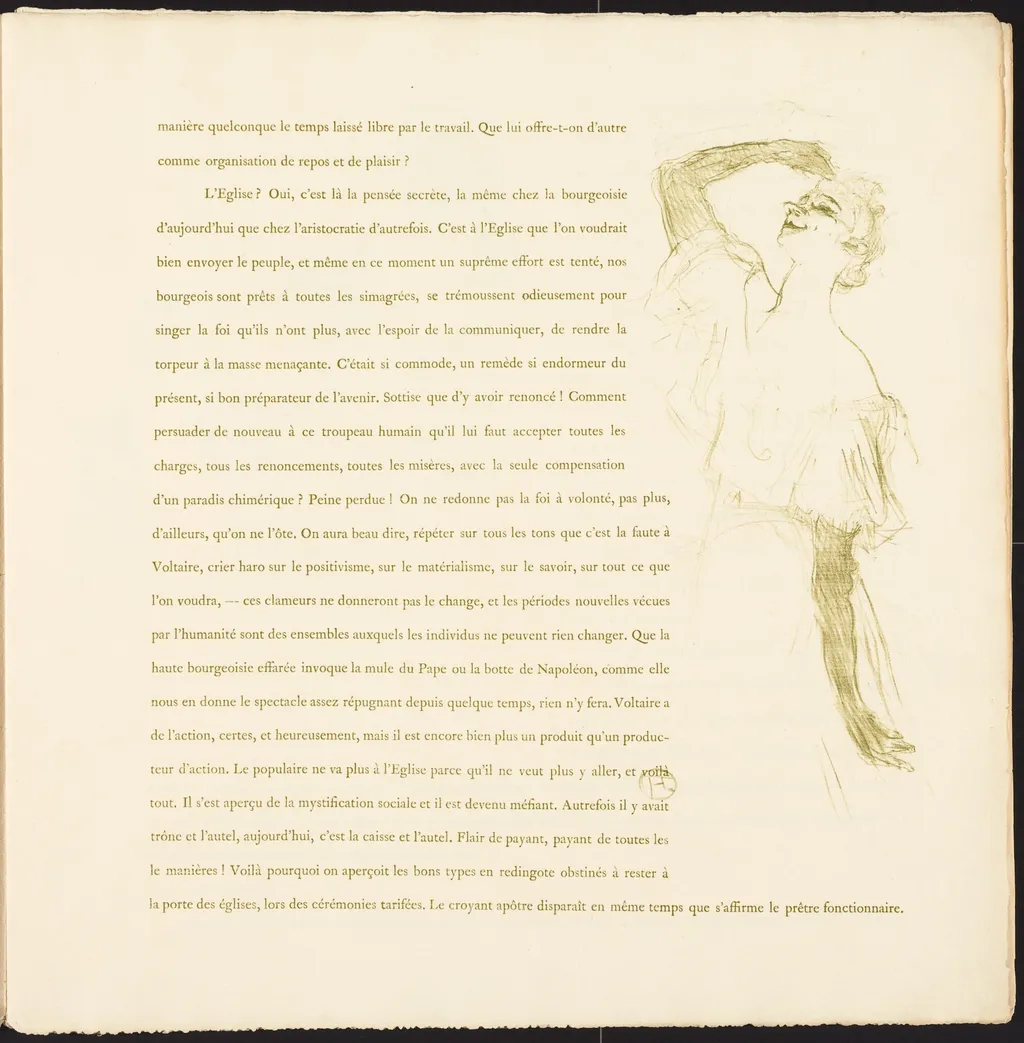
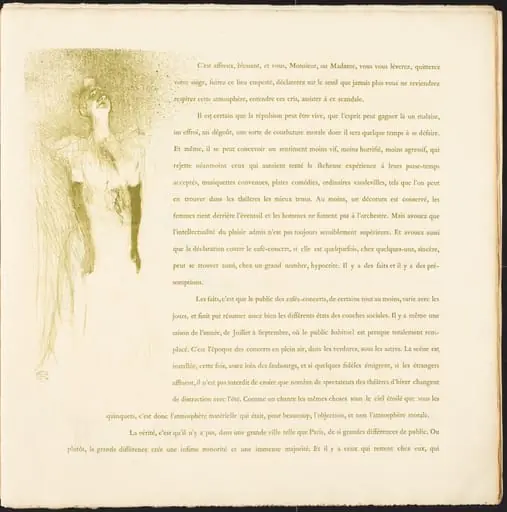
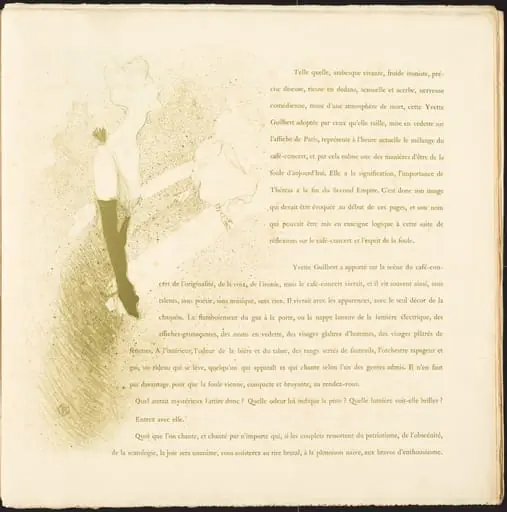
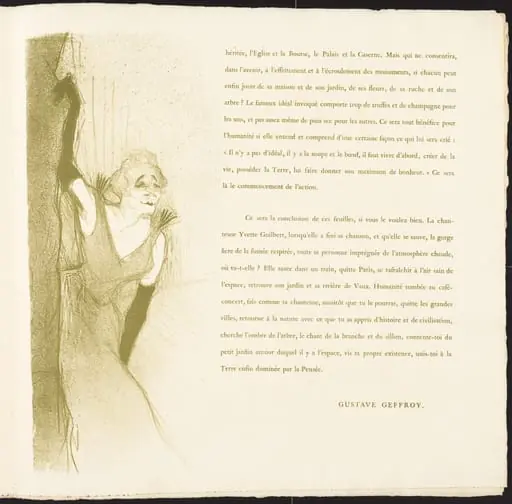
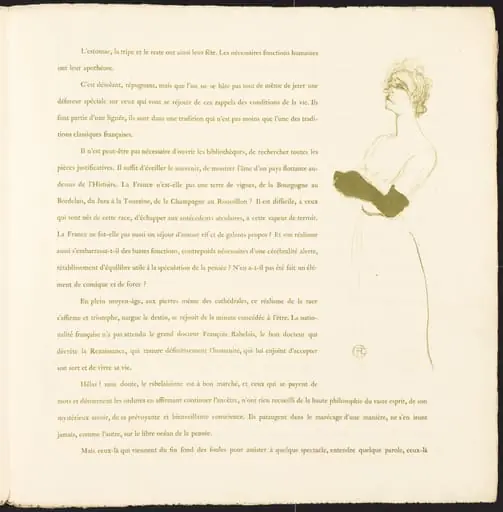
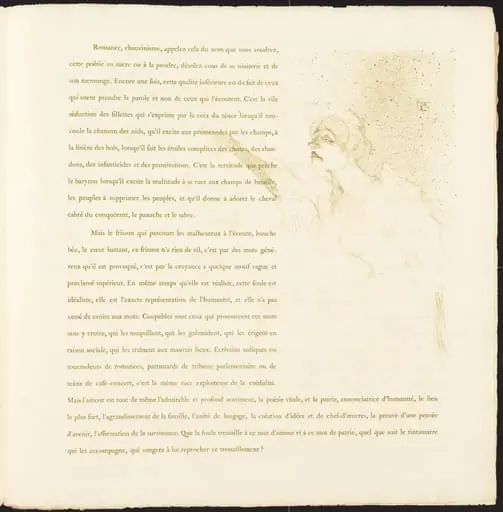
Yvette Guilbert is an ink print by the Impressionist artist Henri de Toulouse-Lautrec. It dates from 1894 and is held in the collection of the National Gallery of Art.
About this work
Overview
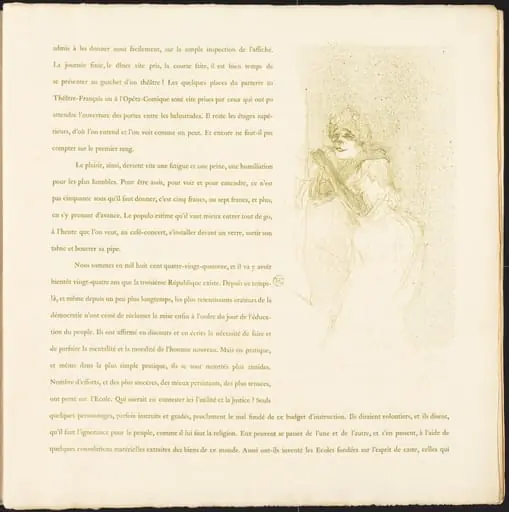
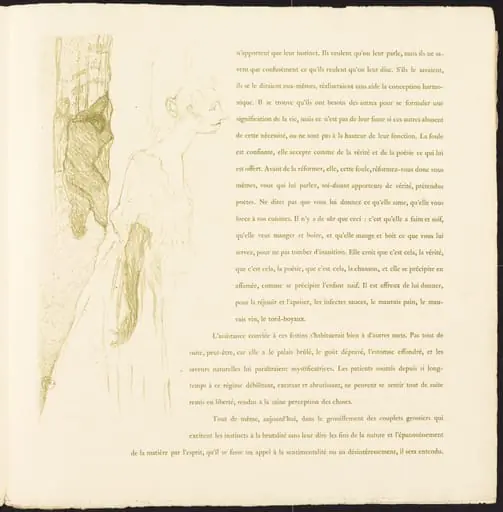
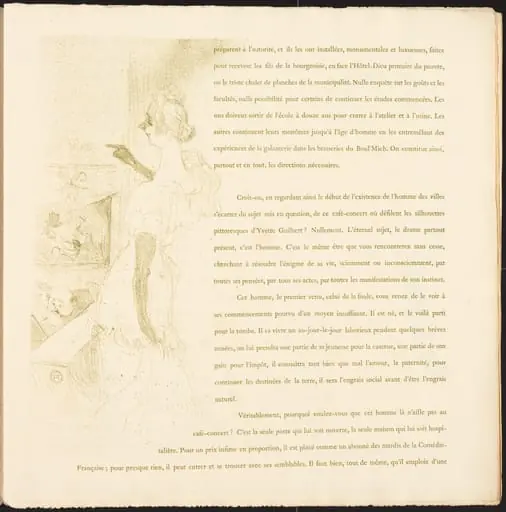
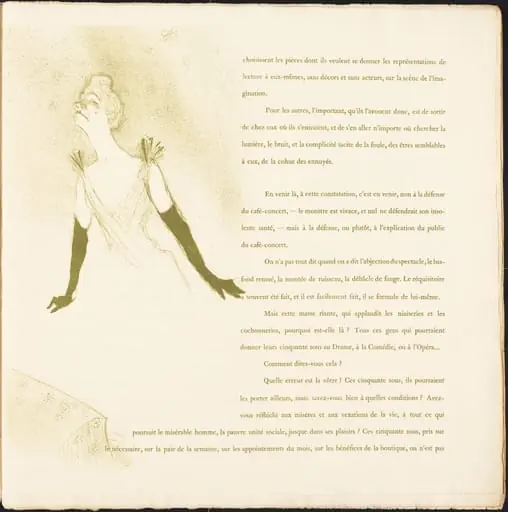
Henri de Toulouse‑Lautrec’s 1894 lithograph titled Yvette Guilbert presents the celebrated Parisian chanteuse in a single‑tone olive‑green print.
Henri de Toulouse‑Lautrec’s 1894 lithograph titled Yvette Guilbert presents the celebrated Parisian chanteuse in a single‑tone olive‑green print. The composition isolates the singer’s head and shoulders, turned slightly, with her hair pulled back, conveying a fleeting, intimate moment. The work exemplifies the artist’s interest in capturing the personalities of the city’s nightlife figures through rapid, expressive line work.
Subject & Meaning
Yvette Guilbert, a prominent music‑hall performer of the 1890s, is rendered not as an idealized portrait but as a study of presence and gesture. By emphasizing the tilt of her head and the looseness of her hair, Toulouse‑Lautrec hints at the performer’s stage charisma and the immediacy of a live performance, inviting viewers to sense her personality rather than her precise likeness.
Technique & Style
Executed as a lithograph, the image relies on a single olive‑green ink applied to paper with a yellowish tone. Toulouse‑Lautrec’s line is swift and economical, suggesting movement through minimal strokes. The loose, sketch‑like quality reflects his practice of working quickly to capture the vitality of his subjects, a hallmark of his printmaking approach during the late nineteenth century.
History & Provenance
Created in 1894, the print emerged during Toulouse‑Lautrec’s most productive period of depicting Parisian cabaret and music‑hall culture. While the artist’s oeuvre often focused on the interiors of venues such as the Moulin Rouge, this portrait stands as a standalone study of a cultural icon. The lithograph has circulated in private collections and museum holdings, illustrating the artist’s enduring engagement with the era’s entertainment figures.
Context
The work belongs to a broader series of Toulouse‑Lautrec’s images that document the social milieu of Belle Époque Paris. His personal experience of physical disability and immersion in the city’s nocturnal life informed a perspective that privileged immediacy and character over formal portraiture, aligning the Yvette Guilbert lithograph with his larger visual record of the period’s theatrical world.
Artist & collection
Artist
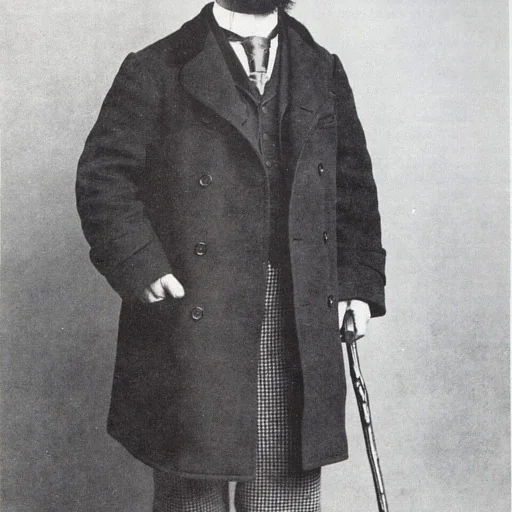
Comte Henri Marie Raymond de Toulouse-Lautrec-Montfa (24 November 1864 – 9 September 1901), known as Toulouse-Lautrec (French: ), was a French painter, printmaker, draughtsman, caricaturist, and illustrator.