Artwork
Yvette Guilbert
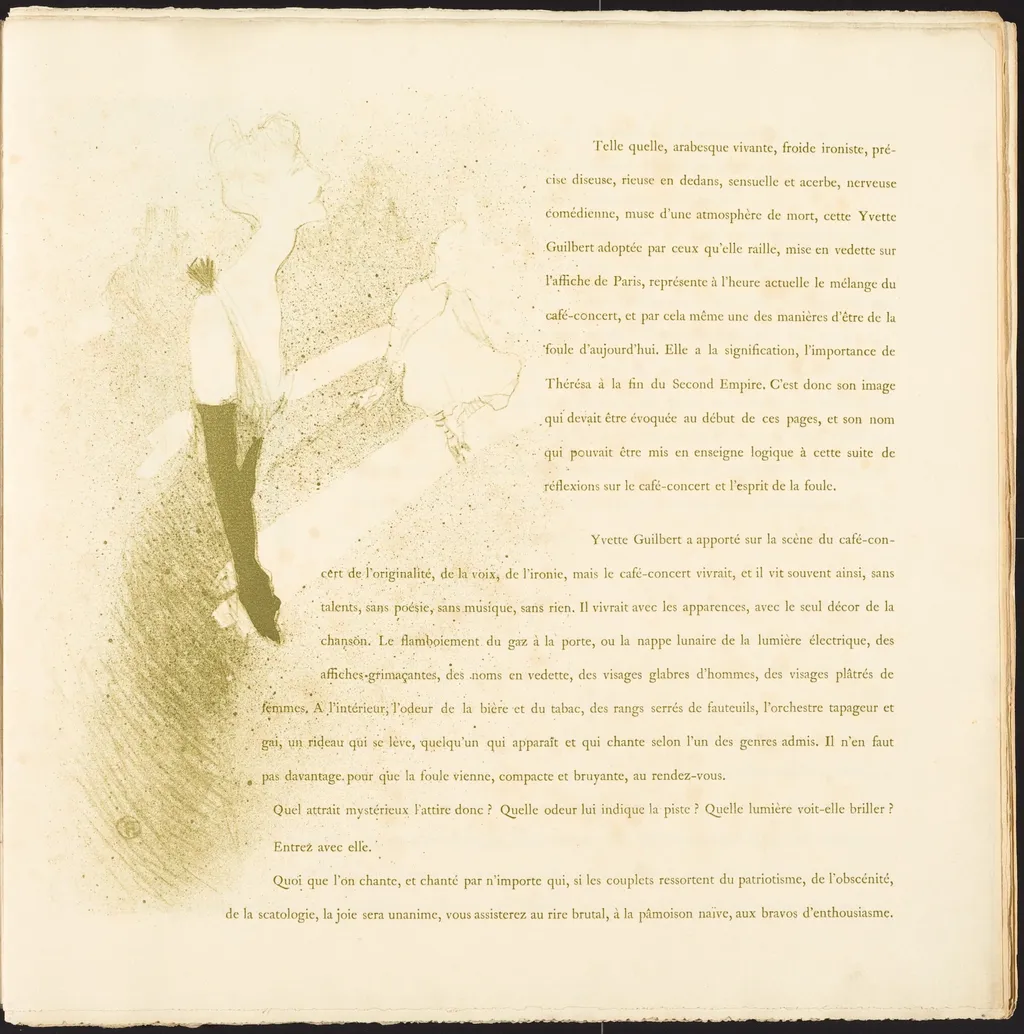
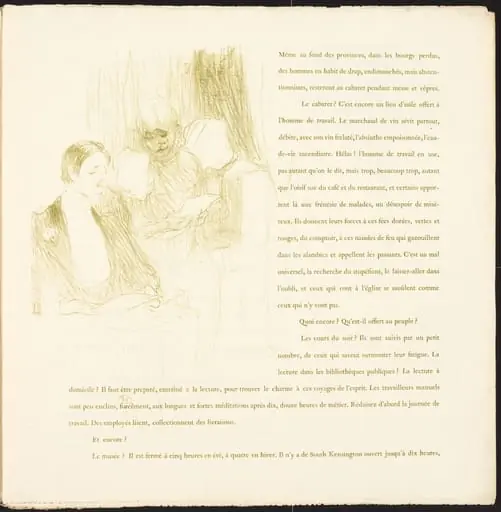
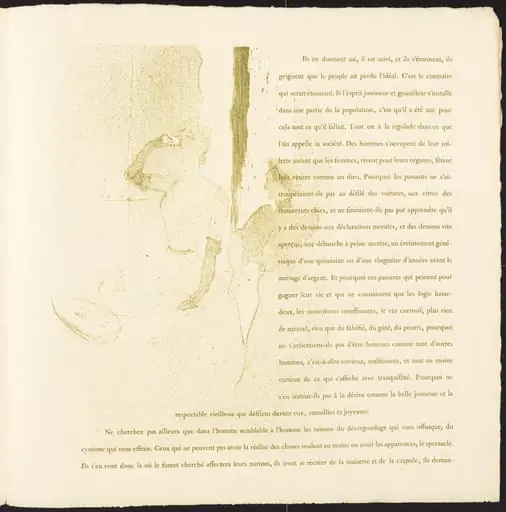
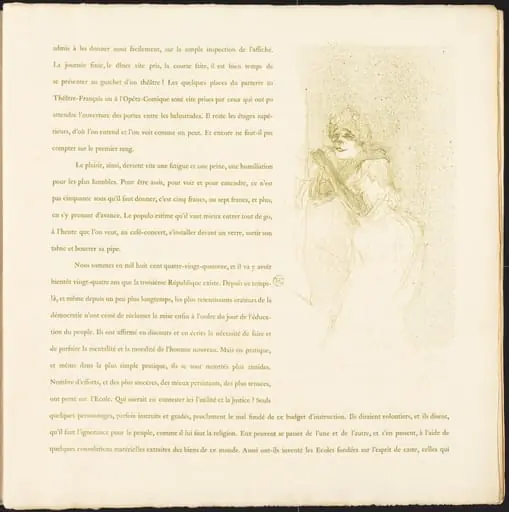
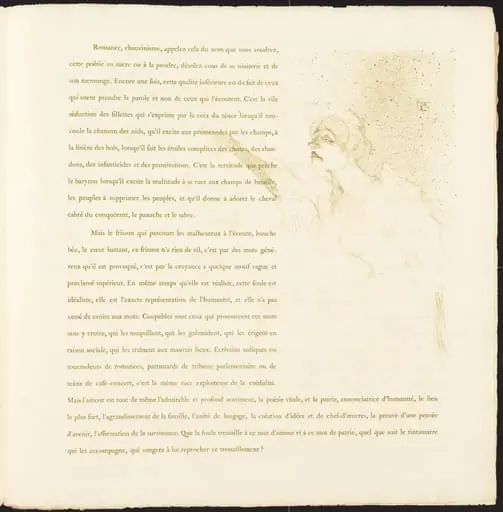
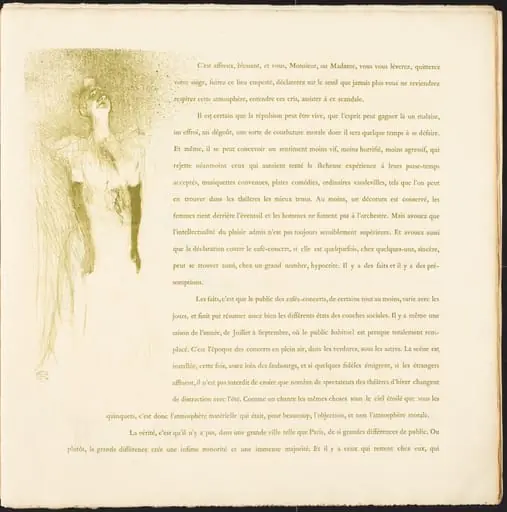
Yvette Guilbert is an ink print by the Impressionist artist Henri de Toulouse-Lautrec. It dates from 1894 and is held in the collection of the National Gallery of Art.
About this work
Overview
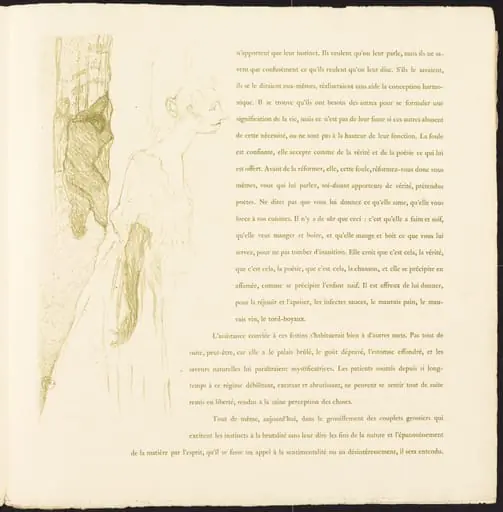
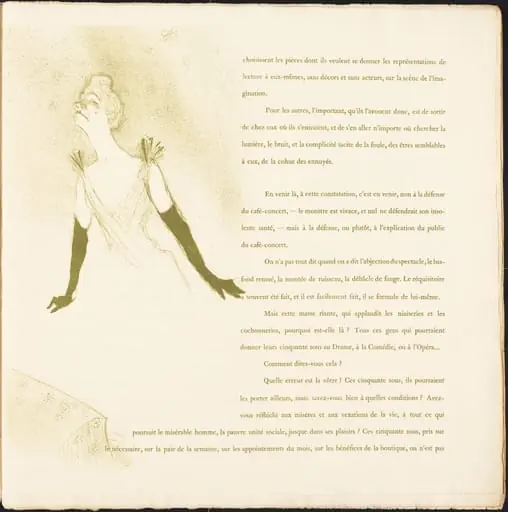
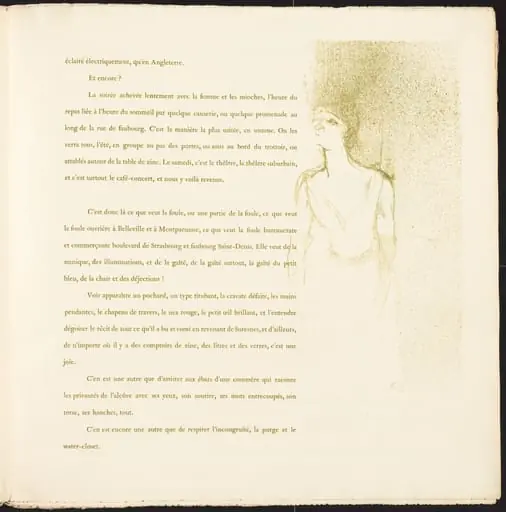
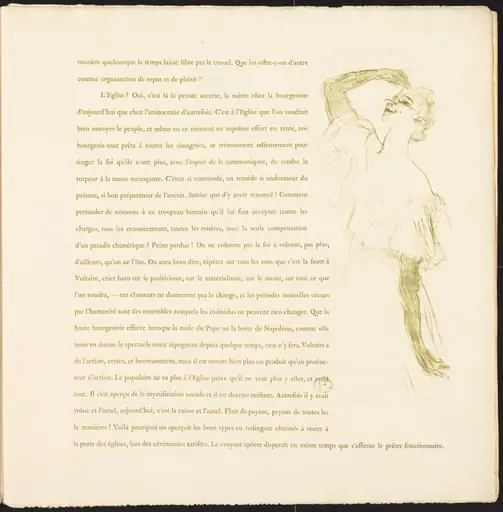
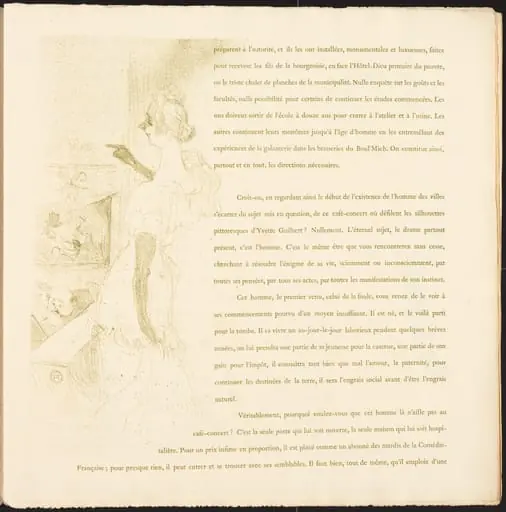
Henri de Toulouse-Lautrec’s 1894 lithograph presents the celebrated French chanteuse Yvette Guilbert in a stylized interior setting.
Henri de Toulouse-Lautrec’s 1894 lithograph presents the celebrated French chanteuse Yvette Guilbert in a stylized interior setting. Rendered in a muted olive‑green palette, the image captures the performer in profile, her elegant attire and feather‑adorned hat suggesting the refined atmosphere of Parisian cabaret. The composition balances simplicity of form with subtle tonal variation, emphasizing the sitter’s poised demeanor.
Subject & Meaning
Yvette Guilbert, a prominent music‑hall star of the 1890s, is portrayed as both a public figure and an emblem of the era’s entertainment culture. Her poised stance and refined dress convey a sense of cultivated sophistication, reflecting the artist’s interest in the personalities that animated the nightlife of Montmartre. The work thus serves as a visual record of a celebrated performer within her social milieu.
Technique & Style
Executed as a lithograph, the piece employs the medium’s capacity for fine line work and tonal gradation. Toulouse‑Lautrec’s handling of the olive‑green ground creates a warm, intimate backdrop, while the delicate hatching defines the folds of the dress and the texture of the hat’s feathers. The print’s flat areas of color and simplified forms align with the artist’s broader graphic approach to capturing movement and character.
History & Provenance
Created in 1894, the lithograph was part of Toulouse‑Lautrec’s prolific output of prints documenting Parisian performers. While specific ownership details are limited, the work has circulated among collections focusing on fin‑de‑siècle French art and the visual culture of the Belle Époque. It remains an illustrative example of the artist’s engagement with contemporary theatrical figures.
Context
During the late nineteenth century, the bohemian districts of Paris, especially Montmartre, fostered a vibrant scene of cabarets, cafés, and music halls. Toulouse‑Lautrec, himself a regular patron, frequently captured these venues and their entertainers. This lithograph reflects the intersection of visual art and popular performance, illustrating how print media disseminated images of celebrated singers like Guilbert to a broader audience.
Artist & collection
Artist
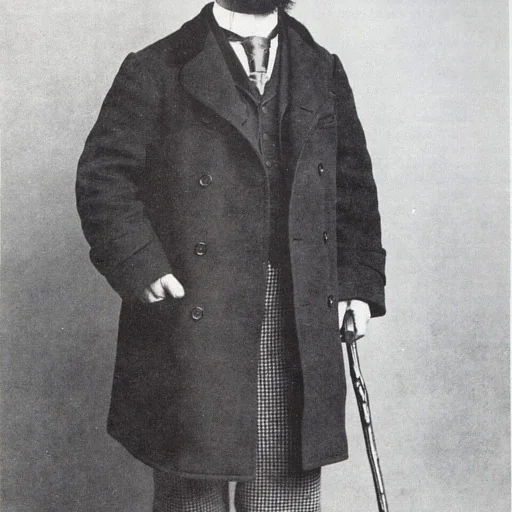
Comte Henri Marie Raymond de Toulouse-Lautrec-Montfa (24 November 1864 – 9 September 1901), known as Toulouse-Lautrec (French: ), was a French painter, printmaker, draughtsman, caricaturist, and illustrator.