Artwork
The Dying Procris

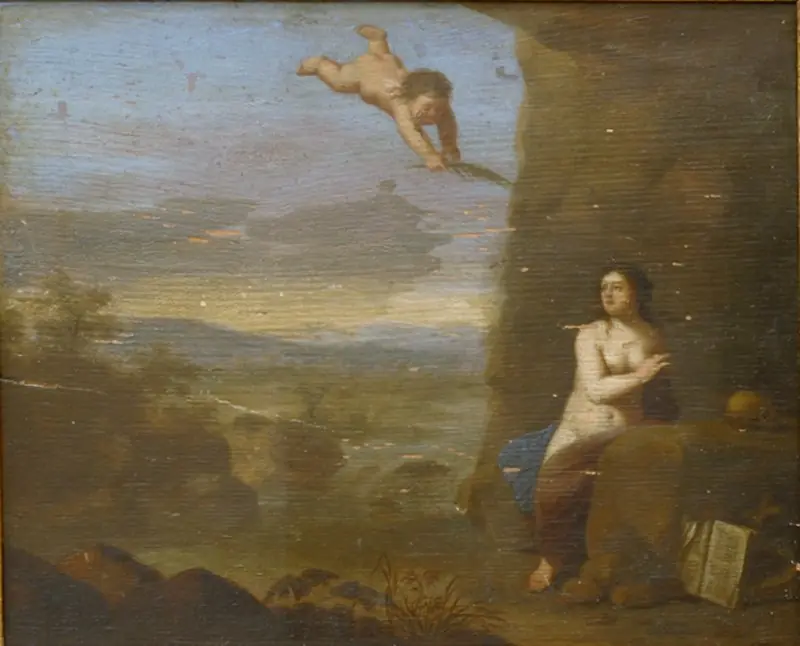
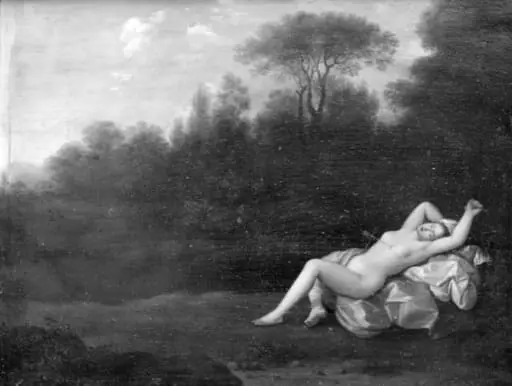
The Dying Procris is an oil painting by the Flemish Baroque painting artist Toussaint Gelton. It dates from 1662 and is held in the collection of the Statens Museum for Kunst.
About this work
Overview
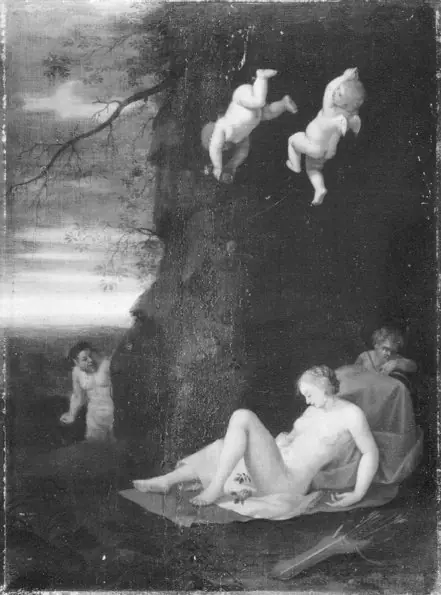
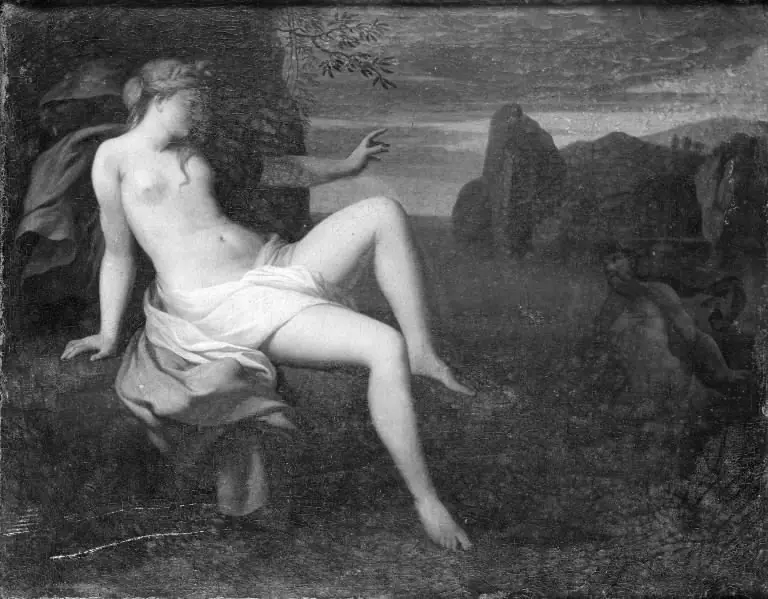
Created in 1662, *The Dying Procris* is a small-scale copper painting by Dutch-born artist Toussaint Gelton. Executed during the height of the Flemish Baroque, the work presents a solitary female figure lying in a wooded clearing, her body illuminated against a muted, atmospheric background. The piece is part of the permanent collection of Denmark’s Statens Museum for Kunst.
Subject & Meaning
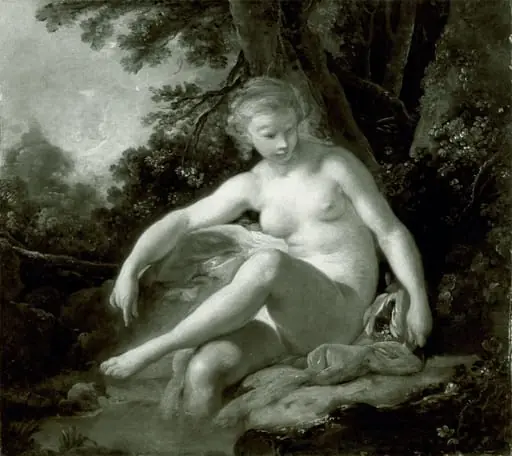
The composition draws on the classical myth of Procris, who, according to legend, falls mortally wounded by an arrow. Gelton captures the moment of her collapse, emphasizing vulnerability and the fleeting nature of life. The sparse setting and the figure’s exposed form underscore the narrative’s tragic intimacy, inviting contemplation of fate and loss.
Technique & Style
A pronounced chiaroscuro effect models the flesh, with a sharp light source highlighting the torso while the surrounding foliage recedes into soft focus.
Rendered on copper, the painting benefits from the metal’s smooth surface, allowing Gelton to achieve fine detail and a luminous finish. A pronounced chiaroscuro effect models the flesh, with a sharp light source highlighting the torso while the surrounding foliage recedes into soft focus. The handling reflects the influence of Dutch masters such as Gerrit Dou, especially in the meticulous rendering of texture.
History & Provenance
Gelton, trained in The Hague, pursued a career that later included art dealing and collecting before his appointment as court painter to Christian V of Denmark in 1674. *The Dying Procris* entered the Statens Museum for Kunst’s holdings in the 20th century, where it remains a representative example of Gelton’s Baroque narrative oeuvre.
Artist & collection
Artist
Toussaint Gelton (1630 – 1680) was a Dutch painter known for his work buying paintings in 1658 for the Swedish king Charles X Gustav and the family of Swedish noble Magnus Gabriel de la Gardie.