Artwork
Untitled
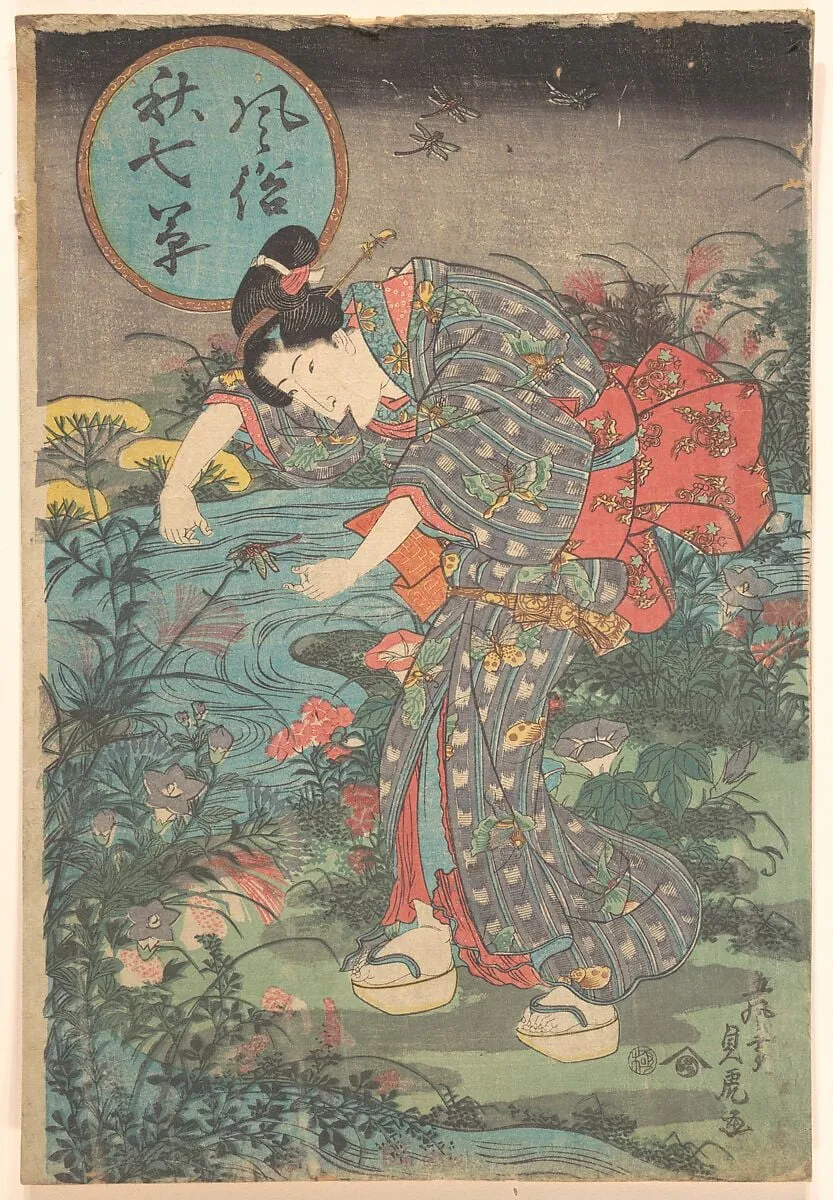
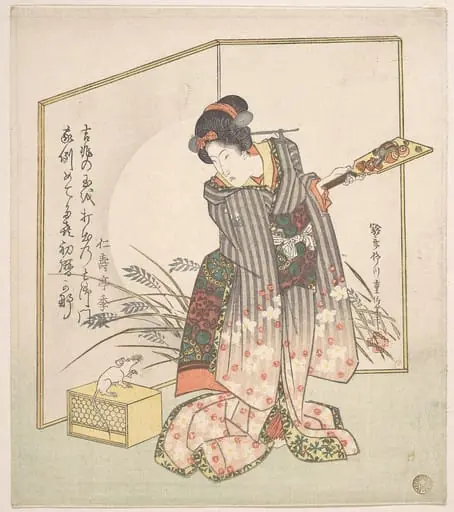
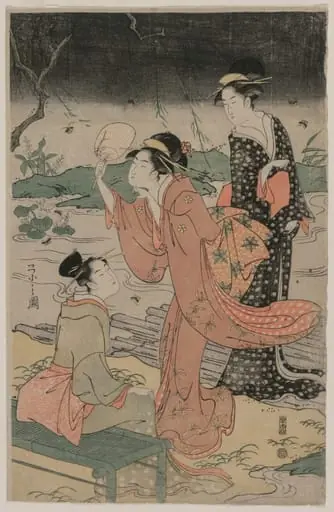
Untitled is an ink print by the Romanticist artist Toyohara Sadatora. It dates from 1831 and is held in the collection of the Metropolitan Museum of Art.
About this work
Overview
Executed in ink and color on paper, the image centers on a woman in a richly patterned robe, poised beside a pond surrounded by foliage and insects.
Toyohara Sadatora’s untitled woodblock print, dated 1831, is part of the Metropolitan Museum of Art’s collection. Executed in ink and color on paper, the image centers on a woman in a richly patterned robe, poised beside a pond surrounded by foliage and insects. The composition balances vivid foreground details with a darkened background, emphasizing the figure’s attire and the surrounding natural elements.
Subject & Meaning
The scene depicts a solitary female figure, her hair swept upward and a fan held delicately, suggesting a moment of contemplation or leisure. The surrounding pond, rippling water, and hovering dragonflies evoke a tranquil, seasonal atmosphere, while the abundant flowers and greenery hint at a celebration of nature’s transient beauty, a common theme in Edo‑period visual culture.
Technique & Style
Created through traditional woodblock printing, the work combines ink outlines with layered pigments to achieve bold stripes and intricate patterns on the woman’s robe. Cross‑hatching and fine line work render texture in the foliage and water surface, while the dark background serves to heighten the luminous colors of the figure’s garments. The blue circular seal in the upper left bears Japanese characters, marking the artist’s signature.
History & Provenance
The print was produced in 1831, during the late Edo period, a time when ukiyo‑e prints flourished as popular visual media. It entered the Metropolitan Museum of Art’s holdings through acquisition in the early twentieth century, reflecting the museum’s early commitment to representing Japanese printmaking within its broader collection of Asian art.
Context
Toyohara Sadatora worked within the vibrant print culture of early nineteenth‑century Japan, where depictions of elegant women, known as bijin-ga, were a staple genre. This piece aligns with that tradition, employing stylized clothing and natural motifs to convey both aesthetic refinement and everyday leisure, resonating with contemporary audiences who prized such depictions of refined femininity.
Artist & collection

 Untitled
 Untitled
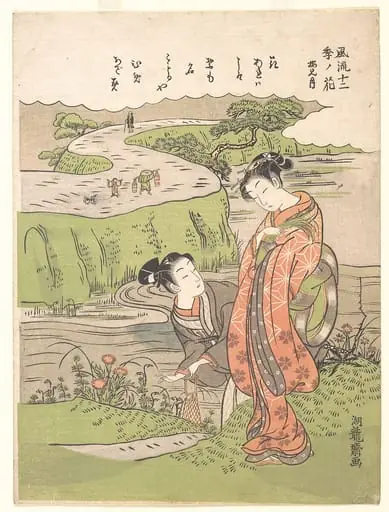 Umemi Tsuki|Plum-Seeing Month: Second Month
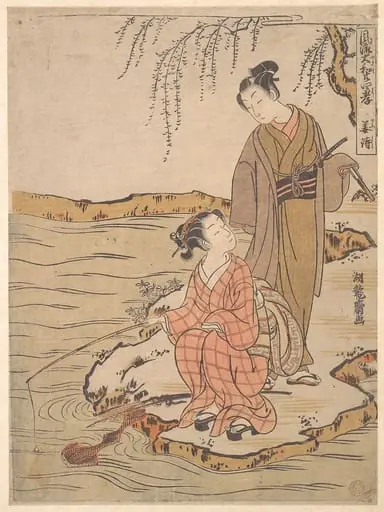 Untitled
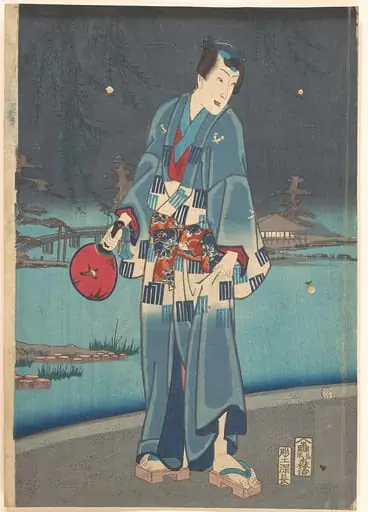 今様源氏紫絹蛍遊び|Modern Genji – Firefly Viewing (Imayō genji shiken hotaru asobi)
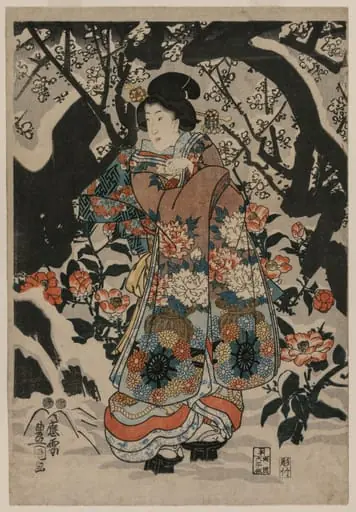 Woman Standing Beside a Plum Tree
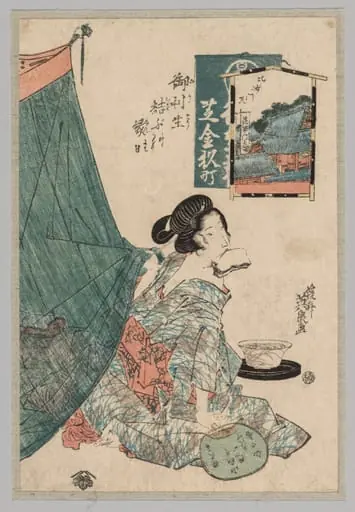 Woman with Papers in Mouth and Fan in Hand
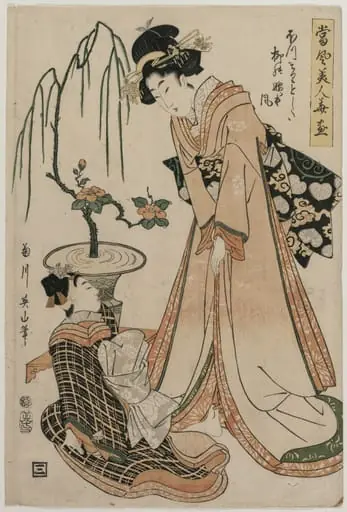 A Lady-in-Waiting with Waist as Slender as a Willow from the series Flowers and Modern Beauties
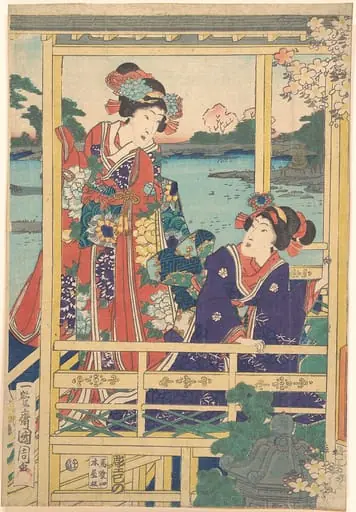 Untitled
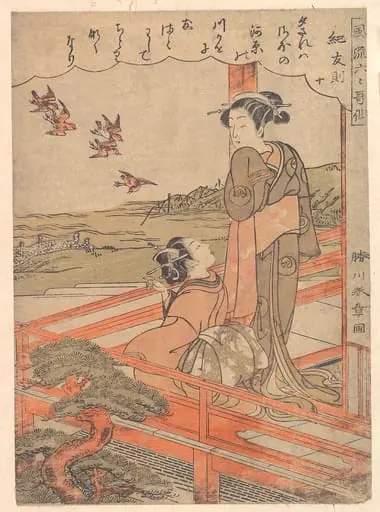 「風流六く歌仙紀友則 十」|“Two Young Women on a Verandah Watching Plovers,” from the series Stylish Six Poetic Immortals (Fūryū rokkasen: Ki no Tomonori, jū)
 Untitled
 Women Beside a Stream Chasing Fireflies