Artwork
Untitled
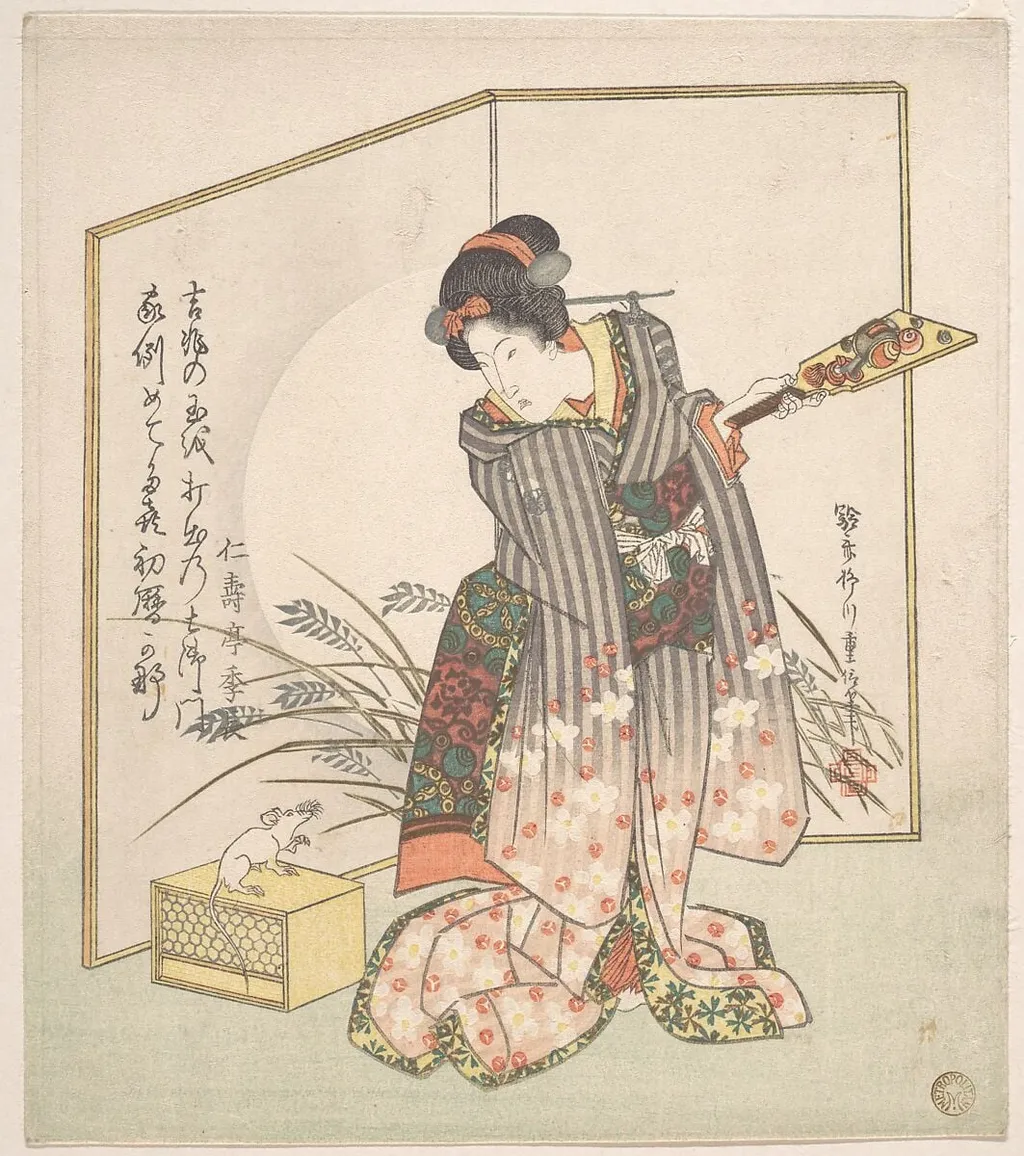
Untitled is an ink print by the Romanticist artist Yanagawa Shigenobu. It dates from 1828 and is held in the collection of the Metropolitan Museum of Art.
About this work
Overview
Created in 1828 by the Edo‑period printmaker Yanagawa Shigenobu, this surimono woodblock print measures a modest size and is part of the Metropolitan Museum of Art’s collection. Executed with ink and color on paper, the work exemplifies the refined private commissions typical of the genre, intended for poetry gatherings and special occasions.
Subject & Meaning
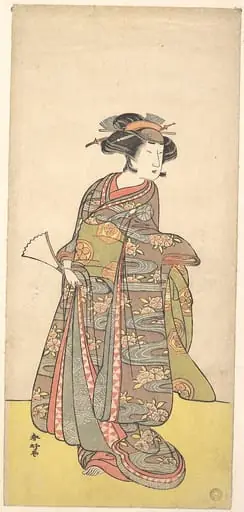
The image presents a woman in a patterned kimono standing before a large white shoji screen. She holds a folding fan in her right hand, while a small box topped with a mouse rests at her left side. The composition suggests a moment of domestic elegance, possibly alluding to seasonal motifs or poetic themes common in ukiyo‑e imagery.
Technique & Style
The careful registration of blocks and use of hand‑applied pigments reflect the high level of craftsmanship associated with these limited‑edition prints.
Printed as a surimono, the piece employs multiple woodblocks to achieve its vivid palette of gray, orange, green, and other hues. Fine line work renders the kimono’s stripes and floral motifs, while the background screen bears delicate calligraphic characters. The careful registration of blocks and use of hand‑applied pigments reflect the high level of craftsmanship associated with these limited‑edition prints.
History & Provenance
After its production in the late Edo period, the print entered private collections before being acquired by the Metropolitan Museum of Art, where it remains on view. Its documented provenance traces a typical path for surimono, moving from literary societies to collectors of Japanese art in the early twentieth century.
Context
Surimono were often created for poetry contests, New Year celebrations, or other cultural events, allowing artists like Shigenobu to experiment with elaborate designs beyond commercial publishing constraints. The inclusion of a written inscription on the screen aligns with this tradition, linking visual art to contemporary literary practice in early nineteenth‑century Japan.
Artist & collection


 Shōkei|Celebrated Waterfall
 Untitled
 Untitled
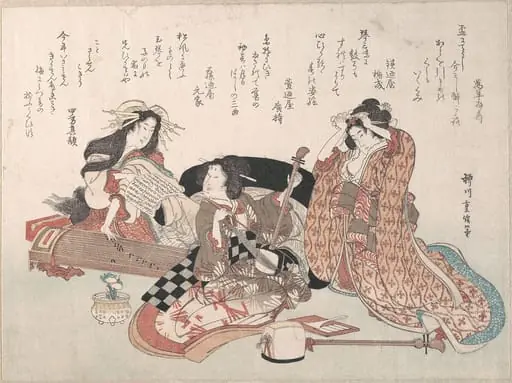 Untitled
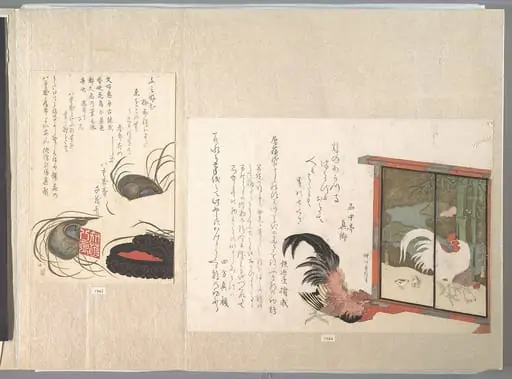 鶏図衝立を見る鶏|Cock Eyeing a Free-standing Screen Painted with Cock, Hen, and Chicks, from Spring Rain Surimono Album (Harusame surimono-jō), vol. 1
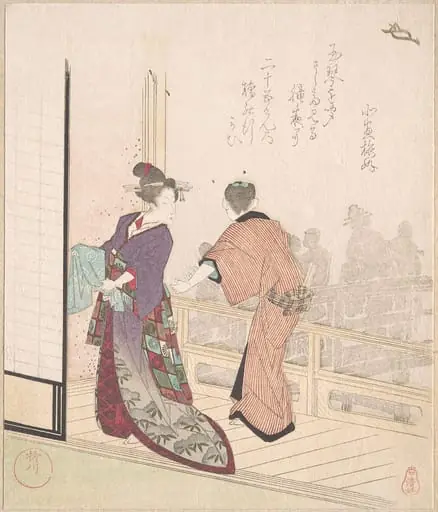 Untitled
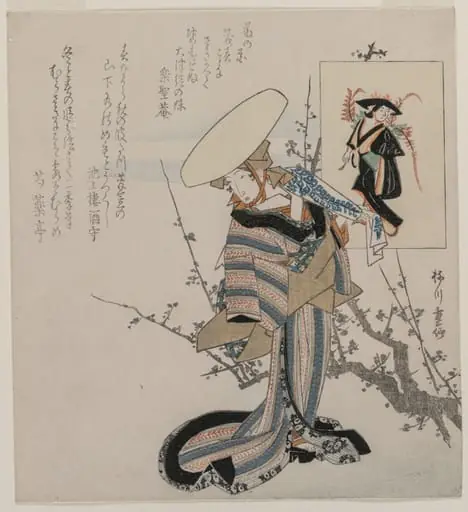 Woman by a Plum Tree Matched with the Wisteria Maiden (from a series of women compared to figures from Otsu paintings)
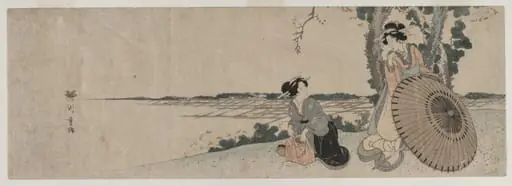 Two Women on a Hilltop
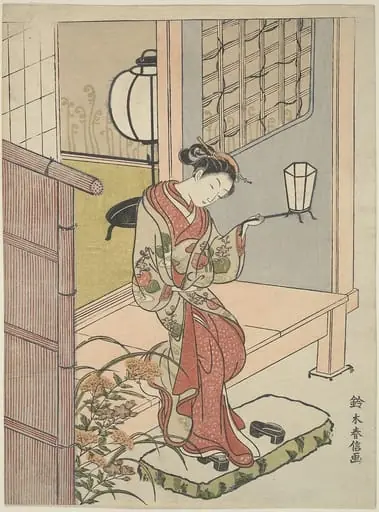 Untitled
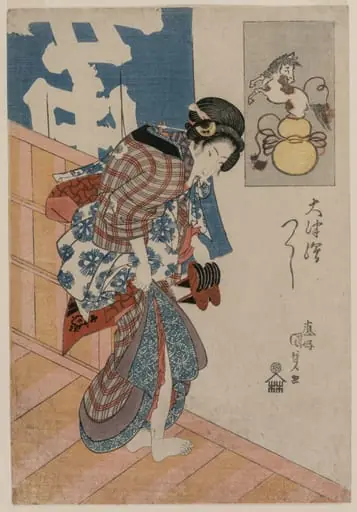 Woman Leaving a Bath House (from the series Pictures from Otsu)
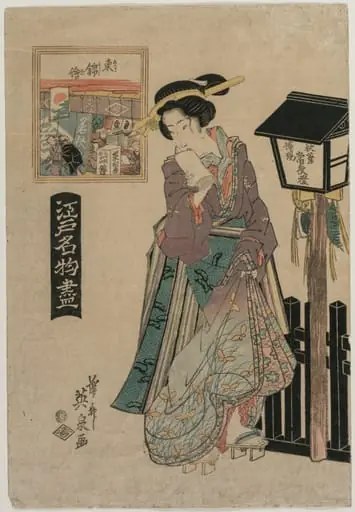 Pictures of Eastern Brocade (from the series Famous Products of Edo)
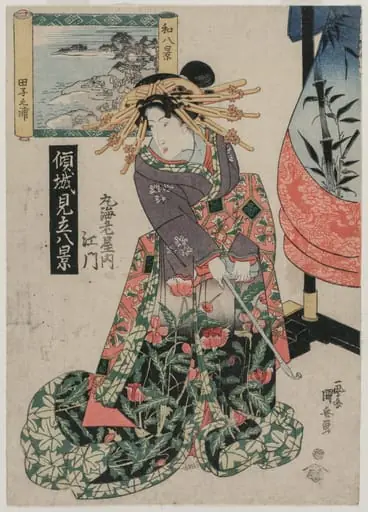 The Courtesan Emon of Maruebiya with a View of Tago Bay (form the series Courtesans with a Playful Group of Eight Views)
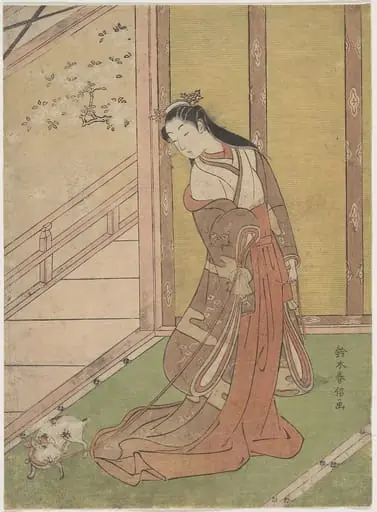 Untitled
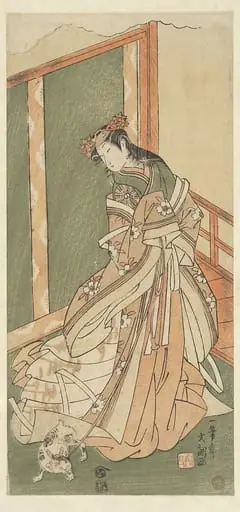 Untitled
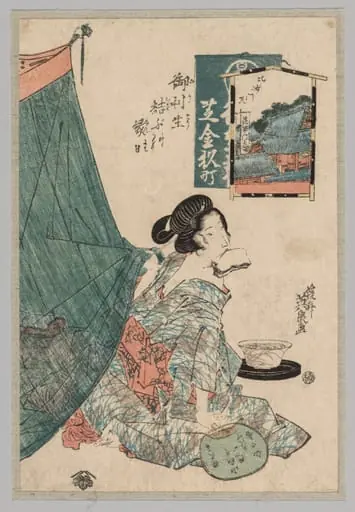 Woman with Papers in Mouth and Fan in Hand
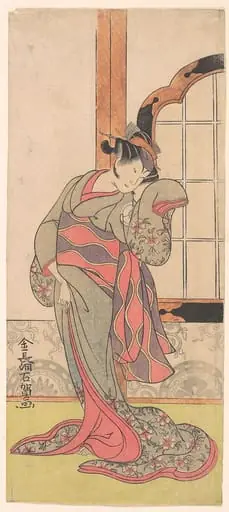 Untitled
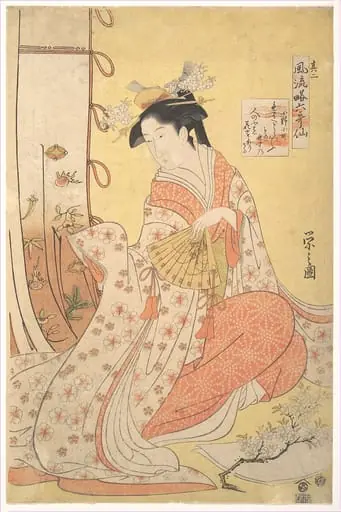 鳥文斎栄之画 「風流略六哥仙 其の二」小野小町|Ono no Komachi: Number Two (Sono ni), from the series Stylish Parodies of the Six Poetic Immortals (Fūryū yatsushi rokkasen)
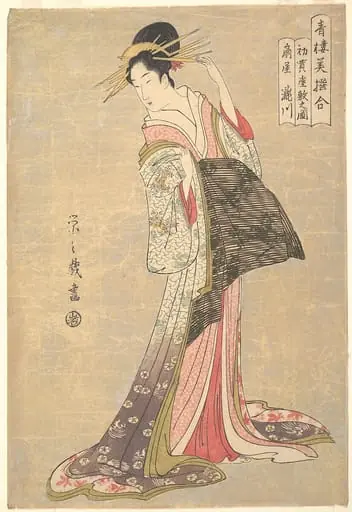 鳥文斎栄之画 「青楼美撰合 初売座敷之図 扇屋滝川」|Takigawa of the Ōgiya Brothel: The First Reception Room Appointment of the New Year (Hatsu-uri zashiki no zu: Ōgiya Takigawa), from the series A Comparison of Selected Beauties of the Pleasure Quarters (Seirō bisen awase)
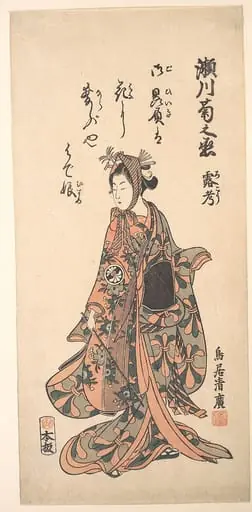 Untitled
 Untitled