Artwork
Untitled
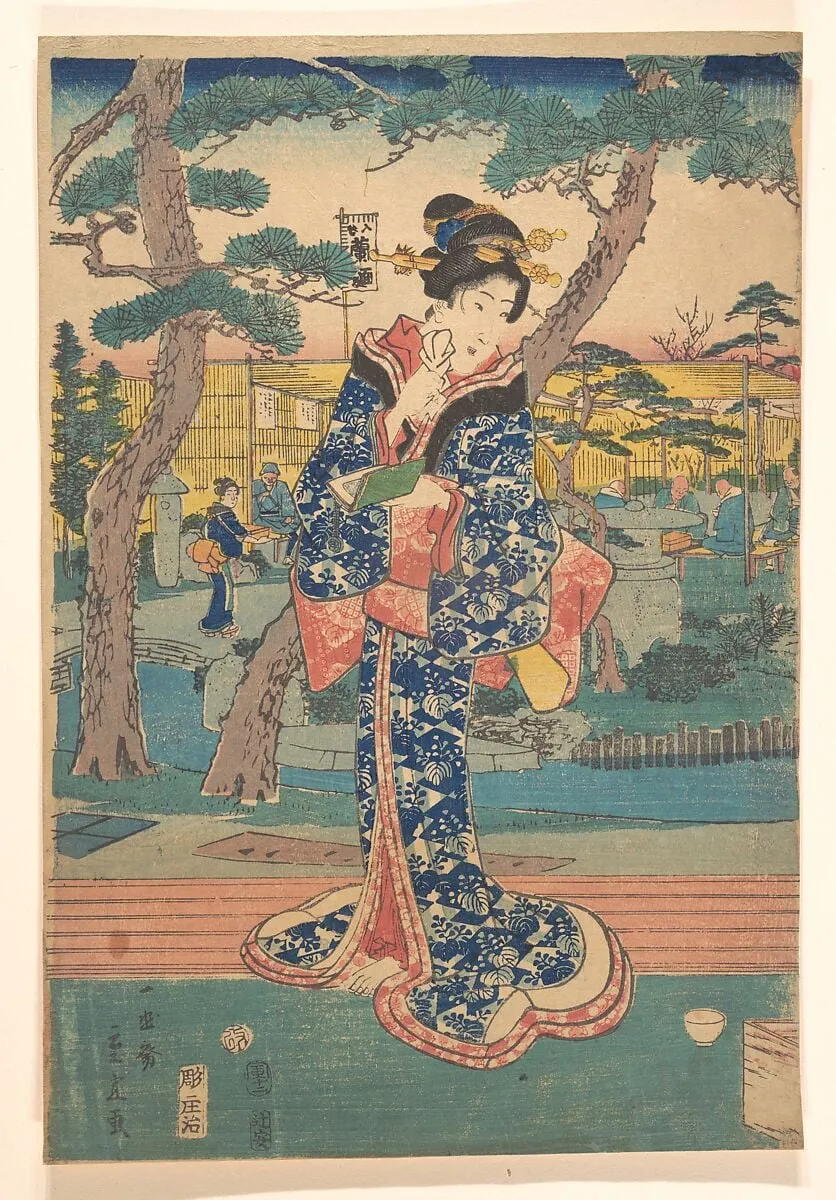
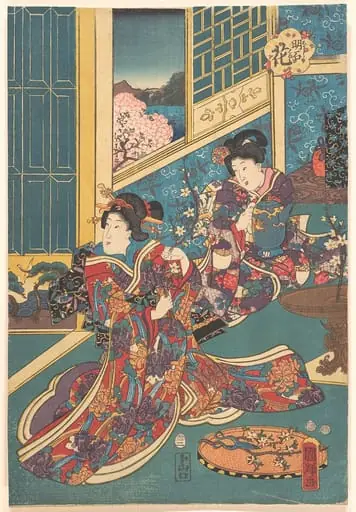
Untitled is an ink print by the Romanticist artist Utagawa Hiroshige II. It dates from 1850 and is held in the collection of the Metropolitan Museum of Art.
About this work
If you're interested in learning more about this style, you might want to check out the work of artist Utagawa Hiroshige II.
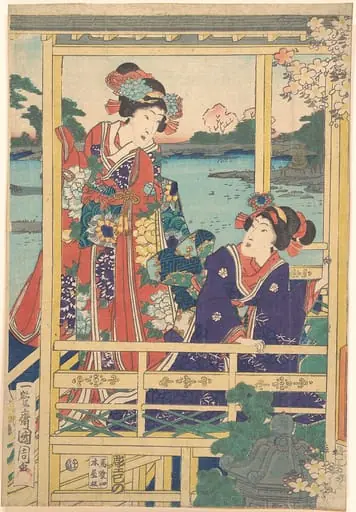
This painting shows a woman in a blue and white kimono standing in a garden. She is holding a fan and looking down, with her right hand on her chin. The kimono has a red lining and a long train, and her hair is styled in an updo with a blue and gold hairpiece.
In the background, there are several people sitting on benches or walking in the garden. There are also several trees, including a large pine tree behind the woman. The sky is a light blue with some pink and yellow clouds.
The painting is a beautiful example of Japanese art from the mid-19th century. If you're interested in learning more about this style, you might want to check out the work of artist Utagawa Hiroshige II.
Overview
Created in 1850, this woodblock print by Utagawa Hiroshige II depicts a solitary woman in a blue‑and‑white kimono within a garden setting. The composition balances the figure’s poised gesture with a backdrop of trees, benches, and distant figures, all rendered in delicate ink and color on paper. The work is part of the collection of the Metropolitan Museum of Art.
Subject & Meaning
The central figure wears a kimono trimmed in red and a long train, her hair arranged in an updo accented by a blue and gold hair ornament. She holds a fan, rests her right hand on her chin, and gazes downward, suggesting a moment of contemplation or private thought amid the garden’s public space.
Technique & Style
Executed in the traditional ukiyo‑e woodblock method, the print combines line work with layered pigments to achieve subtle gradations of sky, foliage, and textile pattern. The use of a limited palette—soft blues, pinks, and yellows for the sky, contrasted with the vivid kimono—demonstrates the period’s emphasis on harmony between figure and environment.
History & Provenance
Attributed to Hiroshige II, a prominent successor of the Hiroshige school, the print reflects mid‑nineteenth‑century Japanese visual culture. It entered the Metropolitan Museum of Art’s holdings through acquisition, where it remains catalogued as an example of the era’s printmaking and the artist’s continuation of his mentor’s aesthetic.
Artist & collection

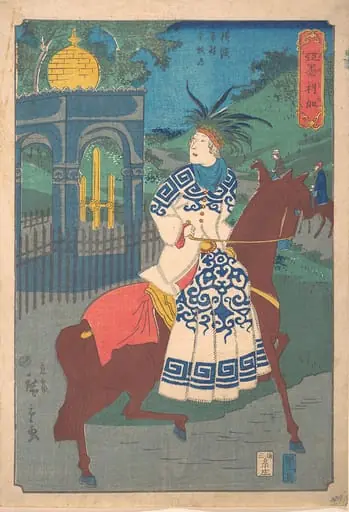 二代歌川広重画 『亜墨利加 横浜本村本牧道』|American Woman Riding Side-Saddle on the Road at Honmoku, Motomura, Yokohama (America Yokohama Motomura Honmoku michi)
 Untitled
 Untitled
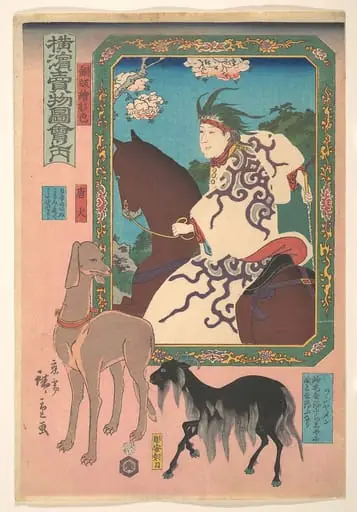 横浜賣物図会の内 唐犬|Copper Plate Engraving of a Woman Riding a Horse, a Goat and a Dog
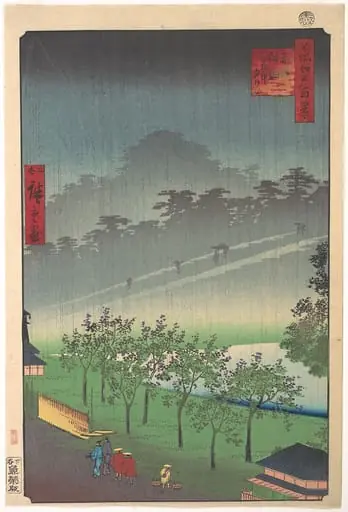 Untitled
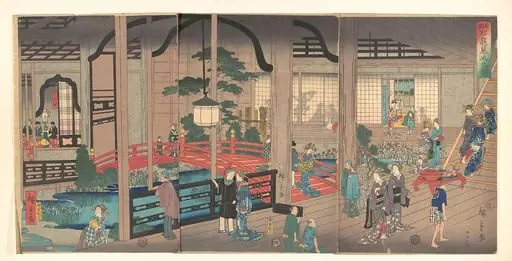 Yokohama Gankirō no zu|View of the Interior of the Gankirō Tea House in Yokohama
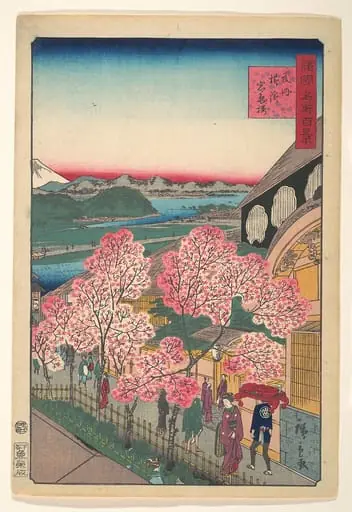 Bushu Yokohama Gankirō|諸国名所百景 武州横浜岩亀楼|Entrance to the Gankirō Tea House in the Miyozaki District, Yokohama, Bushu
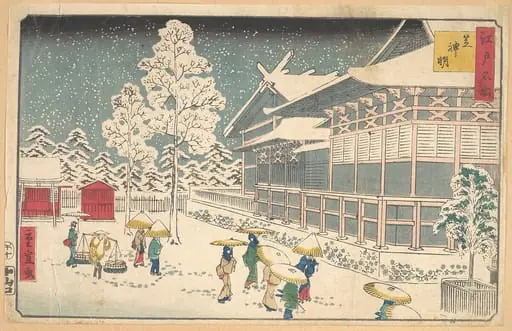 江戸名所 芝神明|Famous Places of Edo: Shiba Shinmei
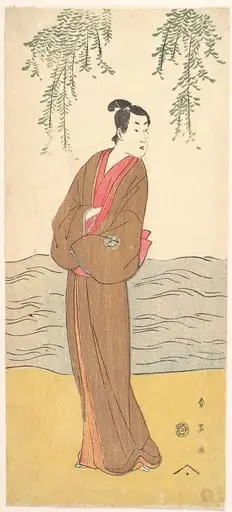 Untitled
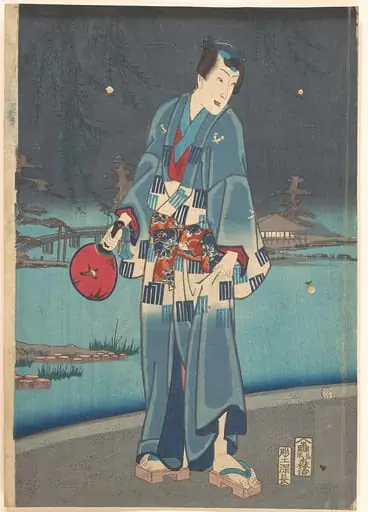 今様源氏紫絹蛍遊び|Modern Genji – Firefly Viewing (Imayō genji shiken hotaru asobi)
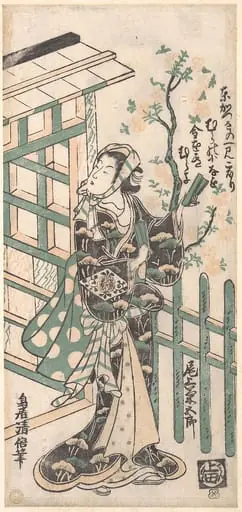 Untitled
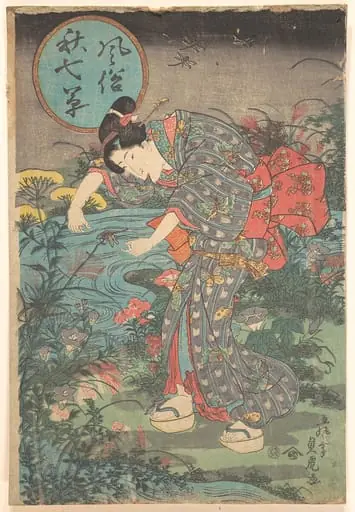 Untitled
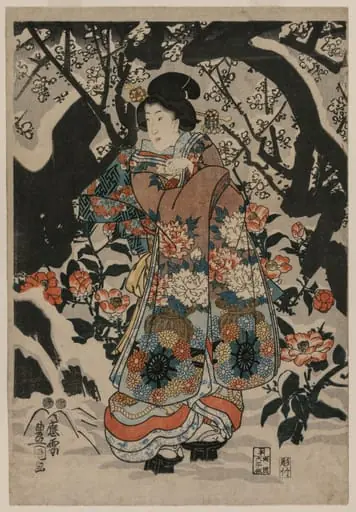 Woman Standing Beside a Plum Tree
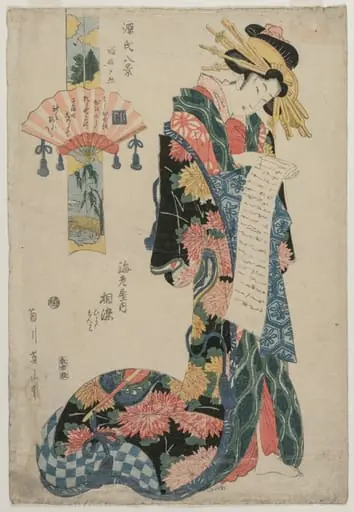 The Courtesan Aizome of the Ebiya (From the series Eight Views of the Tale of Genji)
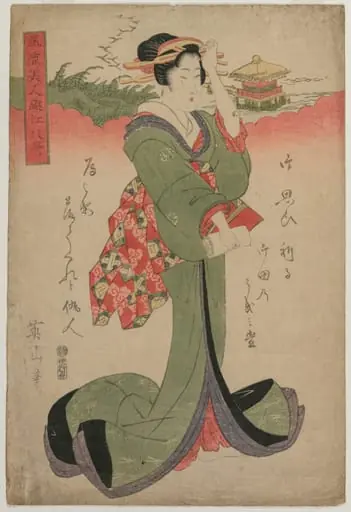 Descending Geese at Katata (From the series Elegant Women and the Eight Views of Lake Biwa)
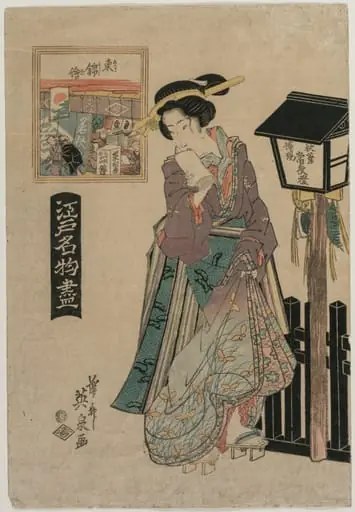 Pictures of Eastern Brocade (from the series Famous Products of Edo)
 Untitled
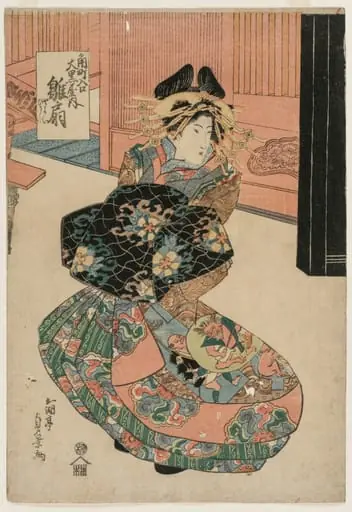 The Courtesan Hinaogi of the Daikokuya at the Entrance of Kadomachi
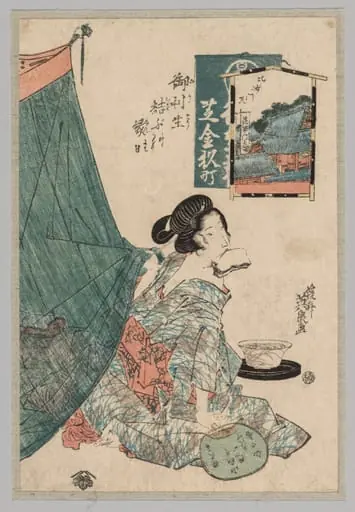 Woman with Papers in Mouth and Fan in Hand
 Untitled