Artwork
The Three Goddesses
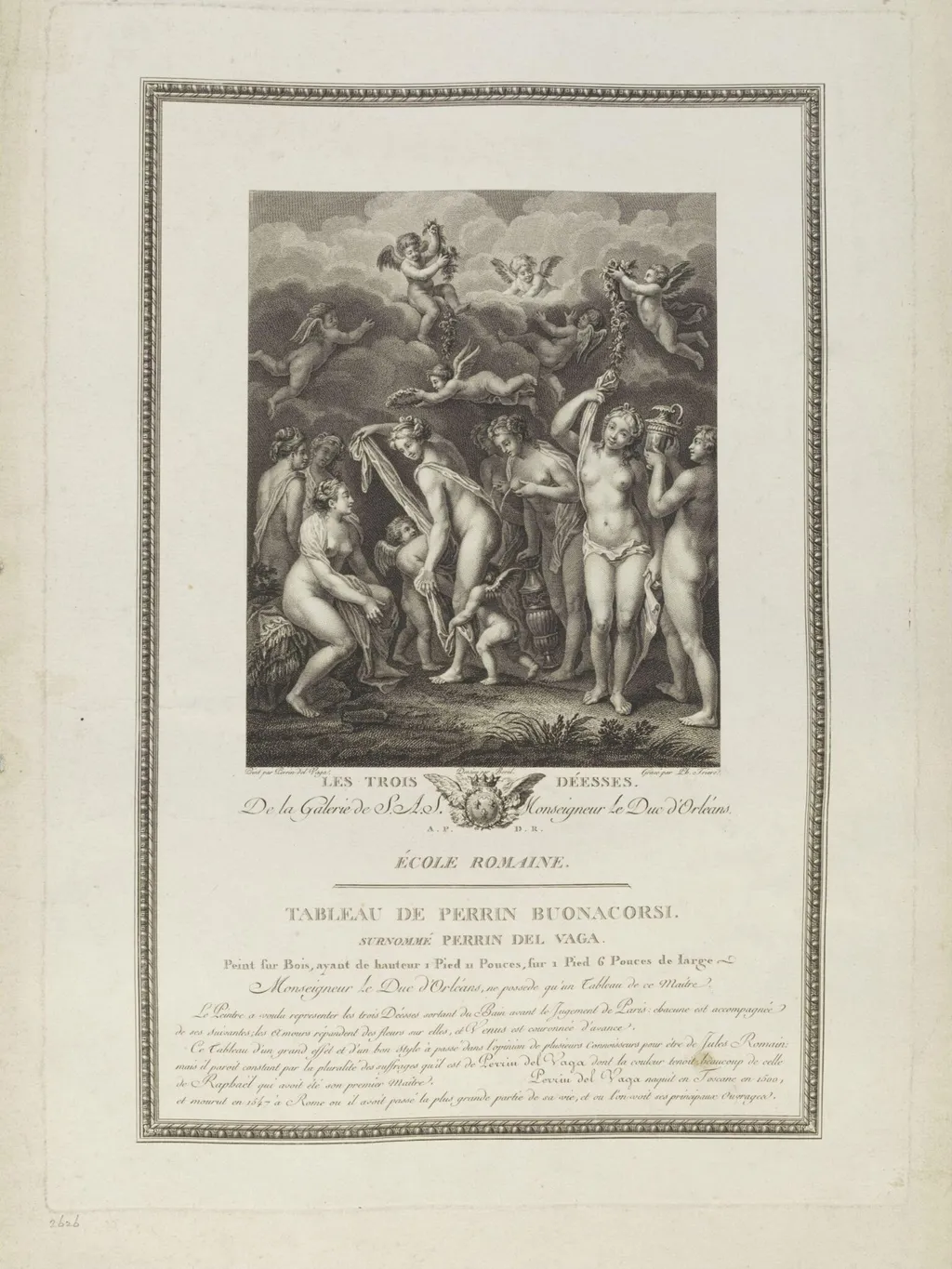
The Three Goddesses is a print by Philippe Trière. It dates from 1850 and is held in the collection of the Victoria and Albert Museum.
About this work
Overview
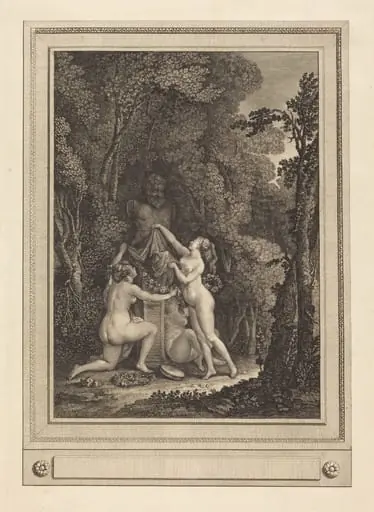
The Three Goddesses is a print produced by Philippe Trière in 1850, based on a work by Perino del Vaga. Rendered on paper, it depicts a scene of three nude goddess-like figures amidst mythological and natural elements.
Subject & Meaning
The print shows three calm yet purposeful naked women in a forest, each associated with distinct attributes: a crown, a staff, and a cloth. Surrounding elements include floating cherubs and a playful infant, suggesting a preparation for a significant event, blending classical and mythological themes.
Technique & Style
The print features a French-titled border, *Les Trois Déesses*, and is signed by Philippe Trière. The style reflects a 19th-century interpretation of Renaissance-inspired mythology, with detailed rendering of figures and surroundings.
History & Provenance
Produced in 1850 by Philippe Trière after Perino del Vaga’s original work. Current location: Victoria and Albert Museum.
Context
This work exemplifies 19th-century European interest in reviving and reinterpreting classical and Renaissance art, particularly in print form.
Legacy
As part of the Victoria and Albert Museum’s collection, *The Three Goddesses* contributes to the institution’s holdings of 19th-century prints, offering insight into the era’s artistic tastes and technical proficiency in printmaking.
Artist & collection
Artist
Philippe Trière spent years sketching Parisian street scenes until one day he folded a blank sheet into thirds and drew the Three Goddesses straight from memory—no models, no references, just the way the light hit the Seine at dawn.

![Omnia Vincit Amor [Apollo and Daphne], by Robert van Audenaerd](https://artifactworldgallery.com/img/robert-van-audenaerd--omnia-vincit-amor-apollo-and-daphne--7af37b2f424f6e58-w320.webp)