Artwork
The Martyrdom of St. Apollonia
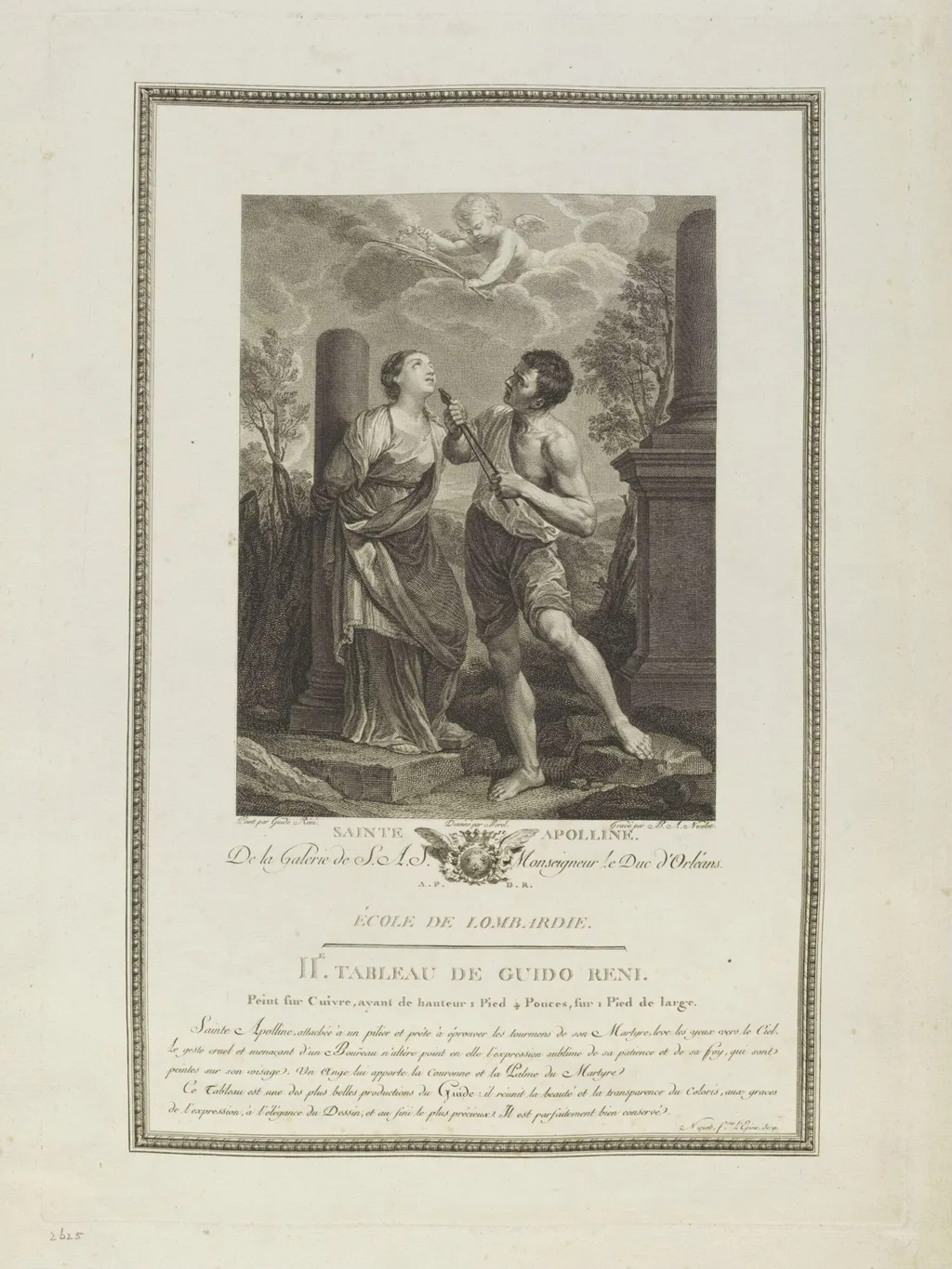
The Martyrdom of St. Apollonia is a print by Bénédict Alphonse Nicolet. It dates from 1850 and is held in the collection of the Victoria and Albert Museum.
About this work
Overview
This 1850 print by Bénédict Alphonse Nicolet portrays the martyrdom of Saint Apollonia, adapted from an earlier composition by Guido Reni.
This 1850 print by Bénédict Alphonse Nicolet portrays the martyrdom of Saint Apollonia, adapted from an earlier composition by Guido Reni. Rendered in ink on paper, it captures a moment of religious sacrifice with heightened emotional tension. The image functions as a reproductive print, translating a painted scene into a widely distributable format for devotional or educational use in the mid-nineteenth century.
Subject & Meaning
The scene illustrates the legendary execution of Saint Apollonia, a Christian martyr who, according to tradition, had her teeth extracted before being burned alive. Here, she is shown in a moment of quiet resignation, her hand near her mouth, while an executioner raises a spear. Above, an angel hovers with a crown, symbolizing divine reward. The composition emphasizes faith amid suffering, aligning with hagiographic conventions of the time.
Technique & Style
Nicolet employs strong contrasts of light and shadow to heighten the drama, a technique rooted in chiaroscuro. The figures are sharply defined against a dark, turbulent sky, enhancing the emotional weight of the scene. Delicate linework renders textures in fabric and hair, while the angel’s ethereal form contrasts with the earthly brutality below. The print’s precision reflects the academic training of its maker and the demands of reproductive engraving.
History & Provenance
The print was produced in 1850 as part of a broader 19th-century revival of interest in religious iconography. It derives from a painting by Guido Reni, a Baroque master whose works were frequently reproduced in print form. Nicolet, a French engraver active in the mid-1800s, specialized in translating classical and religious subjects into accessible graphic formats, likely for private collectors or ecclesiastical institutions.
Context
In mid-19th-century Europe, religious imagery remained a staple of visual culture despite rising secularism. Prints like this served both devotional and didactic purposes, reinforcing Catholic narratives in homes and schools. The choice of Apollonia—a lesser-known martyr associated with dental suffering—reflects a period fascination with saints who endured physical torment as proof of spiritual strength.
Legacy
Though not widely exhibited today, Nicolet’s print represents a common mode of religious dissemination in the 19th century. It preserves a visual lineage from Reni’s Baroque original to the era of mass-produced imagery, illustrating how sacred stories were maintained through mechanical reproduction. Its survival in institutional collections underscores its role as a cultural artifact of devotional practice.
Artist & collection
Artist
This 18th-to-early-19th-century printmaker specialized in religious scenes, often etching martyrs on copper plates.

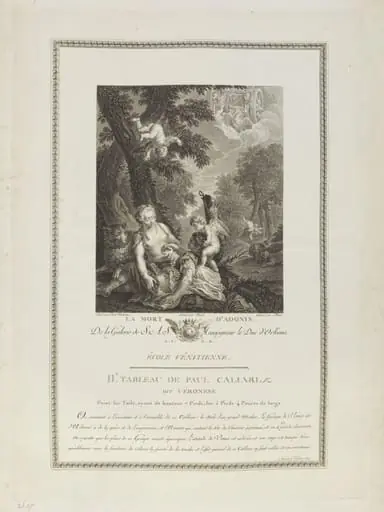 Death of Adonis
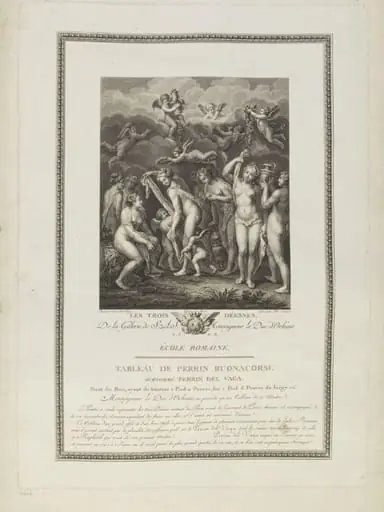 The Three Goddesses
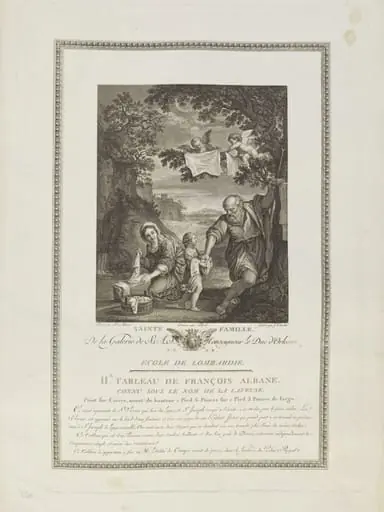 Holy Family
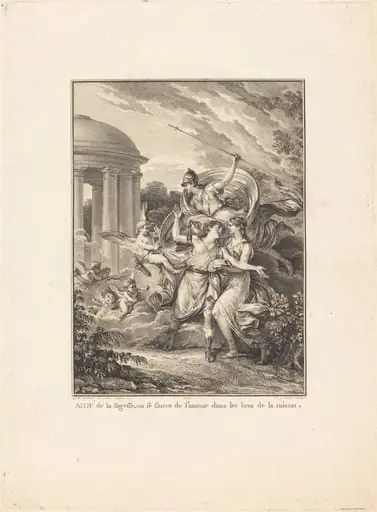 Frontispiece: Aidé de la sagesse, on se sauve de l'amour dans les bras de la raison
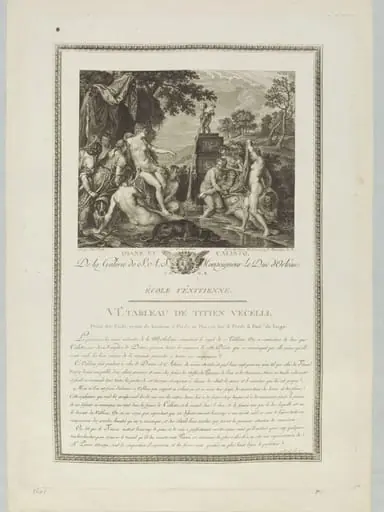 Diana and Callisto
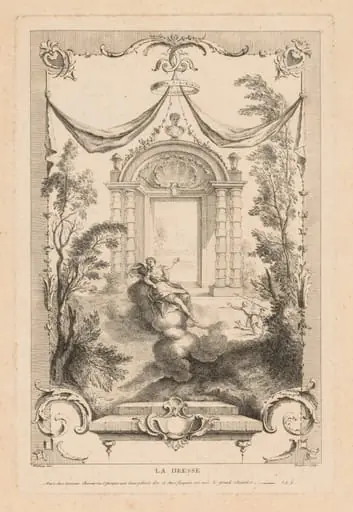 The Goddess, Diana on the Clouds
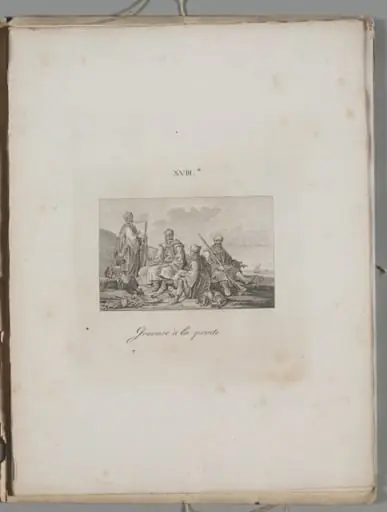 Art of the Lithograph: Albanian, Plate XVIII
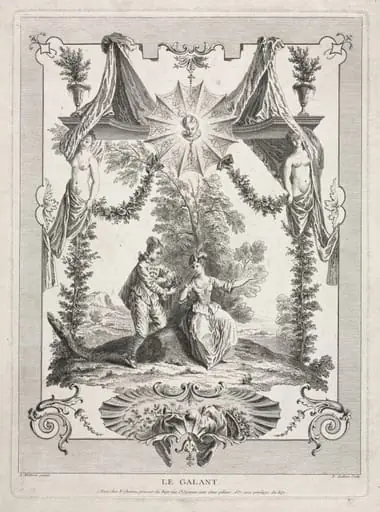 The Gallant
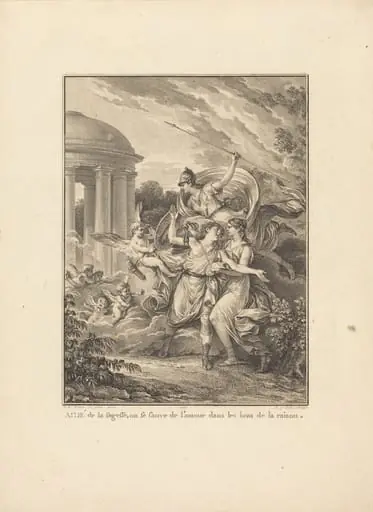 Frontispiece: Aidé de la sagesse, on se sauve de l'amour dans les bras de la raison
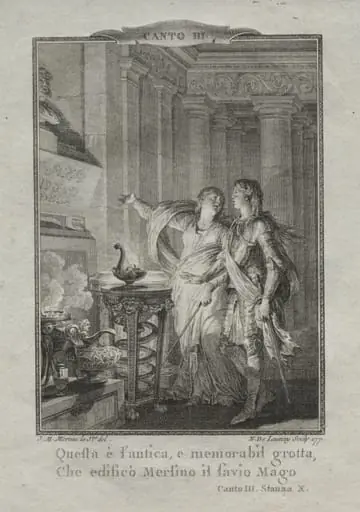 In the Grotto of Merlin, the Magician
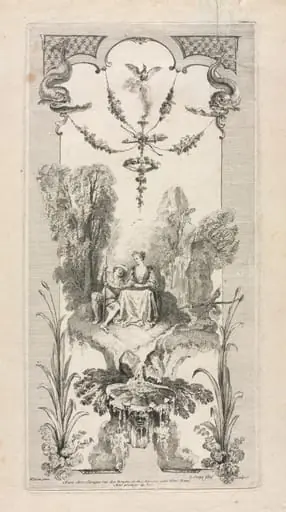 Pastoral, Arabesque
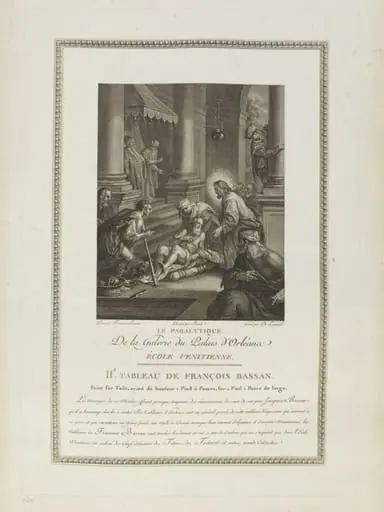 Christ Healing the Paralytic