Artwork
River God
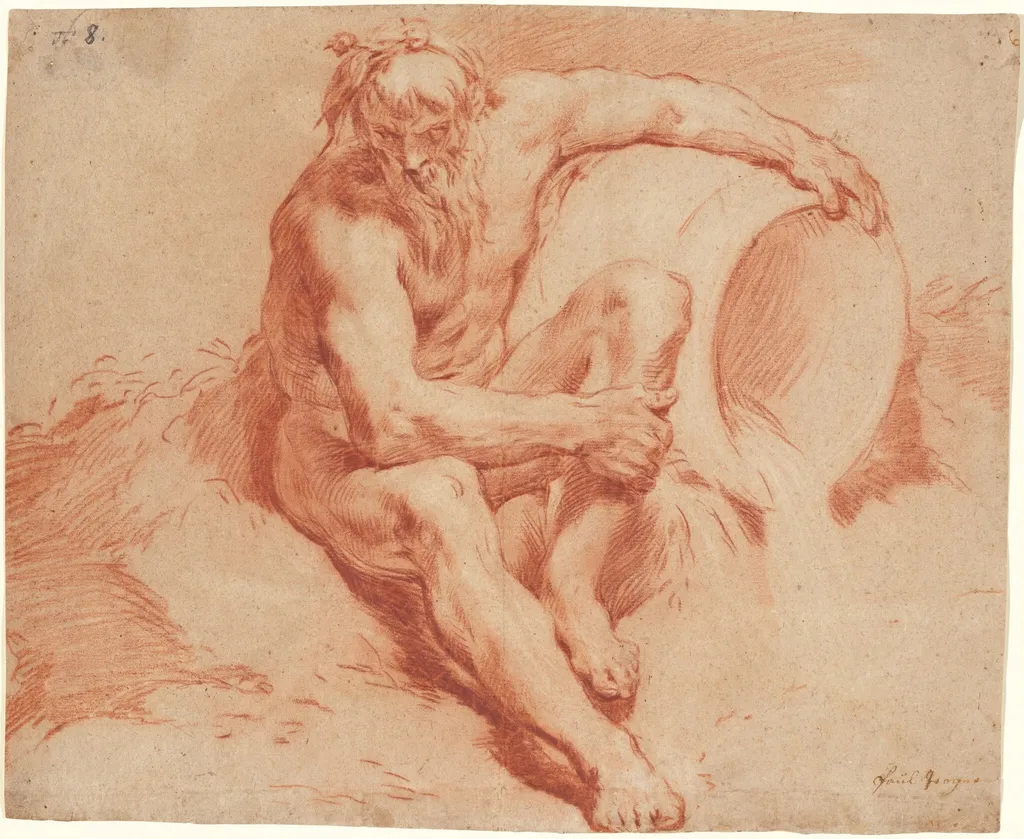
River God is a chalk drawing by the Baroque artist Paul Troger. It dates from 1720 and is held in the collection of the National Gallery of Art.
About this work
Overview
Created around 1720 by Austrian artist Paul Troger, this drawing is executed in red chalk with white highlights on tan oatmeal paper. It exemplifies Troger’s skill in draftsmanship, capturing a mythological figure with immediacy and energy. Though a preparatory study, it stands as a refined expression of his approach to form and motion, reflecting his broader influence on Austrian Baroque art.
Subject & Meaning
The pose suggests both repose and latent power, aligning with Enlightenment-era interest in mythological allegories of nature.
The figure represents a classical river deity, identifiable through traditional iconography such as the shell-shaped vessel, often associated with water deities in antiquity. Seated on a rock with a relaxed yet dynamic posture, the god embodies the natural force of flowing water. The pose suggests both repose and latent power, aligning with Enlightenment-era interest in mythological allegories of nature.
Technique & Style
Troger employed loose, rapid strokes of red chalk to define the muscular form, using white chalk to accentuate highlights and create contrast against the warm paper. The textured surface of the skin and hair emerges from layered, uneven lines, suggesting movement without fixed detail. This sketchy handling reveals the artist’s focus on gesture and volume over finish, characteristic of his preparatory process.
History & Provenance
The drawing originates from Troger’s active period in Austria, likely produced during his early career before major commissions for ecclesiastical ceilings. While its exact provenance before the 20th century is undocumented, it survives as part of a broader corpus of his studies that informed his large-scale frescoes. Its preservation reflects its value as a working document of his artistic method.
Context
In early 18th-century Austria, Baroque art emphasized theatricality and movement, particularly in religious and allegorical subjects. Troger’s drawings like this one served as studies for ceiling compositions where figures appeared to burst into space. This work aligns with broader European trends that revived classical themes through expressive, dynamic rendering rather than rigid formalism.
Legacy
Troger’s drawings, including this one, helped define the Austrian Baroque style through their emphasis on fluid line and anatomical vitality. Though primarily known for frescoes, his studies influenced generations of draftsmen who adopted his energetic approach to figure rendering. This piece remains a testament to the importance of preparatory work in shaping large-scale artistic projects of the period.
Own this work as a print
Artist & collection
Artist
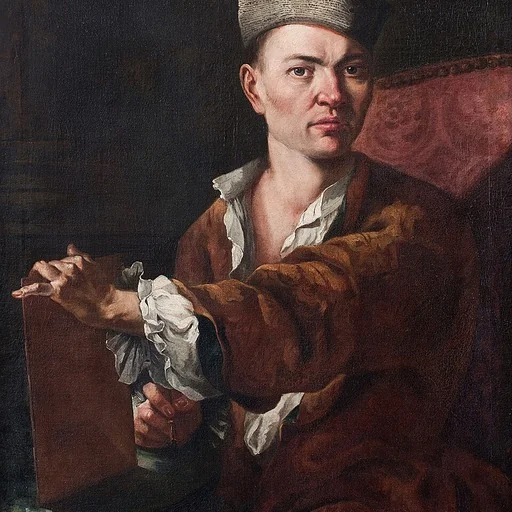
Paul Troger (30 October 1698 – 20 July 1762) was an Austrian painter, draughtsman, and printmaker of the late Baroque period.

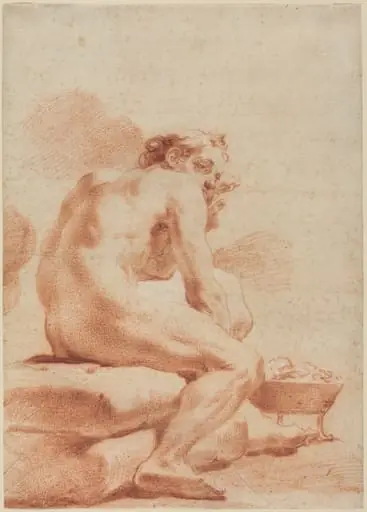 A Young Man Warming Himself at a Brazier
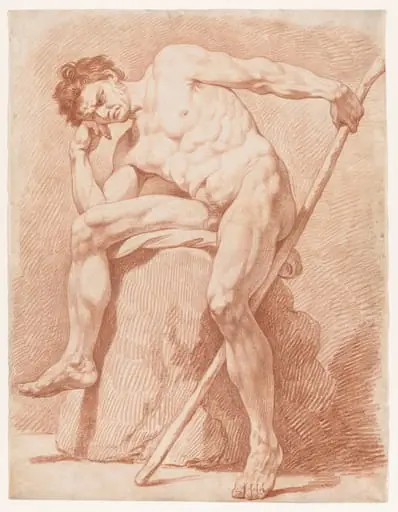 Academy of a Seated Nude Holding a Staff
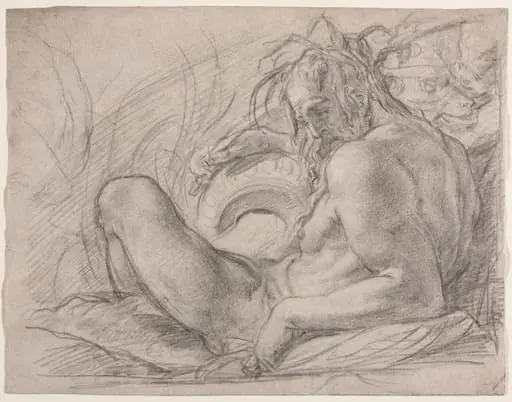 The River God Tiber (Study for a fresco, Miracle of the Snow, or the Foundation of Santa Maria Maggiore, Rome in the Canigiani chapel of S. Felicita, Florence)
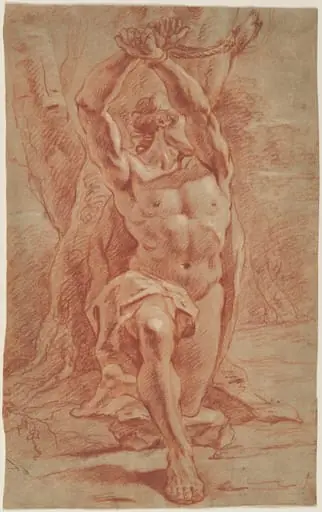 Kneeling Man Bound to a Tree
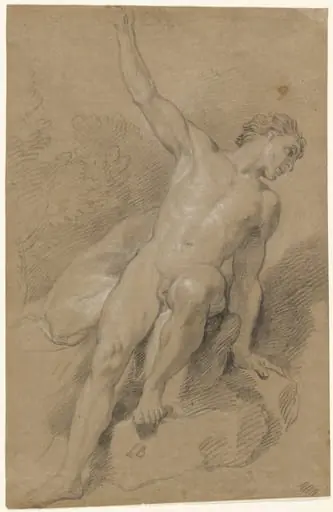 Male Nude Seated on Rocks
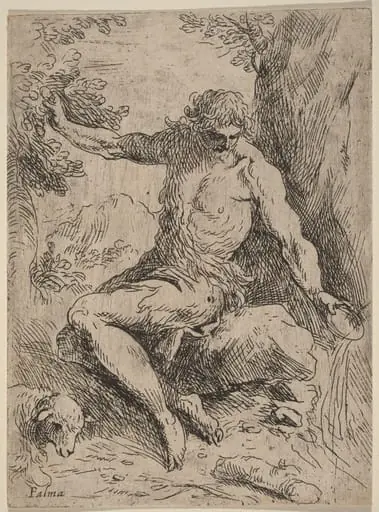 Saint John the Baptist
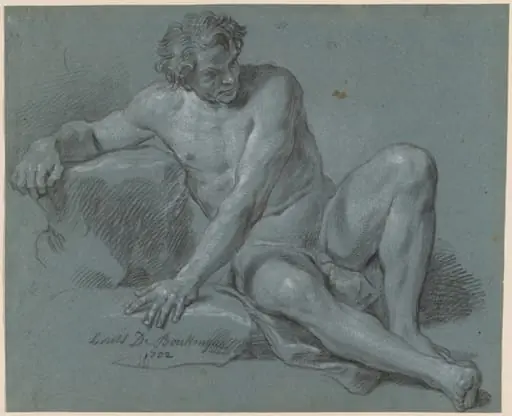 Male Nude Seated on the Ground
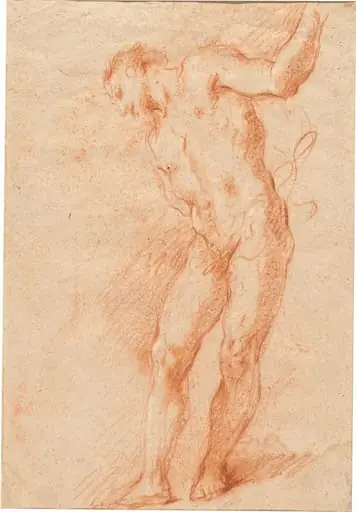 Male Nude
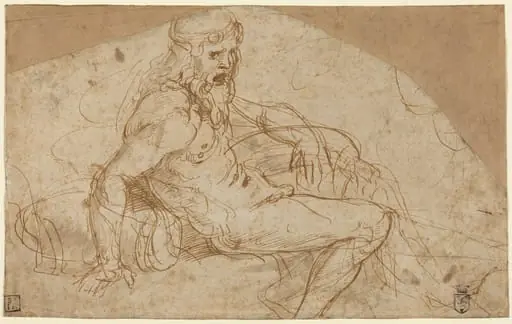 River God