Artwork
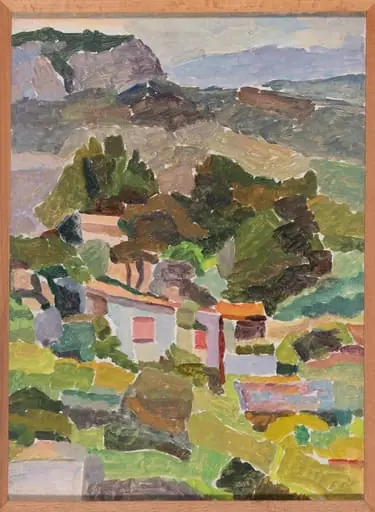
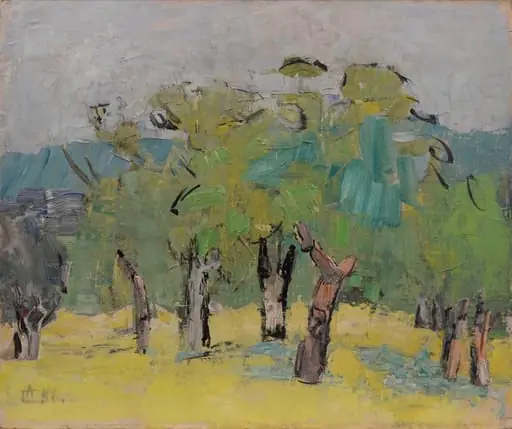
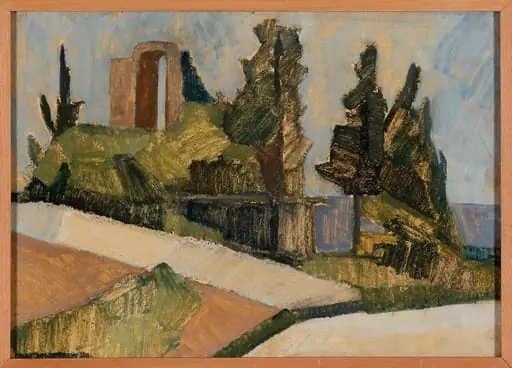
Landscape: Galatsi
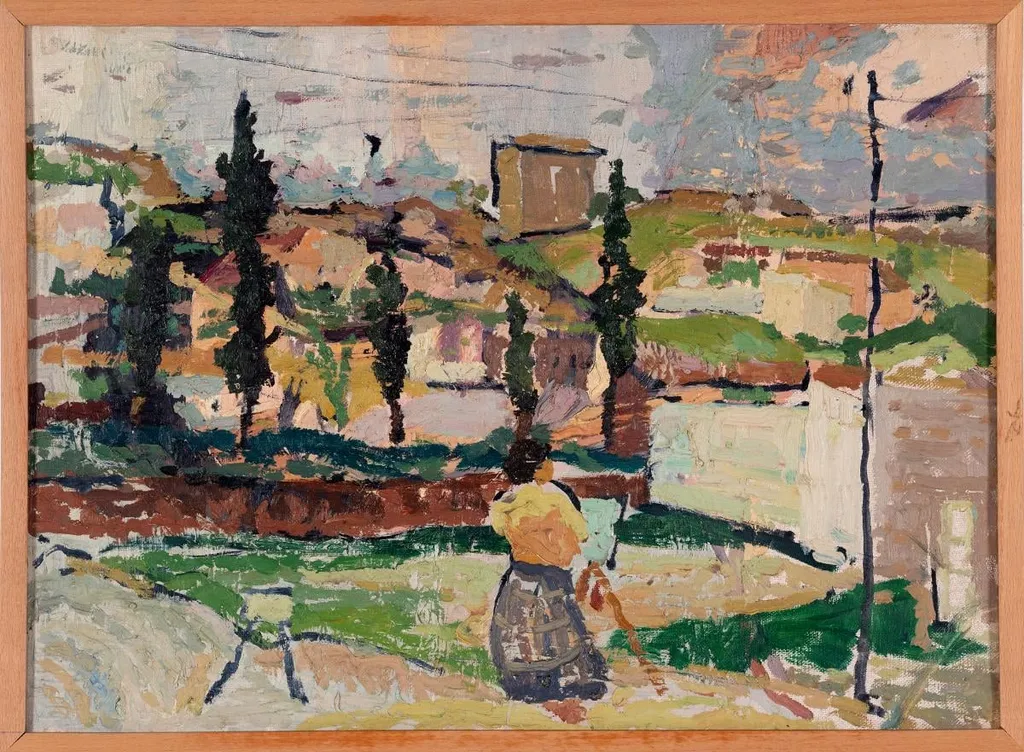
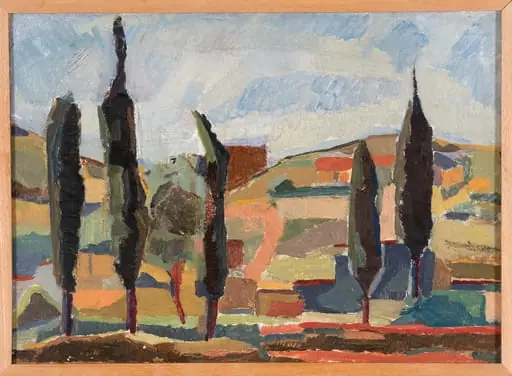
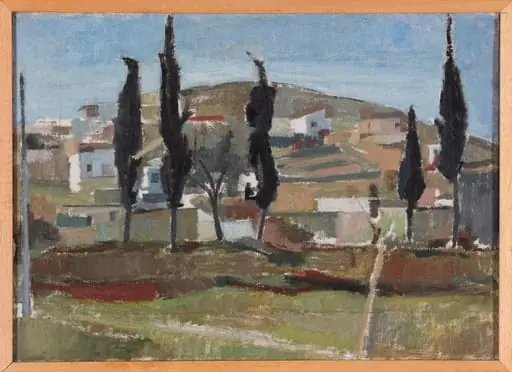
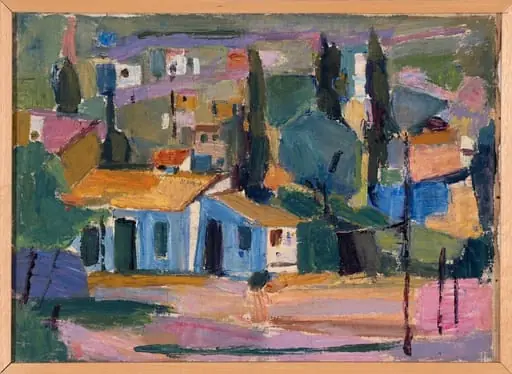
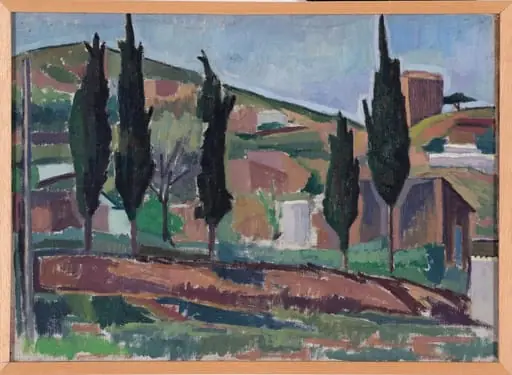
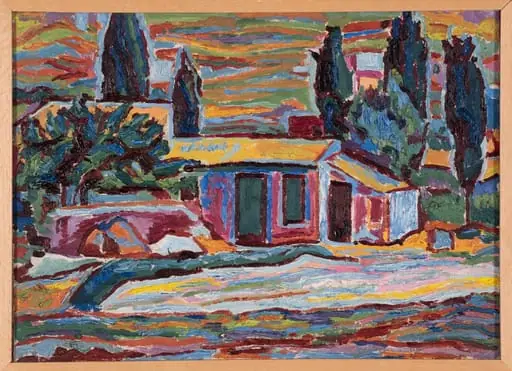
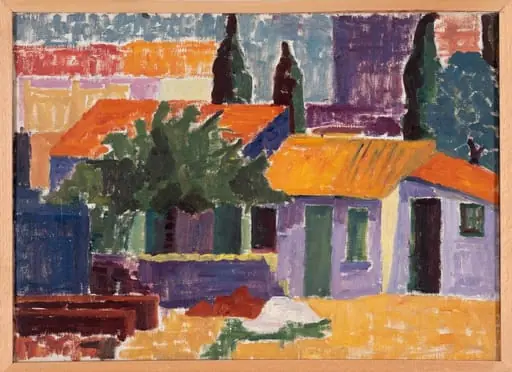
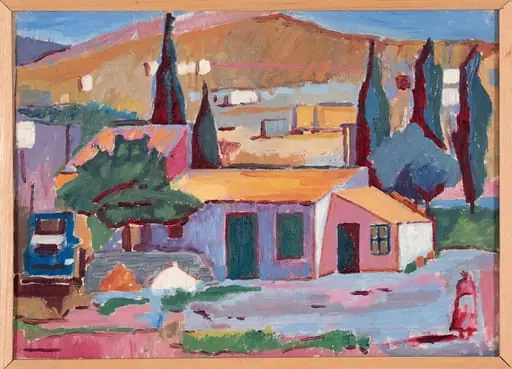
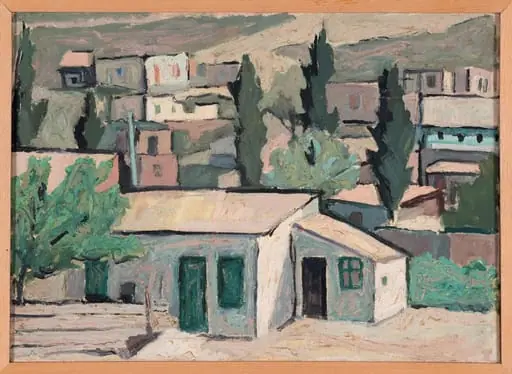
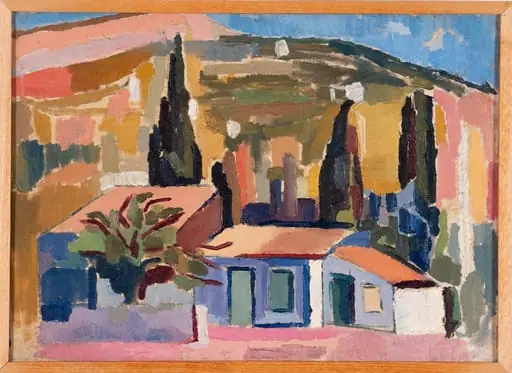
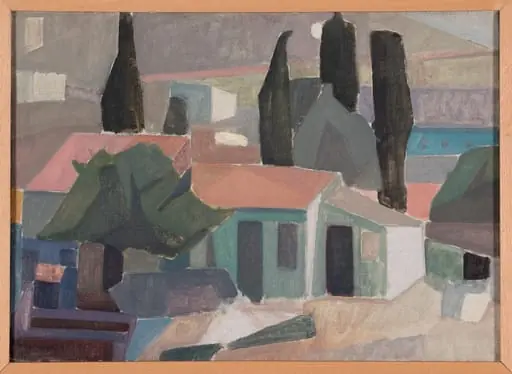
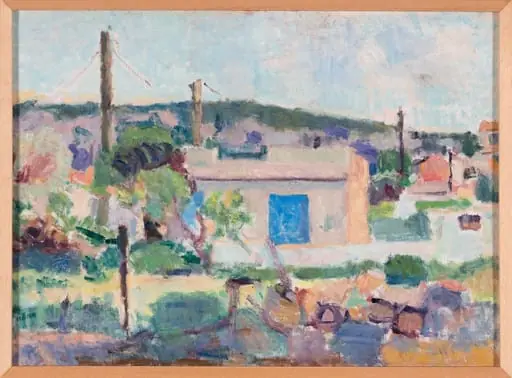
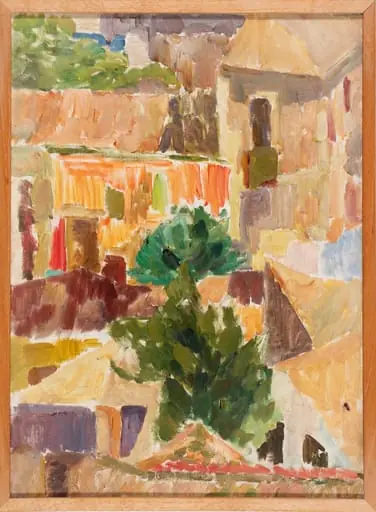
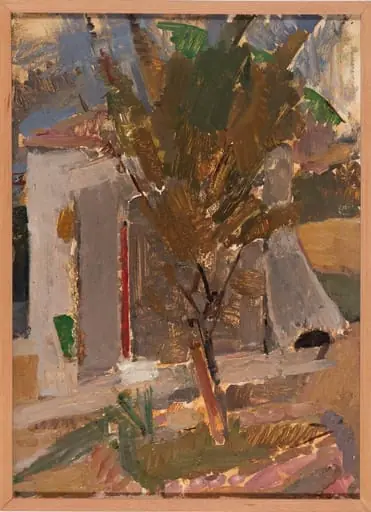
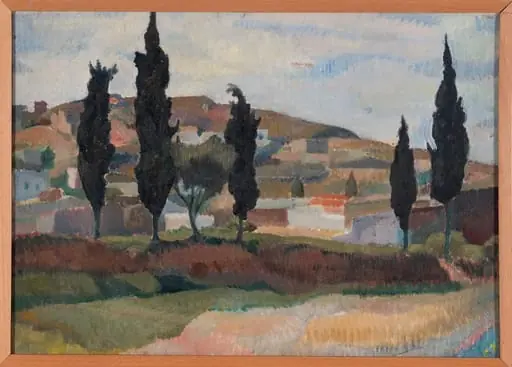
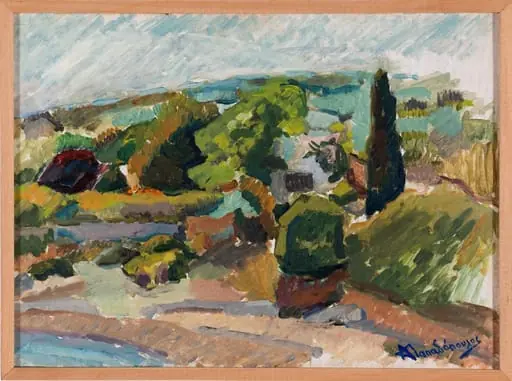
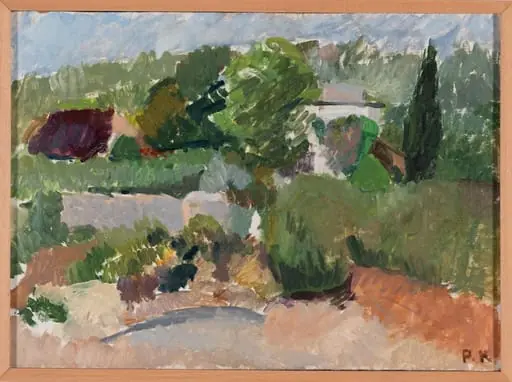
Landscape: Galatsi is an unspecified painting by Tsar Kostas. It dates from 1956 and is held in the collection of the Athens School of Fine Arts.
About this work
Overview
Its modest scale and unadorned subject reflect a deliberate focus on place rather than narrative, grounding the viewer in a specific, unidealized landscape.
Painted in 1956, Landscape: Galatsi is a quiet depiction of a rural scene in Greece, attributed to the artist Tsar Kostas. The work resides in the Museum of Ethnography, where it contributes to a collection focused on everyday life and regional environments. Its modest scale and unadorned subject reflect a deliberate focus on place rather than narrative, grounding the viewer in a specific, unidealized landscape.
Subject & Meaning
A solitary figure sits on a bench amid sparse vegetation, their features softened into indistinct shapes. The absence of clear identity or action invites contemplation rather than storytelling. The setting—rolling hills, dark trees, and uneven ground—suggests a moment of stillness within a working countryside. The figure’s anonymity emphasizes the landscape itself as the true subject, evoking solitude and the passage of time in rural Greece.
Technique & Style
Thick, textured brushwork characterizes the trees and terrain, employing impasto to create tactile surfaces that catch light unevenly. The palette is restrained, dominated by earth tones—olive greens, ochres, and grayed blues—reinforcing the scene’s naturalism. Areas of smoother paint contrast with rougher applications, particularly around the ground and foliage, suggesting variation in vegetation and soil without literal detail.
History & Provenance
The painting entered the Museum of Ethnography’s collection shortly after its creation, likely through direct acquisition or donation by the artist. Its preservation in an institution dedicated to cultural documentation, rather than fine art, signals its perceived value as a record of vernacular life. No significant exhibition or ownership history beyond the museum is documented, suggesting a quiet, localized reception.
Context
Created in postwar Greece, the work aligns with a broader interest among artists in depicting rural life amid rapid urbanization. While not part of a formal movement, its focus on unembellished terrain and anonymous figures reflects a regional tendency to document the changing countryside. The absence of political or symbolic cues situates it within a quiet, observational tradition rather than ideological expression.
Legacy
Landscape: Galatsi remains a modest but persistent example of mid-20th-century Greek regional painting. It is not widely reproduced or studied outside its institutional home, yet it offers a subtle record of how artists engaged with the land during a period of social transition. Its enduring presence in the Museum of Ethnography underscores its role as a visual artifact of everyday place.
Artist & collection
Artist
Tsar Kostas kept a tiny radio in his coat pocket, never turned off, its dial always humming with Greek news or old rebetiko songs.