Artwork
Exterior of buildings
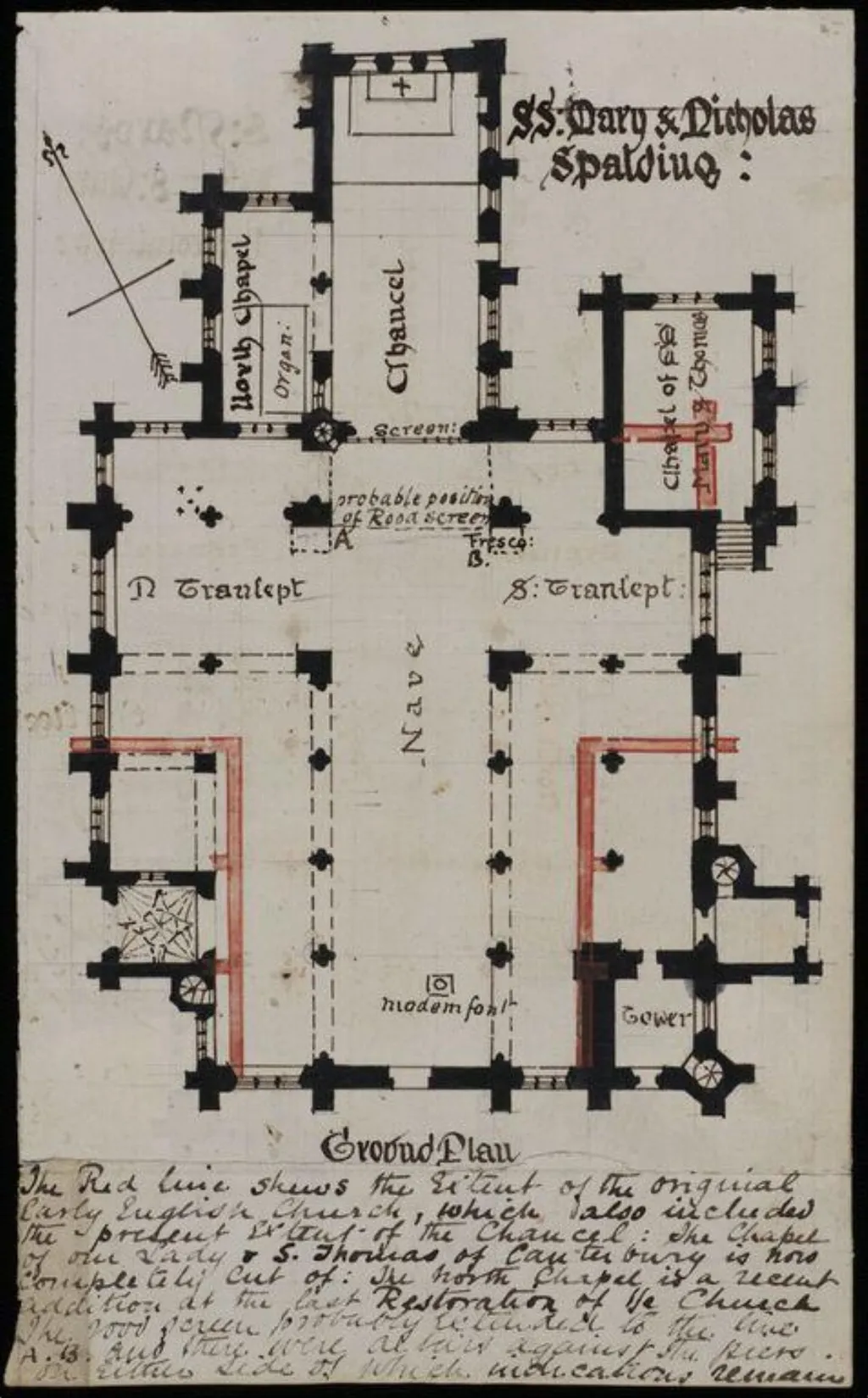
Exterior of buildings is a drawing by the Impressionist artist Charles Frederick Godbold Turner. It dates from 1895 and is held in the collection of the Victoria and Albert Museum. This drawing presents a precise architectural plan of a church, rendered in black ink with selective red accents for key annotations.
About this work
Overview
The inclusion of labeled rooms and fixtures indicates it was not a decorative sketch but a functional document, likely used in planning or construction.
This drawing presents a precise architectural plan of a church, rendered in black ink with selective red accents for key annotations. It captures the building’s structural layout with clarity, including the nave, transepts, chancel, and western tower. The inclusion of labeled rooms and fixtures indicates it was not a decorative sketch but a functional document, likely used in planning or construction.
Subject & Meaning
The subject is a liturgical space designed for communal worship, its layout reflecting standard ecclesiastical geometry of the period. The emphasis on spatial relationships—nave alignment, chancel placement, and tower position—reveals an understanding of ritual movement and acoustic function. Labels suggest the plan served practical needs, possibly guiding modifications to accommodate changing liturgical practices or congregation size.
Technique & Style
Executed in fine black ink, the drawing employs clean lines and measured proportions typical of architectural drafting. Red ink highlights critical elements—doors, windows, or structural changes—enhancing legibility without clutter. The absence of shading or perspective indicates a top-down, orthographic approach, prioritizing accuracy over aesthetic expression, consistent with technical documentation of the time.
History & Provenance
Though the exact origin is undocumented, the drawing’s precision and labeling imply it was produced by a builder, surveyor, or ecclesiastical official involved in a renovation or expansion. Its survival suggests it was retained as a reference, possibly within a parish archive or a master builder’s collection, offering insight into local church maintenance practices of its era.
Context
In the period when such plans were common, churches frequently underwent alterations due to population shifts, liturgical reforms, or structural decay. This drawing reflects a broader tradition of architectural record-keeping in religious institutions, where detailed plans ensured continuity and compliance with established ecclesiastical norms during physical interventions.
Legacy
As a surviving example of utilitarian architectural documentation, the drawing contributes to the study of pre-modern building practices. It illustrates how religious structures were adapted over time through careful planning, offering a tangible link between design intent and physical reality, and serving as a resource for later restoration efforts.
Artist & collection
Artist
Charles Frederick Godbold Turner
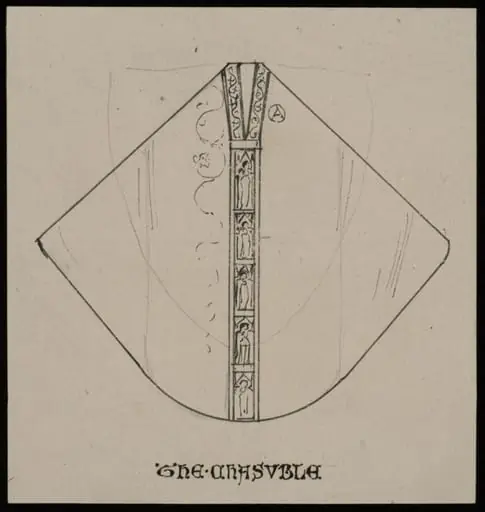
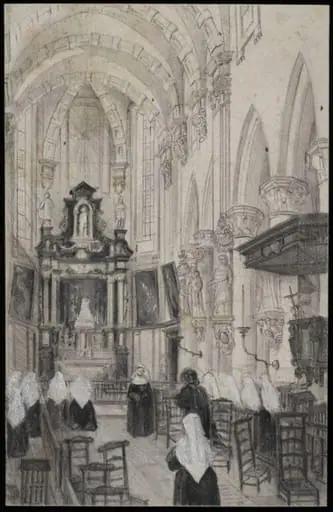
Charles Frederick Godbold Turner spent his life drawing the small stuff most people ignore: the worn stone of cathedral steps, the faded embroidery on an old priest’s robe, the way light slants through a church window.

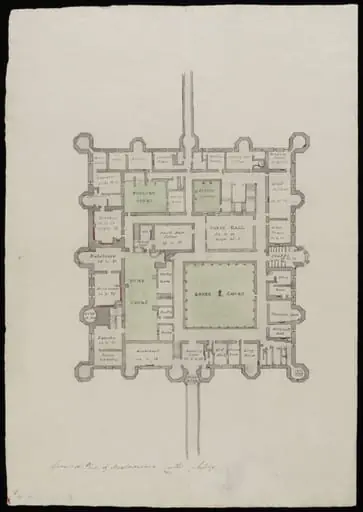 Ground plan, giving dimensions.
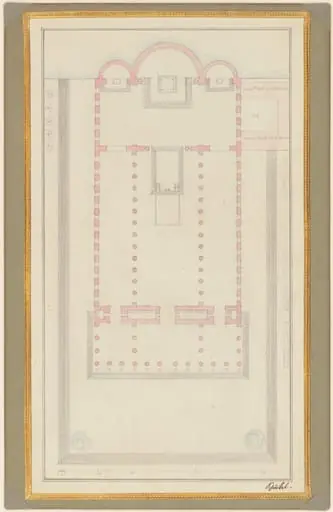 Ground Plan of a Cathedral for Berlin
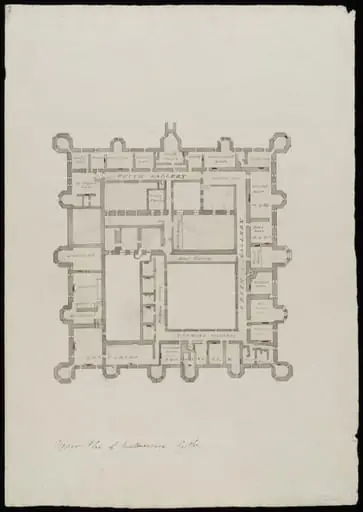 Upper plan.
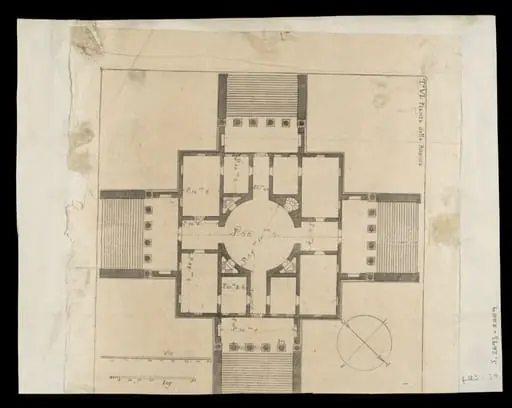 H Beard Print Collection
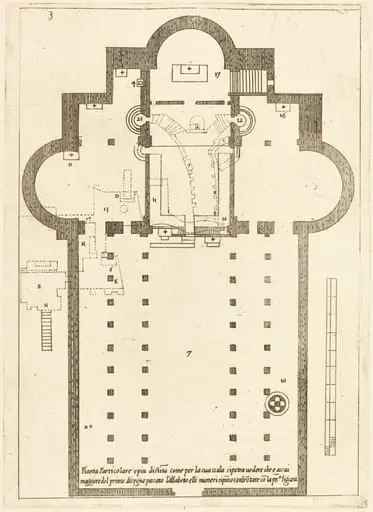 Plan of the Church of the Holy Manger
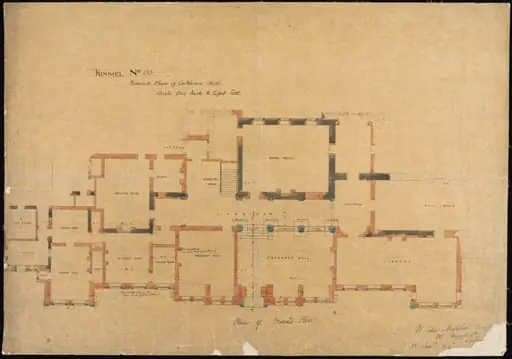 Kinmel Hall, drawing no. 133, revised plan for entrance hall
![Floor Plan [verso], by Filippo Juvarra](https://artifactworldgallery.com/img/filippo-juvarra--floor-plan-verso--77b62087740b42b9-w320.webp) Floor Plan [verso]
Floor Plan [verso]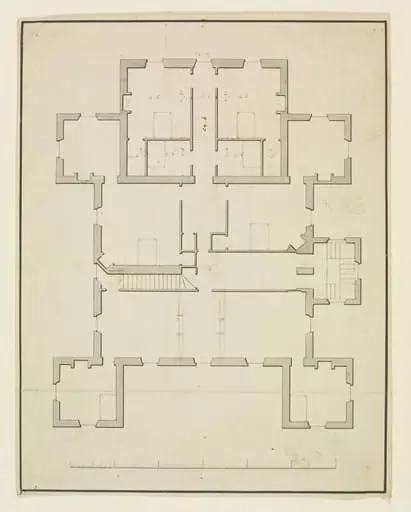 Plan of the Chamber floor, Combe Bank
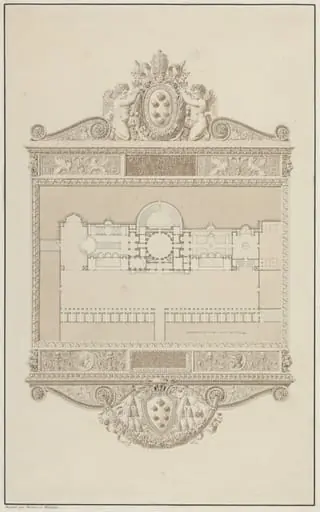 Villa Madama a Rome
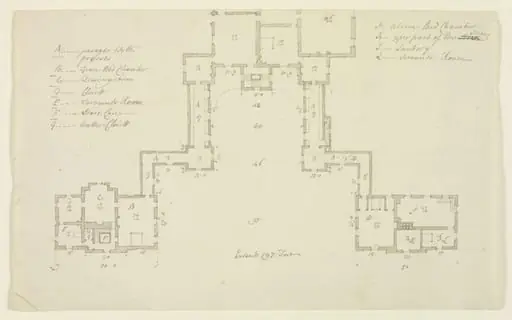 Sketch plan of additions to the North side of Combe Bank.
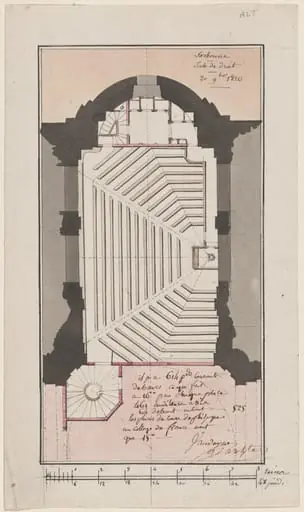 Study for the Renovation of a Law Classroom at the Sorbonne
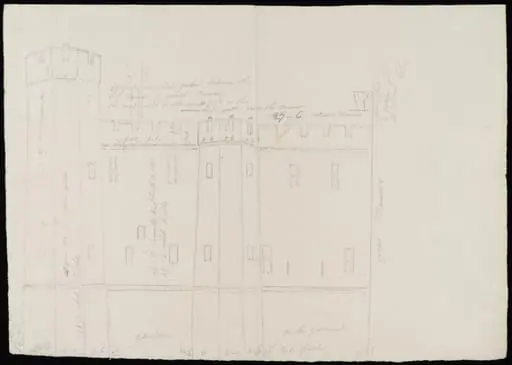 Elevation of part of the façade.