Artwork
The Franco-Italian Album
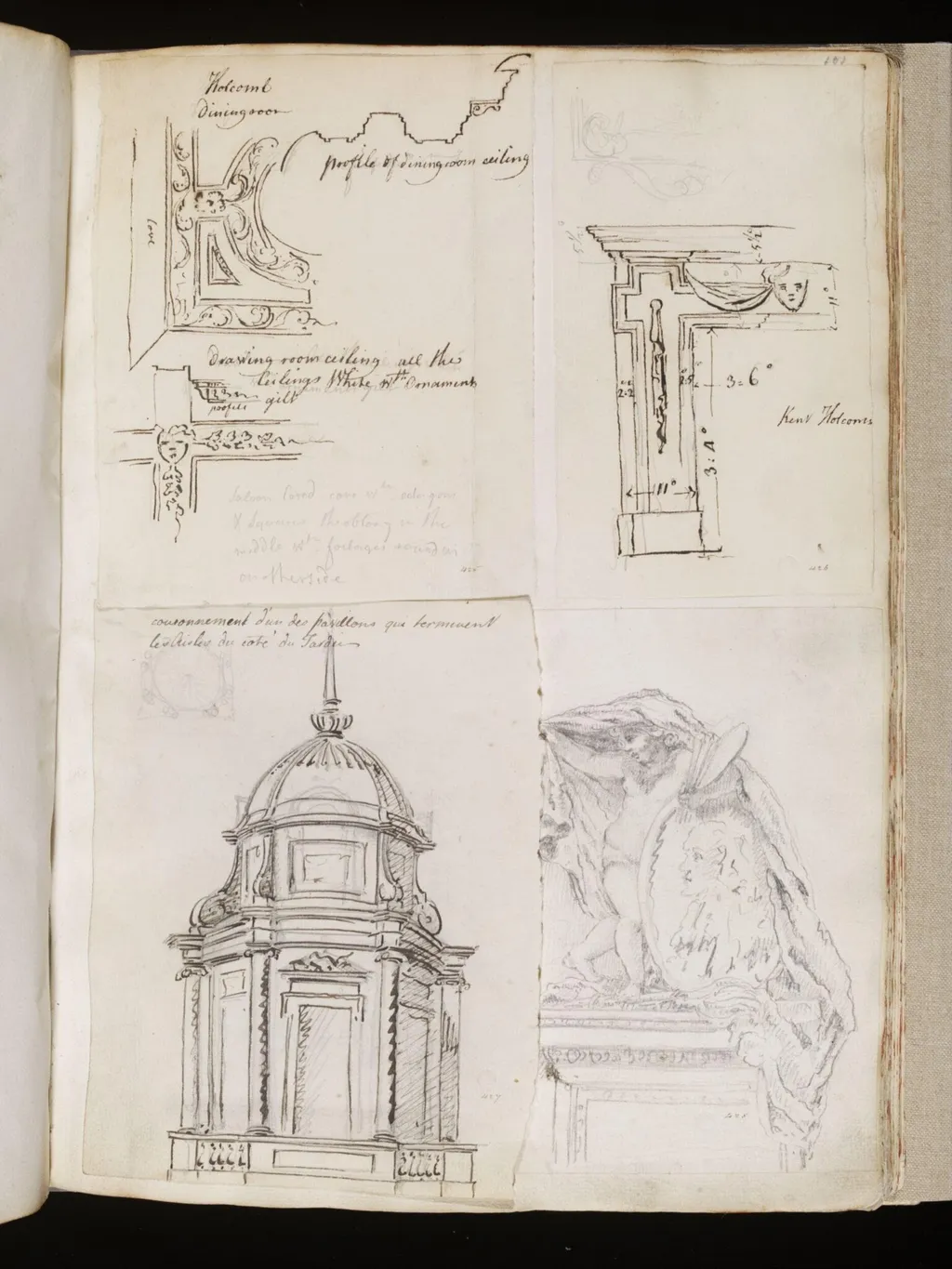
The Franco-Italian Album is a drawing by the Baroque artist Sir William Chambers. It dates from 1752 and is held in the collection of the Victoria and Albert Museum.
About this work
The Franco-Italian Album is a drawing by Sir William Chambers.
It was created between 1749 and 1755.
The drawing is part of the Baroque movement and shows architectural details.
Chambers was a British artist who worked on various architectural projects.
He likely drew this to plan or document a space.
Check out the Baroque movement to learn more about this style.
Overview
Executed in pencil and ink, these sheets record ornamental ceiling mouldings observed during Chambers’s travels in France and Italy.
The Franco-Italian Album is a series of architectural drawings by Sir William Chambers, produced between 1749 and 1755. Executed in pencil and ink, these sheets record ornamental ceiling mouldings observed during Chambers’s travels in France and Italy. The album functions as a visual reference for classical and Baroque decorative elements, compiled during his formative years as an architect before his return to Britain.
Subject & Meaning
The drawings focus on intricate ceiling profiles from aristocratic interiors in Paris and northern Italy, capturing the complexity of Baroque and early Rococo ornamentation. Rather than depicting entire rooms, Chambers isolates moulding profiles to study their proportions and rhythmic repetition. These details were likely intended as templates for future commissions, reflecting his interest in adapting continental European design to British architecture.
Technique & Style
Chambers rendered the mouldings with precise, measured lines, using fine pen and graphite to convey depth and shadow. The style is analytical rather than expressive, emphasizing clarity and structural logic. His approach aligns with the Enlightenment ideal of systematic observation, treating architectural detail as a subject worthy of scholarly documentation rather than mere decoration.
History & Provenance
Created during Chambers’s Grand Tour, the album remained in his personal collection and was later inherited by his family. It entered the Royal Collection in the 19th century, where it is now held as part of the archive of British architectural drawings. Its survival offers rare insight into the preparatory work of a key 18th-century architect before his major public commissions.
Context
In the mid-18th century, British architects sought to elevate domestic design by studying continental precedents. Chambers’s album reflects this trend, positioning him among a generation of designers who imported Italian and French classical motifs. His work contributed to the shift away from Palladian simplicity toward richer, more varied ornamentation in Georgian interiors.
Legacy
The Franco-Italian Album stands as a testament to Chambers’s methodical approach to architectural education. It influenced his later designs, including those for Somerset House and Kew Gardens, and remains a valuable resource for scholars studying the transmission of Baroque decorative language across Europe. The drawings illustrate how travel and documentation shaped British architectural identity in the Enlightenment era.
Artist & collection

Artist
Sir William Chambers was a Swedish-born British architect. Among his best-known works are Somerset House, the Gold State Coach and the pagoda at Kew. Chambers was a founder member of the Royal Academy.

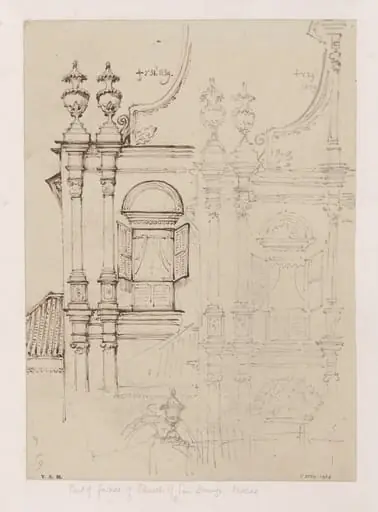 The church of S. Domingos, Macau
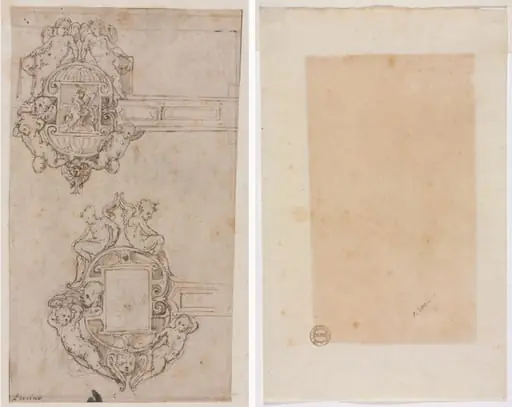 Design for Decorative Hinges (recto) Border Lines (verso)
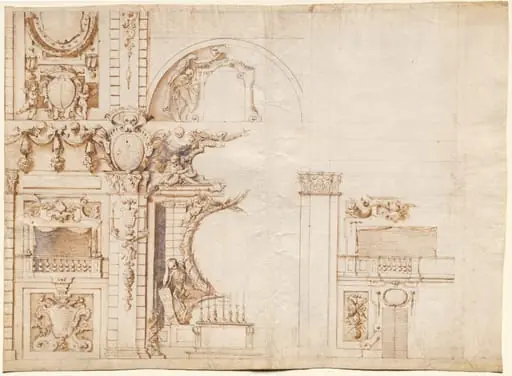 Study for the 'Essequie' Conducted in San Lorenzo, Florence, in 1637 in Honour of Holy Roman Emperor Ferdinand II
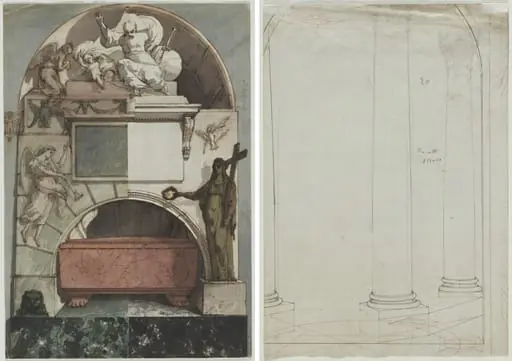 Design for a Fresco of an Artist's Tomb in the Certosa of Bologna (recto); Architectural Drawing of Columns (verso)
![Palatial Mantelpiece with Mercury and Hope [recto], by Austrian 16th Century](https://artifactworldgallery.com/img/austrian-16th-century--palatial-mantelpiece-with-mercury-and-hope-recto--35fcb50c5d0e2044-w320.webp) Palatial Mantelpiece with Mercury and Hope [recto]
Palatial Mantelpiece with Mercury and Hope [recto]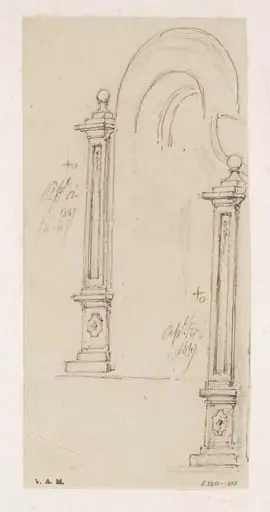 Drawings of a squared column and an arch
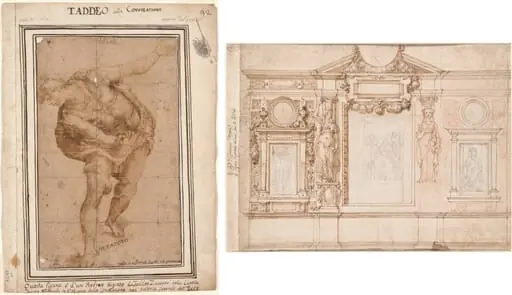 Un Hebreo, from Christ Shown to the People (recto); Design for a Wall Decoration with Pasted-in Sketches after Raphael (verso)
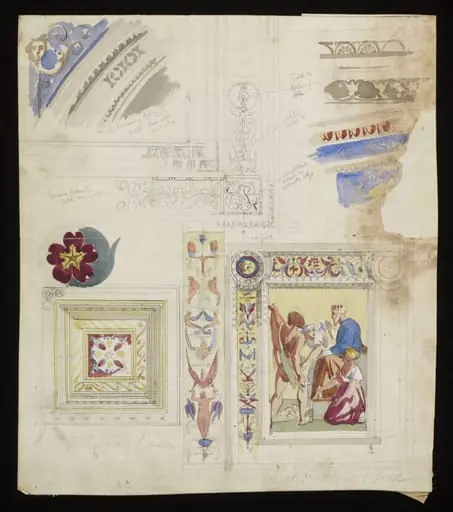 Study of frescos by Raphael on the ceiling of the Stanze della Segnatura in the Vatican Palace
![Palatial Mantelpiece with a Scene of Ancient Sacrifice [recto], by Austrian 16th Century](https://artifactworldgallery.com/img/austrian-16th-century--palatial-mantelpiece-with-a-scene-of-ancient-sacrifice-recto--6818e7e0eb258b13-w320.webp) Palatial Mantelpiece with a Scene of Ancient Sacrifice [recto]
Palatial Mantelpiece with a Scene of Ancient Sacrifice [recto]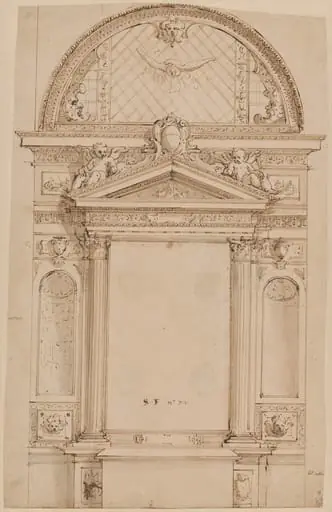 Design for an Altar
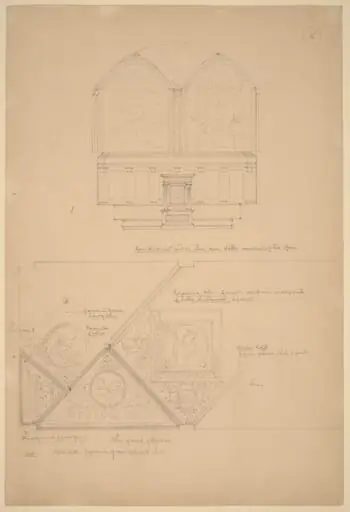 Study of an Altarpiece and Ceiling Panels
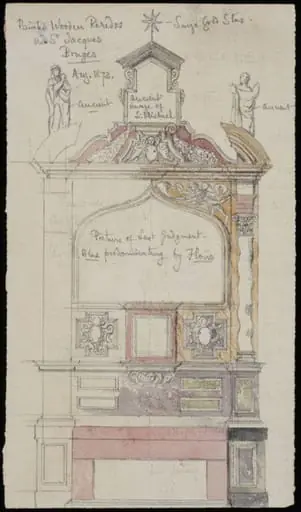 Reredos, fonts, a pulpit and monuments