Artwork
Inside the East End of Nettley Abbey
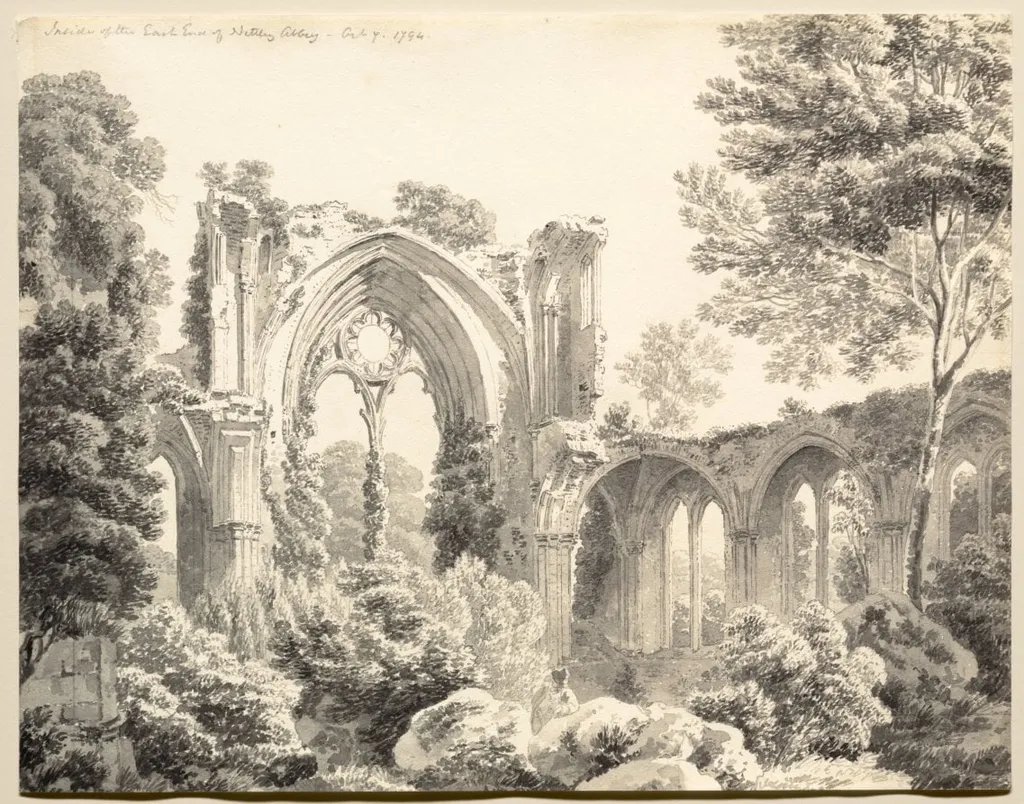
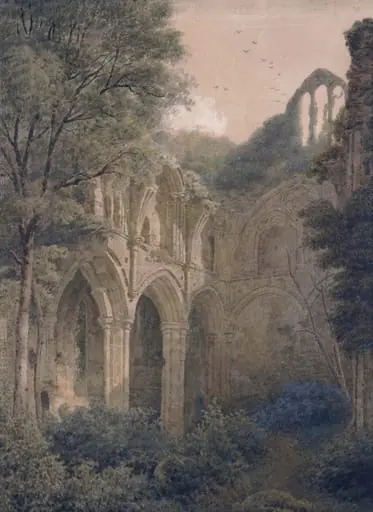
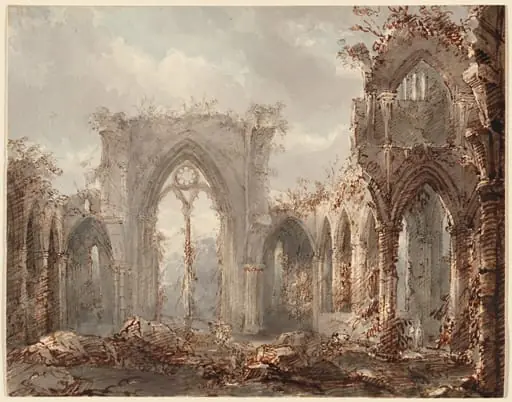
Inside the East End of Nettley Abbey is a drawing by the Romanticist artist Michel Angelo Rooker. It dates from 1794 and is held in the collection of the Cleveland Museum of Art. Michael Angelo Rooker’s drawing depicts the eastern end of Netley Abbey, a dissolved Cistercian monastery in Hampshire.
About this work
In the 1700s, people loved visiting ruins like this—they thought decay made nature look more powerful than human buildings.
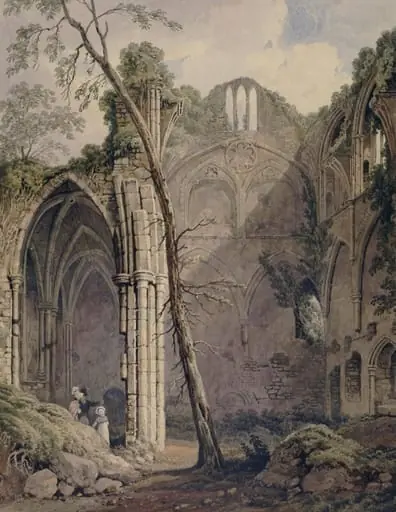
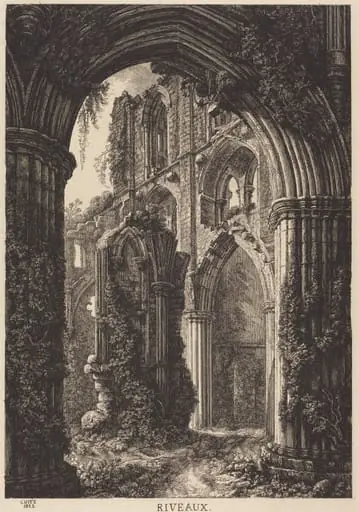
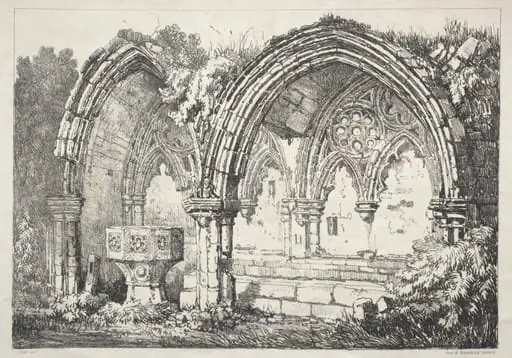
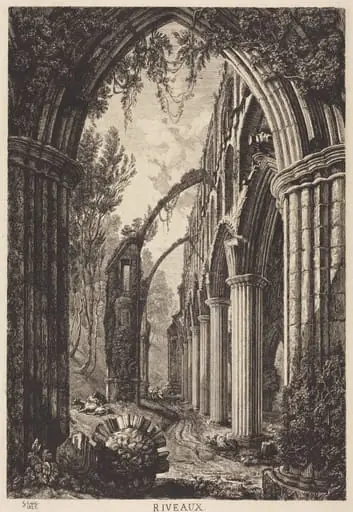
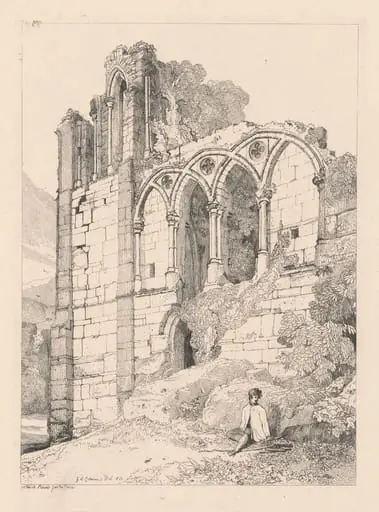
You see crumbling stone arches, ivy crawling up the walls, and sunlight slanting through empty windows. A few figures stand small in the shadows, dwarfed by the ruins.
This painting shows Netley Abbey, a real medieval monastery left to rot. In the 1700s, people loved visiting ruins like this—they thought decay made nature look more powerful than human buildings. Rooker painted it just as tourists and poets were flocking to these spots.
If you like this, look up *england, 18th century* for more paintings of old ruins.
Overview
Michael Angelo Rooker’s drawing depicts the eastern end of Netley Abbey, a dissolved Cistercian monastery in Hampshire. Rendered in the late 18th century, the work captures the site as it appeared after centuries of neglect, when abandoned religious structures had become subjects of aesthetic and philosophical interest. The drawing reflects a broader cultural fascination with decayed architecture, aligning with Romantic sensibilities that valued nature’s reclamation of human endeavor.
Subject & Meaning
The drawing presents the abbey’s crumbling stone arches and ivy-choked walls as symbols of temporal impermanence. Human figures, rendered small and shadowed, emphasize the scale of nature’s quiet dominance over once-grand religious architecture. The scene evokes contemplation of mortality and the futility of earthly ambition, echoing contemporary literary descriptions that likened the ruin to a lost paradise.
Technique & Style
Rooker employs precise pen and ink lines to delineate architectural fragments, while subtle washes suggest depth and shifting light. The composition directs attention to the play of sunlight filtering through broken windows, contrasting the solidity of stone with the organic tendrils of ivy. The delicate handling of texture and scale reflects topographical drawing traditions, adapted here to convey mood rather than mere documentation.
History & Provenance
Netley Abbey was dissolved in 1536 under Henry VIII’s suppression of the monasteries. By the mid-18th century, its ruins had become a destination for travelers and artists drawn to the picturesque. Rooker’s drawing, likely made during a visit around 1770, responds to earlier accounts by figures like Horace Walpole, whose poetic descriptions helped shape public perception of such sites as emotionally resonant landscapes.
Context
In the 18th century, England’s ruined abbeys and castles were increasingly visited as sites of emotional and intellectual reflection. The rise of Romanticism encouraged viewing decay not as loss, but as a natural, even sublime, process. Artists and writers alike used these ruins to meditate on time, memory, and the relationship between civilization and the natural world, making Netley a frequent subject in visual and literary culture.
Legacy
Rooker’s drawing contributes to a visual archive of Britain’s medieval past as reinterpreted through Enlightenment and Romantic lenses. It helped standardize the aesthetic of the picturesque ruin, influencing later topographical artists and photographers. The work remains a quiet testament to how cultural values can transform physical decay into a medium for philosophical inquiry.
Artist & collection