Artwork
Junction of Severn and Wye
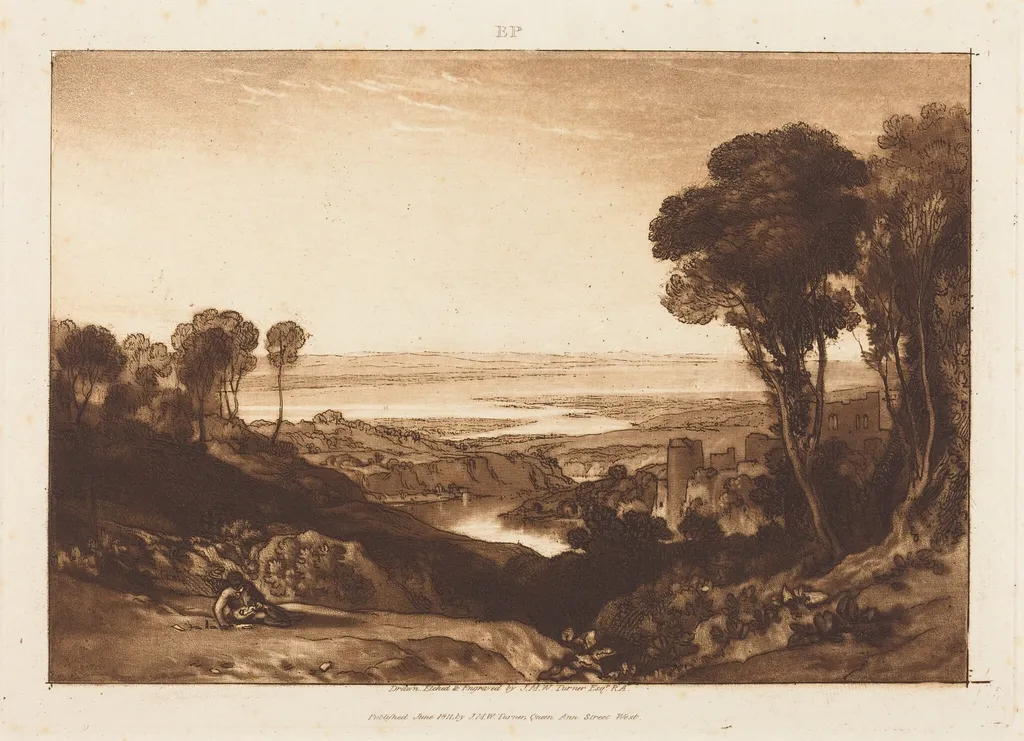
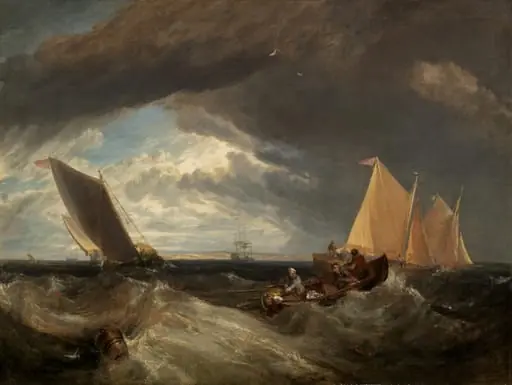
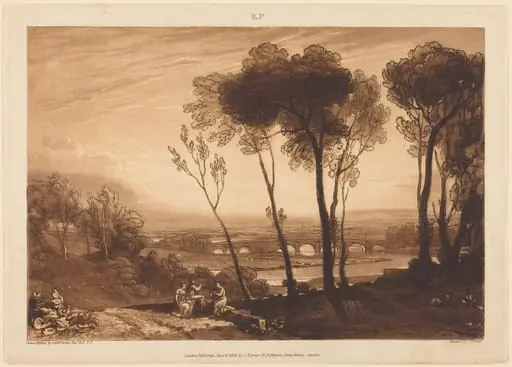
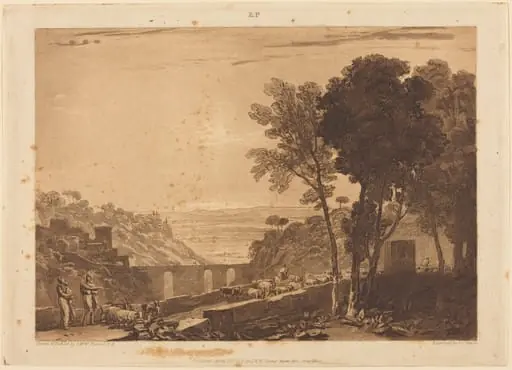
Junction of Severn and Wye is an ink print by the Romanticist artist Joseph Mallord William Turner. It dates from 1811 and is held in the collection of the National Gallery of Art.
About this work
Overview
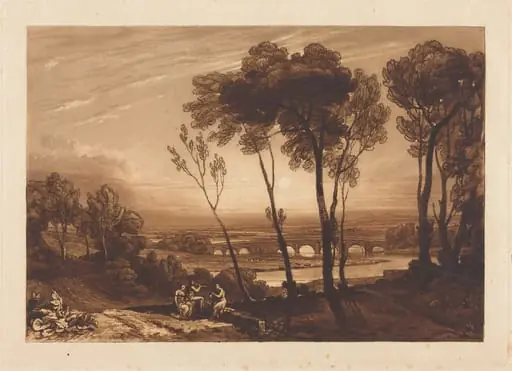
Junction of Severn and Wye is a 1811 print by J. M. W. Turner that combines etching, mezzotint and aquatint techniques. The work portrays a tranquil river scene, likely representing the confluence of the Severn and Wye rivers, framed by wooded hills and a distant architectural structure.
Subject & Meaning
The composition balances natural and built elements: a flowing waterway bordered by trees and rising terrain, with a castle or church perched on a hill in the background. The juxtaposition suggests a harmonious relationship between landscape and human presence, evoking a reflective, almost nostalgic mood.
Technique & Style
Turner employs a layered approach, using the fine lines of etching for detail, mezzotint for rich tonal gradations, and aquatint to achieve broad washes of colour. This combination creates atmospheric depth, with luminous highlights and deep shadows that model the sky, water and foliage.
History & Provenance
Created in 1811, the print reflects Turner’s early experimentation with mixed printmaking processes. It was produced during a period when the artist was expanding his repertoire beyond watercolour, seeking new ways to capture light and atmosphere on paper.
Context
The work aligns with the Romantic fascination for wild scenery and the sublime, a trend prevalent in early‑19th‑century British art. Turner’s focus on light, colour contrast and emotive landscape places the piece within this broader cultural movement.
Own this work as a print
Artist & collection
Artist
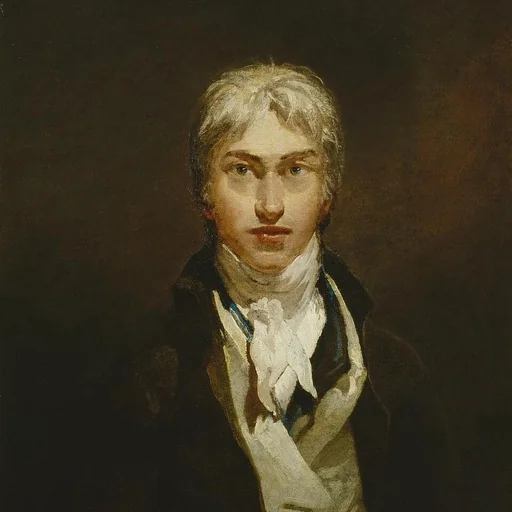
Joseph Mallord William Turner was born in 1775 at Maiden Lane, Covent Garden, where his father kept a barber and wig-making shop.