Artwork
The Vision of Sin
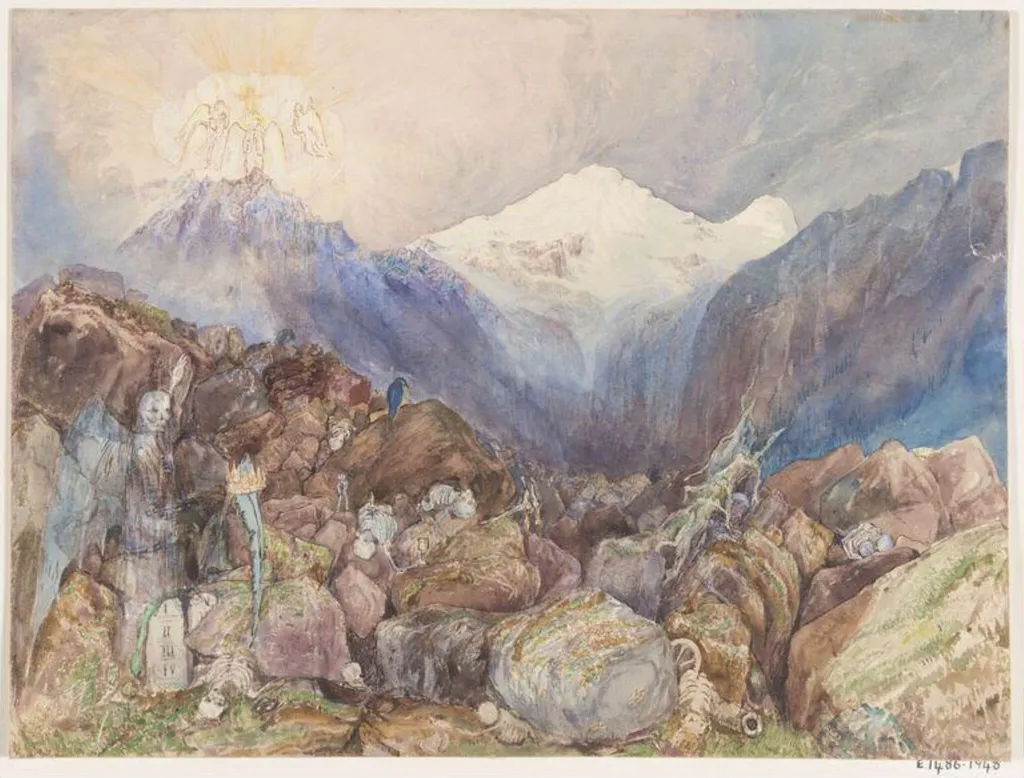
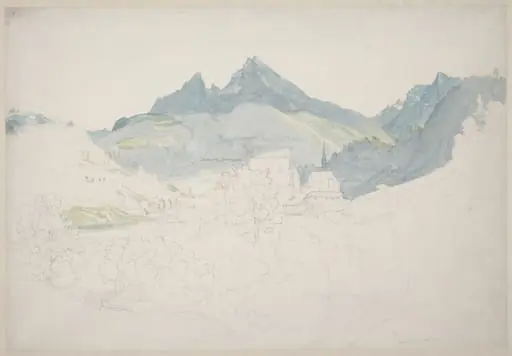
The Vision of Sin is a drawing by the Romanticist artist Richard St. John Tyrwhitt. It dates from 1827 and is held in the collection of the Victoria and Albert Museum. A pencil or ink drawing portrays a rugged mountain pass, its steep terrain strewn with scattered boulders and worn rock faces.
About this work
Overview
A pencil or ink drawing portrays a rugged mountain pass, its steep terrain strewn with scattered boulders and worn rock faces.
A pencil or ink drawing portrays a rugged mountain pass, its steep terrain strewn with scattered boulders and worn rock faces. A lone skeleton lies near the path, while several figures traverse the slope—some climbing, others pausing. A distant tower rises above the horizon, framed by a pale, even sky. The composition emphasizes the physical difficulty of the ascent and the quiet presence of mortality within the landscape.
Subject & Meaning
The scene suggests a metaphorical journey, where the skeleton and isolated travelers evoke themes of transience and human endurance. The path’s harshness implies life’s arduous passage, while the tower may symbolize an unreachable goal or spiritual destination. Death is not depicted as a personified figure but as an embedded presence, woven into the terrain itself, reinforcing a somber, contemplative tone.
Technique & Style
The artist employs fine, deliberate strokes to render the rough textures of stone and the subtle gradations of shadow. Soft tonal variations in browns and grays dominate, avoiding bold contrasts in favor of muted harmony. The brushwork or pencil lines emphasize tactile surfaces—cracked rock, uneven ground—while the figures are rendered with minimal detail, enhancing their anonymity and the scale of the environment.
History & Provenance
The drawing’s origin is unattributed in available records, though its style aligns with early 19th-century Romantic draftsmanship. It likely stems from a private sketchbook or study, possibly made during travel through alpine regions. No documented exhibition or ownership history precedes its current location, suggesting it remained in the artist’s circle or was acquired posthumously.
Context
Created during a period when artists increasingly turned to nature as a vessel for existential reflection, the work reflects Romanticism’s preoccupation with solitude, sublime landscapes, and the fragility of life. Unlike dramatic depictions of storms or ruins, this piece conveys quiet unease through restraint, aligning with lesser-known but significant strands of the movement focused on introspective solitude.
Legacy
Though not widely reproduced or studied, the drawing contributes to a quieter tradition within Romantic drawing—one that favors understated symbolism over theatricality. Its emphasis on texture, scale, and implicit mortality influenced later artists seeking to convey psychological depth through landscape without overt narrative. It remains a quiet testament to the era’s contemplative engagement with nature and death.
Own this work as a print
Artist & collection
Artist

 Fantastic Mountainous Landscape with a Starry Sky
 An Alpine pass
 Untitled
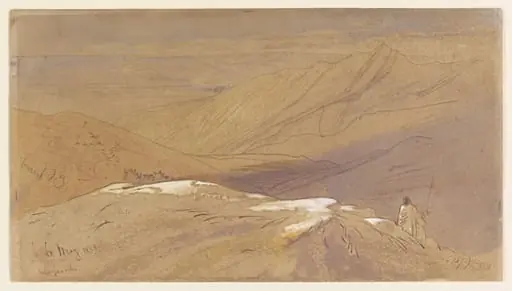 Near Jericho
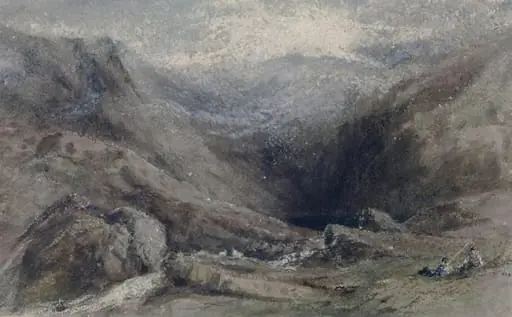 Helvellyn
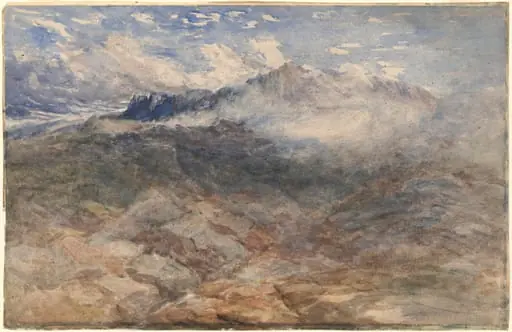 Mountain Heights, Cader Idris
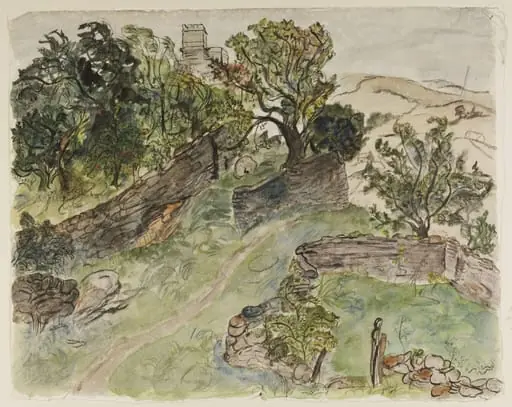 The Yard of the Abbey Arms Hotel, Festiniog, Merionethshire
 Rydal Water
 Aboo Simbel
 Mountain View at Bormio (from Switzerland 1869 Sketchbook)
 In the Alps
 Berchtesgaden with the Watzmann Peak in the Distance