Artwork
Near Jericho
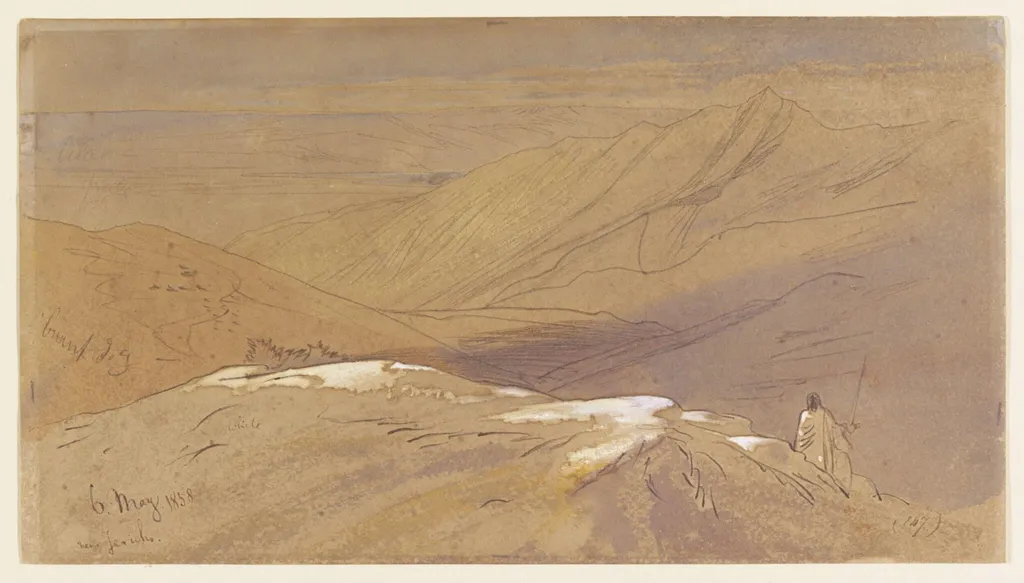
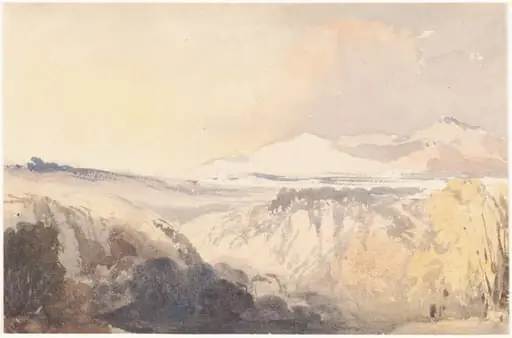
Near Jericho is a watercolor work on paper by the Impressionist artist Edward Lear. It dates from 1858 and is held in the collection of the Victoria and Albert Museum.
About this work
The landscape is made of rough, earthy tones—browns and tans—with patches of snow clinging to the cliffs.
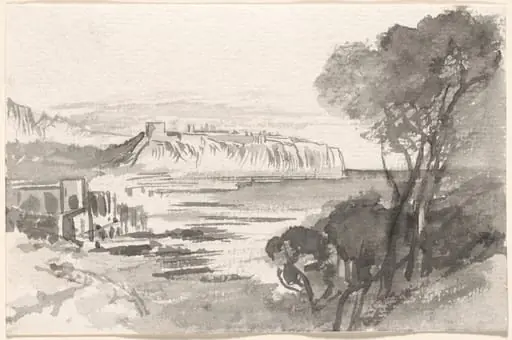
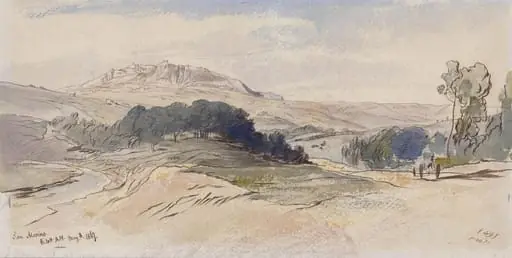
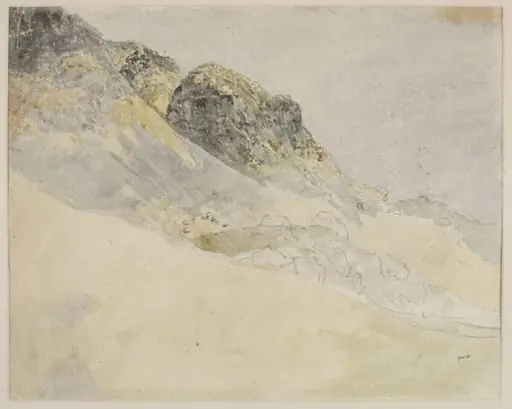
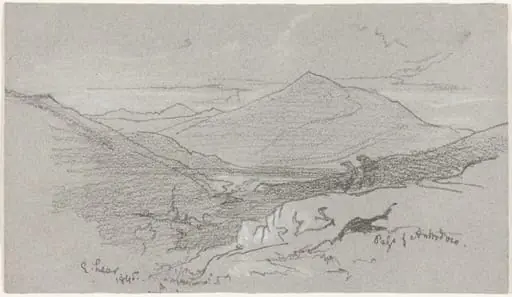
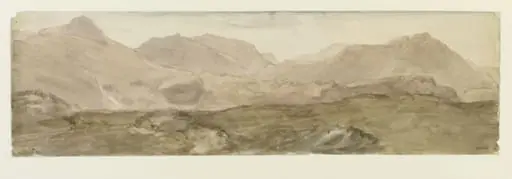
This sketch shows a lone figure standing on a rocky hillside, looking out over a dry, winding valley. The landscape is made of rough, earthy tones—browns and tans—with patches of snow clinging to the cliffs. The artist used loose, quick lines to capture the uneven terrain and distant hills.
The small figure feels tiny against the vast, empty land, making the scene feel quiet and remote. The date "6 May 1858" is written in the corner, hinting this was drawn on the spot.
Next, look up Realism to see how artists like this one captured everyday scenes with honesty.
Overview
Edward Lear’s 1858 watercolour, titled Near Jericho, records the northern shoreline of the Dead Sea with the Moab hills rising in the distance. Executed during his journey from Petra back to Jerusalem, the sketch captures a solitary figure perched on a rocky slope, surveying a dry, winding valley under a sky marked by scattered snow on the cliffs.
Subject & Meaning
The composition juxtaposes a diminutive human presence against an expansive, desolate landscape, emphasizing the isolation and quiet of the region. The lone figure, rendered in quick, gestural strokes, underscores the scale of the terrain and invites contemplation of the harsh, arid environment surrounding the Dead Sea.
Technique & Style
Lear employs loose, rapid lines typical of field watercolours, using a limited palette of earthy browns, tans, and muted whites to convey the rocky ground and occasional snow patches. The swift application of pigment suggests an on‑site study, prioritising immediacy and atmospheric effect over detailed rendering.
History & Provenance
The work bears the date “6 May 1858” in its lower corner, confirming its creation during Lear’s 1858 travels. It entered the public collection after being purchased from the dealers Abbott & Holder in January 1962 by Rodney Searight for £16.
Context
Created during the mid‑nineteenth‑century surge of travel illustration, Lear’s watercolour reflects the period’s interest in documenting remote landscapes with observational accuracy. The depiction aligns with contemporary realist tendencies to portray everyday scenes without romantic embellishment.
Artist & collection
Artist
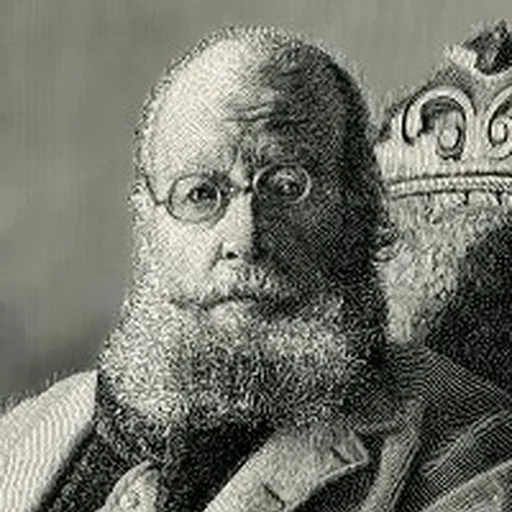
Edward Lear (12 May 1812 – 29 January 1888) was an English artist, illustrator, musician, author and poet, who is known mostly for his literary nonsense in poetry and prose and especially his limericks, a form he popularised but which term…