Artwork
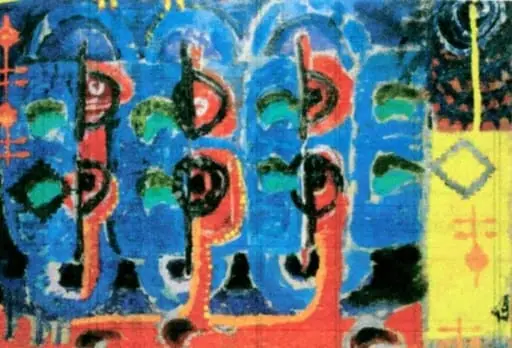
Taina păunilor
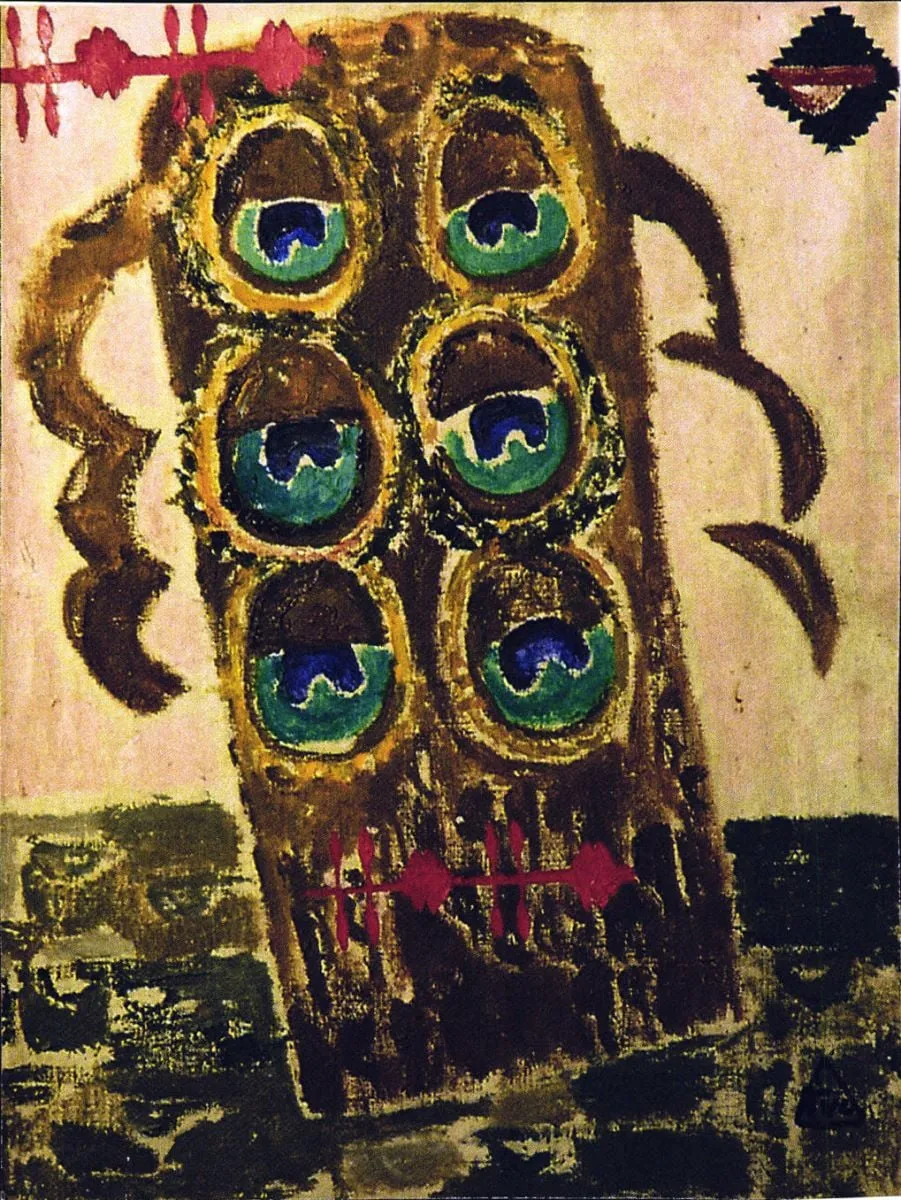
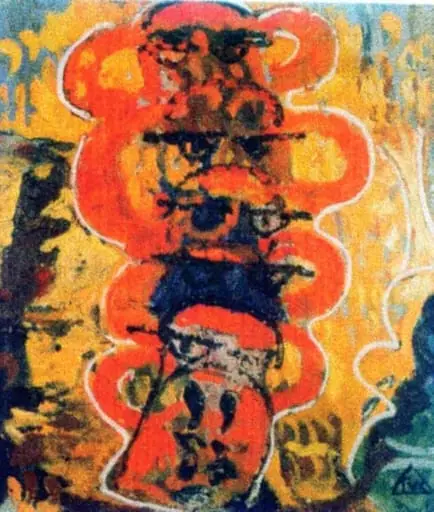
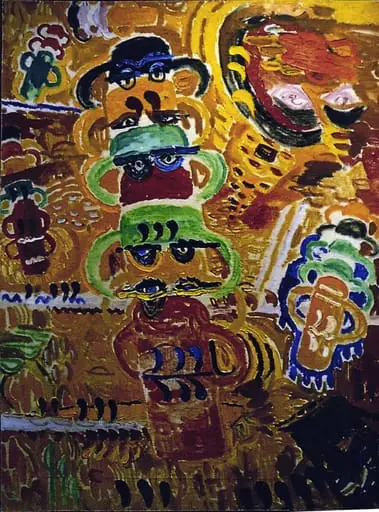
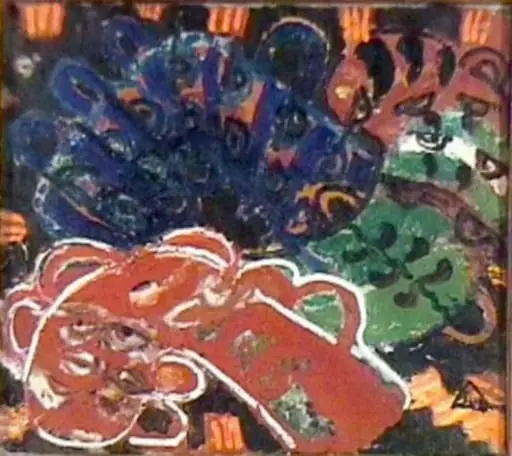
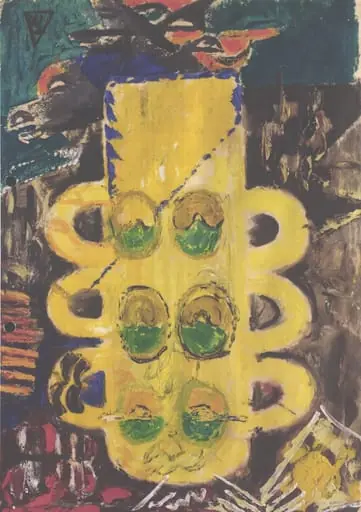
Taina păunilor is a print by Ion Țuculescu. It dates from 1946 and is held in the collection of the Art museum of Craiova.
About this work
Overview
Taina păunilor, created around 1946 by Romanian artist Ion Țuculescu, is an abstract composition held in the collection of the Museum of Ethnography.
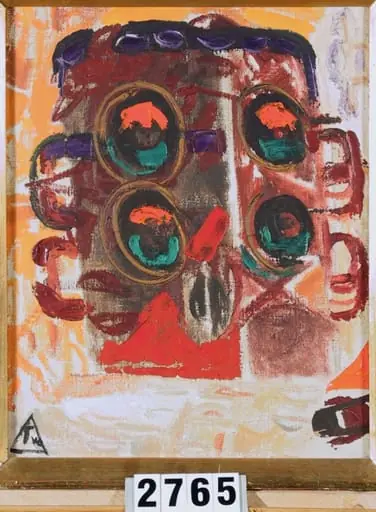
Taina păunilor, created around 1946 by Romanian artist Ion Țuculescu, is an abstract composition held in the collection of the Museum of Ethnography. The work presents a singular, stylized figure rendered in bold, non-naturalistic colors and geometric forms. Its abstract language diverges from representational norms, emphasizing symbolic structure over realistic depiction. The piece reflects Țuculescu’s engagement with modernist tendencies during the postwar period in Romania.
Subject & Meaning
The central figure, with six green eyes arranged in two vertical columns and a body composed of vertical brown stripes, resists literal interpretation. Its form suggests a hybrid or mythic presence, possibly evoking spiritual or folkloric motifs. The absence of facial features and the proliferation of eyes may imply heightened perception or inner vision. The red horizontal line and dark upper-right shape introduce tension, hinting at unseen forces or boundaries within the composition.
Technique & Style
Țuculescu employs flat planes of color—yellow, brown, black, red, and green—to construct a rhythmic, almost mosaic-like surface. The figure’s body is segmented into uniform vertical bands, while the eyes are rendered as precise, uniform ovals. Brushwork is deliberate but unmodulated, favoring clarity over texture. The style aligns with abstract expressionism in its emotional intensity, yet retains a structured, almost schematic quality that distinguishes it from Western counterparts.
History & Provenance
Created in the immediate aftermath of World War II, the painting entered the Museum of Ethnography’s collection during a period when Romanian institutions were redefining national cultural identity. Its acquisition suggests an interest in works that blended modernist experimentation with indigenous or folk-inspired symbolism. No documented exhibition history exists prior to its inclusion in the museum, indicating it may have been acquired directly from the artist’s studio.
Context
In mid-1940s Romania, artists navigated shifting political pressures while exploring personal visions. Țuculescu’s work, though abstract, resonated with broader regional interests in symbolic and archetypal imagery. The painting’s use of color and form echoes both European modernism and local decorative traditions, positioning it at an intersection of international trends and national cultural inquiry during a time of ideological constraint.
Legacy
Taina păunilor remains a distinctive example of Romanian abstract art from the postwar era. While Țuculescu is not widely known outside Romania, this work contributes to the understanding of how local artists adapted modernist vocabularies under complex socio-political conditions. Its continued presence in the Museum of Ethnography underscores its role as a bridge between ethnographic themes and avant-garde expression in 20th-century Romanian art.
Artist & collection

Artist
Ion Țuculescu was a Romanian expressionist and abstract oil painter, although professionally he worked as a biologist and physician.