Artwork
Untitled
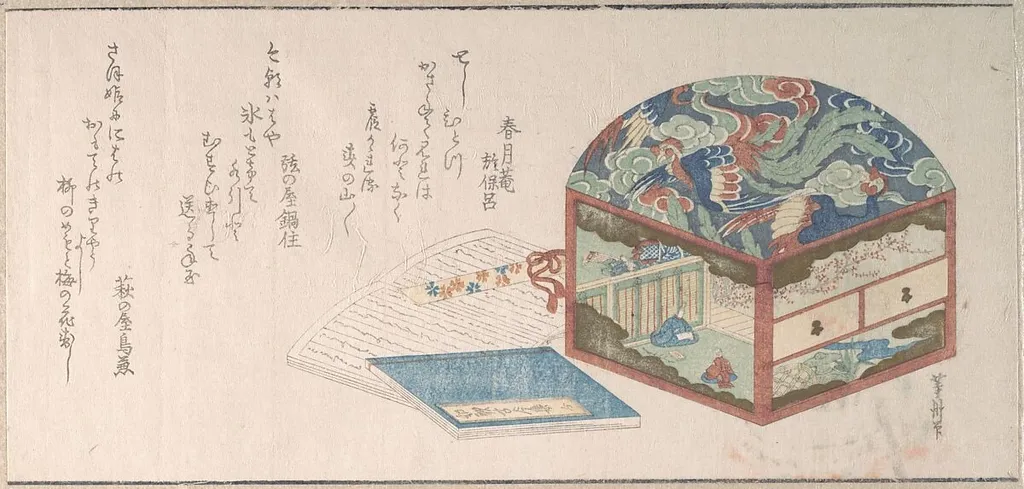
Untitled is an ink print by the Romanticist artist Uematsu Tōshū. It dates from 1804 and is held in the collection of the Metropolitan Museum of Art.
About this work
Overview
Created in 1804 by Uematsu Tōshū, this surimono is a small woodblock print on paper, combining ink and color. Designed as a luxury item for private exchange among poetry circles, it features intricate detail within a compact format. The work is part of The Metropolitan Museum of Art’s collection, representing the refined aesthetic of early 19th-century Japanese print culture.
Subject & Meaning
Together, the imagery and text evoke themes of seclusion, nature’s harmony, and the quiet joy of private artistic exchange.
The print depicts a miniature wooden box, its interior revealing a tranquil garden with a bridge, rocks, and a pond. The lid displays a stylized sky and mountain scene, suggesting a contained universe. Inscriptions encircle the edges, likely poetic verses that invite contemplation. Together, the imagery and text evoke themes of seclusion, nature’s harmony, and the quiet joy of private artistic exchange.
Technique & Style
Executed in woodblock printing, the work uses precise carving and layered pigments to achieve vivid contrasts against the dark wood grain. Fine lines define architectural and natural elements, while subtle color gradations enhance depth. The composition is densely packed yet balanced, reflecting the surimono tradition of meticulous craftsmanship and intimate scale, tailored for discerning viewers.
History & Provenance
Produced in 1804, this print belongs to the surimono genre, privately commissioned for special occasions such as New Year’s or poetic gatherings. It passed into the collection of The Metropolitan Museum of Art, where it remains as a rare example of Edo-period amateur print culture. Its survival reflects its value to collectors who prized such works for their artistry and literary associations.
Context
Surimono emerged in late 18th-century Japan as non-commercial prints, often distributed among members of poetry societies. Unlike mass-produced ukiyo-e, they emphasized literary allusion, refined technique, and exclusive audiences. This piece reflects the era’s appreciation for subtle beauty, where art, poetry, and craftsmanship intertwined in small, personal objects meant for quiet appreciation.
Legacy
Though not widely known outside specialist circles, this print exemplifies the sophistication of Edo-period private printmaking. Its survival and display in major institutions highlight the enduring interest in intimate, literary art forms. It continues to inform scholarly understanding of how art functioned within social and poetic networks beyond public markets.
Artist & collection

 Untitled
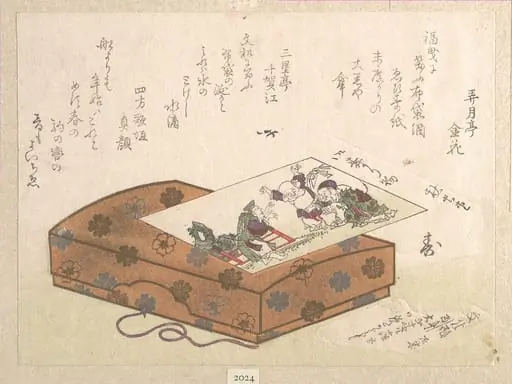 Untitled
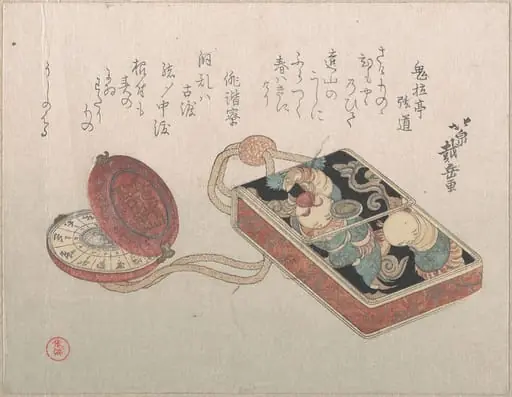 胴乱印籠と懐中時計根付『春雨集』 摺物帖|Dōran (Square Leather Box Used as an Inrō) with a Watch as a NetsukeFrom the Spring Rain Collection (Harusame shū), vol. 3
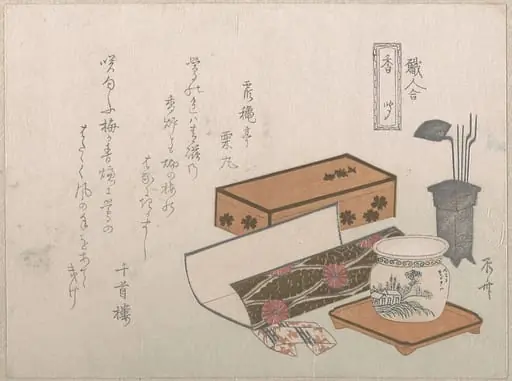 「職人合香聞 」|Utensils for the Incense Ceremony, “Incense Master” (Kōgiki), from the series An Array of Artisans
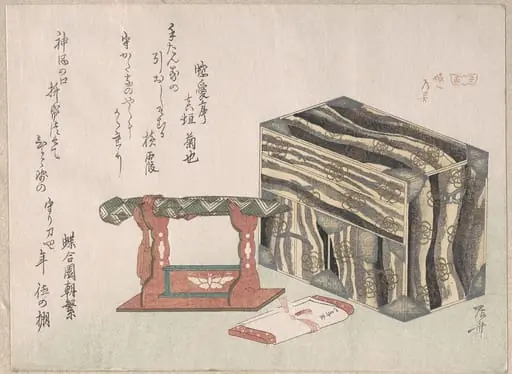 Untitled
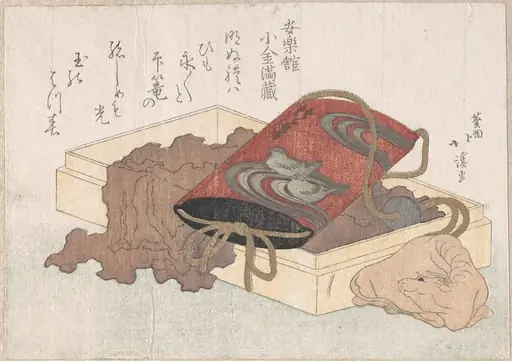 印籠と牛根付『春雨集』 摺物帖|Lacquer Inrō with Waterbirds and Ox-shaped Netsuke in a BoxFrom the Spring Rain Collection (Harusame shū), vol. 3
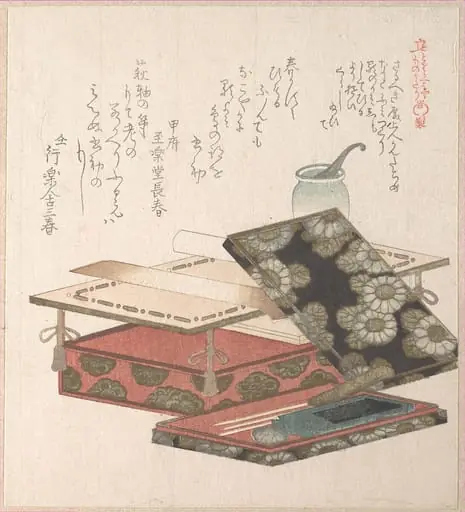 Untitled