Artwork
Untitled
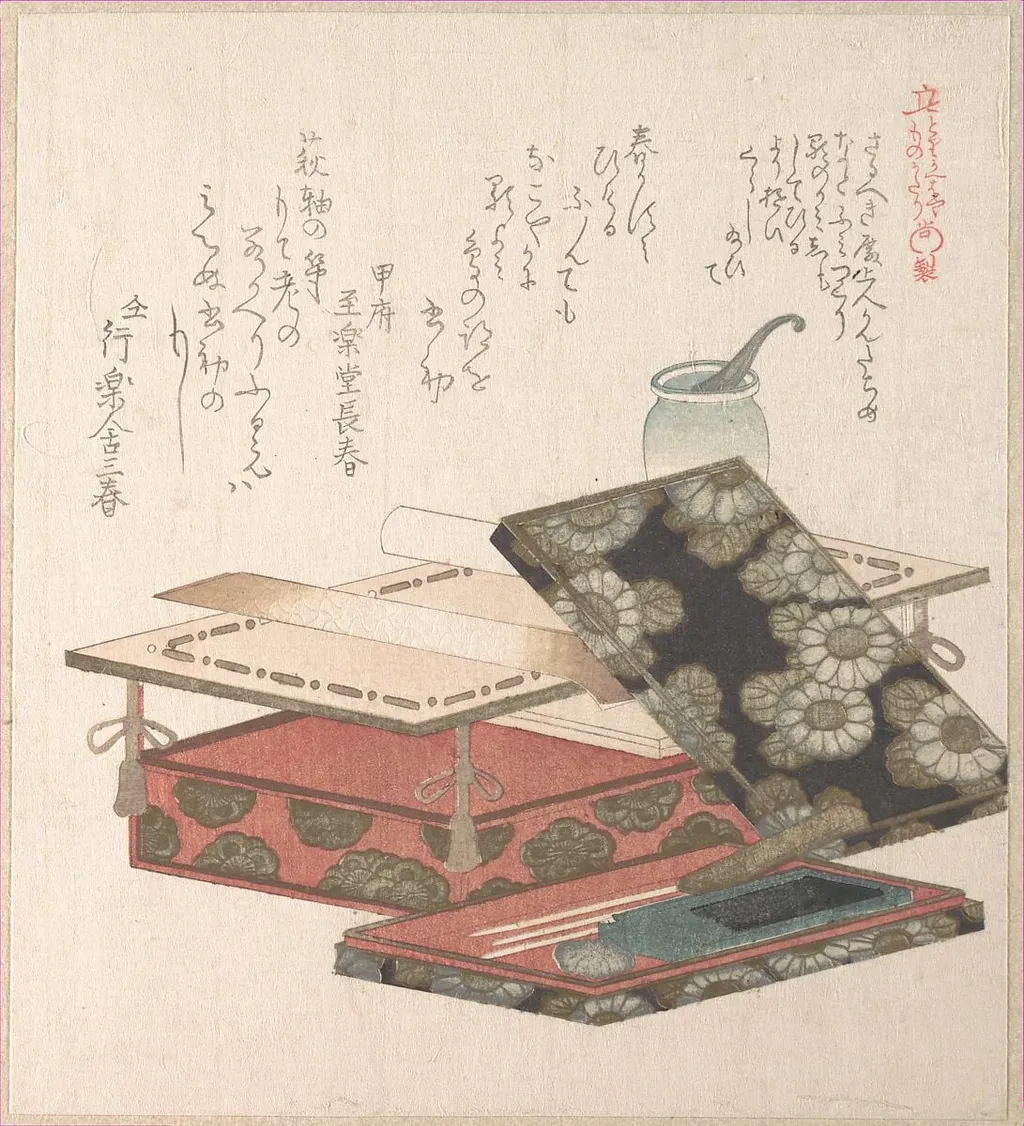
Untitled is an ink print by the Romanticist artist Kubo Shunman. It is held in the collection of the Metropolitan Museum of Art.
About this work
Overview
The composition emphasizes stillness and subtlety, reflecting the intimate, ceremonial nature of its intended audience and purpose.
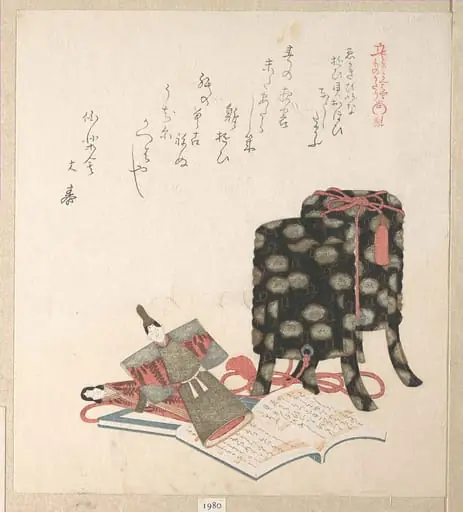
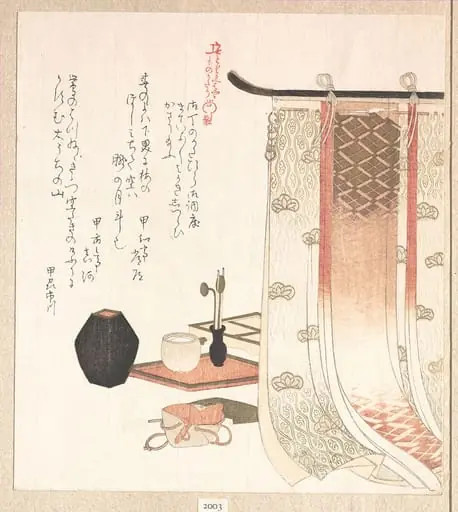
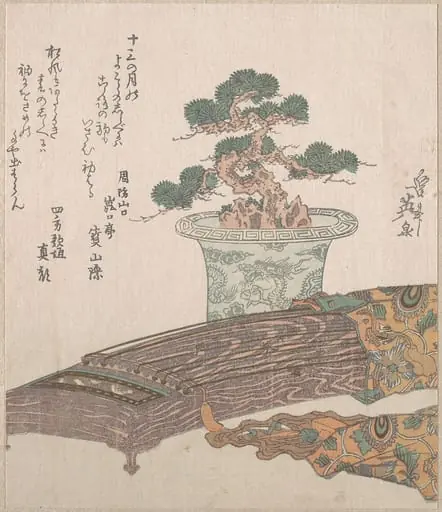
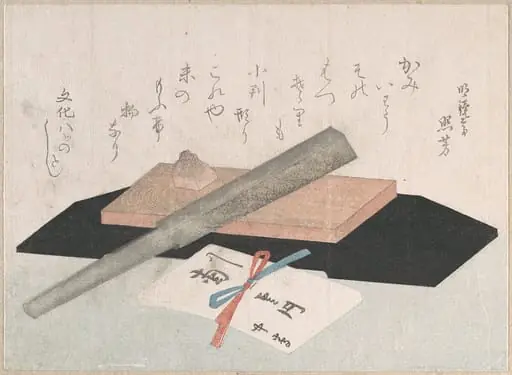
This woodblock print, created around 1900 by Kubo Shunman, belongs to the surimono tradition—a refined genre of Japanese prints produced for private exchange rather than commercial sale. Executed in ink and color on paper, it presents a quiet still life of calligraphic tools arranged on a small wooden table. The composition emphasizes stillness and subtlety, reflecting the intimate, ceremonial nature of its intended audience and purpose.
Subject & Meaning
The print features a writing set: brushes, ink stones, and a folded letter resting on a plain wooden surface. These objects suggest the quiet rituals of literary and poetic life in late Edo-period Japan. The folded letter implies communication, perhaps a personal message, while the tools signify the act of writing itself. Together, they evoke contemplation, refinement, and the private sphere of scholarly expression.
Technique & Style
Shunman carved each line by hand into woodblocks, then applied ink and color with precision before pressing paper onto the wet surface. The dark background enhances the luminous quality of the objects, achieved through delicate cross-hatching and graded ink tones. The paper retains its crispness and texture after two centuries, a testament to the care in printing and the quality of materials used in surimono production.
History & Provenance
As a surimono, this work was likely commissioned by a poet or scholar for a special occasion, such as a New Year’s greeting or literary gathering. These prints were distributed in small numbers among close circles, making them rare and personal. Its survival in good condition suggests it was carefully preserved, possibly within a family or collection devoted to the arts of writing and print.
Context
Surimono emerged in the late 18th century as luxury prints, often commissioned by poetry societies or wealthy patrons. Unlike mass-produced ukiyo-e, they prioritized artistic experimentation and textual integration. This piece reflects the cultural value placed on calligraphy and literary exchange in Edo-period Japan, where the tools of writing were imbued with symbolic weight beyond their practical use.
Legacy
Though not widely known outside specialist circles, this print exemplifies the quiet sophistication of surimono. Its enduring physical integrity and restrained aesthetic continue to inform studies of Japanese print culture, particularly the intersection of literature, materiality, and craftsmanship. It stands as a quiet artifact of a private artistic world, preserved through meticulous technique and thoughtful curation.
Artist & collection


 Untitled
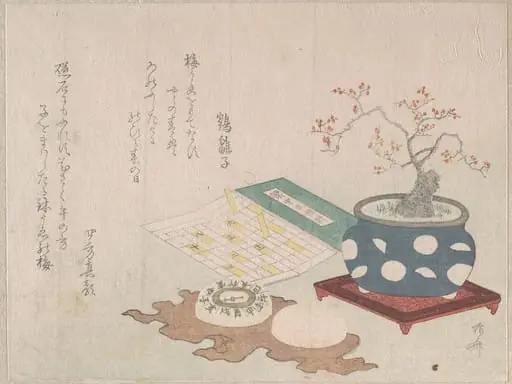 鉢梅、懐中日時計、羅針盤|Bonsai Plum, Compass, and Pocket Sundial with Design of Calendar, from Spring Rain Surimono Album (Harusame surimono-jō, vol. 3)
 Untitled
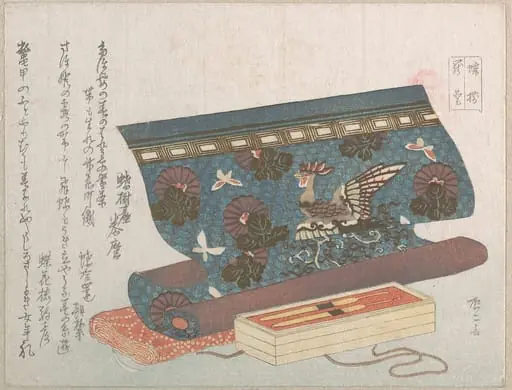 『蝶揃・寵愛』帯と簪|Roll of Cloth for an Obi and Tortoise-shell Hair Ornaments (“Presents for One’s Beloved”), from the Butterfly Series, from Spring Rain Surimono Album (Harusame surimono-jō, vol. 3)
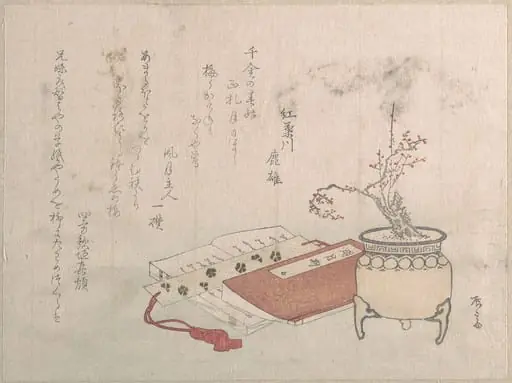 Untitled
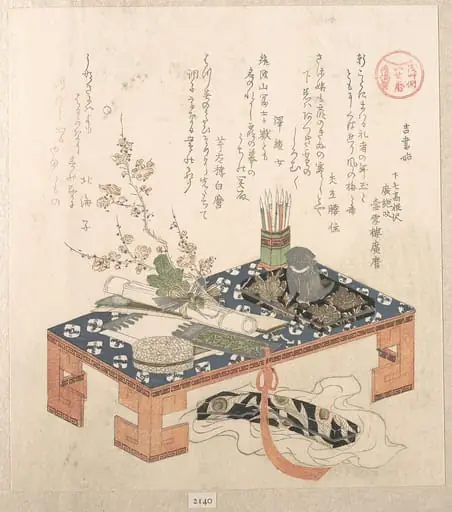 『浅草側いせ暦』 文房具と梅熨斗『春雨集』 摺物帖 |“Desk with Writing Set and Plum Flowers,” from the series Ise Calendars for the Asakusa Group (Asakusa-gawa Ise goyomi)From the Spring Rain Collection (Harusame shū), vol. 2
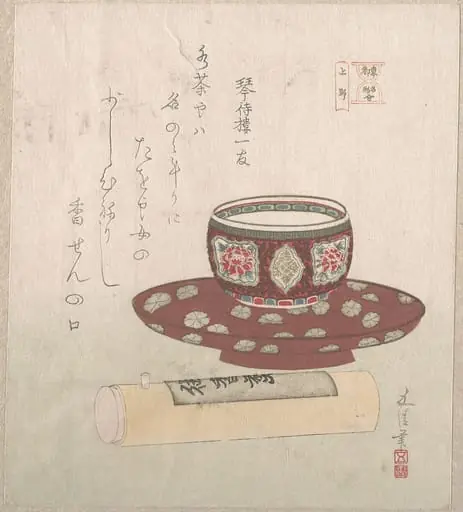
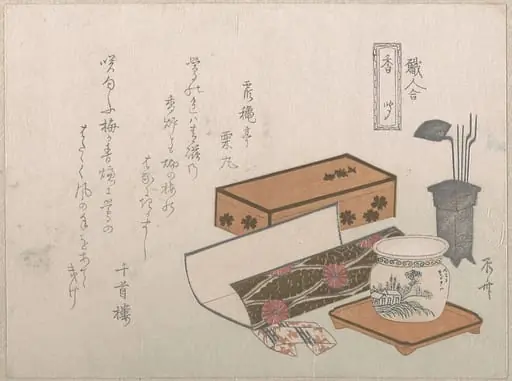 「職人合香聞 」|Utensils for the Incense Ceremony, “Incense Master” (Kōgiki), from the series An Array of Artisans
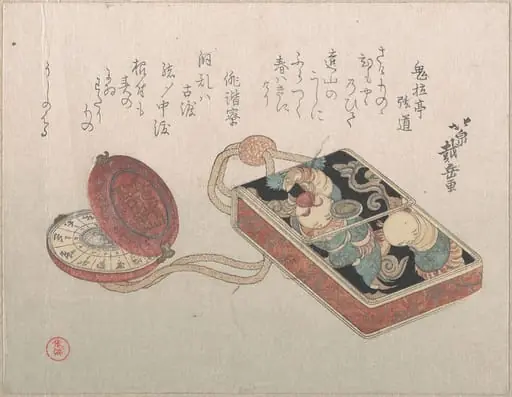 胴乱印籠と懐中時計根付『春雨集』 摺物帖|Dōran (Square Leather Box Used as an Inrō) with a Watch as a NetsukeFrom the Spring Rain Collection (Harusame shū), vol. 3
 Untitled
 Untitled