Artwork
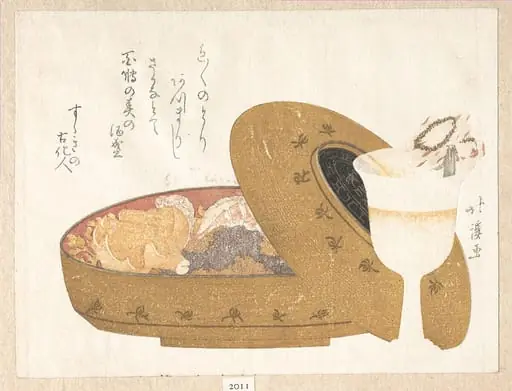
印籠と牛根付『春雨集』 摺物帖|Lacquer Inrō with Waterbirds and Ox-shaped Netsuke in a BoxFrom the Spring Rain Collection (Harusame shū), vol. 3
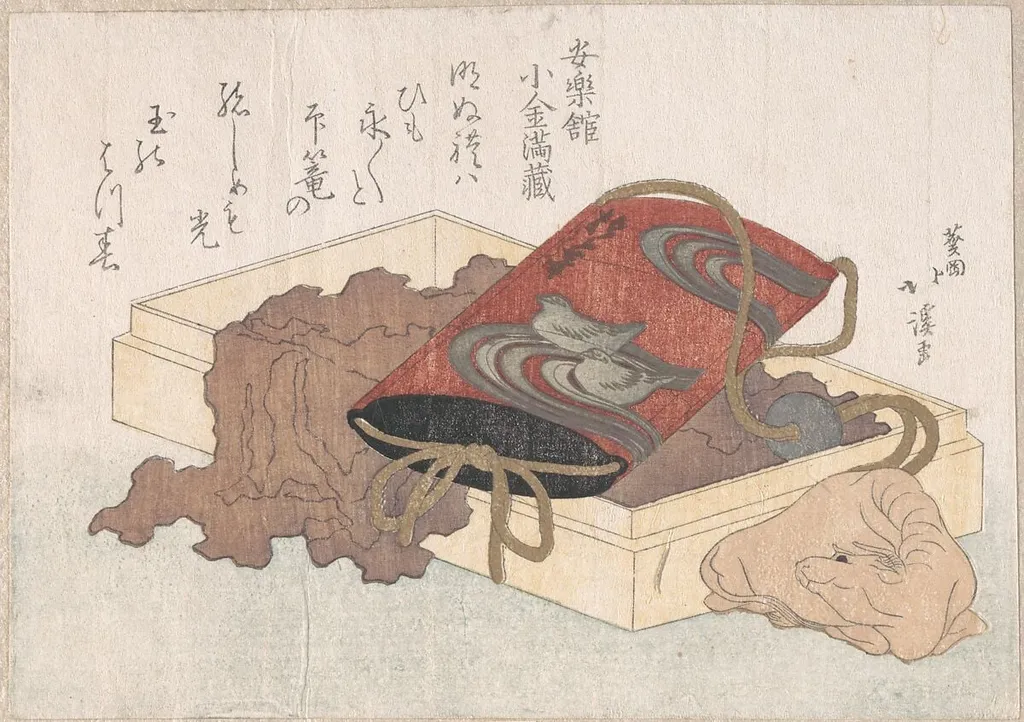
印籠と牛根付『春雨集』 摺物帖|Lacquer Inrō with Waterbirds and Ox-shaped Netsuke in a BoxFrom the Spring Rain Collection (Harusame shū), vol. 3 is an ink print by the Romanticist artist Totoya Hokkei. It dates from 1817 and is held in the collection of the Metropolitan Museum of Art.
About this work
Overview
Totoya Hokkei’s woodblock print, dated around 1817, forms part of the third volume of the Spring Rain Collection (Harusame shū). Executed in ink and color on paper, the image depicts a lacquer inrō placed atop a box, accompanied by a small ox‑shaped netsuke. The composition is rendered in a restrained palette of red, black, beige and brown, emphasizing a quiet, refined atmosphere.
Subject & Meaning
The central inrō bears a decorative motif of two stylized waterbirds surrounded by swirling lines, a common emblem of seasonal change and poetic allusion in Edo‑period art. The accompanying netsuke, shaped like an ox, adds a playful, three‑dimensional counterpoint, suggesting the everyday objects that surrounded the literati who commissioned such prints.
Technique & Style
Created as a surimono, the print was produced for private, often poetic gatherings, allowing for finer carving and richer pigments than commercial ukiyo‑e. Hokkei’s line work is delicate yet precise, while the limited color scheme—muted reds and deep blacks against warm earth tones—enhances the subtle elegance typical of his later work.
History & Provenance
The print entered the collection of the Metropolitan Museum of Art, where it is catalogued as part of the museum’s Japanese prints holdings. Its inclusion in the Spring Rain Collection links it to a series of collaborative books that combined poetry, calligraphy, and image, circulated among cultured circles in early nineteenth‑century Japan.
Context
During the early 1800s, surimono served as a vehicle for artists like Hokkei to experiment beyond the commercial market. The Spring Rain Collection gathered contributions from several poets and artists, reflecting the era’s interest in seasonal themes and the integration of visual and literary arts within elite social gatherings.
Artist & collection

 Sumidagawa|Sumida River
 松・滝に孔雀図と緋毛氈|Painting of Peacocks, Pines, a Waterfall, and a Roll of Red Fabric
 Untitled
 Untitled
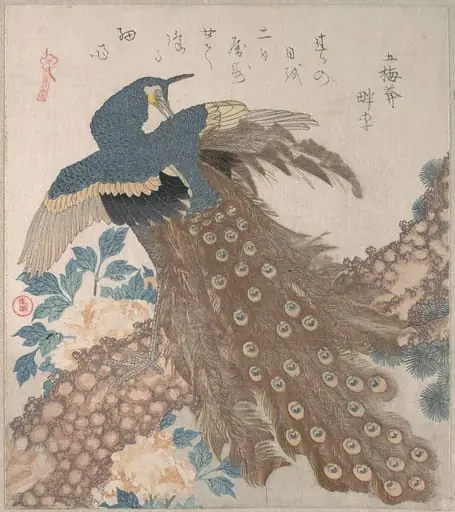 「三ひらの内」松・牡丹に孔雀|Peacock on Pine Tree and Peonies, from the series Three Sheets (Mihira no uchi)
 Untitled
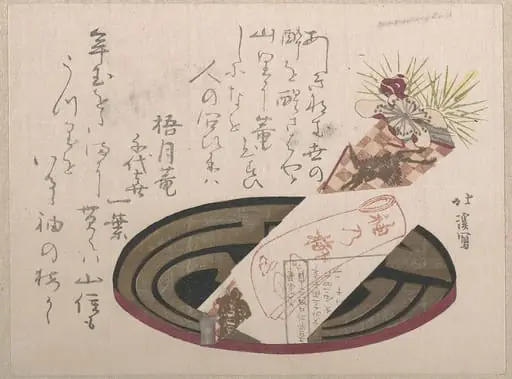 Untitled
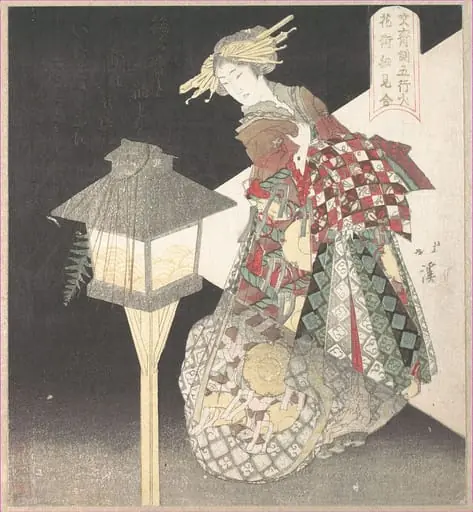 「文齊側五行火 花街細見合」|Courtesan by a Lantern, “Fire,” from the series Five Elements for the Bunsai Poetry Group, a Guide to the Yoshiwara Pleasure Quarters
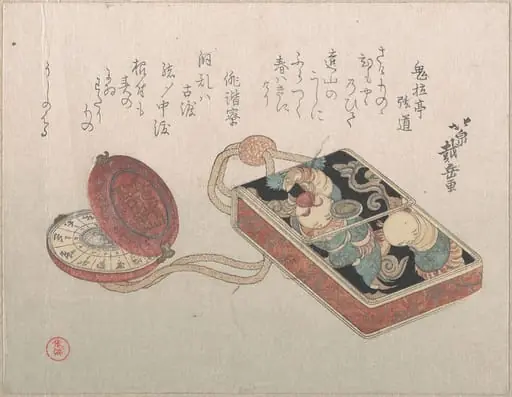 胴乱印籠と懐中時計根付『春雨集』 摺物帖|Dōran (Square Leather Box Used as an Inrō) with a Watch as a NetsukeFrom the Spring Rain Collection (Harusame shū), vol. 3
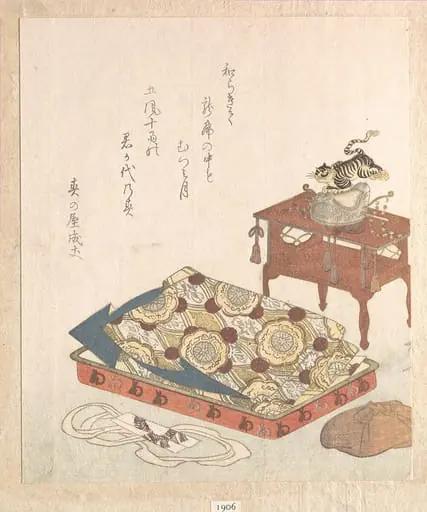 舞楽衣装『春雨集』 摺物帖|Costume for Bugaku Court DanceFrom the Spring Rain Collection (Harusame shū), vol. 1
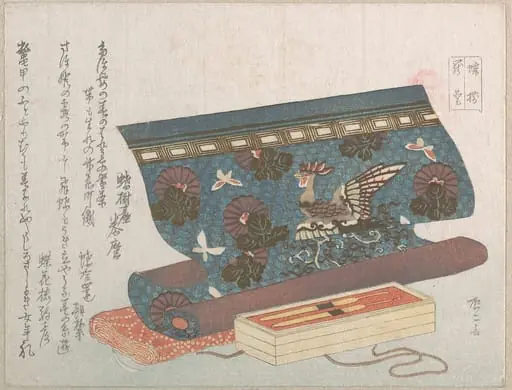 『蝶揃・寵愛』帯と簪|Roll of Cloth for an Obi and Tortoise-shell Hair Ornaments (“Presents for One’s Beloved”), from the Butterfly Series, from Spring Rain Surimono Album (Harusame surimono-jō, vol. 3)
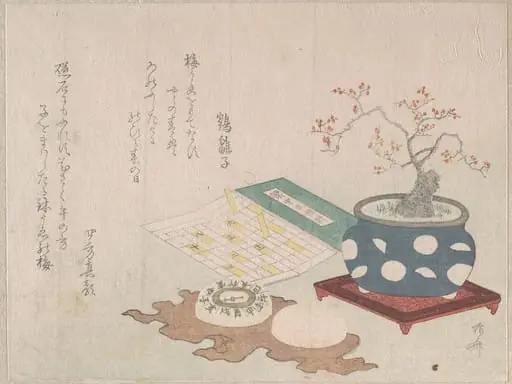 鉢梅、懐中日時計、羅針盤|Bonsai Plum, Compass, and Pocket Sundial with Design of Calendar, from Spring Rain Surimono Album (Harusame surimono-jō, vol. 3)
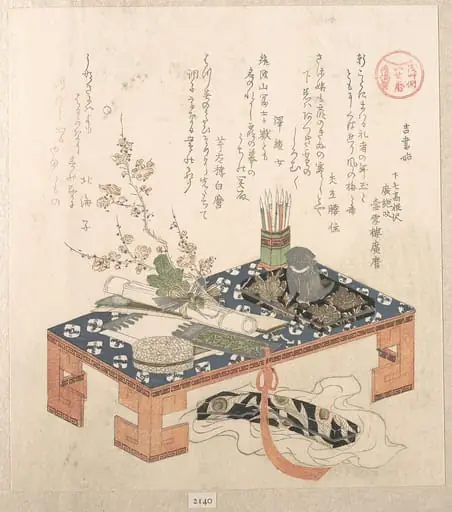 『浅草側いせ暦』 文房具と梅熨斗『春雨集』 摺物帖 |“Desk with Writing Set and Plum Flowers,” from the series Ise Calendars for the Asakusa Group (Asakusa-gawa Ise goyomi)From the Spring Rain Collection (Harusame shū), vol. 2
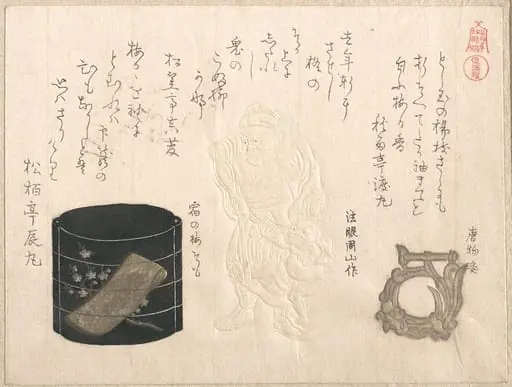 『名物革仝印籠仝根付』 印籠根付『春雨集』 摺物帖|“Inrō and Netsuke,” from the series Famous Leathers, Inrō, and Netsuke (Meibutsu kawa, inrō, netsuke)From the Spring Rain Collection (Harusame shū), vol. 2
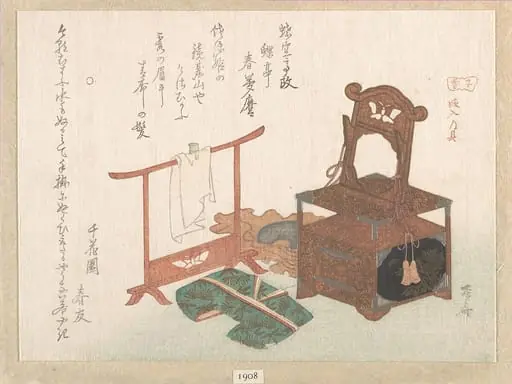 柳々居辰斎画 子春 嫁入の具『春雨集』 摺物帖|Accoutrements for a Bride, from the Spring Rain Collection (Harusame shū), vol. 1
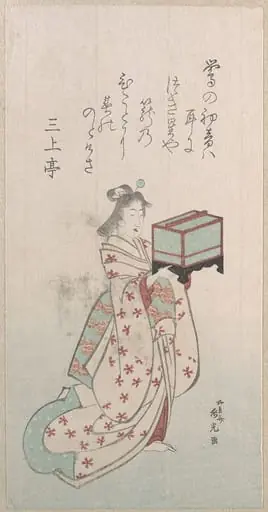 『春雨集』 摺物帖柳月斎辰光 少女に鳥かご|Spring Rain Collection (Harusame shū), vol. 2: Young Woman with a Birdcage
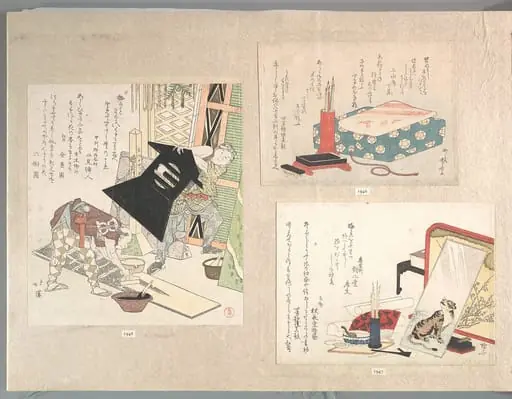 文具一式|Writing Set and Poem Card Box (Shikishi-bako), from Spring Rain Surimono Album (Harusame surimono-jō), vol. 1
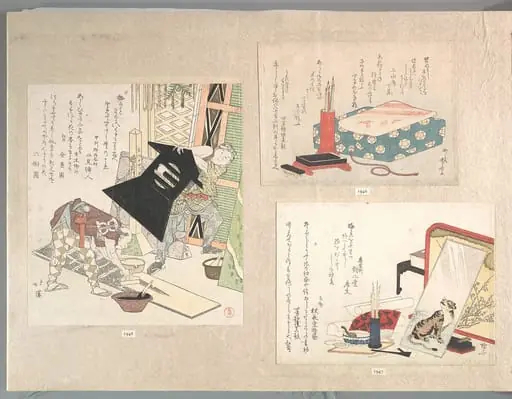 衝立、虎図、文具一式|Desk Screen, Writing Set, Painting of Tiger, and Mounting Paraphernalia, from Spring Rain Surimono Album (Harusame surimono-jō, vol. 1)