Artwork
胴乱印籠と懐中時計根付『春雨集』 摺物帖|Dōran (Square Leather Box Used as an Inrō) with a Watch as a NetsukeFrom the Spring Rain Collection (Harusame shū), vol. 3
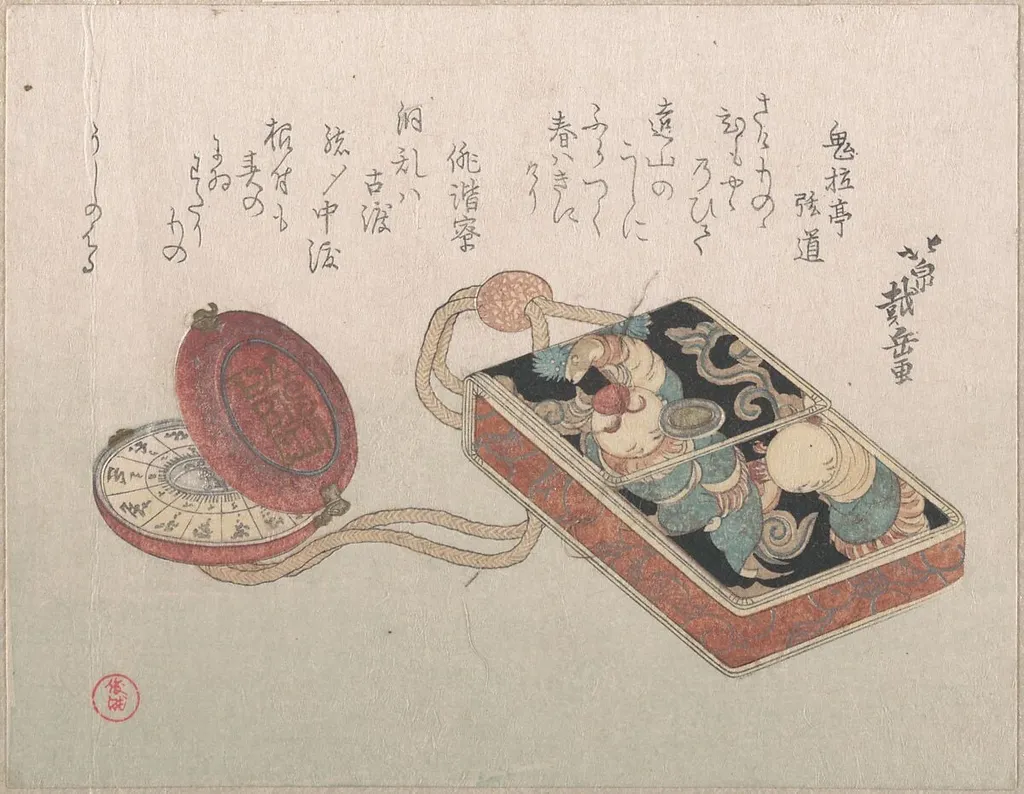
胴乱印籠と懐中時計根付『春雨集』 摺物帖|Dōran (Square Leather Box Used as an Inrō) with a Watch as a NetsukeFrom the Spring Rain Collection (Harusame shū), vol. 3 is an ink print by the Romanticist artist Hokusen Taigaku. It dates from 1817 and is held in the collection of the Metropolitan Museum of Art.
About this work
Overview
This early nineteenth‑century woodblock print, created by Hokusen Taigaku around 1817, forms part of the third volume of the Spring Rain Collection (Harusame shū). Executed as a surimono, the image depicts a paired inrō—a square leather case—and a small watch‑shaped netsuke, rendered with ink and color on paper. The work is presently in the collection of the Metropolitan Museum of Art.
Subject & Meaning
The composition presents two functional objects linked by a thin cord: a round, red‑leather pouch on the left and a rectangular box on the right whose lid opens to reveal a miniature scene of figures and food. The juxtaposition highlights the elegance of personal accessories in Edo‑period daily life, while the decorative lid suggests a theatrical or festive narrative.
Technique & Style
Taigaku employs the bold line work and flat, saturated pigments characteristic of surimono prints, allowing the objects to stand out against an unadorned background. The lid’s interior is rendered with fine cross‑hatching to suggest shadow and depth, contrasting with the otherwise planar treatment of the leather surfaces.
History & Provenance
Produced as a limited‑edition print for a private audience, the piece was included in the Spring Rain Collection, a series of illustrated albums circulated among connoisseurs. It entered the Metropolitan Museum of Art’s holdings through a 20th‑century acquisition, though the exact path of ownership prior to that remains undocumented.
Context
In the early 1800s, surimono prints often celebrated seasonal themes, poetry, or specialized subjects such as personal objects. The inrō and netsuke were common accessories among the literate classes, and their depiction reflects contemporary interest in the aesthetics of everyday items.
Legacy
While not as widely reproduced as larger narrative prints, this work exemplifies the refined craftsmanship of Edo‑period book illustration and contributes to scholarly understanding of material culture and decorative arts in early modern Japan.
Artist & collection

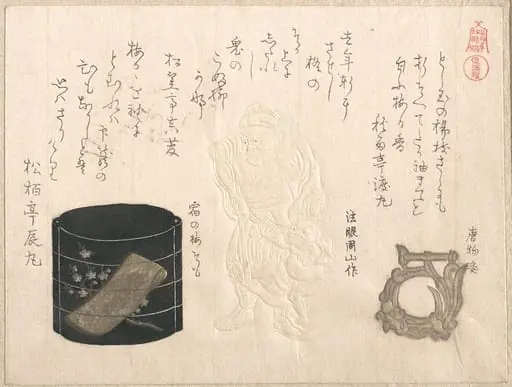 『名物革仝印籠仝根付』 印籠根付『春雨集』 摺物帖|“Inrō and Netsuke,” from the series Famous Leathers, Inrō, and Netsuke (Meibutsu kawa, inrō, netsuke)From the Spring Rain Collection (Harusame shū), vol. 2
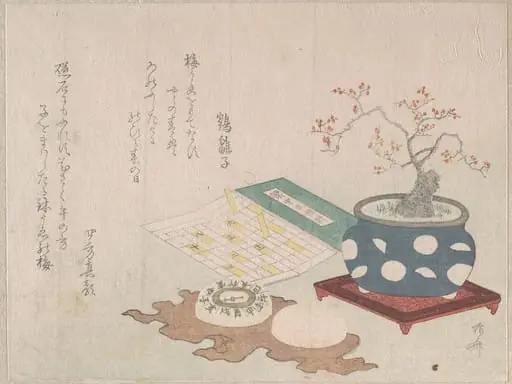 鉢梅、懐中日時計、羅針盤|Bonsai Plum, Compass, and Pocket Sundial with Design of Calendar, from Spring Rain Surimono Album (Harusame surimono-jō, vol. 3)
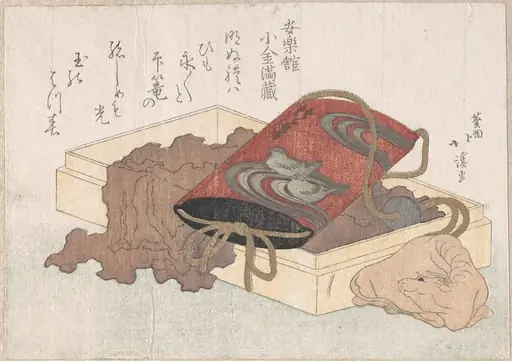 印籠と牛根付『春雨集』 摺物帖|Lacquer Inrō with Waterbirds and Ox-shaped Netsuke in a BoxFrom the Spring Rain Collection (Harusame shū), vol. 3
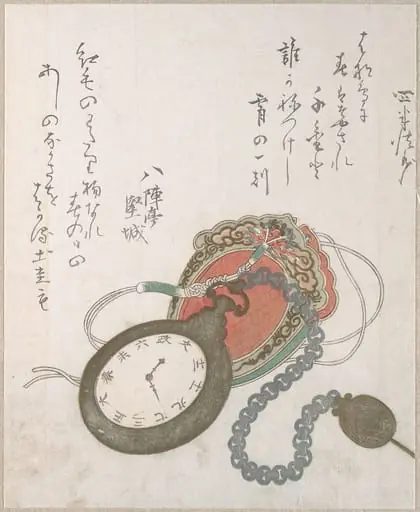 西洋風の懐中時計『春雨集』 摺物帖|Western Pocket WatchFrom the Spring Rain Collection (Harusame shū), vol. 3
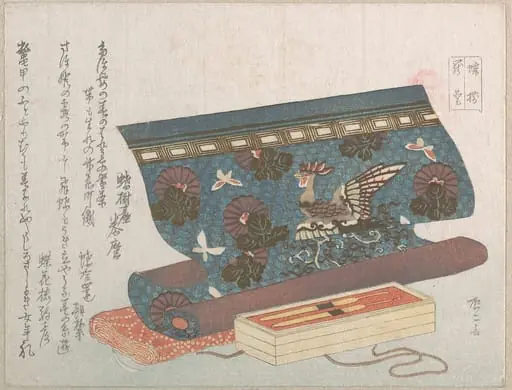 『蝶揃・寵愛』帯と簪|Roll of Cloth for an Obi and Tortoise-shell Hair Ornaments (“Presents for One’s Beloved”), from the Butterfly Series, from Spring Rain Surimono Album (Harusame surimono-jō, vol. 3)
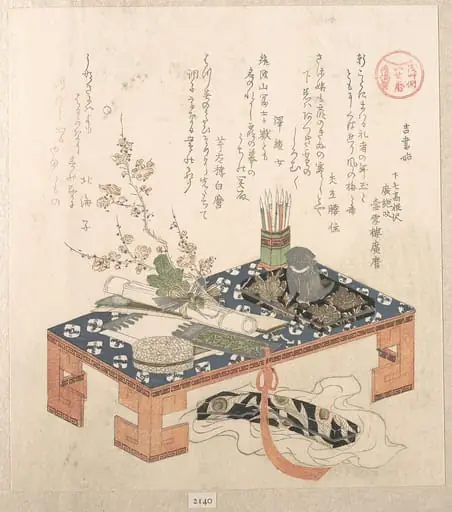 『浅草側いせ暦』 文房具と梅熨斗『春雨集』 摺物帖 |“Desk with Writing Set and Plum Flowers,” from the series Ise Calendars for the Asakusa Group (Asakusa-gawa Ise goyomi)From the Spring Rain Collection (Harusame shū), vol. 2
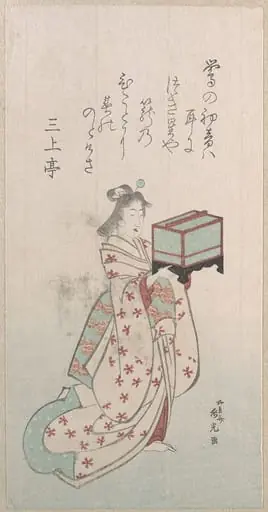 『春雨集』 摺物帖柳月斎辰光 少女に鳥かご|Spring Rain Collection (Harusame shū), vol. 2: Young Woman with a Birdcage
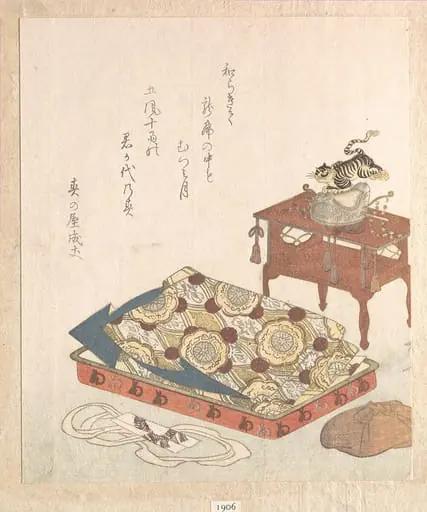 舞楽衣装『春雨集』 摺物帖|Costume for Bugaku Court DanceFrom the Spring Rain Collection (Harusame shū), vol. 1
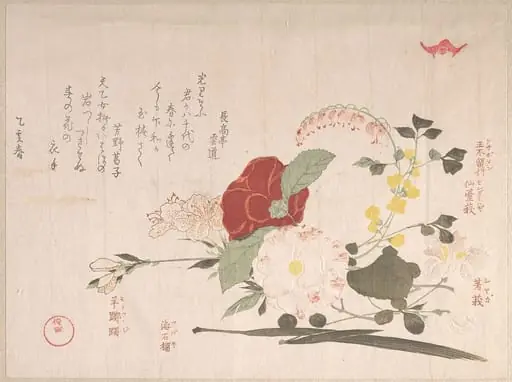 『春雨集』 摺物帖窪俊満画 クサボタン、萩、シャ ガ、ツバキ、モチツバキ|Spring Rain Collection (Harusame shū), vol. 2: Cut Flowers: Clematis, Bush Clover, Iris, Camellia, and Azalea