Artwork
Untitled
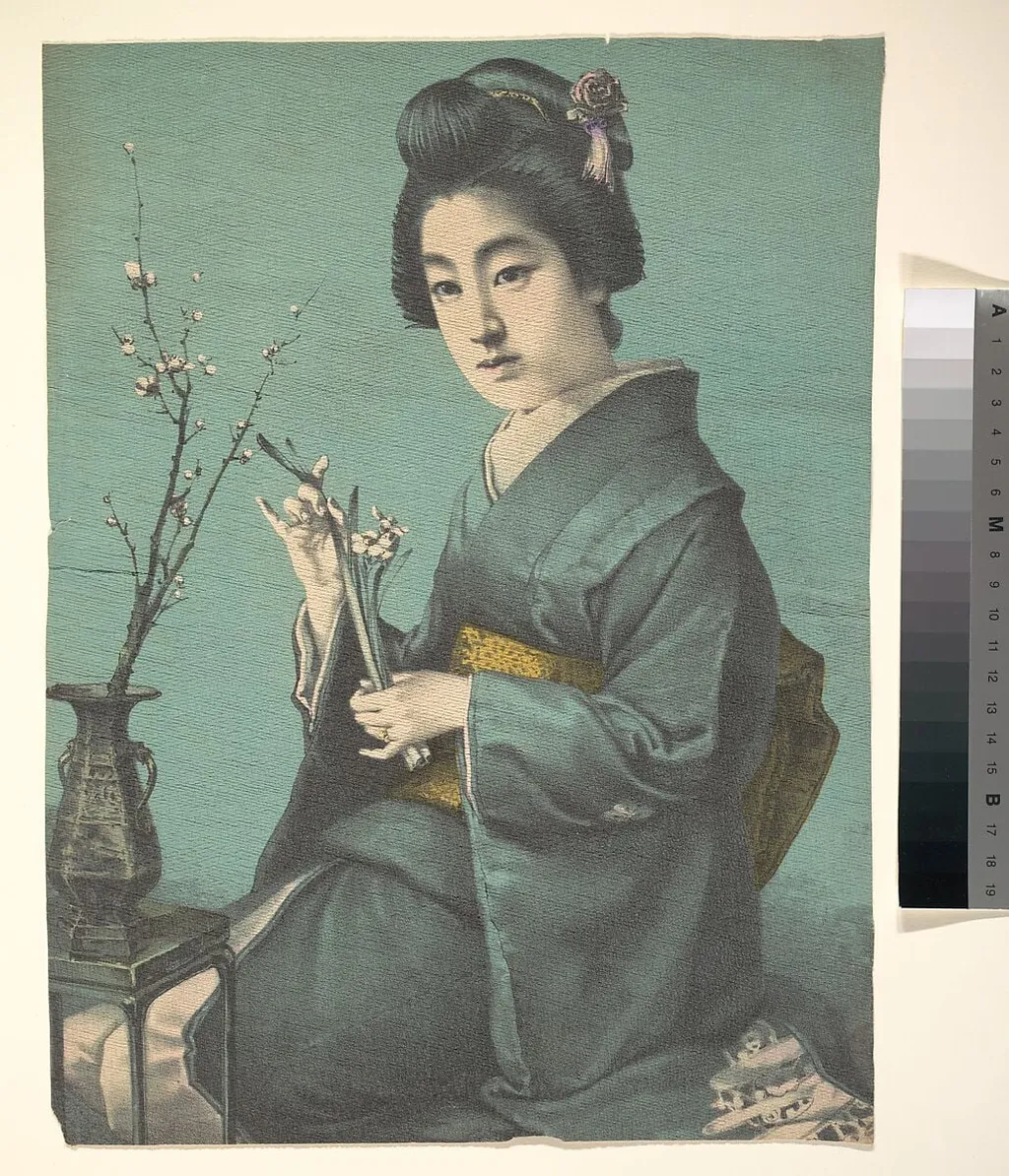
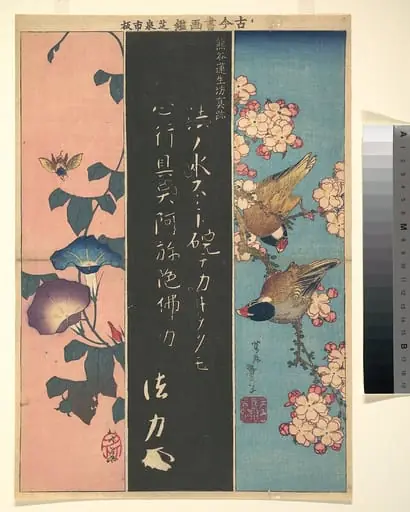
Untitled is an ink print by the Impressionist artist After Hugechi. It dates from 1900 and is held in the collection of the Metropolitan Museum of Art.
About this work
Overview
This woodblock print, dated around 1900, is attributed to the artist After Hugechi. Executed in ink and color on crepon paper, it belongs to the print collection at The Metropolitan Museum of Art. The work exemplifies late Meiji-period Japanese printmaking, blending traditional techniques with subtle stylistic refinements characteristic of the era.
Subject & Meaning
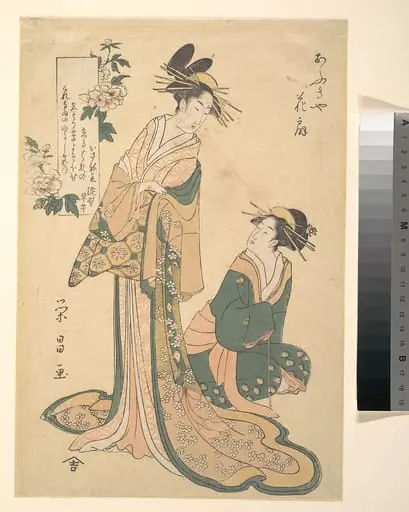
The print portrays a young woman seated in a composed, contemplative pose, her legs folded beneath her. She holds a sprig of white blossoms in one hand, while the other rests gently on her lap. The flowers and stillness suggest themes of quiet reflection or seasonal change, common in Japanese visual culture. Her refined attire and hairstyle reinforce an atmosphere of dignified calm.
Technique & Style
The image is rendered through woodblock printing, with delicate lines and muted tones. The background is a soft, pale green, chosen to harmonize rather than compete with the figure’s dark hair and kimono. The hairpin and floral detail are rendered with precision, indicating careful carving and selective color application typical of high-quality ukiyo-e-derived prints of the time.
History & Provenance
Its attribution to After Hugechi reflects scholarly consensus based on stylistic comparison, though the artist’s biography remains poorly documented.
The print entered the collection of The Metropolitan Museum of Art as part of its broader acquisition of Japanese prints from the late 19th and early 20th centuries. Its attribution to After Hugechi reflects scholarly consensus based on stylistic comparison, though the artist’s biography remains poorly documented. The work’s condition and paper type suggest it was produced for domestic or collector use rather than mass distribution.
Context
Created during Japan’s Meiji period, the print reflects a cultural moment when traditional aesthetics were preserved amid rapid modernization. Artists like After Hugechi often drew from ukiyo-e traditions but adapted them for new audiences, favoring subdued palettes and intimate subjects over the bold narratives of earlier generations.
Legacy
Though not widely known outside specialist circles, works like this contribute to the understanding of transitional Japanese printmaking. They illustrate how artisans maintained technical rigor and poetic restraint even as commercial demands and foreign influences reshaped the art world. This piece remains a quiet testament to a fading yet enduring visual language.
Artist & collection
Artist
This artist made delicate woodblock prints around 1900, working in the crepon style—a crinkled paper that gives soft edges to colors.

 Untitled
 Untitled
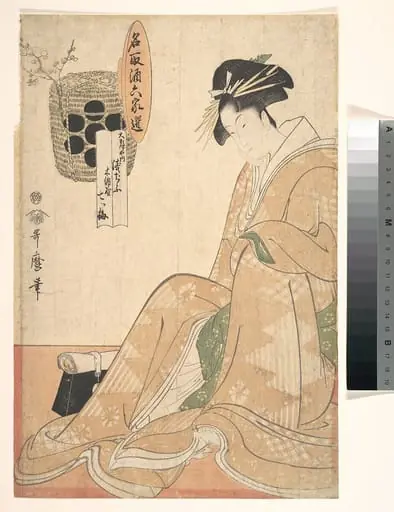 名取酒六家選 大もんぢや内浅じふ 木綿屋七ッ梅|A Courtesan
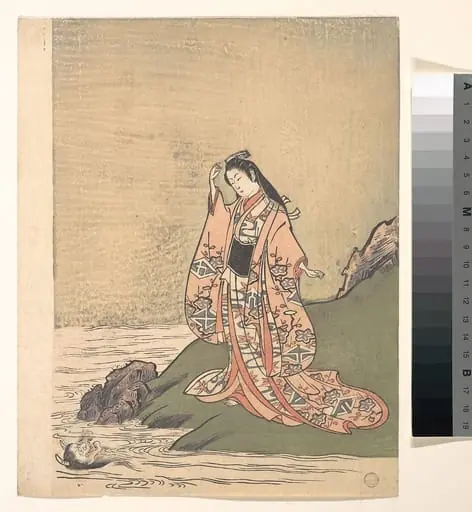 Untitled
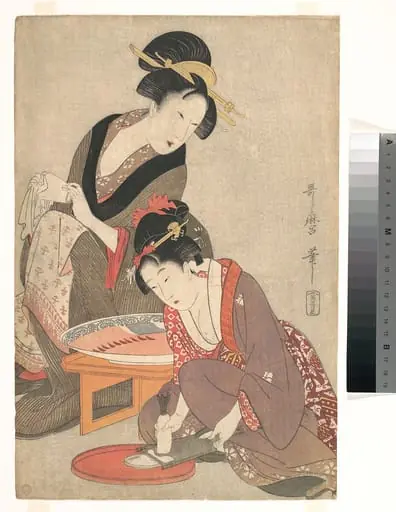 Untitled
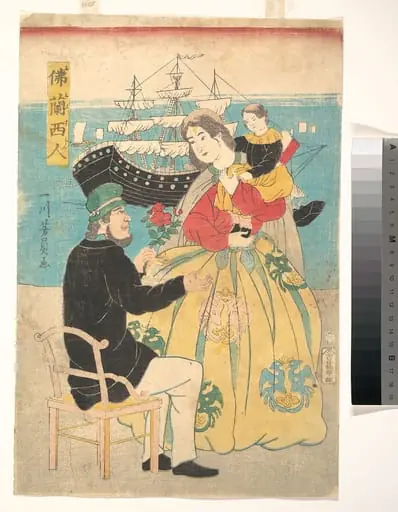 Untitled
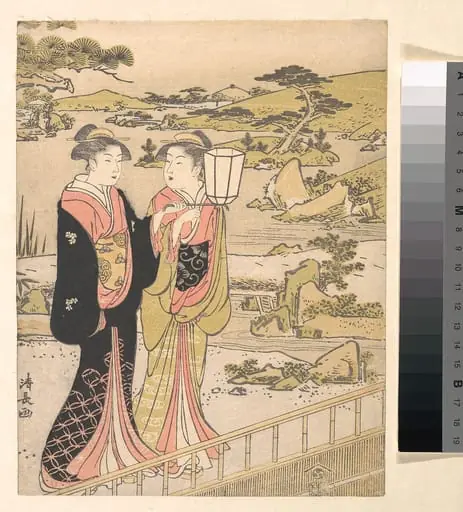 Untitled
 Untitled
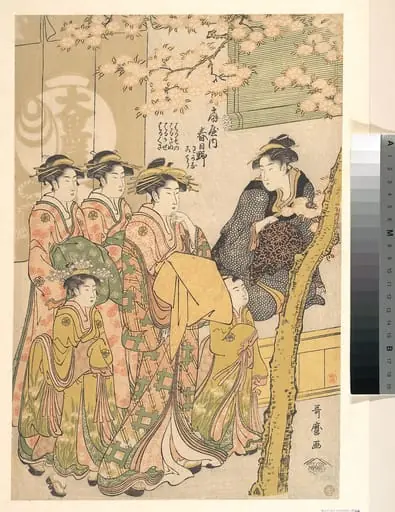 扇屋内春日野|The Oiran Kasugano of Ogiya on Parade under Blossoming Cherry Trees
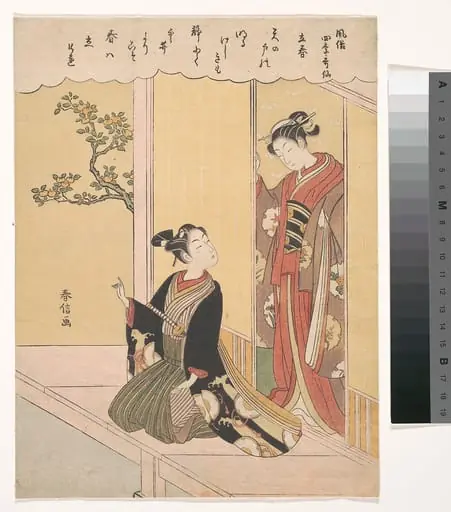 鈴木春信画「風俗四季歌仙 立春」|The First Day of Spring (Risshun), from the series Fashionable Poetic Immortals of the Four Seasons (Fūzoku shiki Kasen)
 Untitled
 古今書画鑑 熊谷蓮生坊真跡|Bird-and-Flower Paintings