Artwork
鈴木春信画「風俗四季歌仙 立春」|The First Day of Spring (Risshun), from the series Fashionable Poetic Immortals of the Four Seasons (Fūzoku shiki Kasen)
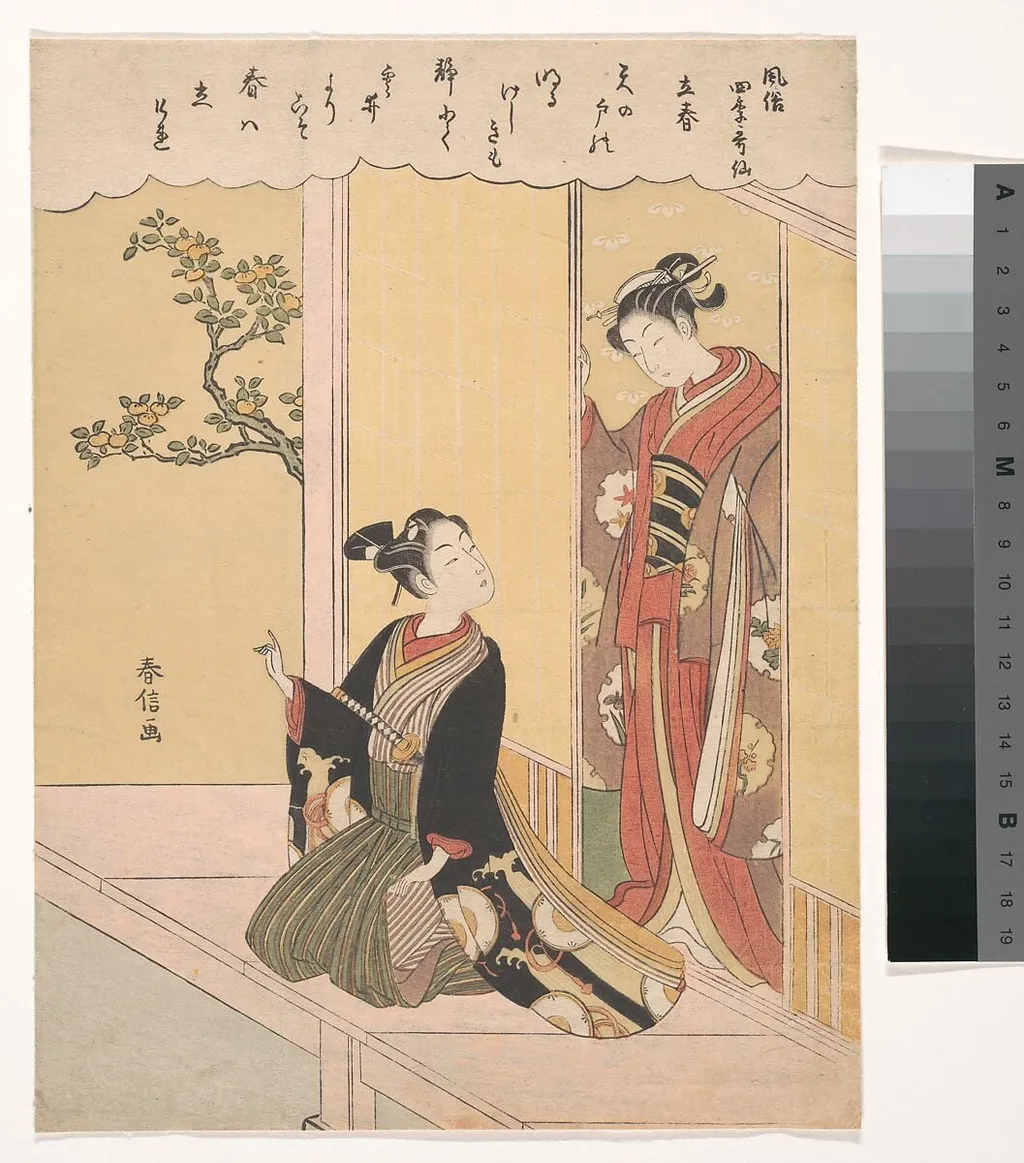
鈴木春信画「風俗四季歌仙 立春」|The First Day of Spring (Risshun), from the series Fashionable Poetic Immortals of the Four Seasons (Fūzoku shiki Kasen) is an ink print by the Romanticist artist Suzuki Harunobu. It dates from 1768 and is held in the collection of the Metropolitan Museum of Art.
About this work
Overview
Created around 1768, this woodblock print by Suzuki Harunobu belongs to the series titled Fashionable Poetic Immortals of the Four Seasons. The work, known as The First Day of Spring (Risshun), is part of the Metropolitan Museum of Art’s collection and exemplifies the ukiyo-e genre’s focus on everyday elegance.
Subject & Meaning
The composition depicts an interior scene in which two women are positioned near sliding doors. One, dressed in dark, patterned robes, kneels and holds a fan while gazing downward. The other, in a vivid red garment, stands near the doors, also holding a fan. A branch bearing tiny blossoms extends through the doorway, suggesting the arrival of spring.
Technique & Style
Harunobu employs bold, saturated pigments and clear, simplified outlines to convey a lively atmosphere. The patterned textiles feature woven‑stripe motifs rendered with fine line work, while the delicate rendering of the flowering branch demonstrates his skill in balancing decorative surface with natural detail.
History & Provenance
The print was produced in the late eighteenth century, a period when Harunobu’s innovations in multicolor printing were reshaping ukiyo-e. It entered the Metropolitan Museum of Art’s collection through acquisition in the twentieth century, where it remains on view as part of the museum’s Japanese prints holdings.
Context
The series portrays seasonal themes through the lens of fashionable courtesans, reflecting contemporary Edo‑period interest in poetry, fashion, and the passage of time. Risshun, marking the first day of spring, was traditionally associated with renewal, a motif echoed in the delicate blossoms visible beyond the screen.
Legacy
Harunobu’s work in this series contributed to the popularization of the bijin-ga (beautiful women) genre and influenced later ukiyo-e artists who adopted his delicate color harmonies and elegant figure compositions.
Artist & collection

 Untitled
 Untitled
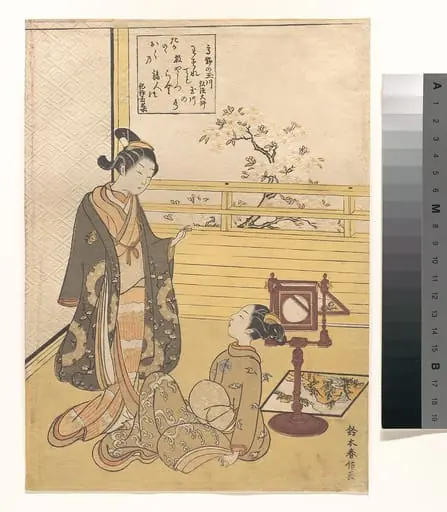 鈴木春信画 覗き絡繰り・「高野の玉川 弘法大師」|A Teenage Boy and Girl with a Viewer for an Optique Picture (Nozoki-karakuri); Kōbō Daishi’s Poem on the Jewel River of Kōya (Kōya no Tamagawa: Kōbō Daishi)
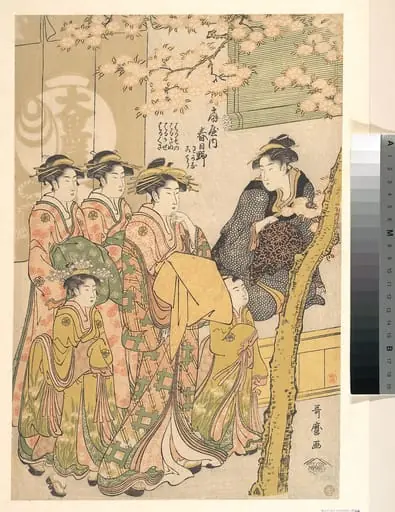 扇屋内春日野|The Oiran Kasugano of Ogiya on Parade under Blossoming Cherry Trees
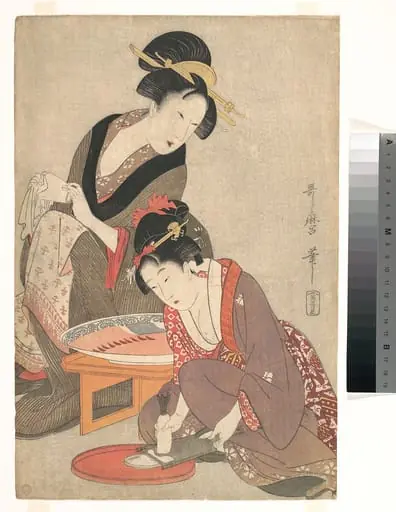 Untitled
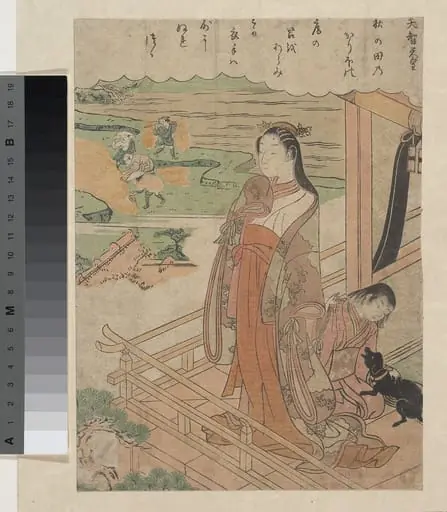 百人一首 天智天皇|Sympathy
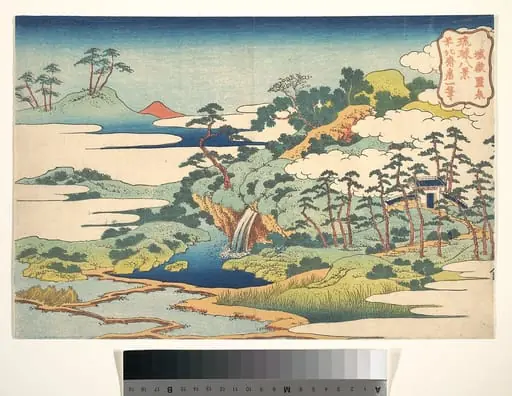 琉球八景 城嶽霊泉|The Sacred Spring at Jōgaku (Jōgaku reisen), from the series Eight Views of the Ryūkyū Islands (Ryūkyū hakkei)
 Untitled
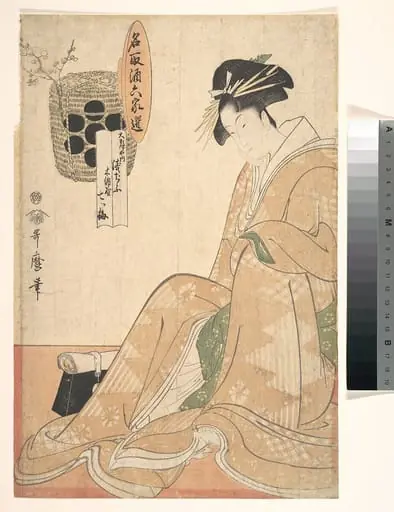 名取酒六家選 大もんぢや内浅じふ 木綿屋七ッ梅|A Courtesan