Artwork
Henry III, King of France
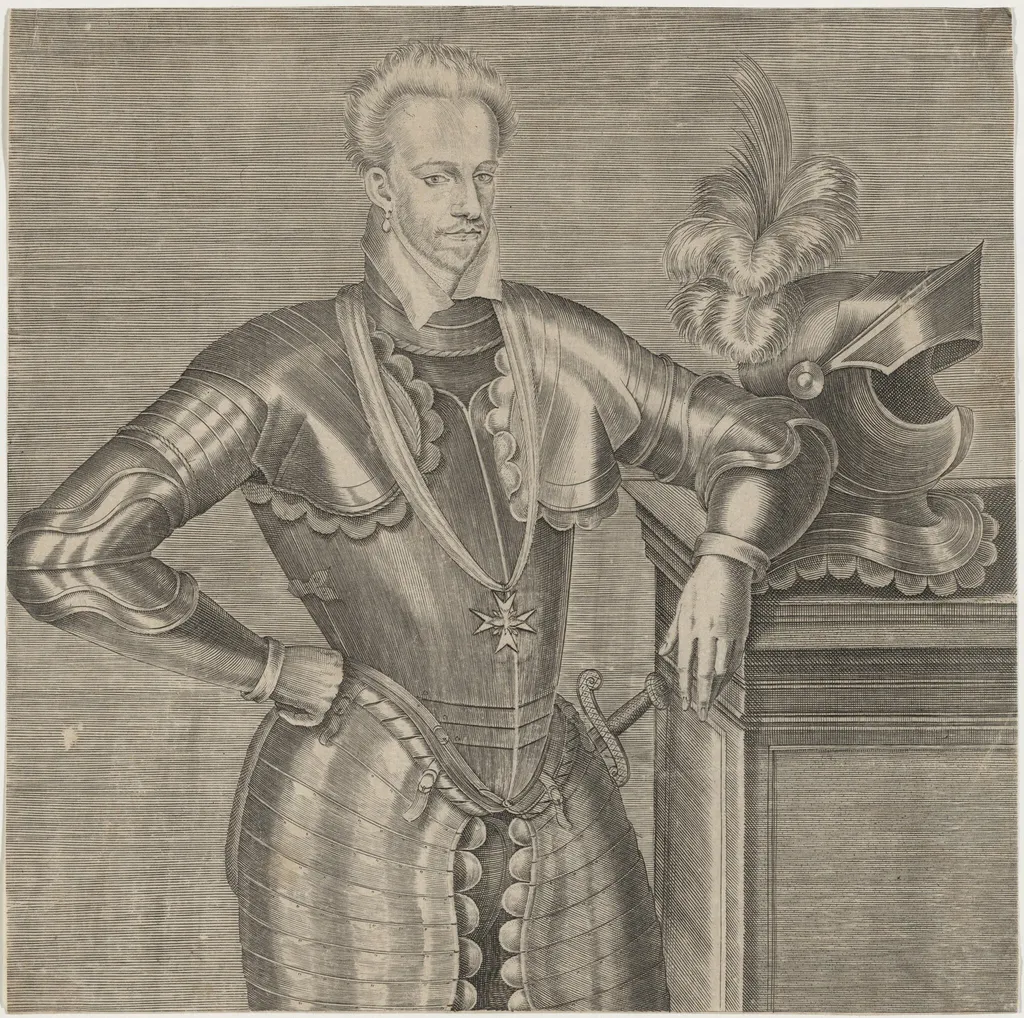
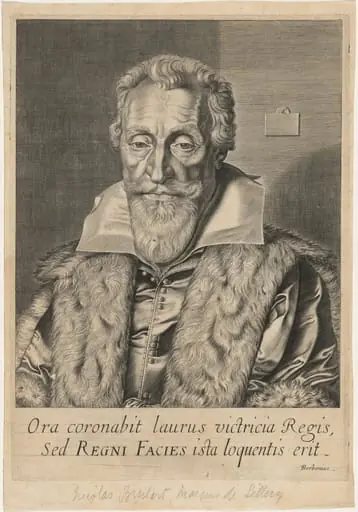
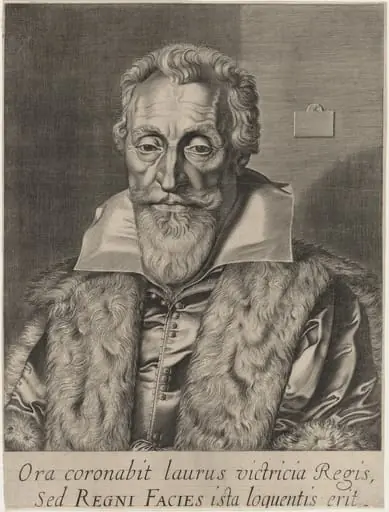
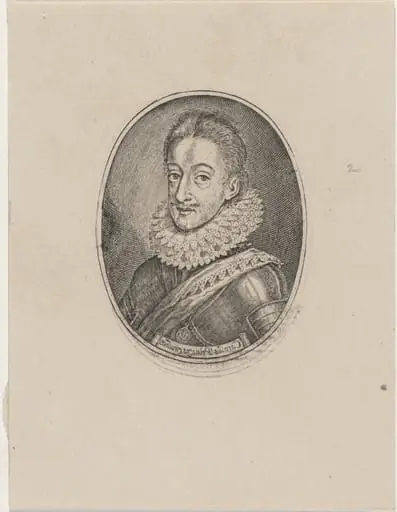
Henry III, King of France is an ink print by the Romanticist artist Unknown 19th Century. It dates from 1850 and is held in the collection of the National Gallery of Art.
About this work
Overview
This engraving portrays Henry III of France in full armor, rendered with precise linear detail characteristic of late 16th-century printmaking.
This engraving portrays Henry III of France in full armor, rendered with precise linear detail characteristic of late 16th-century printmaking. The figure stands rigidly against a plain background, emphasizing his regal bearing. The work is not a painting but a printed image, likely produced for distribution among courtiers or as a political statement. Its technical execution reflects the craftsmanship of contemporary engravers rather than the stylistic concerns of later movements.
Subject & Meaning
Henry III is depicted as a warrior-king, clad in ornate armor bearing a Christian cross, symbolizing divine sanction of his rule. The sword at his side and his hand resting on his hip convey authority and readiness for command. The decorative object beneath his left hand may reference royal insignia or a ceremonial item, reinforcing his status. The image serves as a visual assertion of monarchical power during a turbulent period in French history.
Technique & Style
The portrait employs fine cross-hatching to model the textures of metal, fabric, and leather, creating subtle gradations of light and shadow. Lines are tightly controlled, revealing the engraver’s skill in translating three-dimensional form onto a flat surface. The absence of color and the focus on linear precision align with Northern European print traditions, prioritizing clarity and detail over expressive flourish.
History & Provenance
Created during Henry III’s reign (1574–1589), the engraving likely originated in Paris or another major French center of print production. It may have been commissioned by the royal court or a loyalist faction to reinforce his image amid religious conflict. Surviving impressions are rare, suggesting limited circulation, possibly among elite audiences rather than the general public.
Context
This portrait emerged during the French Wars of Religion, when monarchs relied on imagery to project stability and legitimacy. Henry III, caught between Catholic and Huguenot factions, used visual propaganda to assert his role as defender of the realm. The armor and cross reflect the era’s fusion of martial and religious authority, common in royal iconography of the time.
Legacy
Though technically accomplished, this engraving does not belong to Romanticism, which emerged two centuries later. Its significance lies in its function as a political artifact of the Valois court, offering insight into how Renaissance rulers used portraiture to sustain authority. It remains a valuable example of early modern print culture, not an artistic movement.
Artist & collection

Artist