Artwork
Frederick Henry, Prince of Orange
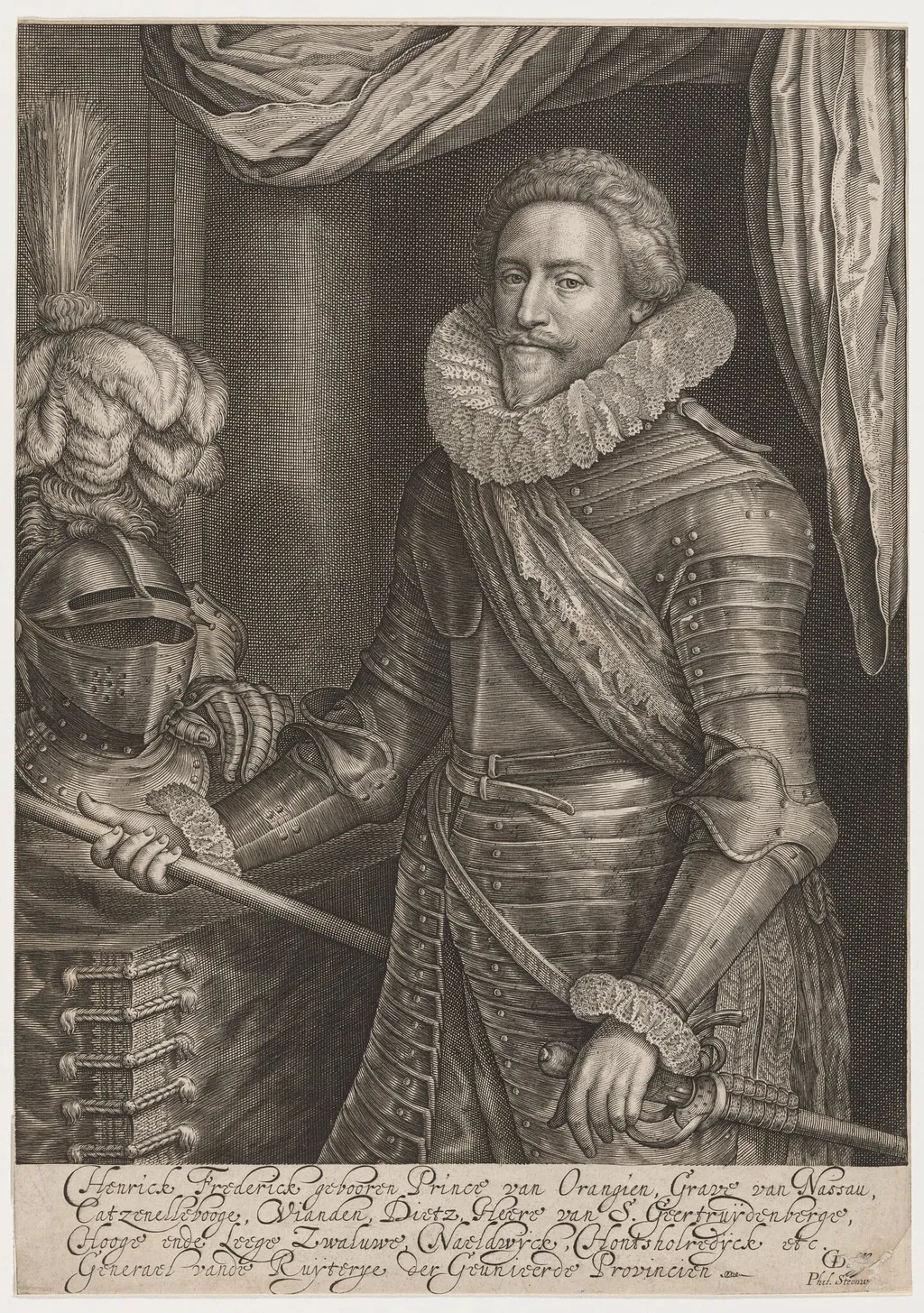
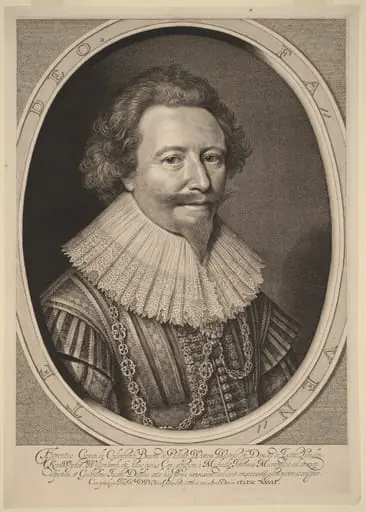
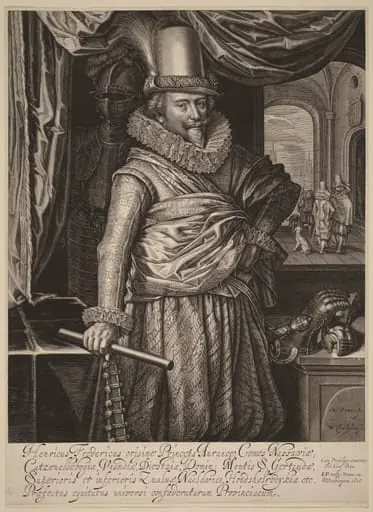
Frederick Henry, Prince of Orange is an ink print by the Renaissance artist Willem Jacobsz Delff. It dates from 1609 and is held in the collection of the National Gallery of Art.
About this work
Overview
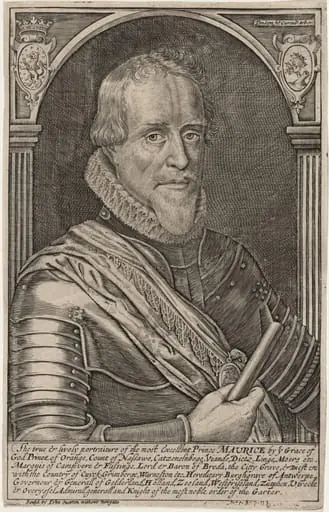
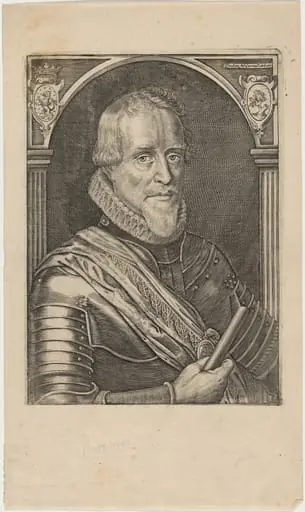
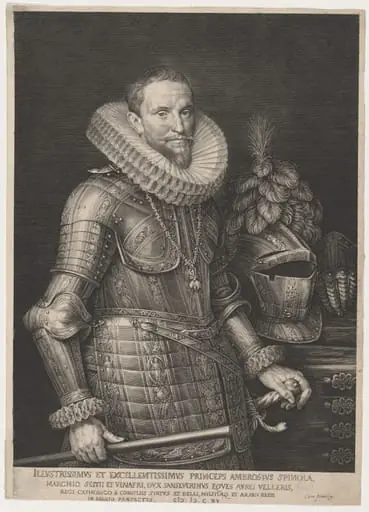
This 1609 engraving by Willem Jacobsz Delff portrays Frederick Henry, Prince of Orange, as a military leader in full armor.
This 1609 engraving by Willem Jacobsz Delff portrays Frederick Henry, Prince of Orange, as a military leader in full armor. Rendered in fine cross-hatching, the portrait emphasizes texture and depth through meticulous line work. The dark, unadorned background isolates the figure, focusing attention on his poised stance and deliberate gaze. The print reflects the tradition of noble portraiture in the Dutch Republic during the early 17th century.
Subject & Meaning
Frederick Henry, then heir to the Dutch stadtholderate, is depicted with the attributes of command: armor, sword, and staff. His direct gaze and solemn expression convey authority and resolve, aligning with his role as a future leader in the Dutch struggle for independence. The absence of overt symbolism or landscape suggests an emphasis on personal dignity rather than political narrative, reinforcing his status through restraint.
Technique & Style
Delff employs fine, controlled cross-hatching to model the armor’s metallic surfaces, the ruffled collar’s fabric, and the subtle contours of the face. The technique allows for nuanced gradations of light and shadow without tone or wash. The precision of the lines reveals a mastery of the engraver’s burin, characteristic of Northern European printmaking at the time, where detail served both realism and symbolic gravitas.
History & Provenance
Created in 1609, the engraving likely served to circulate the prince’s image among political allies and the public during a critical phase of the Eighty Years’ War. As a member of the House of Orange, Frederick Henry’s likeness would have been reproduced for propaganda and commemorative purposes. The work’s survival in institutional collections suggests early recognition of its artistic and historical value.
Context
In early 17th-century Holland, engraved portraits of nobility were tools of political identity, often distributed to reinforce leadership during wartime. Delff, trained in the tradition of Dutch and Flemish printmakers, contributed to a culture where printmaking rivaled painting in prestige. This work aligns with broader trends of civic and dynastic portraiture emerging in the Dutch Republic after its formal independence.
Legacy
Delff’s engraving remains a representative example of Dutch portraiture in print, valued for its technical discipline and restrained elegance. It influenced later generations of engravers who sought to capture authority through precise line and composition. Though not widely exhibited today, it endures in academic and museum collections as a document of early modern leadership imagery.
Artist & collection