Artwork
Horace Vere, Baron Vere of Tilbury
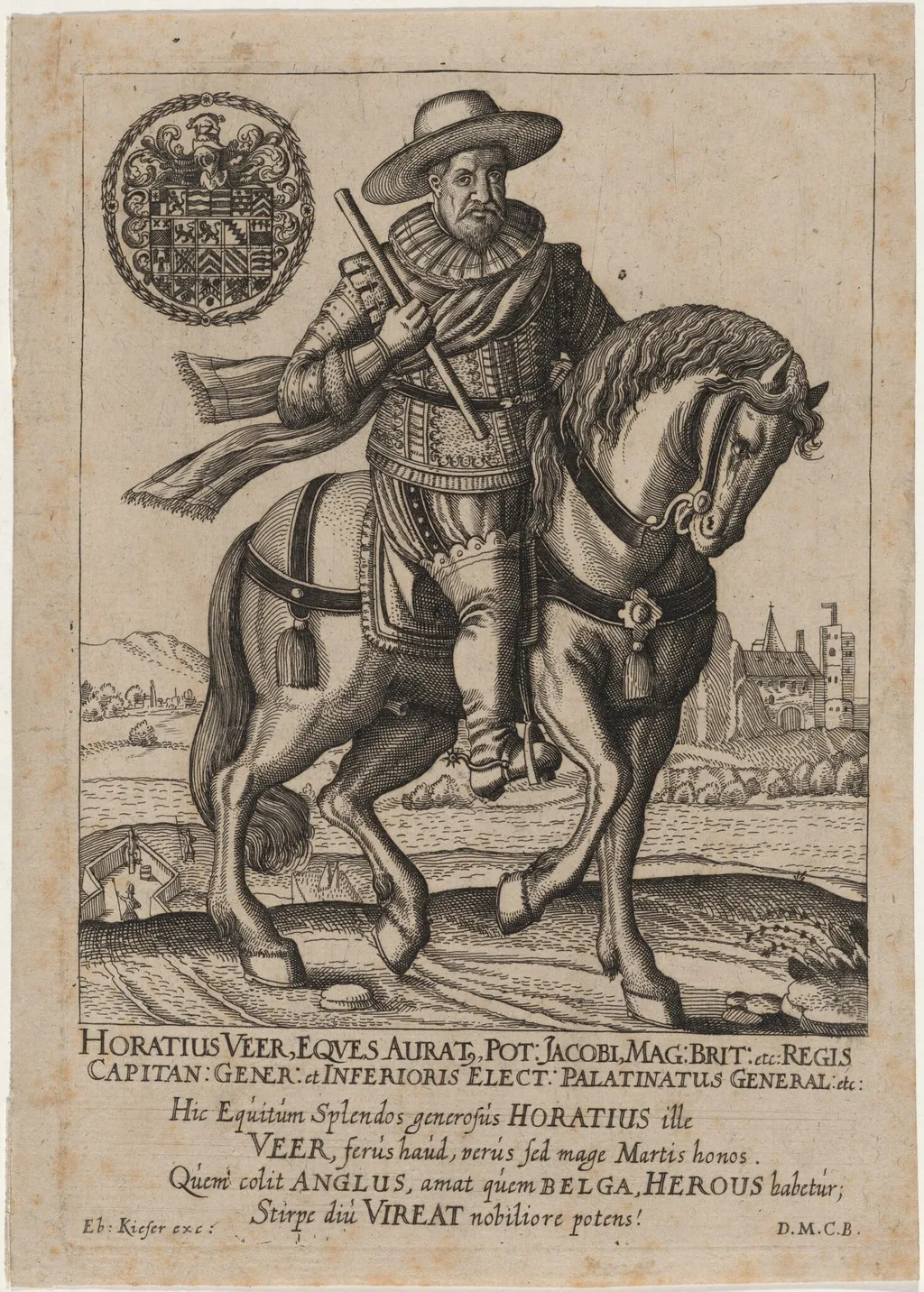
Horace Vere, Baron Vere of Tilbury is an ink print by the Romanticist artist Unknown 19th Century. It dates from 1850 and is held in the collection of the National Gallery of Art.
About this work
Overview
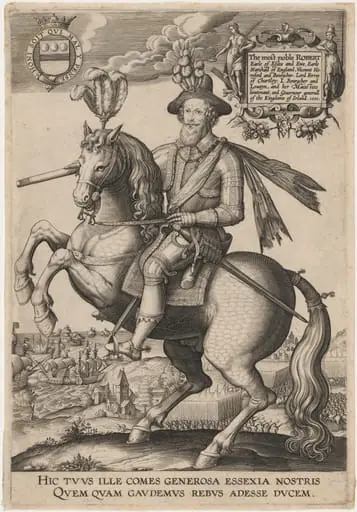
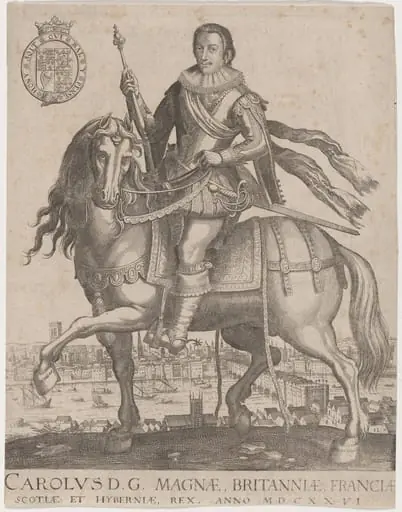
A circular emblem in the upper left may indicate a family crest or publisher’s mark, common in early modern portraiture.
This engraving portrays Horace Vere, Baron Vere of Tilbury, mounted on a horse, set against a distant cityscape. Executed as a printed graphic, it captures the subject in formal attire, suggesting his status and military role. The composition emphasizes elegance through detailed rendering of fabric, harness, and equine movement. A circular emblem in the upper left may indicate a family crest or publisher’s mark, common in early modern portraiture.
Subject & Meaning
Horace Vere was an English military commander known for his service in the Thirty Years’ War. The image presents him as a noble figure in motion, reinforcing his identity as a leader. The ornate clothing and poised posture convey authority, while the cityscape behind him may reference his campaigns in the Low Countries. The long object in his hand is likely a staff or sword, symbolizing command rather than aggression.
Technique & Style
The work is a fine-line engraving, characterized by precise cross-hatching and controlled tonal gradations. Details in the horse’s mane, the folds of clothing, and the distant architecture demonstrate technical skill typical of 17th-century printmaking. The composition balances foreground figure with atmospheric background, creating spatial depth without perspective distortion. The style reflects Northern European traditions rather than Romanticism, which emerged later.
History & Provenance
Created during or shortly after Vere’s lifetime (1565–1635), the engraving likely served as a commemorative portrait for aristocratic circulation. Such prints were often commissioned by families or military patrons to preserve public image. The circular emblem may link it to a specific printmaker or publisher active in the Netherlands or England. No documented provenance is widely recorded, but similar engravings survive in British and European print collections.
Context
In early 17th-century Europe, engraved portraits of military leaders were common tools of political and familial legacy. Vere’s image aligns with a broader trend of depicting commanders in full regalia, blending personal identity with institutional power. The inclusion of a cityscape reflects contemporary interest in topographical detail, though it is stylized rather than topographically accurate. This genre predates Romanticism by over a century.
Legacy
The engraving remains a historical record of Vere’s public persona and the visual culture of early modern military nobility. While not widely exhibited today, it contributes to understanding how elite identities were constructed through print media. Its technical precision and restrained composition reflect the values of its time, distinct from later emotional or dramatic interpretations associated with Romanticism.
Artist & collection

Artist