Artwork
Maurice of Nassau, Prince of Orange
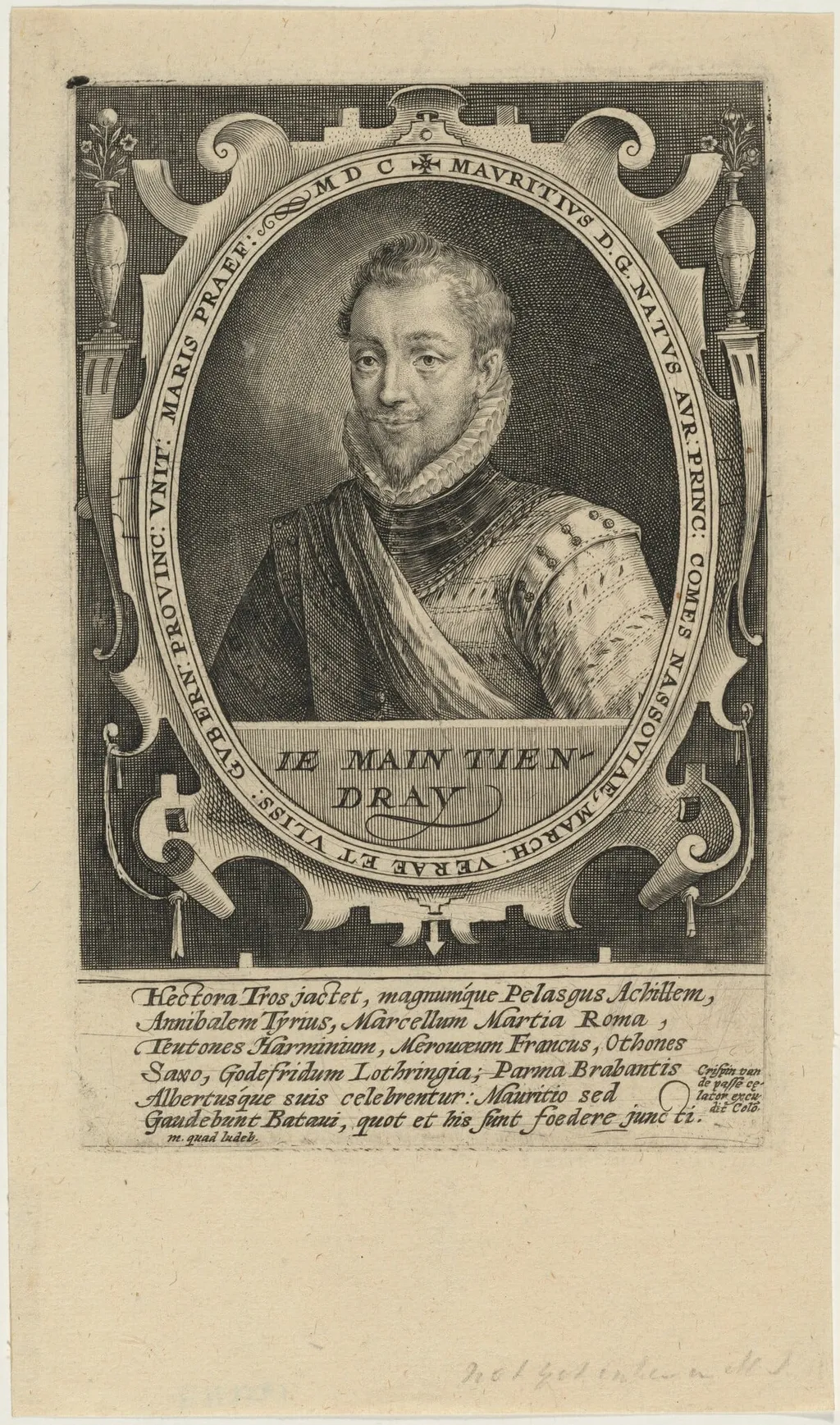
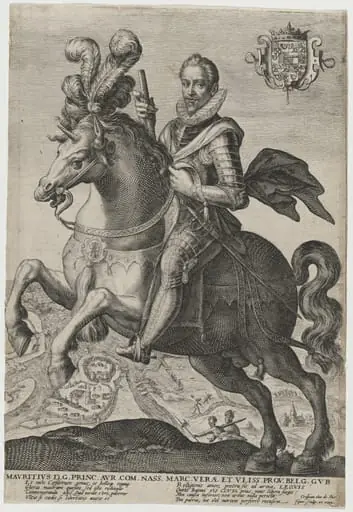
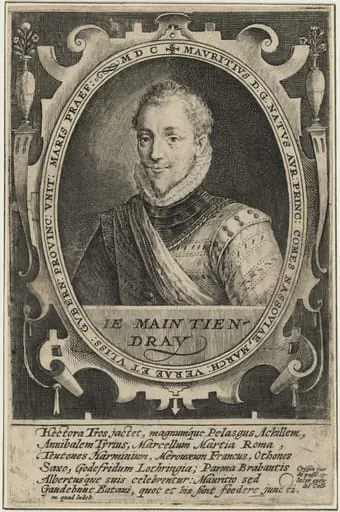
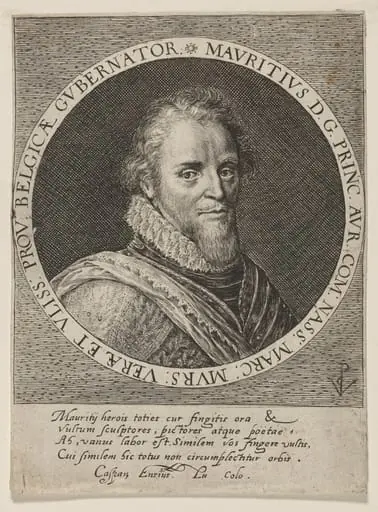
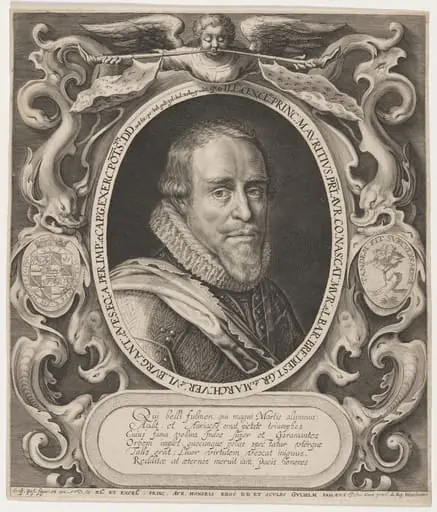
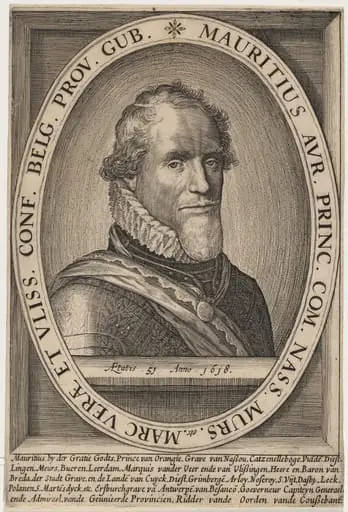
Maurice of Nassau, Prince of Orange is an ink print by the Baroque artist Crispijn van de Passe I. It dates from 1600 and is held in the collection of the National Gallery of Art.
About this work
Overview
Executed through the intaglio technique, the image was produced by incising lines into a metal plate, inking the grooves, and pressing paper onto it.
This black-and-white engraving depicts Maurice of Nassau, Prince of Orange, created in 1600 by Crispijn van de Passe I. Executed through the intaglio technique, the image was produced by incising lines into a metal plate, inking the grooves, and pressing paper onto it. The result is a detailed, tonal portrait that mimics drawn lines but is mechanically reproducible. A decorative border surrounds the figure, inscribed with Latin text, reinforcing the print’s formal and commemorative purpose.
Subject & Meaning
Maurice of Nassau, a key military and political leader of the Dutch Revolt, is portrayed with solemn authority. His direct gaze and formal attire—including a stiff ruff and a chain of office—signal his status and gravitas. The Latin inscription likely honors his role in securing Dutch independence. The portrait functions not as mere likeness but as a public statement of leadership, intended for dissemination among allies and subjects to reinforce his legitimacy and resolve.
Technique & Style
Van de Passe employed fine, controlled lines to model form and texture, using cross-hatching to suggest shadow and depth. The engraving’s precision reflects the technical mastery of Northern Renaissance printmaking. The metallic sheen of the chain, the crisp folds of the ruff, and the subtle gradations of the face were achieved through meticulous incisions. The border’s ornamental motifs and script frame the image as a dignified artifact, typical of elite portraiture in early 17th-century print culture.
History & Provenance
Created in 1600, the engraving emerged during a critical phase of the Eighty Years’ War, when Maurice was consolidating his command. As a member of a prominent family of printmakers, van de Passe produced numerous portraits of political figures for wide circulation. This print likely served diplomatic or propagandistic ends, distributed across Protestant Europe. Its survival in multiple institutional collections suggests early and sustained interest in its subject and craftsmanship.
Context
In the early 1600s, engraved portraits were vital tools for shaping public perception of leaders, especially in regions with limited access to painted likenesses. The Dutch Republic, newly asserting its identity, relied on such images to promote unity and legitimacy. Van de Passe’s work aligned with broader European trends in printmaking, where clarity, detail, and symbolic elements were prioritized to convey authority and virtue to a literate, expanding audience.
Legacy
The engraving stands as an example of how print technology enabled the standardization of political imagery in the early modern period. Van de Passe’s technique influenced subsequent generations of engravers, and Maurice’s portrait became a reference for later depictions of Dutch leadership. Its enduring presence in museum collections underscores its role as both a historical document and a refined specimen of Northern European printmaking.
Artist & collection

Artist
Crispijn van de Passe I (1564–1637) was an artist, born in Arnemuiden.