Artwork
Philip William, Prince of Nassau
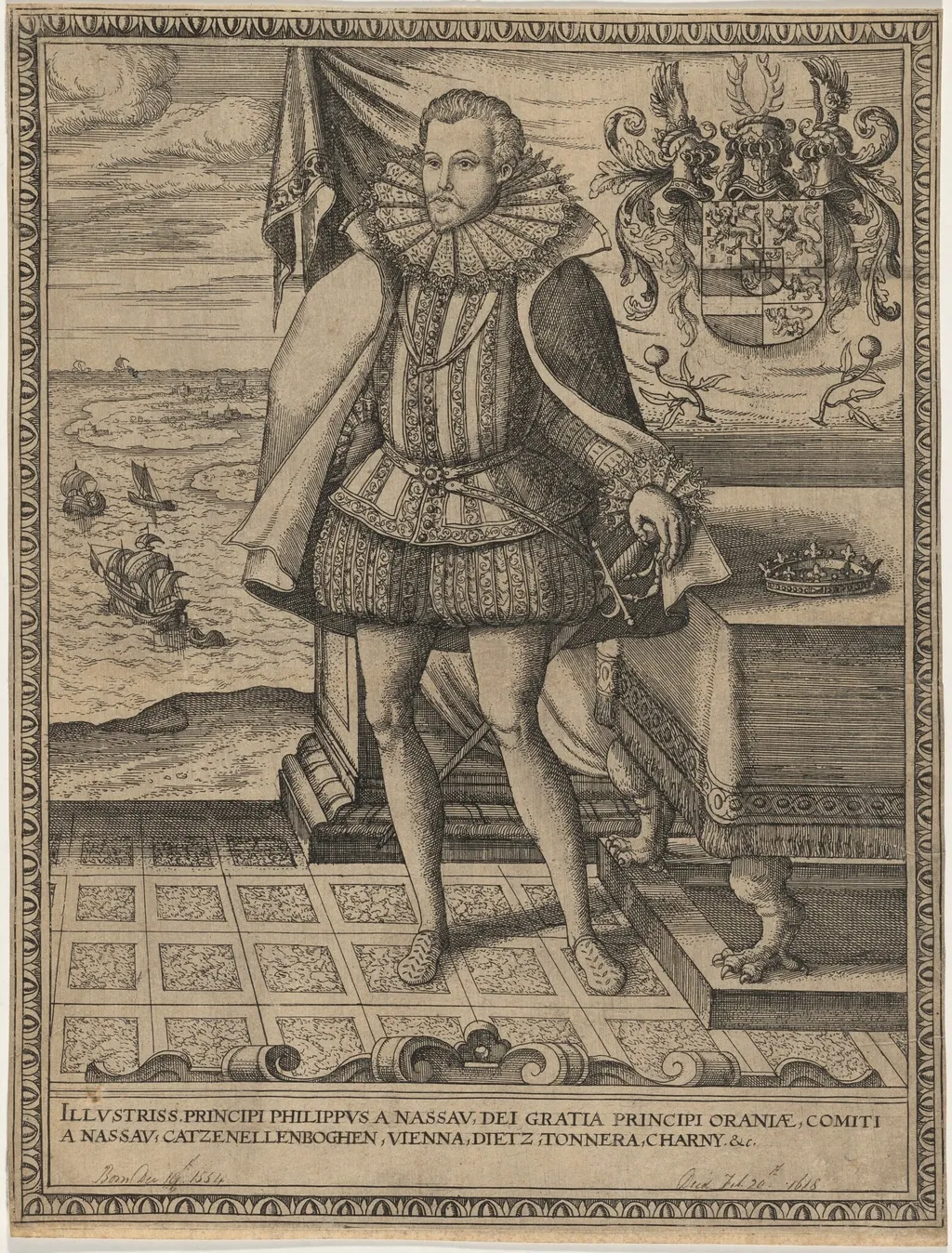
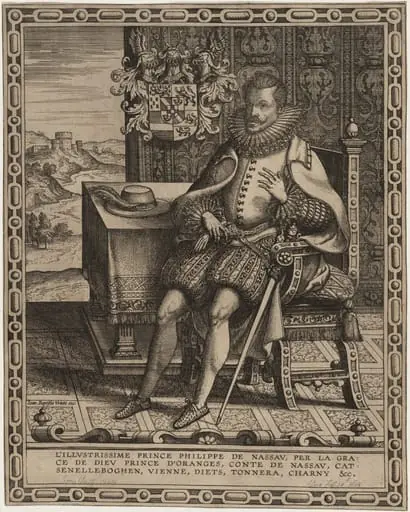
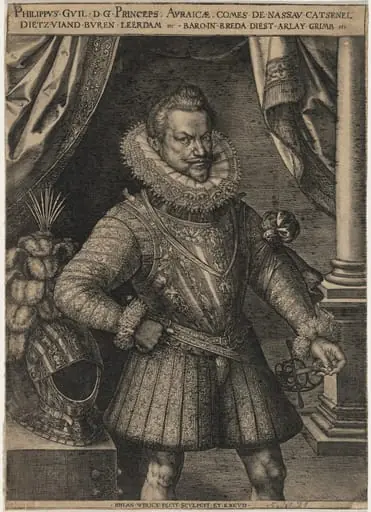
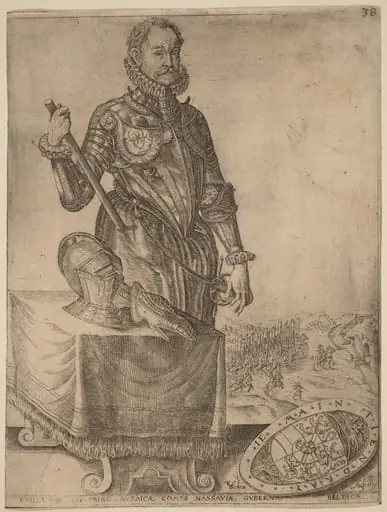
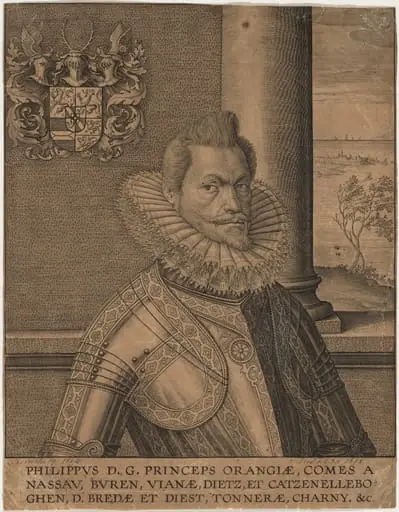
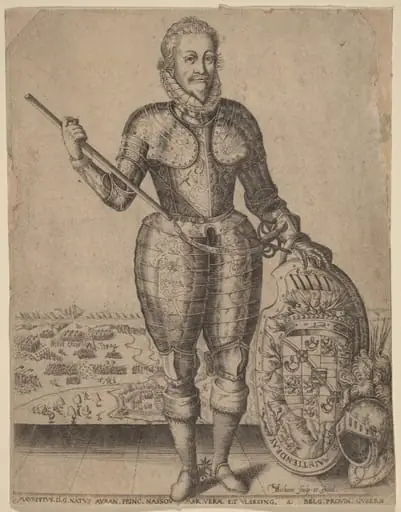
Philip William, Prince of Nassau is an ink print by the Romanticist artist Unknown 19th Century. It dates from 1850 and is held in the collection of the National Gallery of Art.
About this work
Overview
The scene is rendered with meticulous fine-line work, creating depth and texture across the tiled deck, rippling sea, and ornate garments.
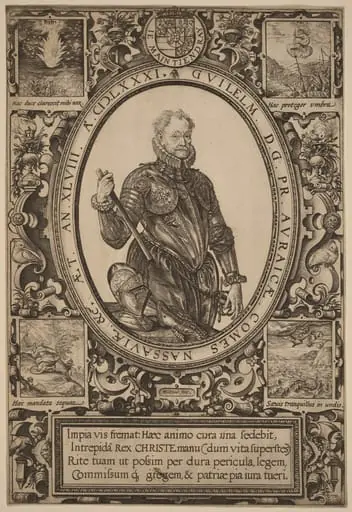
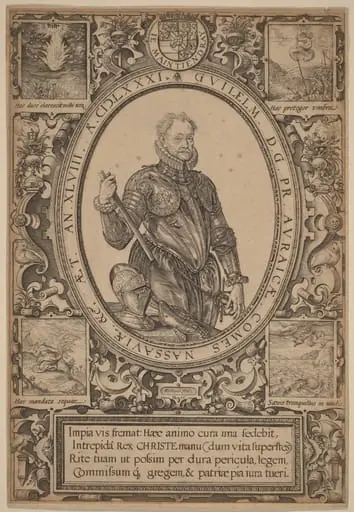
This engraving depicts Philip William, Prince of Nassau, portrayed in formal 17th-century attire aboard a ship. He holds a sword in one hand and a scroll in the other, positioned before a pedestal bearing his family’s coat of arms. The scene is rendered with meticulous fine-line work, creating depth and texture across the tiled deck, rippling sea, and ornate garments. The composition leans toward allegorical representation rather than strict portraiture.
Subject & Meaning
The image presents Philip William not as a literal figure but as a symbol of noble authority and maritime sovereignty. The sword suggests military leadership, while the scroll implies diplomatic or legal power. The ship and coat of arms reinforce his dynastic identity and territorial claims. The theatrical setting elevates him beyond a mere likeness, framing him as an emblem of princely virtue and command.
Technique & Style
The artist employed fine, controlled engraving lines to model light and shadow, giving the figure and surroundings a sculptural solidity. Textures in fabric, wood, and water are built through dense cross-hatching and delicate stippling. The dark tonal range and sharp contrasts enhance the dramatic atmosphere, aligning the work with Northern European print traditions that valued precision and symbolic detail over naturalism.
History & Provenance
Created during the early 1600s, the engraving likely served as a propagandistic or commemorative object for the House of Nassau. It may have been distributed among allies or collected by patrons to affirm political legitimacy. Though the specific printer or publisher is unrecorded, similar prints circulated widely in the Dutch Republic as tools of aristocratic self-representation.
Context
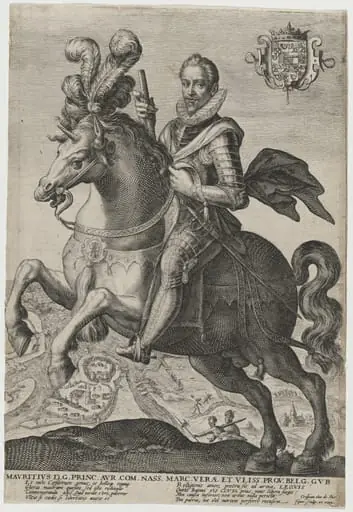
In the early modern period, engraved portraits of nobility often blended realism with allegory to convey status and ambition. Maritime imagery was common among ruling families with colonial or naval interests. Philip William’s portrayal reflects the era’s tendency to merge personal identity with dynastic symbolism, using visual cues to assert power beyond the battlefield or court.
Legacy
This engraving exemplifies how printmaking extended the reach of aristocratic imagery beyond painted portraits. Its technical refinement and symbolic language influenced later generations of engravers who sought to merge portraiture with narrative. Though not widely known today, it remains a representative artifact of how noble families used visual media to shape their public presence.
Artist & collection

Artist