Artwork
Philip William, Prince of Orange
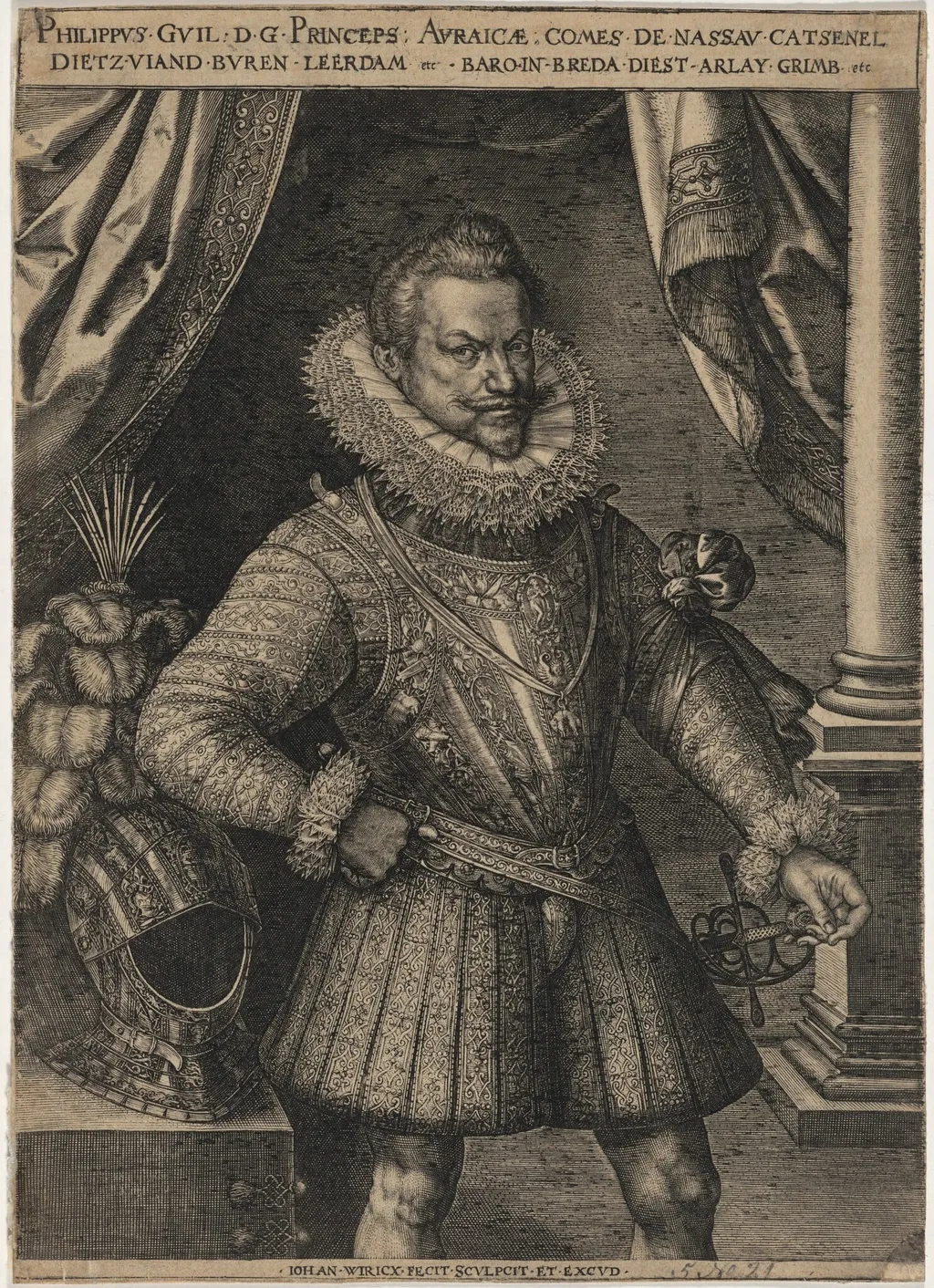
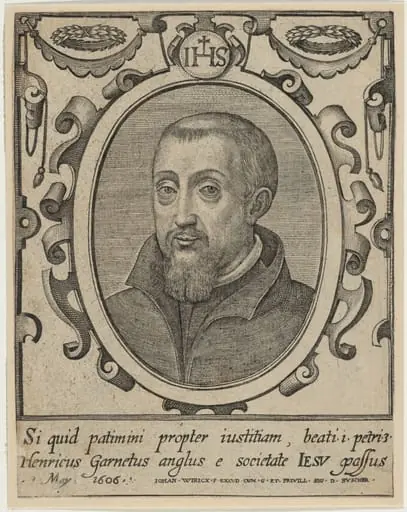
Philip William, Prince of Orange is an ink print by the Renaissance artist Johan Wierix. It dates from 1582 and is held in the collection of the National Gallery of Art.
About this work
Overview
The composition is tightly framed, with the subject centered against a draped curtain, and includes symbolic elements such as a shield and a kneeling figure.
An engraving by Johan Wierix, dated 1582, depicts Philip William, Prince of Orange, in formal attire. Rendered in monochrome, the portrait emphasizes detail through fine linear incisions on a metal plate. The composition is tightly framed, with the subject centered against a draped curtain, and includes symbolic elements such as a shield and a kneeling figure. The artist’s signature and the prince’s name are clearly inscribed, reinforcing the work’s function as a documented likeness.
Subject & Meaning
Philip William, heir to the House of Orange, is portrayed with regal insignia: a jeweled chain, an ornate coat, and a shield bearing his family’s heraldry. The small object in his right hand may signify authority or stewardship, while the kneeling figure offering a crown alludes to his dynastic claim. The imagery conveys legitimacy and continuity, aligning with his status as a political figure during the Dutch Revolt, despite his absence from the Netherlands at the time.
Technique & Style
Wierix employed the engraving technique, incising lines into a copper plate with a burin to create fine, controlled details. The texture of fabric, the sheen of metal, and the depth of the curtain are rendered through varying line density and cross-hatching. The style reflects Northern Renaissance precision, prioritizing clarity and symbolic accuracy over emotional expression, typical of portrait prints intended for dissemination among elite circles.
History & Provenance
Created in 1582, the engraving likely served to affirm Philip William’s status during his captivity in Spain following his father’s assassination. As the eldest son of William the Silent, his image was circulated to maintain political visibility. The print’s survival suggests it was preserved in aristocratic or institutional collections, possibly as part of a broader effort to document the House of Orange’s lineage.
Context
In the early 1580s, the Dutch Revolt intensified, and the House of Orange became central to resistance against Spanish rule. Philip William, though held in Spain, remained a symbolic figurehead. Portraits like this one were tools of propaganda, reinforcing familial legitimacy and succession claims. Wierix, a Flemish engraver known for religious and noble portraits, was commissioned to produce such images for patrons across Europe.
Legacy
The engraving stands as a documented artifact of dynastic representation during a turbulent period in Dutch history. While not widely reproduced today, it contributes to the visual record of the House of Orange’s early modern identity. Its technical execution and iconography reflect the role of print culture in shaping political perception, offering insight into how lineage and authority were visually constructed in the late 16th century.
Artist & collection