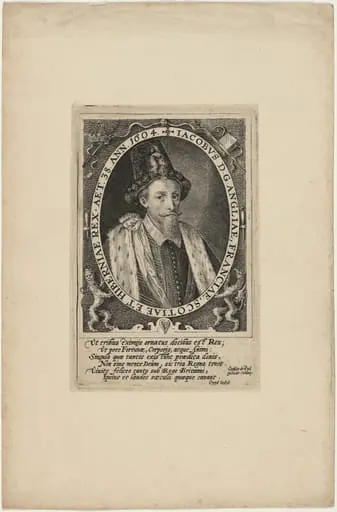
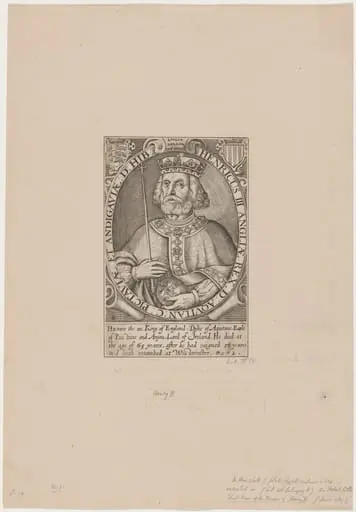
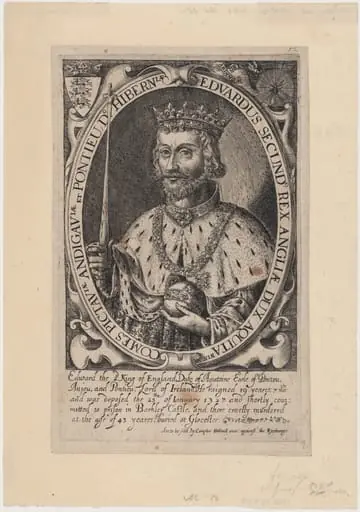
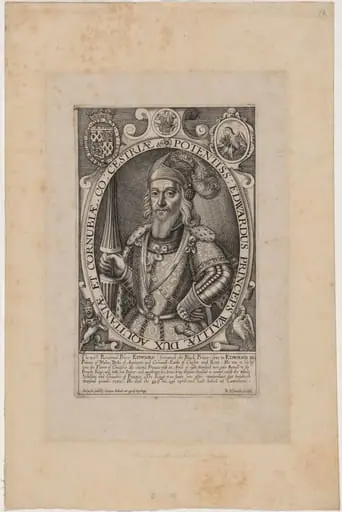
Artwork
Prince John of Gaunt, Duke of Lancaster
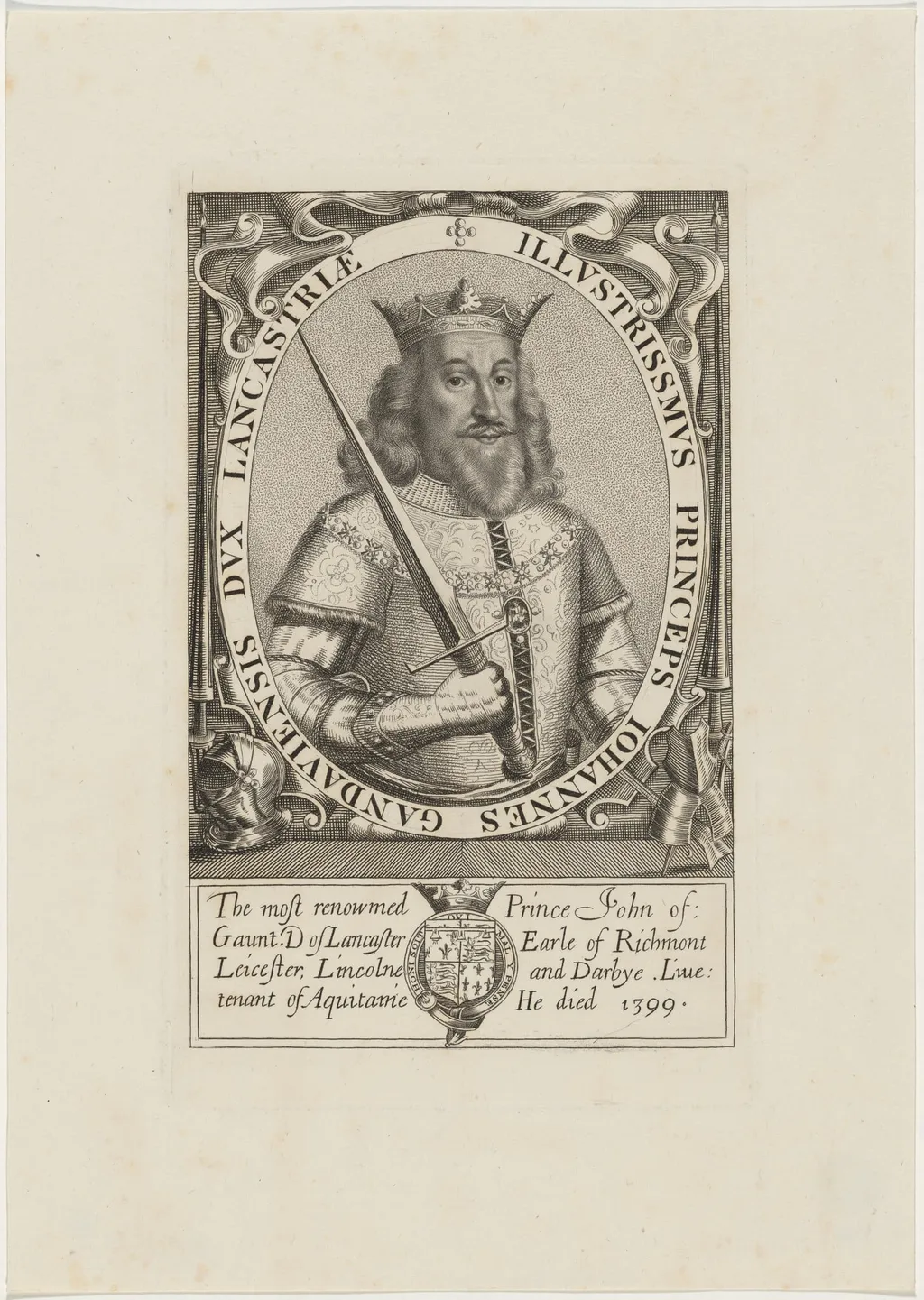
Prince John of Gaunt, Duke of Lancaster is a print by the Romanticist artist Unknown 19th Century. It dates from 1850 and is held in the collection of the National Gallery of Art. This black-and-white print is a facsimile of a historical portrait depicting John of Gaunt, Duke of Lancaster.
About this work
Overview
The plain background emphasizes the subject, while ornate scrollwork frames the image with Latin inscriptions identifying his title.
This black-and-white print is a facsimile of a historical portrait depicting John of Gaunt, Duke of Lancaster. Rendered in monochrome, it captures the figure in formal regalia typical of late 14th-century English nobility. The plain background emphasizes the subject, while ornate scrollwork frames the image with Latin inscriptions identifying his title. The print suggests reproduction from an earlier source, likely intended for scholarly or decorative use in later centuries.
Subject & Meaning
The figure is identified as John of Gaunt, a powerful royal duke and father of King Henry IV. His crown, richly patterned robe, and sword signify his high status and military authority. The scroll in his hand may allude to governance, law, or dynastic claims. The Latin inscriptions reinforce his title, though their accuracy as a historical record remains unverified. The image functions as a symbolic representation of aristocratic legitimacy rather than a precise likeness.
Technique & Style
Executed as a facsimile print, the work reproduces an earlier painted or illuminated portrait in monochrome, likely through engraving or etching. Details such as the robe’s gold patterning and the beard’s texture are rendered in tonal gradations, mimicking the original’s richness without color. The decorative frame, with its intricate scrollwork and Latin text, reflects Renaissance or early modern conventions of framing historical figures, prioritizing dignity over naturalism.
History & Provenance
The print’s origin is undocumented, but its style suggests it was produced centuries after John of Gaunt’s death, possibly during the 18th or 19th century. Such facsimiles were commonly made to disseminate images of notable historical figures for educational or antiquarian purposes. Its current context is unclear, though similar prints are held in institutions like the National Gallery of Art, Washington, where archival collections preserve such reproductions.
Context
John of Gaunt was a central figure in the politics of late medieval England, and his image was frequently invoked in later periods to legitimize royal lineage. This print reflects a broader trend of reviving and reproducing portraits of medieval nobility during the rise of historical scholarship and national identity projects. The use of Latin and ornamental framing aligns with antiquarian practices of the early modern era, which idealized the past through stylized representation.
Legacy
As a facsimile, this print contributes to the enduring visual memory of John of Gaunt, preserving his iconography beyond original medieval sources. While not an authentic contemporary portrait, it serves as a cultural artifact of how later generations interpreted and memorialized medieval figures. Such reproductions helped shape public perception of historical nobility, embedding their imagery into institutional and scholarly collections.
Artist & collection

Artist