Artwork
Queen Elizabeth
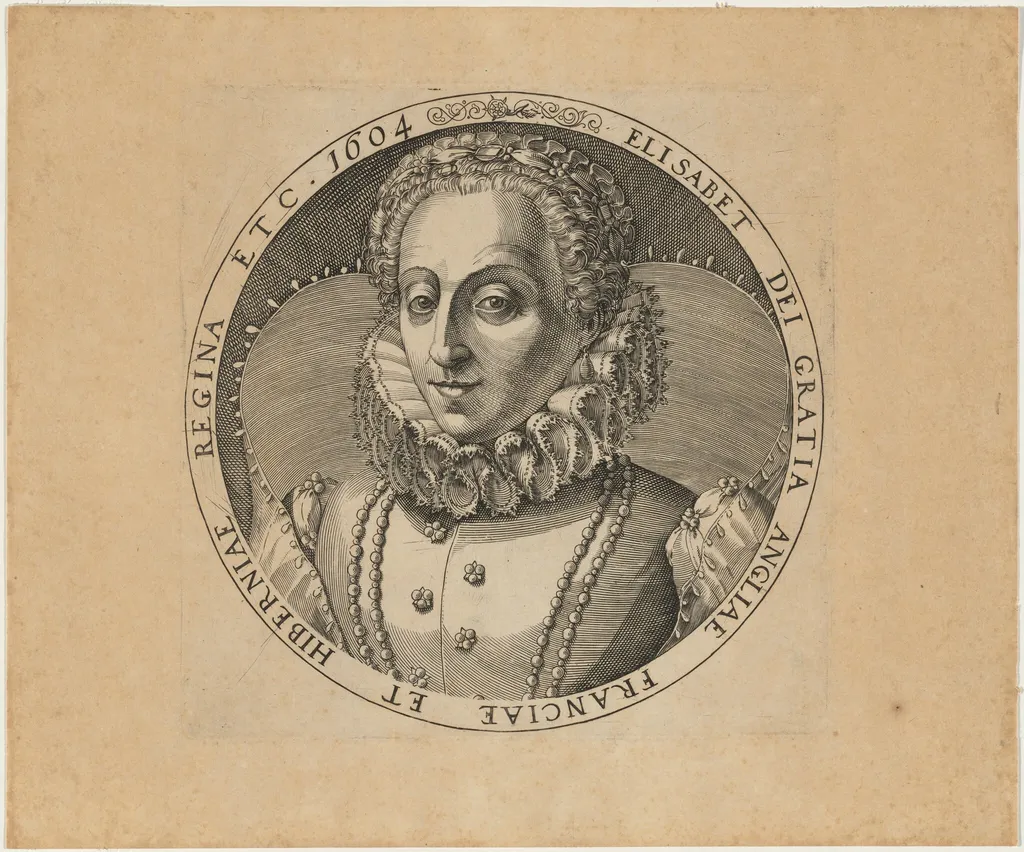
Queen Elizabeth is an ink print by the Baroque artist Unknown 19th Century. It dates from 1604 and is held in the collection of the National Gallery of Art.
About this work
Overview
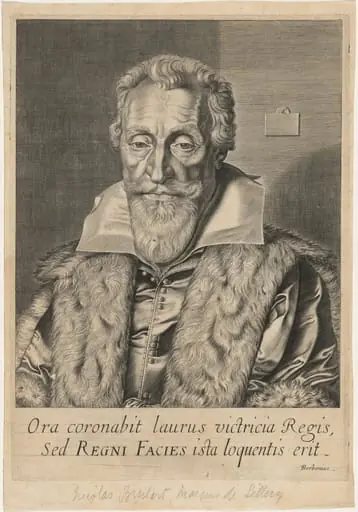
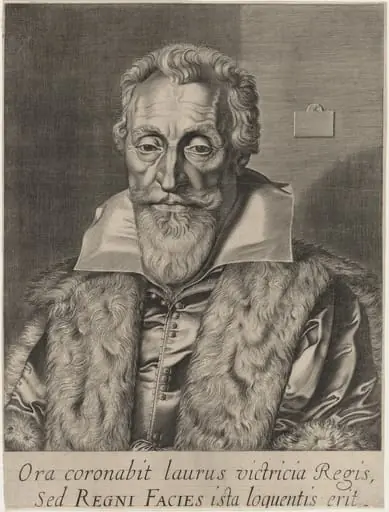
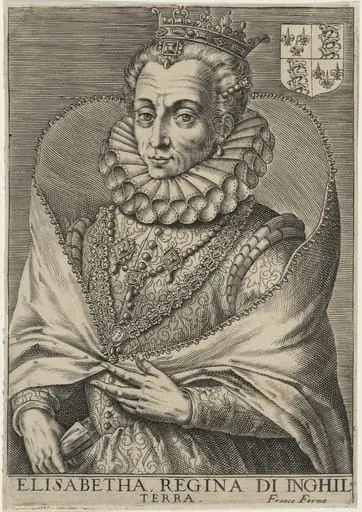
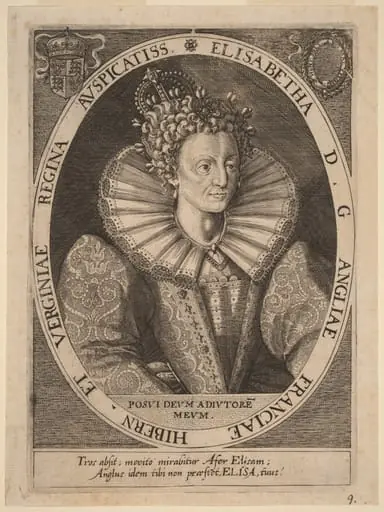
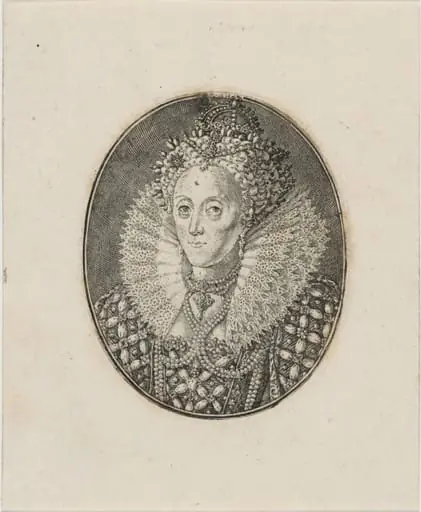
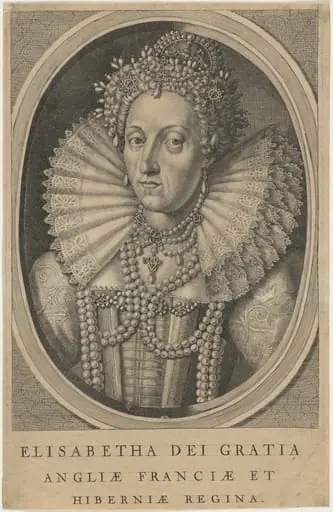
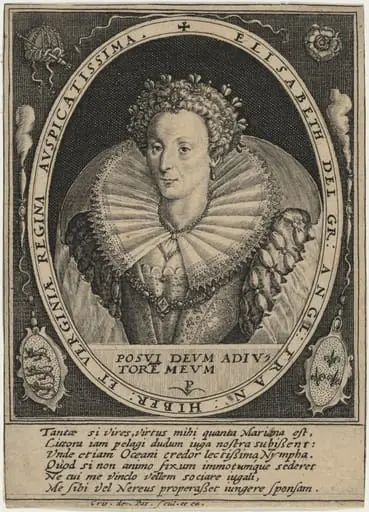
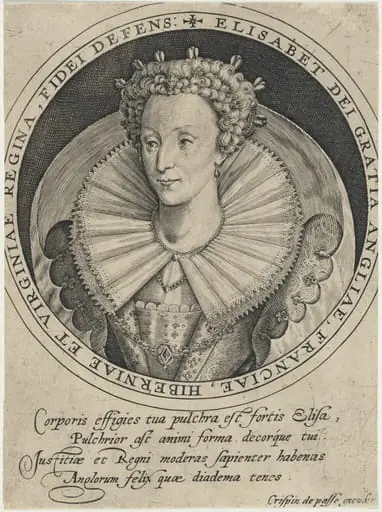
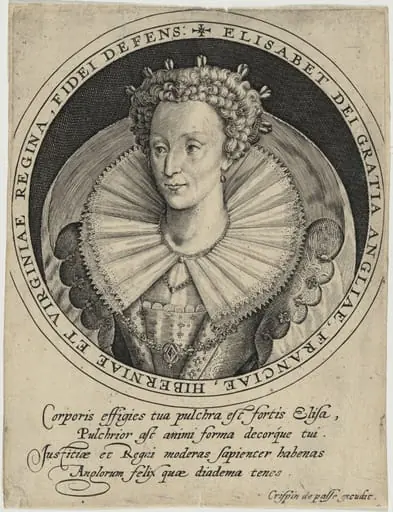
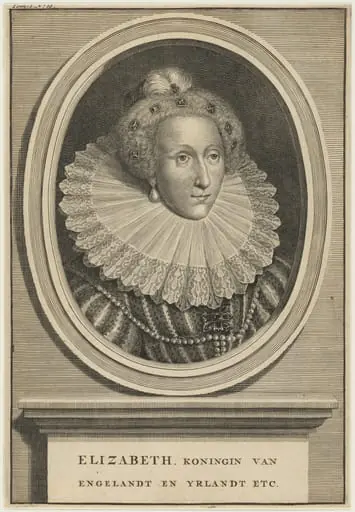
This woodcut portrait depicts Queen Elizabeth I, rendered in fine linear detail against a dark, unmodulated background. The composition focuses on her upper torso and face, emphasizing regal attire and facial expression. The medium’s inherent contrast and precision highlight the craftsmanship typical of early modern printmaking, where each line was carved by hand to achieve clarity and depth.
Subject & Meaning
The portrait presents Elizabeth I in ceremonial dress, adorned with a beaded necklace and a crown-like headpiece, reinforcing her status as monarch. The high collar and ornate fabric suggest formality and authority. Her composed expression, neither warm nor stern, reflects the calculated image of sovereignty cultivated during her reign—measured, distant, and enduring.
Technique & Style
Executed as a woodcut, the image relies on incised lines to define texture and form, with careful attention to the folds of fabric, hair, and jewelry.
Executed as a woodcut, the image relies on incised lines to define texture and form, with careful attention to the folds of fabric, hair, and jewelry. The stark contrast between light and dark areas enhances three-dimensionality. The style aligns with Northern European print traditions of the late 16th century, prioritizing detail over atmospheric effects, though it anticipates later Baroque tendencies in its dramatic framing.
History & Provenance
The print likely originates from the late 1500s, produced during or shortly after Elizabeth’s reign to disseminate her likeness across England and Europe. Woodcuts were a common method for reproducing royal images due to their reproducibility. While the exact origin and printer remain uncertain, its survival indicates its cultural significance in shaping public perception of the monarch.
Context
In an era before photography, printed portraits served as primary means of visual propaganda. Elizabeth’s image was tightly controlled to project stability and divine right. This woodcut, like others of the period, was distributed to nobles, institutions, and foreign courts, reinforcing her authority through consistent visual representation in a time of political and religious upheaval.
Legacy
As one of many printed portraits of Elizabeth I, this woodcut contributes to a broader visual archive that defined her public persona for centuries. Its technical precision and formal restraint reflect the limitations and strengths of early print media. Today, it stands as a historical artifact of how power was visually constructed and circulated in pre-modern Europe.
Artist & collection

Artist