Artwork
Sir Henry Wotton
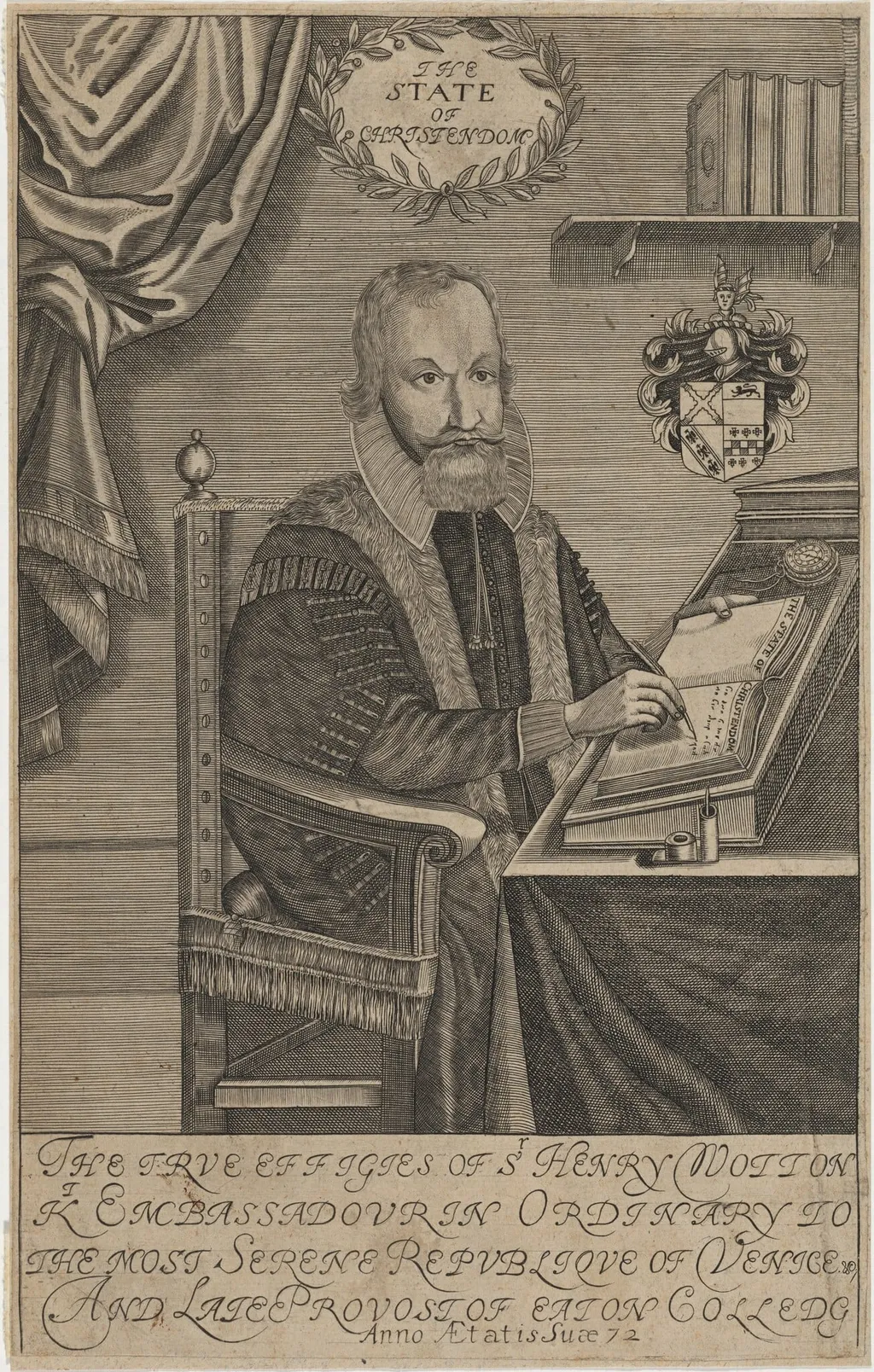
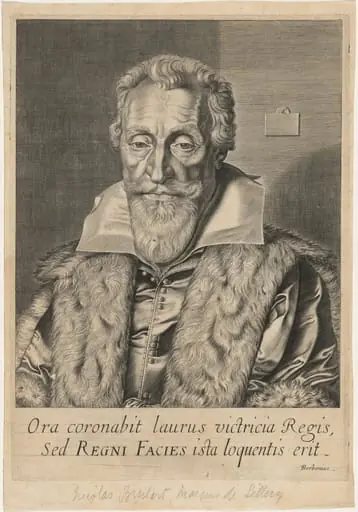
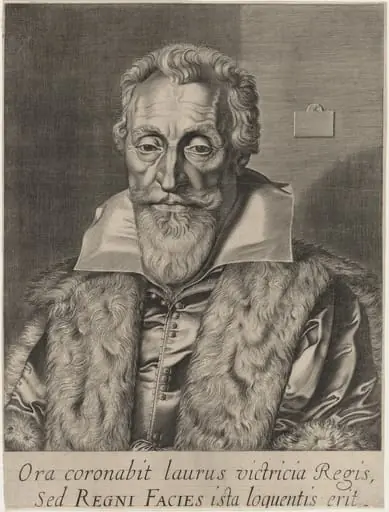
Sir Henry Wotton is an ink print by the Baroque artist Unknown 19th Century. It dates from 1657 and is held in the collection of the National Gallery of Art.
About this work
Overview
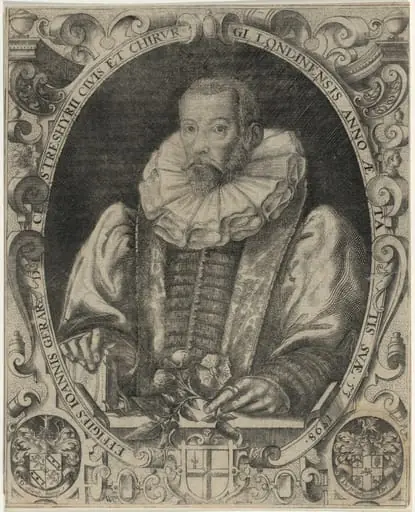
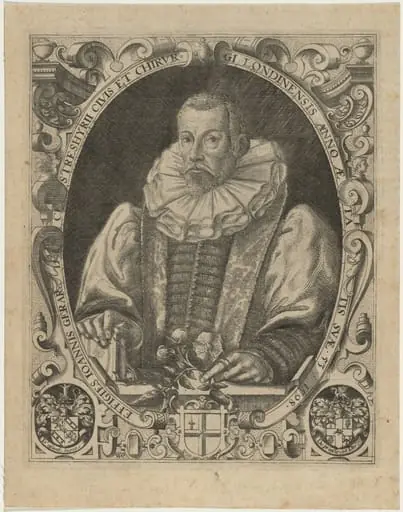
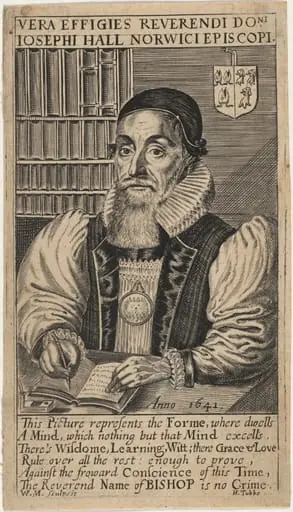
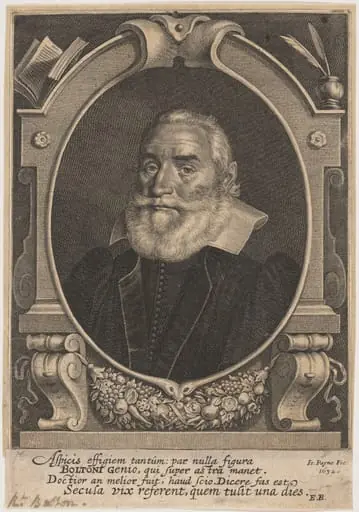
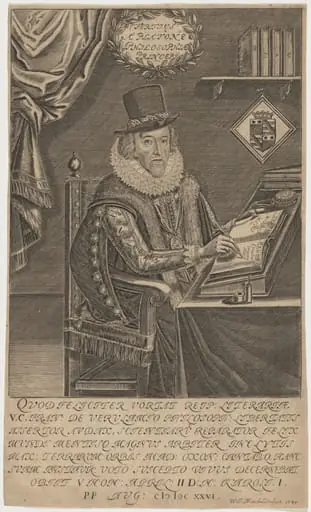
The engraving presents Sir Henry Wotton seated in an armchair, his left hand holding an open volume. He is attired in elaborate seventeenth‑century dress, featuring a ruffled collar and a long coat. Behind him a heraldic shield bearing a crown and assorted symbols is visible, while a low bookcase filled with bound volumes occupies the foreground.
Subject & Meaning
The portrait identifies Wotton as a learned figure, emphasized by the open book and the surrounding library. The inclusion of a coat of arms and regal insignia underscores his social standing and connections to the aristocracy, suggesting a link between intellectual authority and noble status.
Technique & Style
The image is rendered entirely in black and white through cross‑hatching, a method of intersecting lines that creates tonal variation and a sense of three‑dimensional form. This approach, typical of Baroque portrait prints, allows the artist to model flesh, fabric, and architectural elements without the use of color.
History & Provenance
The print bears the title *The State of Christendom* at the top and the caption *The true effigies of Sir Henry Wotton* at the bottom, indicating it was intended as an authentic likeness for contemporary viewers. No further details about its original publisher or date are supplied in the available description.
Context
Produced during the Baroque period, the engraving reflects the era’s interest in combining portraiture with emblematic symbols of power and learning. Such prints were often circulated among educated circles to commemorate notable individuals and to reinforce cultural ideals of erudition and noble lineage.
Artist & collection

Artist