Artwork
Later Copy of the Arms of Scotland
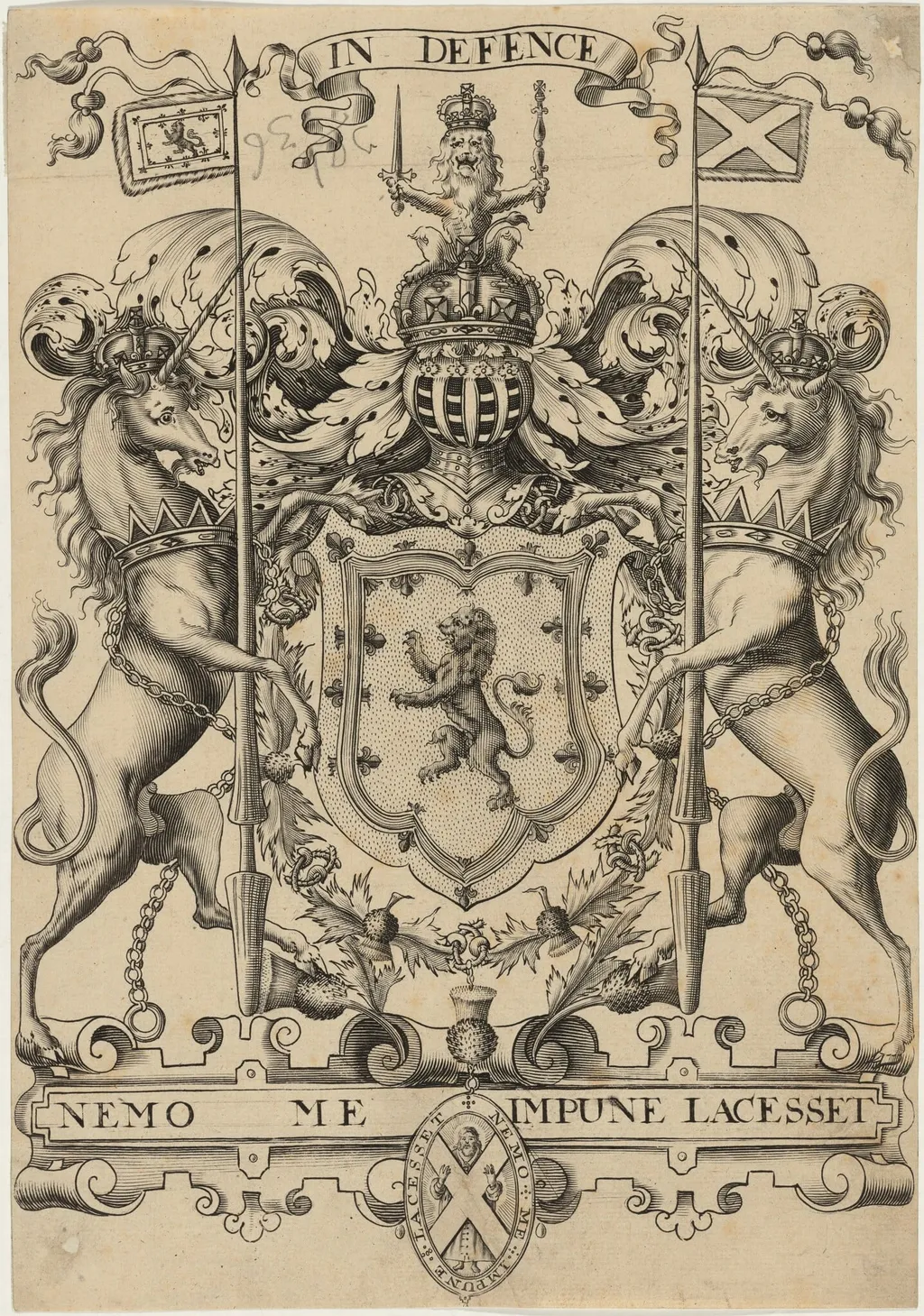
Later Copy of the Arms of Scotland is a print by the Romanticist artist Unknown 19th Century. It dates from 1850 and is held in the collection of the National Gallery of Art. This 19th-century print is a faithful reproduction of the royal coat of arms of Scotland.
About this work
You see a coat of arms with symbols like lions and unicorns in this painting.
It's a copy from the 19th century, and that's interesting because it shows how artists repeated important designs.
The details in the copy are pretty accurate, which suggests the artist paid close attention to the original.
You can learn more about this style by looking into the technique of impasto.
Overview
This 19th-century print is a faithful reproduction of the royal coat of arms of Scotland. Created as a facsimile, it reflects a period when historical heraldic imagery was systematically documented and replicated. The work does not originate from the medieval era but serves as a deliberate transcription, preserving the emblem’s formal structure for educational or archival purposes.
Subject & Meaning
The composition centers on the traditional Scottish royal arms: two rampant lions passant guardant and a unicorn, each flanking a shield bearing the lion rampant. These symbols represent sovereignty and national identity, rooted in centuries of monarchical tradition. The inclusion of the unicorn, often chained, alludes to the mythical power and untamed nature of the Scottish crown.
Technique & Style
The print reproduces heraldic elements with precision, emphasizing clarity over artistic interpretation. While the original description mentions impasto, this medium—being a facsimile print—likely relies on engraving or lithographic methods to achieve fine detail. The absence of textured brushwork suggests a focus on accuracy rather than painterly expression.
History & Provenance
Produced in the 19th century, this copy emerged during a wave of antiquarian interest in national symbols. Such reproductions were often commissioned for public institutions, educational texts, or private collections seeking to preserve historical insignia. Its existence indicates a broader cultural effort to standardize and disseminate heraldic knowledge during the Victorian era.
Context
In the 1800s, as national identities were being redefined across Europe, Scotland’s heraldic imagery gained renewed attention. This print aligns with efforts to visually codify heritage amid industrialization and political change. Similar facsimiles appeared in official publications, reinforcing continuity between past monarchy and contemporary state identity.
Legacy
This reproduction contributes to the archival record of Scottish heraldry, ensuring the emblem’s visual consistency across time. Though not an original artifact, it played a role in maintaining public familiarity with national symbols. Its existence underscores how printed media helped stabilize and transmit institutional imagery beyond the reach of original manuscripts or seals.
Artist & collection

Artist

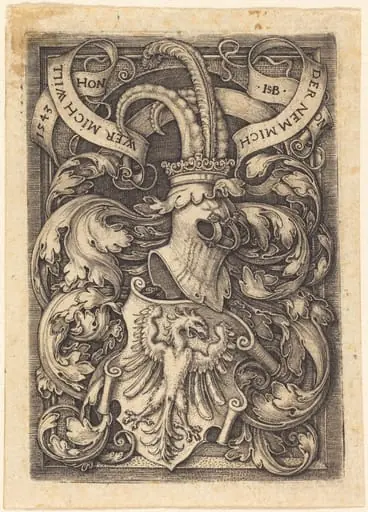 Coat of Arms with an Eagle
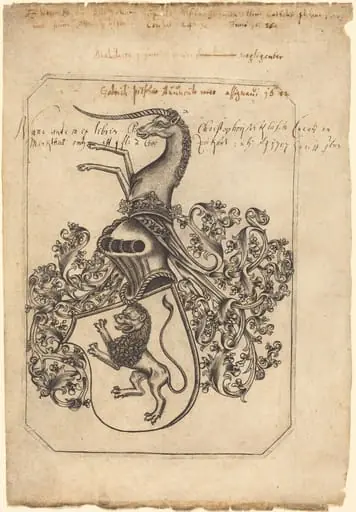 Coat of Arms with a Lion and Unicorn
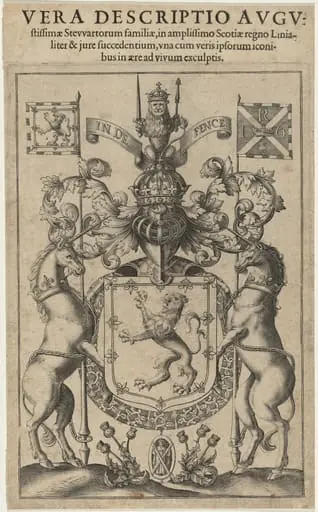 Stuart Coat of Arms from Vera Descriptio by John Jonston
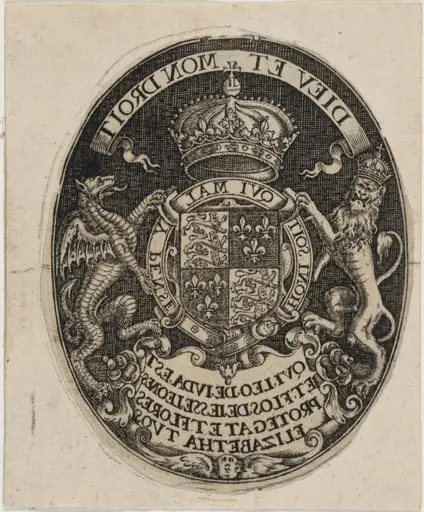 Shield of Queen Elizabeth
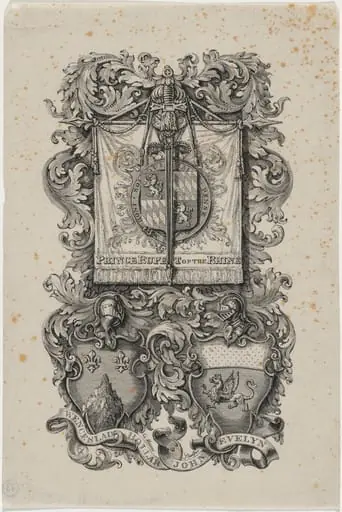 Coat of Arms of Prince Rupert, Hollar and Evelyn
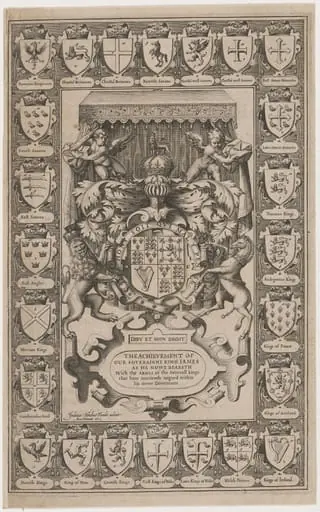 Title Page for the Achievement of our Soveraigne King James
 Ornament Fillet
![Shield of James I [bottom half], by Simon van de Passe](https://artifactworldgallery.com/img/simon-van-de-passe--shield-of-james-i-bottom-half--ba628f9c8498bd19-w320.webp) Shield of James I [bottom half]
Shield of James I [bottom half]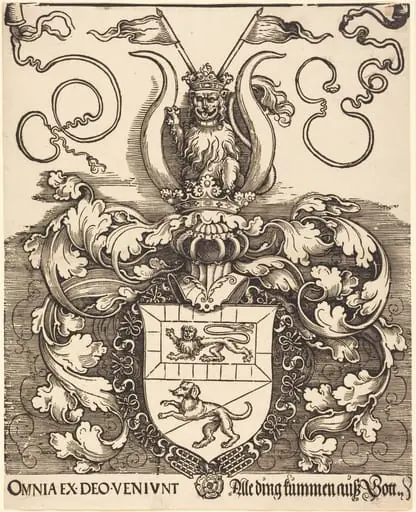 Coat of Arms of Lorenz Staiber