Artwork
James I in Parliament
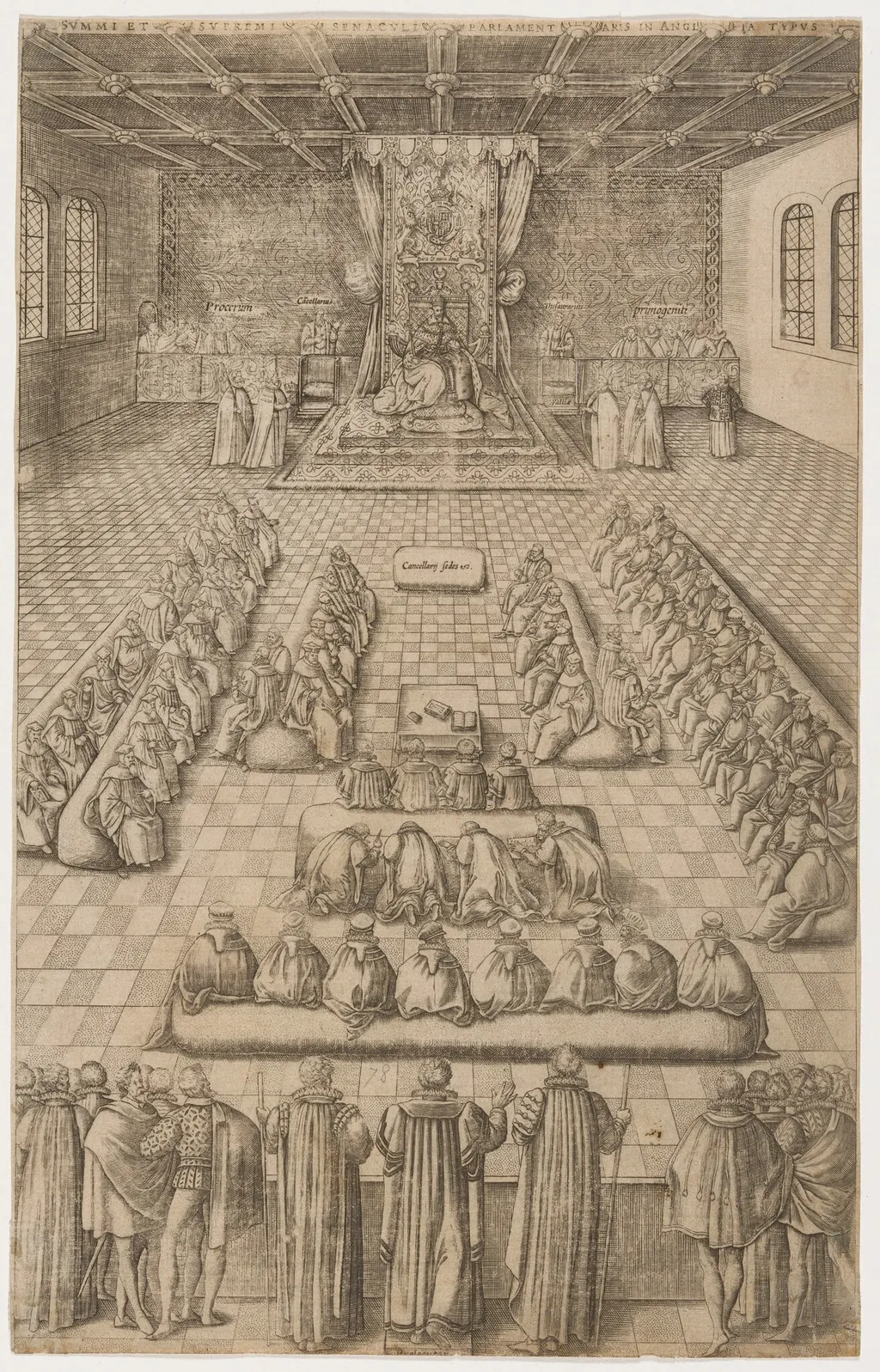
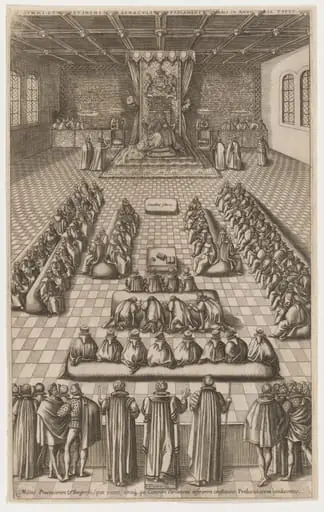
James I in Parliament is an ink print by the Baroque artist Renold Elstrack. It dates from 1610 and is held in the collection of the National Gallery of Art.
About this work
Overview
Though the monarch is absent, his presence is implied by the empty throne beneath a canopy, anchoring the composition’s hierarchical structure.
Created in 1610 by Renold Elstrack, this engraving depicts a formal session of the English Parliament under King James I. Rendered in fine linear etching, the print captures a multi-tiered chamber filled with attendees in period dress. Though the monarch is absent, his presence is implied by the empty throne beneath a canopy, anchoring the composition’s hierarchical structure. The work serves as a documentary record of parliamentary ritual rather than a portrait of individuals.
Subject & Meaning
The scene illustrates the ceremonial assembly of Parliament, emphasizing order and institutional formality. Figures are arranged by rank: nobles and clergy near the throne, lawyers and officials clustered around the table, and lesser attendees filling the lower tiers. The empty throne signals the king’s authority without his physical presence, reinforcing the idea of monarchy as a structural force within governance. The detailed attire and postures reflect the social and political distinctions of early Stuart England.
Technique & Style
Elstrack employed fine-line etching to achieve intricate detail and subtle tonal variation. The use of cross-hatching and delicate parallel lines models light and shadow, giving depth to the crowded interior without color or wash. Architectural elements—beamed ceilings, tall windows, and railings—are rendered with precision, suggesting spatial depth. The style aligns with Northern European print traditions, prioritizing clarity and structural accuracy over expressive drama.
History & Provenance
The engraving was produced shortly after James I’s accession, likely to commemorate parliamentary proceedings or distribute as a political document. It was printed in London and circulated among elites and institutions. No early ownership records are widely documented, but surviving impressions suggest limited, selective distribution. The work survives in a small number of institutional collections, primarily in British archives and print rooms.
Context
This print emerged during a period of growing tension between the Crown and Parliament over taxation and royal prerogative. While James I favored divine right, Parliament asserted its traditional rights. Elstrack’s image, though neutral in tone, reflects the formalized rituals that underpinned these power struggles. Similar engravings of state occasions were rare in England at the time, making this an early example of political visual documentation in print form.
Legacy
Elstrack’s engraving stands as one of the earliest detailed visual records of an English parliamentary session. It influenced later depictions of state ceremonies and provided a model for how institutional authority could be conveyed through print. Though not widely reproduced in its time, it remains a key reference for historians studying the visual culture of early modern governance and the role of print in shaping political perception.
Artist & collection

 Queen Elizabeth in Parliament
 Composite Image Depicting Actions of Henri IV, King of France, upon His Abjuration of the Protestant Faith
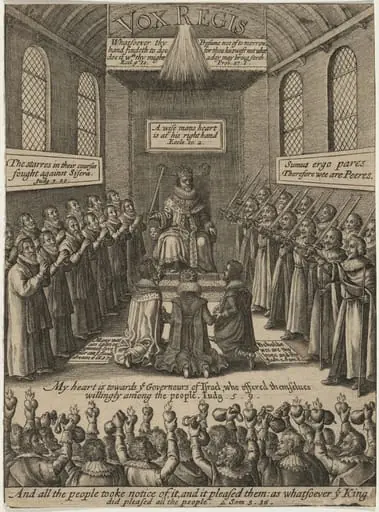 Vox Regis, by Thomas Scott
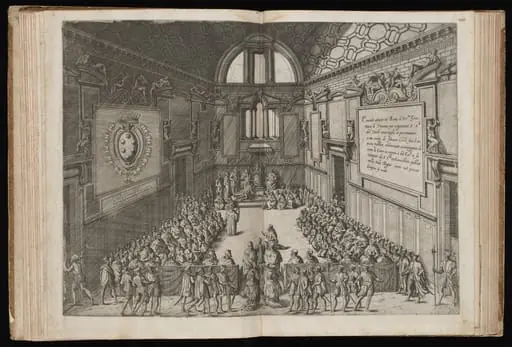 The Coronation of Cosimo I de' Medici
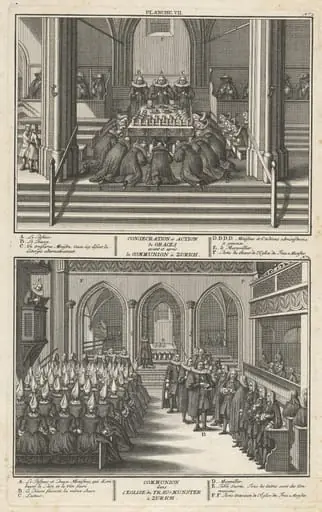 Consecration et Action de Graces avant et après la Communion à Zurich; Communion dans l’Eglise du Fraumunster à Zurich (Consecration and Communion at the Fraumunster, Zurich)
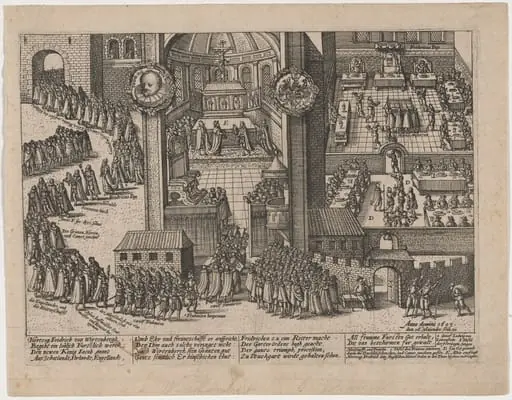 Frederick VI, Duke of Wurtenberg
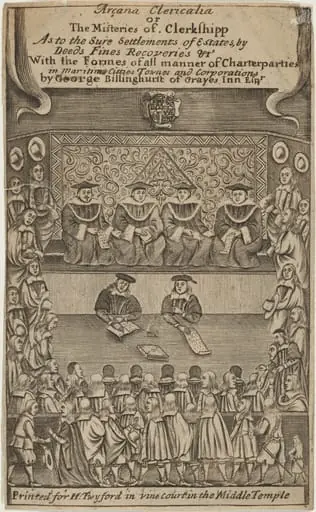 Title Page to Arcana Clericalia or the Misteries of Clerkshipp by George Billinghurst
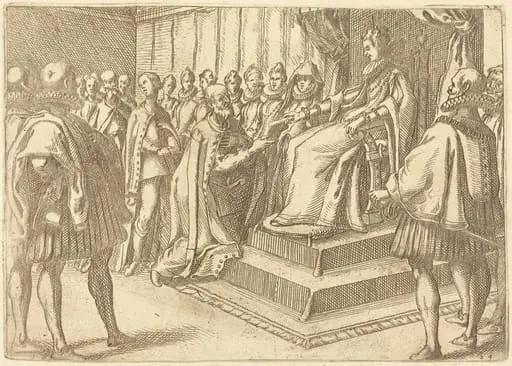 Reception of the Envoy of Poland
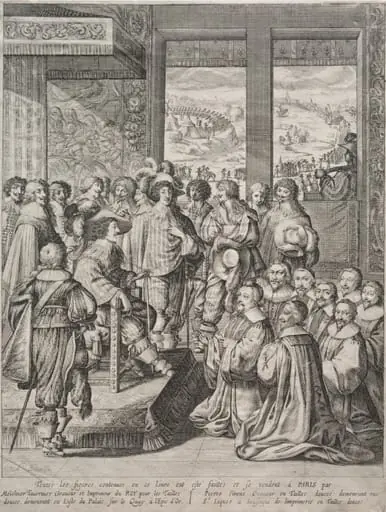 Louis XIII Receiving a Deputation of Magistrates
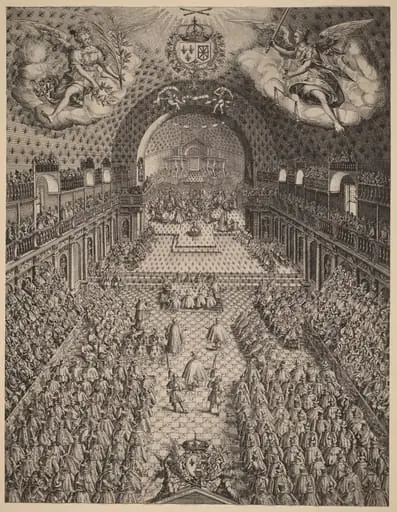 The States General of France (Les Etats Generaux de France)
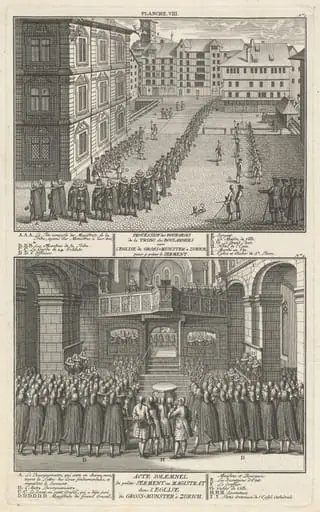 Procession des Bourgeois de la Tribu des Boulangers vers l’Eglise du Grossmunster à Zurich, pour y prêter le Serment; Acte Solemnel de prêter Serment au Magistrat dans l’eglise du Grossmunster à Zurich (Procession and Sermon at the Grossmunster)
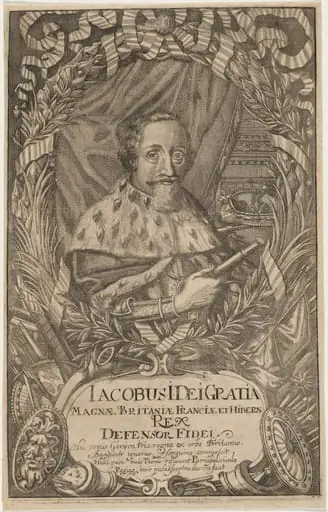 James I