Artwork
Title Page to the Bible
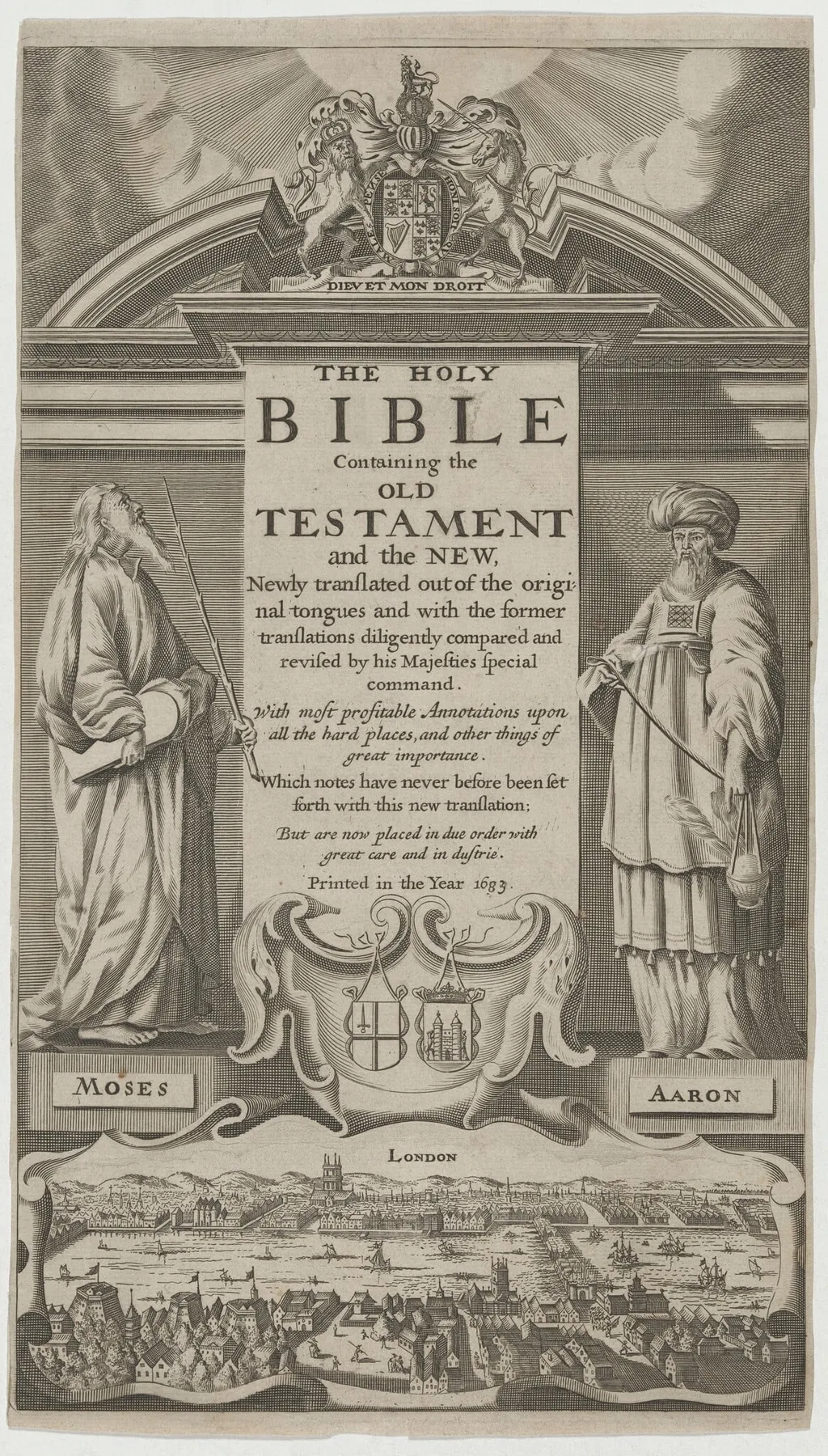
Title Page to the Bible is an ink print by the Romanticist artist Unknown 19th Century. It dates from 1850 and is held in the collection of the National Gallery of Art. This 1693 engraving serves as the title page for a newly published Bible translation accompanied by scholarly annotations.
About this work
The bottom features a detailed cityscape labeled "London," showing ships, buildings, and a busy river.
This image shows a title page for a Bible. On the left is a robed figure labeled "Moses" holding a long staff. On the right is another figure labeled "Aaron," also in robes and a turban. Above them is a coat of arms with a crown and Latin words.
The page advertises a new Bible translation with notes, printed in 1693. The bottom features a detailed cityscape labeled "London," showing ships, buildings, and a busy river.
Look up engraving to see how artists create intricate images like this.
Overview
This 1693 engraving serves as the title page for a newly published Bible translation accompanied by scholarly annotations. Executed in fine line work typical of early modern printmaking, it combines religious symbolism with civic imagery to assert the authority and contemporary relevance of the edition. The composition centers on two biblical figures flanking a heraldic emblem, while the lower register depicts a detailed view of London, grounding the sacred text in a specific urban and historical moment.
Subject & Meaning
Moses and Aaron, identified by inscriptions, represent the foundations of Mosaic law and priestly authority. Their placement on either side of the coat of arms—featuring a crown and Latin text—suggests divine sanction for the translation project. The inclusion of these figures alongside a royal emblem implies alignment between religious truth, monarchical power, and institutional legitimacy, reinforcing the edition’s claim to scholarly and spiritual credibility.
Technique & Style
The image is rendered in meticulous engraving, a technique involving incised lines on a metal plate inked and pressed onto paper. Fine cross-hatching and delicate contours define the figures’ robes, the armorial details, and the architectural elements of London. The contrast between the static, symbolic figures above and the lively, crowded cityscape below demonstrates the engraver’s command of spatial depth and textural variation within a single composition.
History & Provenance
Produced in London in 1693, this title page accompanied a Bible edition likely intended for educated Protestant audiences. The detailed cityscape and the use of Latin reflect the era’s scholarly culture and the city’s role as a center of printing and theological debate. The engraving’s precision and heraldic elements suggest patronage by a reputable publisher seeking to distinguish their edition through visual authority and geographic specificity.
Context
In late 17th-century England, new Bible translations were closely tied to religious and political identity. The emphasis on Moses and Aaron, combined with royal iconography, aligns with post-Reformation efforts to affirm scriptural authority while distancing from Catholic tradition. The depiction of London as a thriving port city underscores the connection between print culture, commerce, and the dissemination of religious texts in an increasingly literate society.
Legacy
This engraving exemplifies how early modern publishers used visual rhetoric to legitimize textual authority. Its fusion of biblical imagery with contemporary urban life set a precedent for later religious publications, where geography and heraldry served to anchor sacred content in the material world. Though not widely reproduced today, it remains a representative artifact of print culture’s role in shaping religious understanding during the Enlightenment.
Artist & collection

Artist


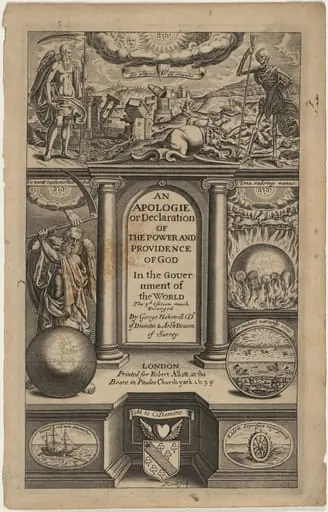 Title Page to An Apologie, or Declaration of the Power and Providence of God
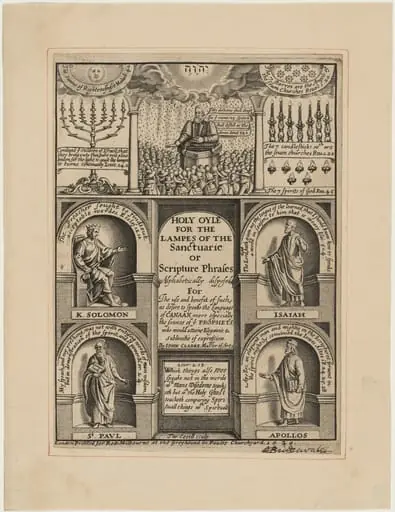 Title Page for Holy Oyle for the Lampes of the Sanctuarie, John Clarke
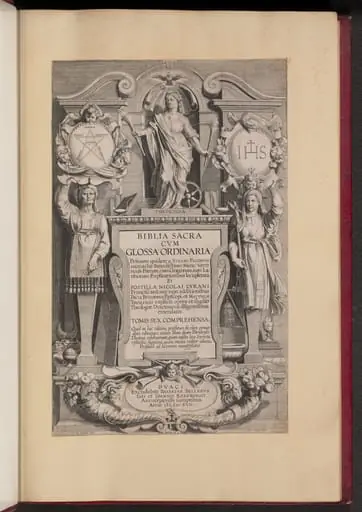 Title Page for Biblia Sacra Cvm Glossa Ordinaria
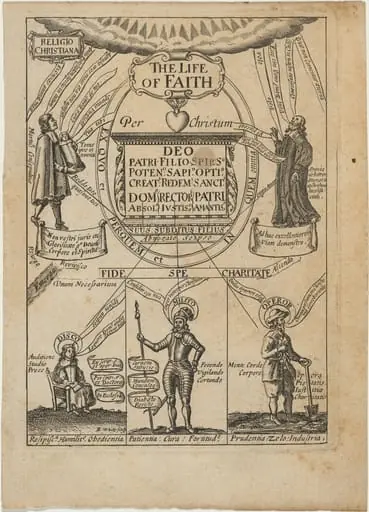 Title Page to The Life of Faith by Richard Baxter
 Satan Going Forth from the Presence of the Lord
 Title Page to "The History of Great Britaine" by John Speed
 Jupiter
 Title Page for Ludovicus Blosius, Opera
 Title Page for Ludovicus Blosius, Opera
 The Temple of Honor