Artwork
Jupiter
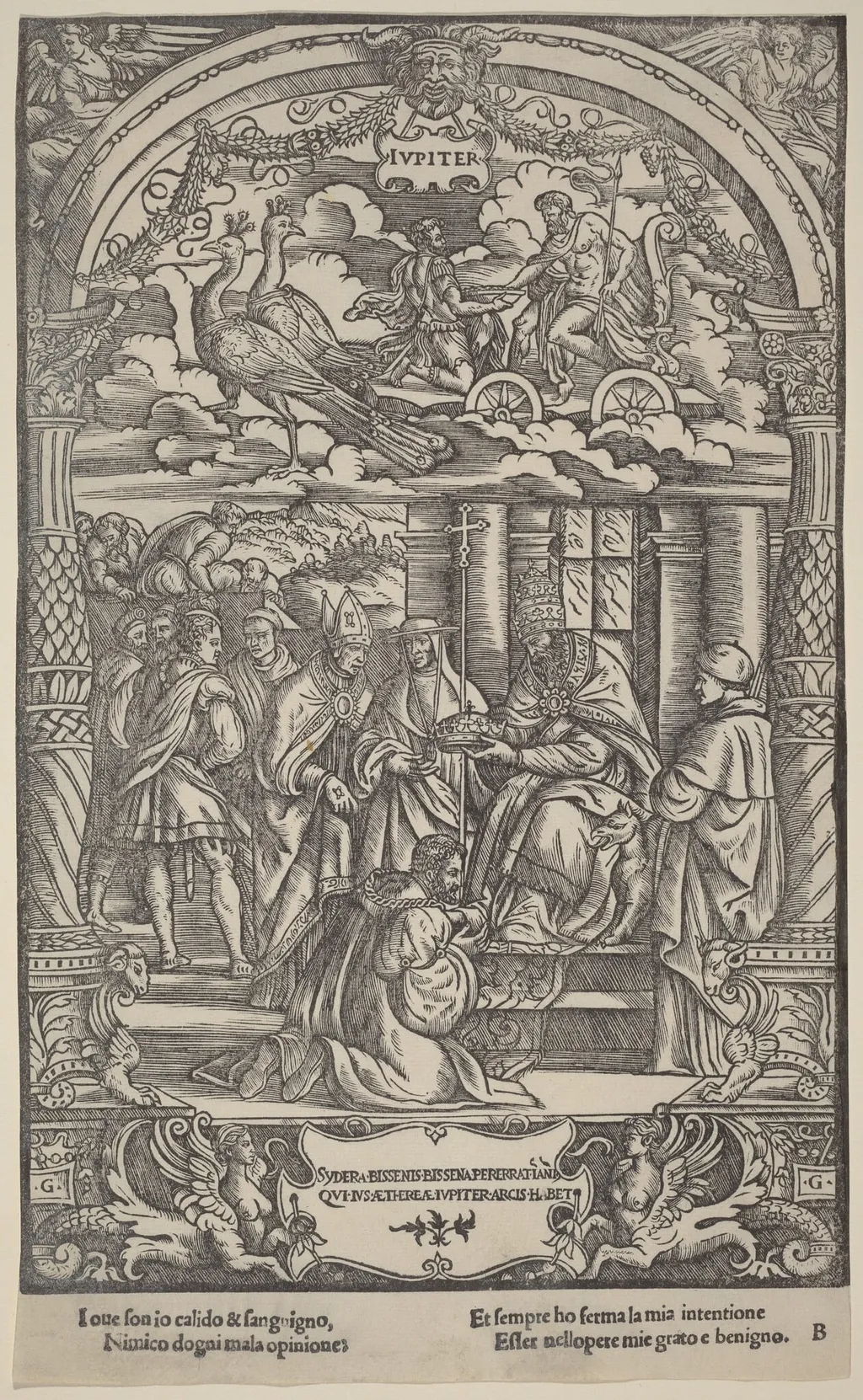
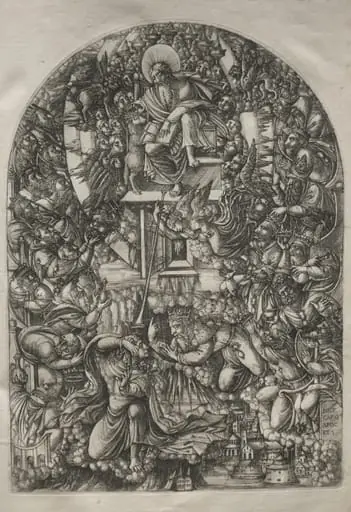
Jupiter is an ink print by the Renaissance artist Gabriele Giolito de' Ferrara. It dates from 1534 and is held in the collection of the National Gallery of Art.
About this work
Overview
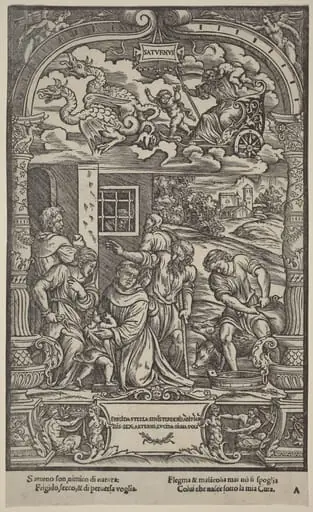
Jupiter is a 1534 woodcut print attributed to Gabriele Giolito de' Ferrara. Executed entirely in black and white, the image presents a densely populated composition filled with figures, animals, and decorative motifs, all rendered with crisp, linear incisions typical of early‑modern Italian printmaking.
Subject & Meaning
At the composition’s core a robed figure cradles an infant while a kneeling man attends him, suggesting a paternal or protective scene.
At the composition’s core a robed figure cradles an infant while a kneeling man attends him, suggesting a paternal or protective scene. Above them, a winged deity labeled “Jupiter” occupies a cloud, hurling bolts of lightning, implying divine authority. Encircling the central tableau are diminutive human and animal forms, scrollwork, and enigmatic symbols, while an Italian inscription at the base hints at an allegorical or moral instruction.
Technique & Style
The work employs the traditional woodcut method: a design cut into a wooden block, inked, and pressed onto paper. Giolito’s hand is evident in the sharp, intersecting lines that define figures and decorative elements, creating strong contrasts without any chromatic variation. The dense, almost chaotic arrangement of motifs reflects the period’s fascination with intricate narrative prints.
History & Provenance
Created in the early sixteenth century, the print belongs to the output of Giolito de' Ferrara’s publishing house, a leading Venetian‑based printer of literary and illustrative works. Surviving copies appear in several European collections, indicating the image’s circulation among patrons interested in mythological and didactic subjects.
Context
The depiction of Jupiter aligns with the Renaissance revival of classical mythology, where the chief Roman god often symbolized supreme power and justice. The inclusion of moralizing text mirrors contemporary humanist practices that paired visual allegory with didactic commentary, a common feature in printed ephemera of the era.
Artist & collection


 The Old King on His Throne
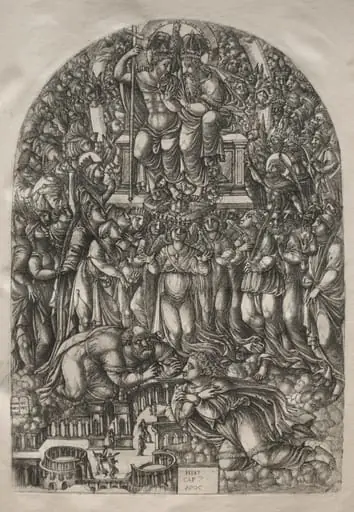 The Apocalypse: An Innumerable Multitude Which Stand before the Throne
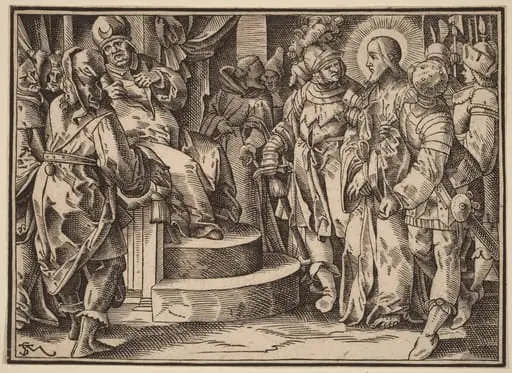 Christ Tells His Disciples of the Last Judgment
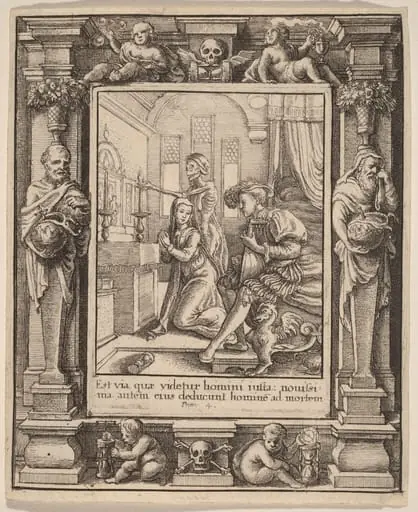 Nun
Nun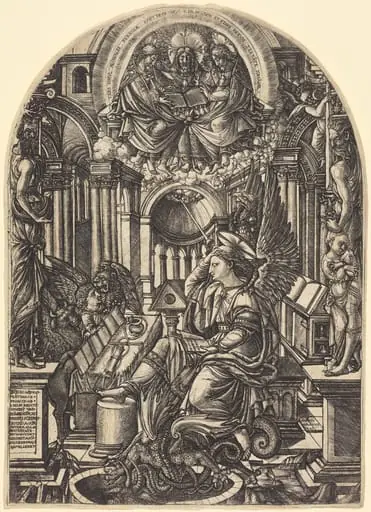 The Revelation of Saint John the Evangelist
![The Adoration of the Kings [recto], by German 16th Century](https://artifactworldgallery.com/img/german-16th-century--the-adoration-of-the-kings-recto--d7f3fbf5ae8063c3-w320.webp) The Adoration of the Kings [recto]
The Adoration of the Kings [recto]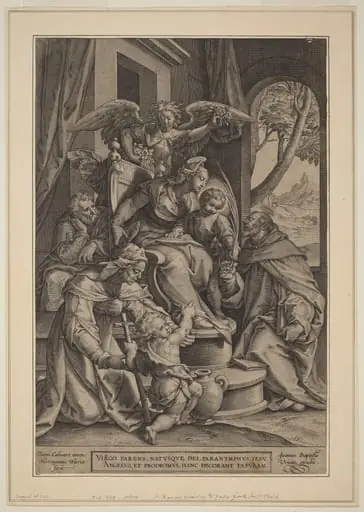 The Holy Kinship
 The Apocalypse: St. John Summoned to Heaven
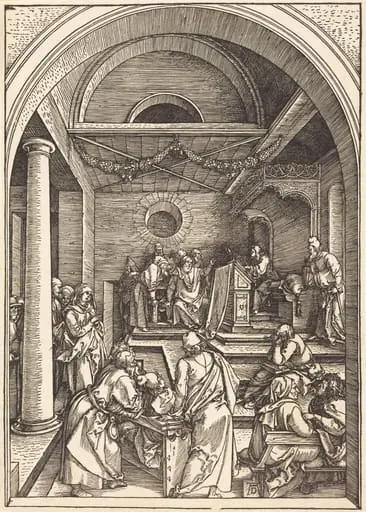 Christ among the Doctors