Artwork
Title Page for Ludovicus Blosius, Opera
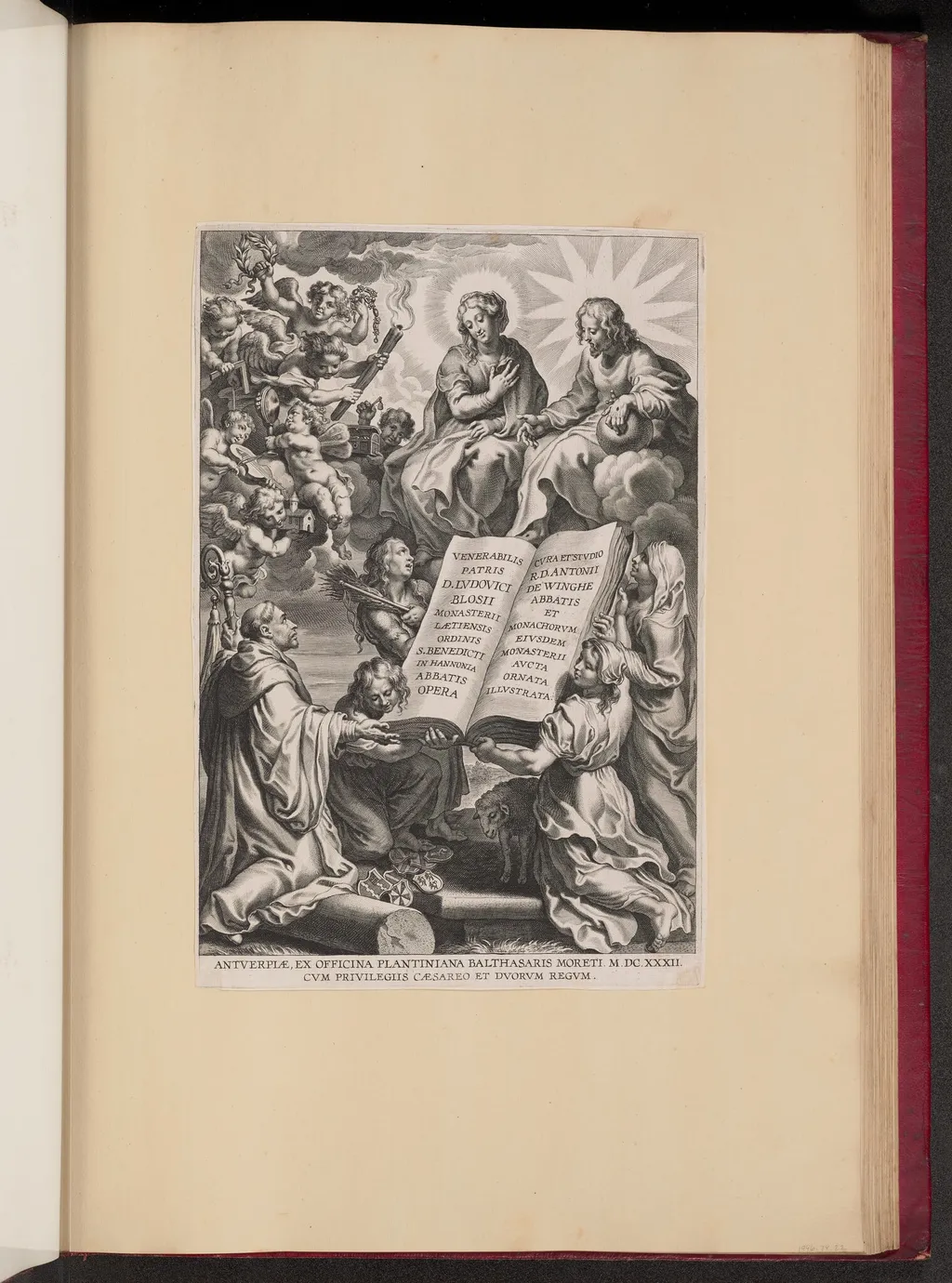
Title Page for Ludovicus Blosius, Opera is an ink print by the Baroque artist Cornelis Galle I. It dates from 1632 and is held in the collection of the National Gallery of Art. The title page for Ludovicus Blosius’s *Opera* was engraved in 1632 by Cornelis Galle the Elder.
About this work
The tiny details—like the dog’s curled tail or the angels’ delicate wings—make the scene feel alive.
This engraving shows a busy scene with people gathered around a book. At the center, a robed man kneels, holding an open book while others point or gesture toward it. Above them, angels float in the sky, and a woman in a cloud holds a heart on fire. The ground has scattered tools and a small dog. Latin text fills the book and borders the image.
The tiny details—like the dog’s curled tail or the angels’ delicate wings—make the scene feel alive. This print was made in 1632 by an artist who worked with sharp lines.
Try looking up engraving to see how artists like this carved images into metal.
Overview
The title page for Ludovicus Blosius’s *Opera* was engraved in 1632 by Cornelis Galle the Elder. Executed on laid paper, the print presents a crowded composition in which a kneeling, robed figure holds an open book while surrounding characters point and gesture. Above the scene, celestial angels hover, and a woman in a cloud bears a flaming heart, all framed by Latin inscriptions.
Subject & Meaning
The central act of reading suggests the dissemination of knowledge, while the surrounding gestures emphasize communal engagement with the text. The celestial elements—angels and the fiery‑hearted woman—introduce a spiritual dimension, implying divine inspiration or protection of the work. Minor details such as scattered tools and a small dog add a domestic, everyday context to the scholarly activity.
Technique & Style
Galle employed fine, sharply cut lines typical of early‑17th‑century engraving, allowing intricate details like the dog’s curled tail and the delicate feathering of the angels’ wings. The use of laid paper provides a subtle texture that enhances the contrast between the dense crowd and the airy sky, demonstrating the engraver’s command of line work and tonal variation.
History & Provenance
Born in Antwerp in 1576, Cornelis Galle the Elder trained under his father, Philip Galle, before spending a formative period in Rome where he refined his approach to printmaking. After returning to Antwerp, he attained master status in the local guild and produced a range of plates, both after other artists and from his own designs, including this title page for Blosius’s publication.
Context
The print reflects the broader commercial and artistic environment of the early 1600s, when engravers served both as craftsmen and as disseminators of literary and scholarly works. Title pages such as this functioned as visual introductions, combining allegorical imagery with practical information, and illustrate the collaborative relationship between printers, authors, and the engraving trade in the Dutch Republic.
Artist & collection

Artist
Cornelis Galle the Elder (1576 – 29 March 1650), a younger son of Philip Galle, was born at Antwerp in 1576, and was taught engraving by his father.

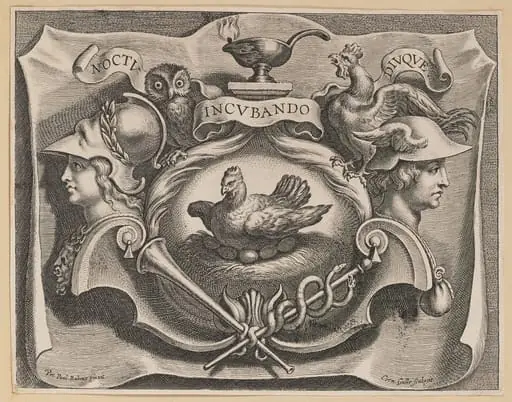 Vignette for the Title Page of Martinus Bonacina, Opera Omnia
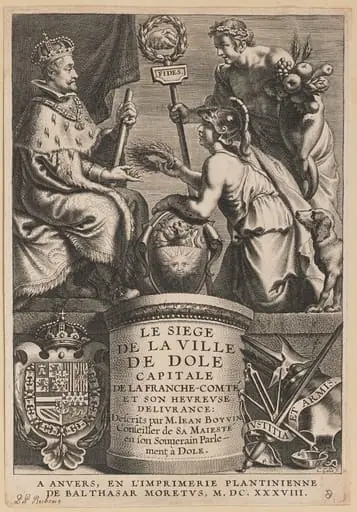 Title Page for Jean Boyvin, Le Siege de la Ville de Dole
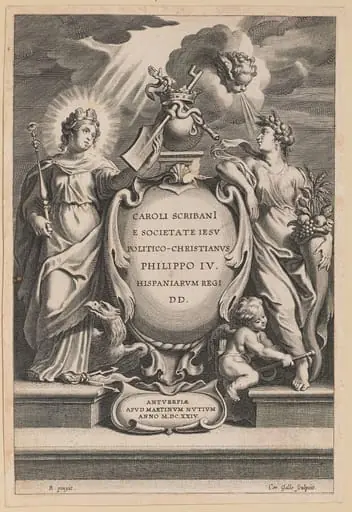 Title Page for Carolus Scribani, Politico-Christianus
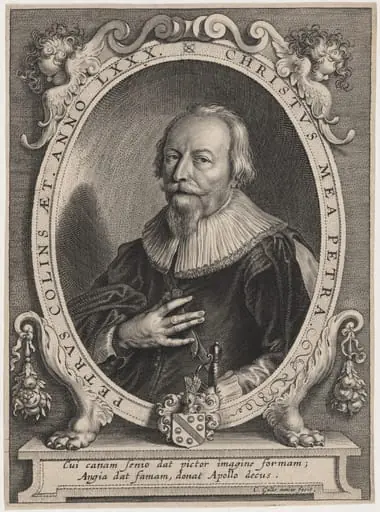 Petrus Collins
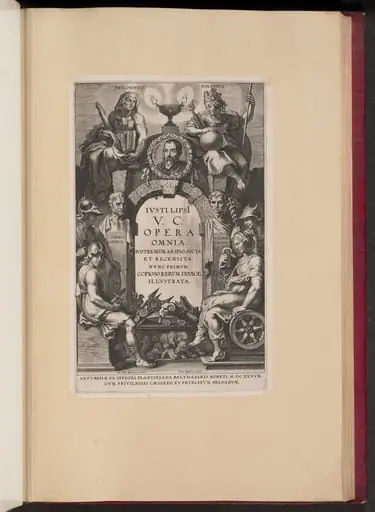 Title Page for Justus Lipsius, Opera Omnia, I
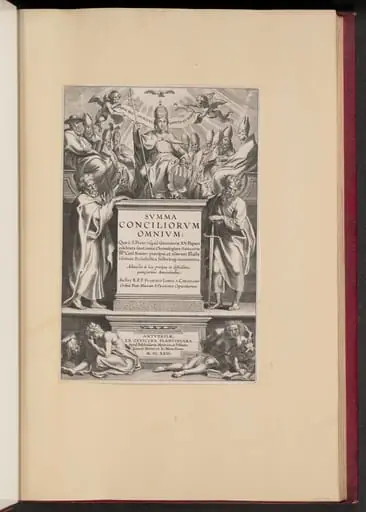 Title Page for F. Longo a Coriolano's "Svmma Conciliorvm Omnivm"
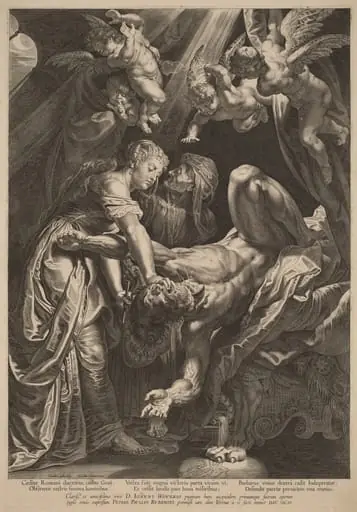 Judith Beheading Holofernes
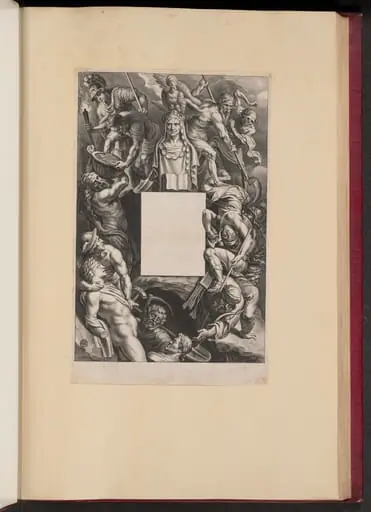 Title Page for Hubert Goltzius, Romanae et Graecae Antiqvitatis Monvmenta (Opera Omnia, I)
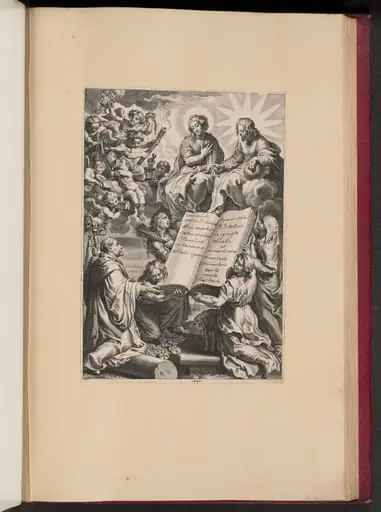 Title Page for Ludovicus Blosius, Opera
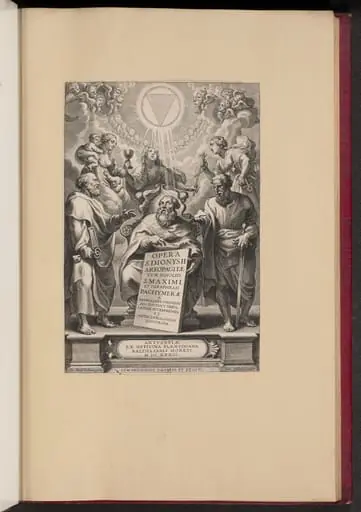 Title Page for Balthasar Cordier's "Opera S. Dionysii Areopagitae, I"
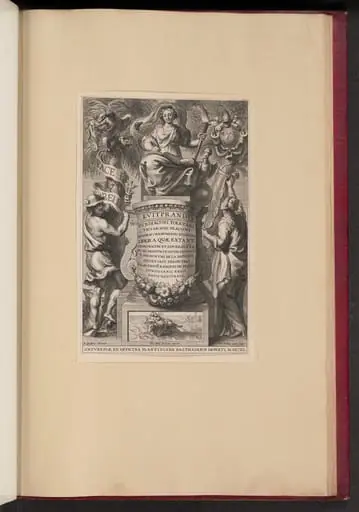 Title Page for Liutprand, Opera
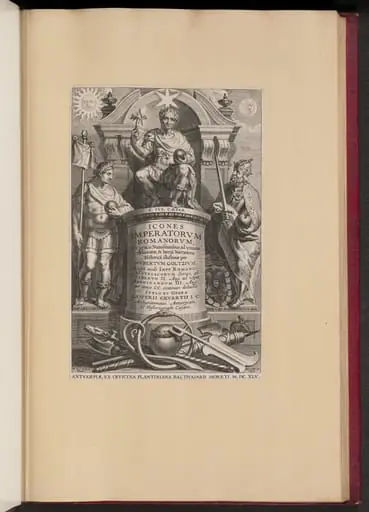 Title Page for Hubert Goltzius's Icones Imperatorvm Romanorvm (Opera Omnia, V)
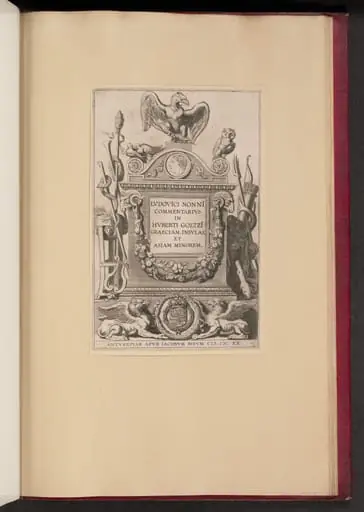 Title Page for Ludovicus Nonnius, Commentarius in Huberti Goltzi Graeciam, Insulas, et Asiam Minorem