Artwork
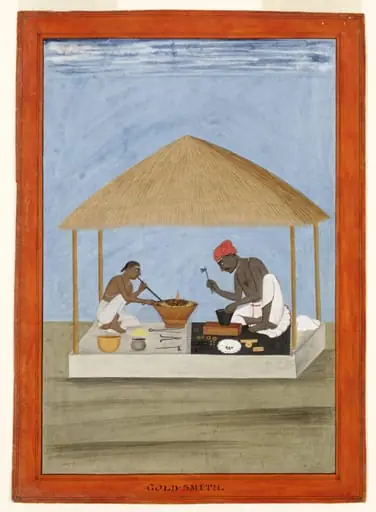
A blacksmith and his assistant
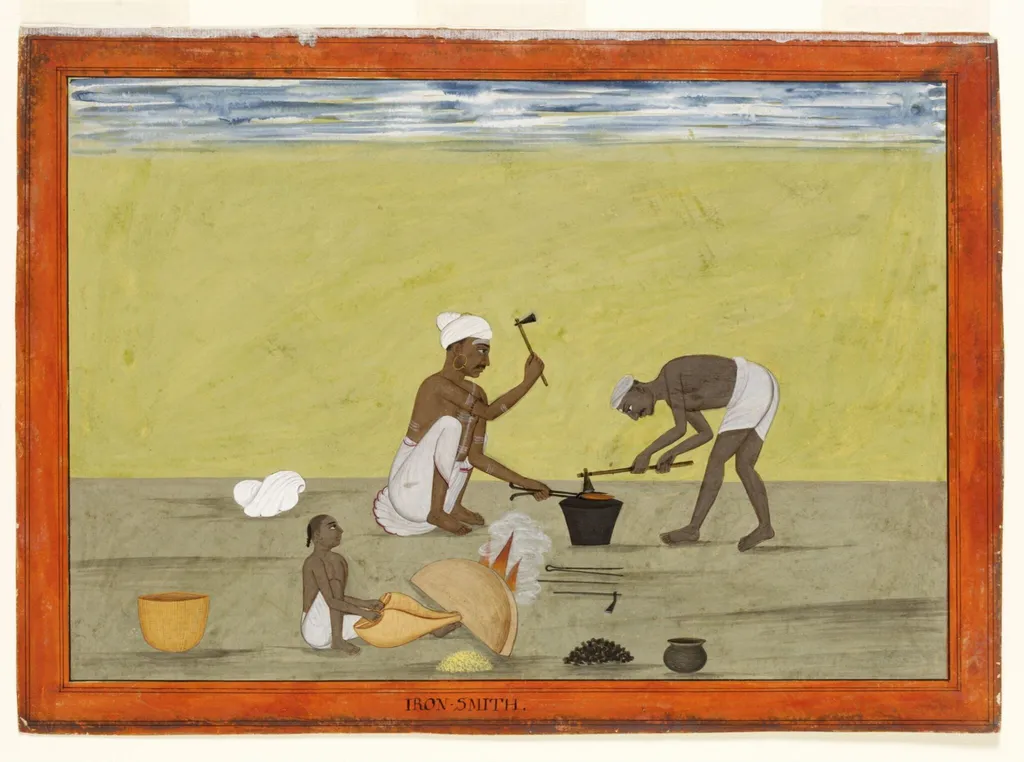
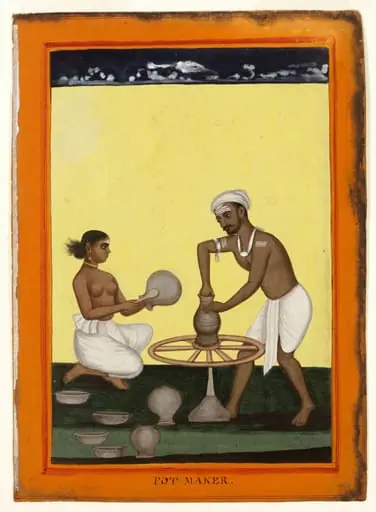
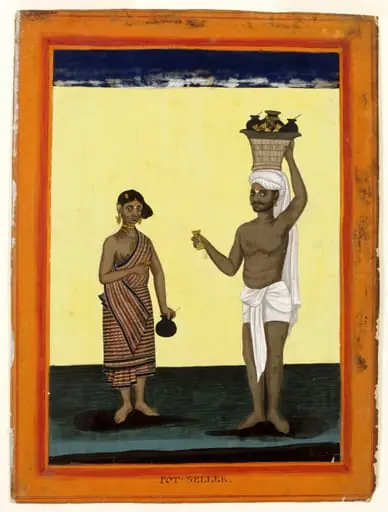
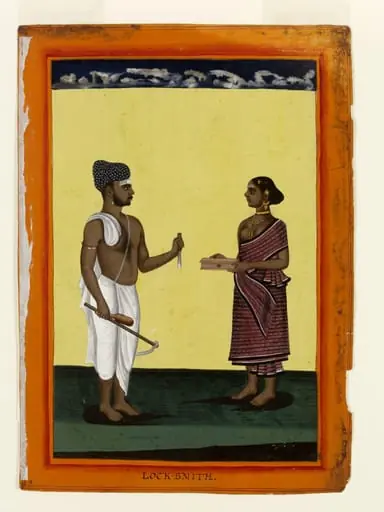
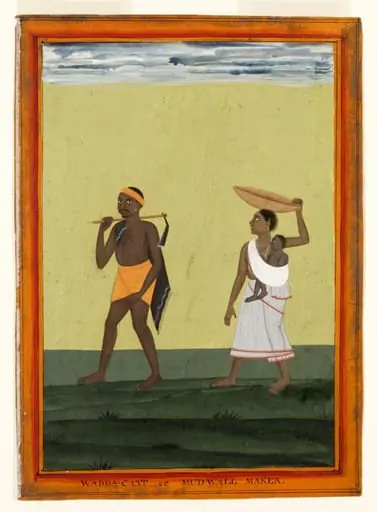
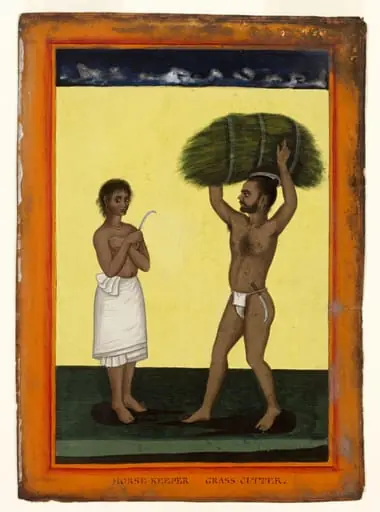
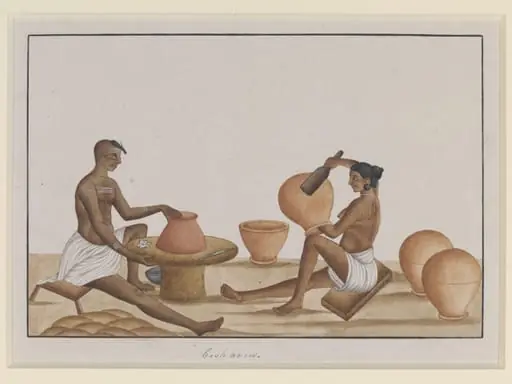
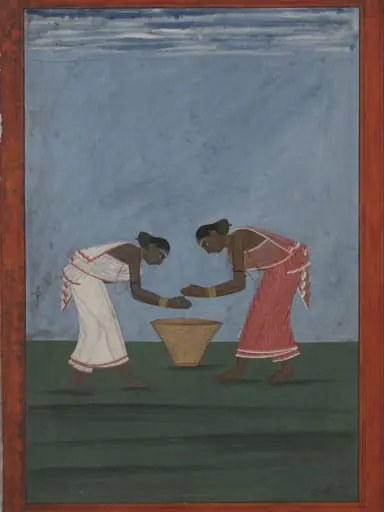
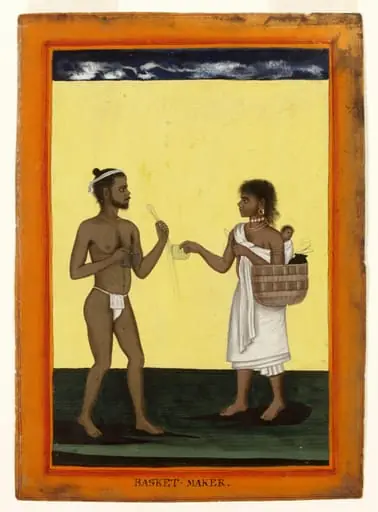
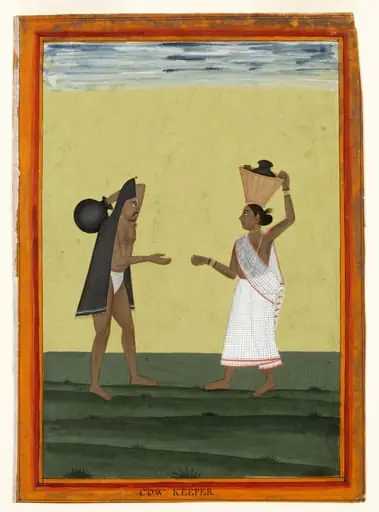
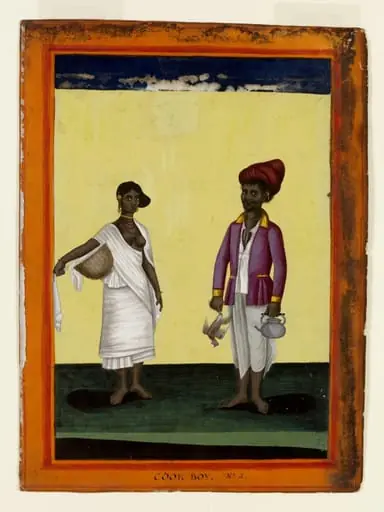
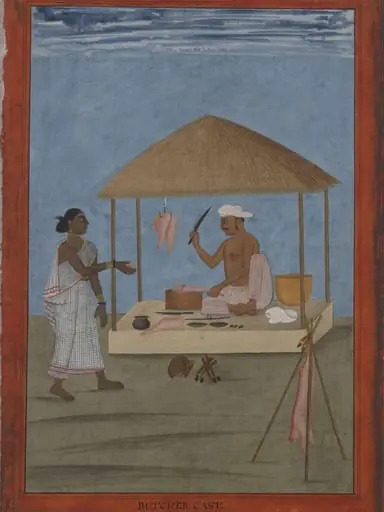
A blacksmith and his assistant is a paint painting by the Rococo painting artist Unknown. It dates from 1770 and is held in the collection of the Victoria and Albert Museum. This work is one of a series of thirty‑six small paintings that depict various South Indian castes and occupations.
About this work
Overview
This work is one of a series of thirty‑six small paintings that depict various South Indian castes and occupations.
This work is one of a series of thirty‑six small paintings that depict various South Indian castes and occupations. Each image presents a male figure and his spouse, identified by the tools and attire of their trade, and is framed by a red border topped with a stylised cloud motif. The series was compiled in an album dated 1799, bearing the watermark J. Ruse and a bookplate belonging to Joseph Whatley, whose Latin motto reads “Pelle Timorem.”
Subject & Meaning
The picture portrays a blacksmith at his forge, accompanied by an assistant who helps manage the heated metal. The figures are shown in the act of shaping iron, surrounded by hammers, tongs, and anvil, offering a direct visual record of the craft’s material culture. By pairing the blacksmith with his partner, the series emphasizes the familial and communal dimensions of occupational identity in South Indian society.
Technique & Style
The composition employs chiaroscuro, contrasting the bright glow of the forge with deep shadows that cling to the figures’ feet. A heavy looped shadow anchors the scene, while the background is rendered in dark green, punctuated by a tangled cloud strip at the top. Variations in brushwork suggest three different hands: one favors bold outlines on a yellow field, another renders finer detail against deep blue, and a third uses softer modeling on green‑blue tones.
History & Provenance
All thirty‑six paintings were bound together in a single album, each bearing an English inscription naming the depicted caste or occupation. The album’s watermark, J. Ruse, dates to 1799, and the ownership mark of Joseph Whatley indicates the collection passed through private hands in the late eighteenth century. The series likely served as a visual catalogue of Indian social groups for European audiences.
Context
Created during a period of intensified British interest in Indian ethnography, the series reflects colonial attempts to classify and document the subcontinent’s complex social hierarchy. By presenting occupational pairs in a uniform format, the images both inform and simplify the diversity of South Indian labor practices, aligning with contemporary encyclopedic projects that sought to map cultural differences for administrative purposes.
Artist & collection

 Domestic Scene
 Giacomo and Cardinal Marco, investing Andrea, Abbot of San Zeno, with his Benefice
 The Nymph of Fontainebleau
 Portrait of a Woman
 Madonna and Child with Saints in the Enclosed Garden
 Venus and Minerva
 Family Group of Four on Sofa
 Wall painting from Room H of the Villa of P. Fannius Synistor at Boscoreale