Artwork
Two women dancing and clapping
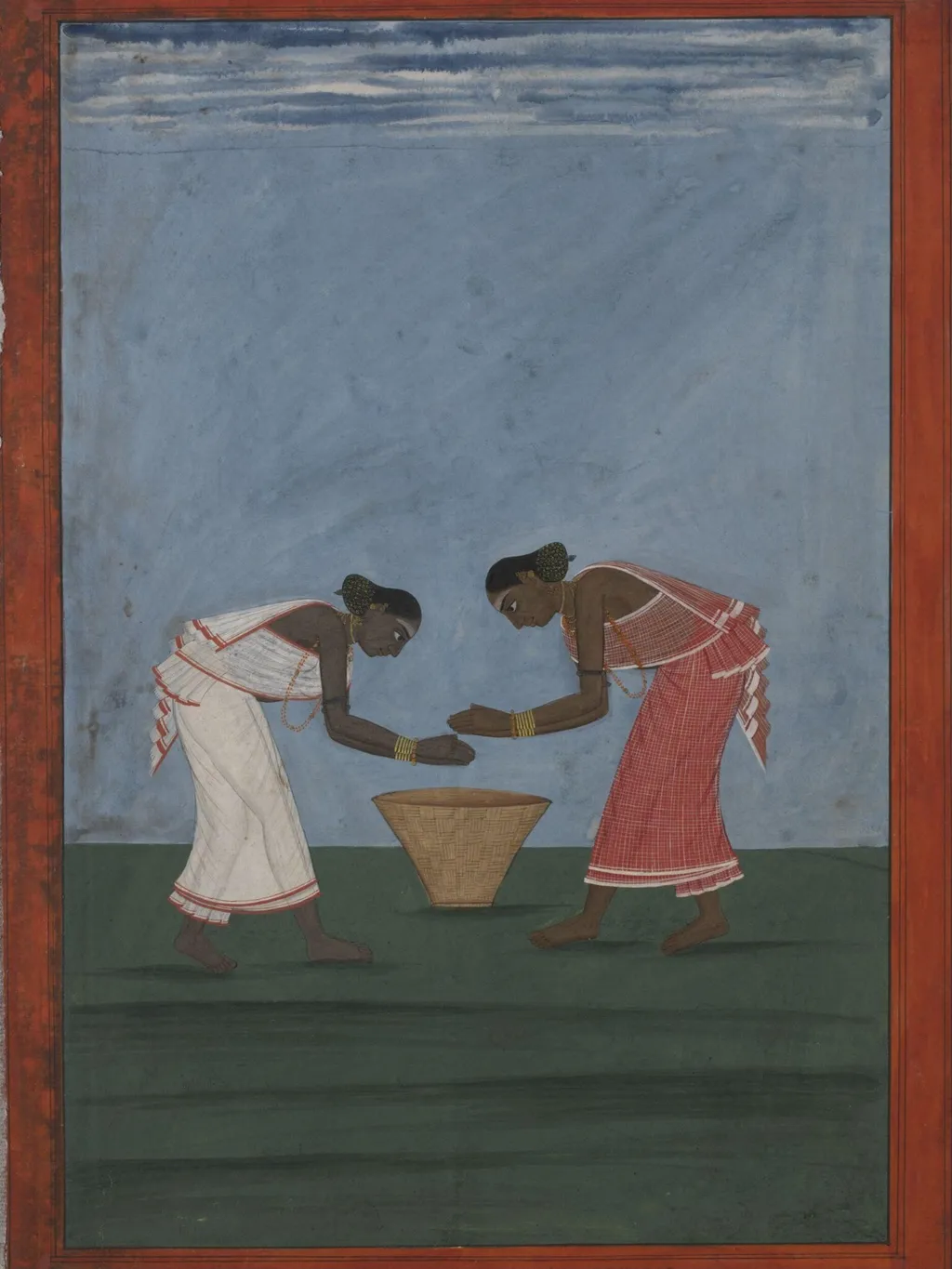
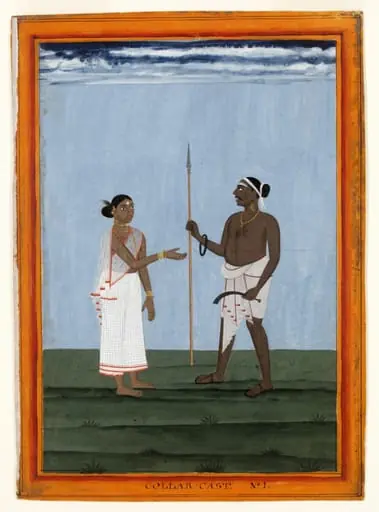
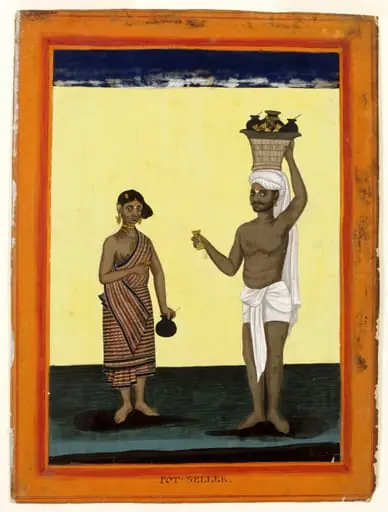
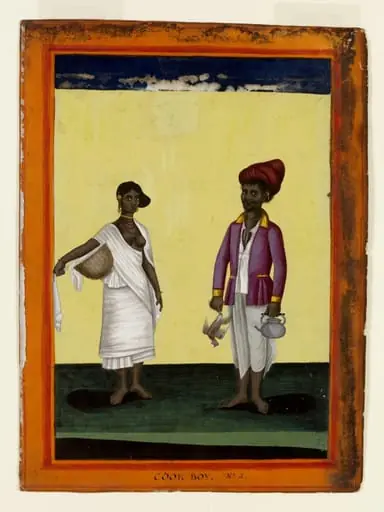
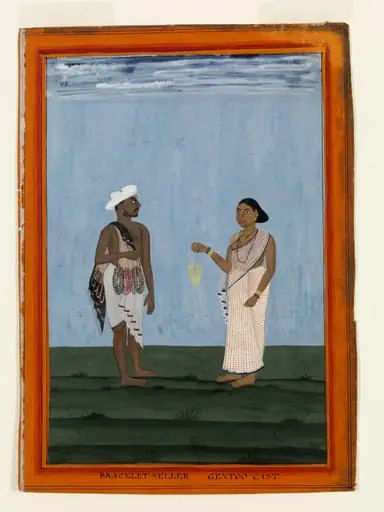
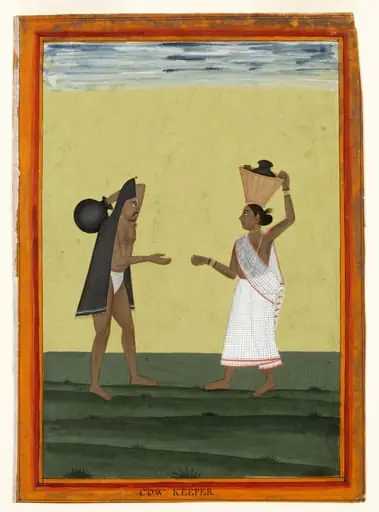
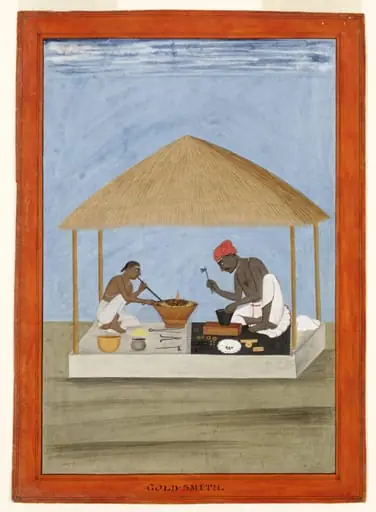
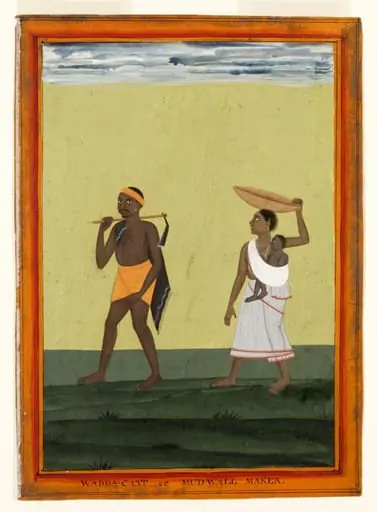
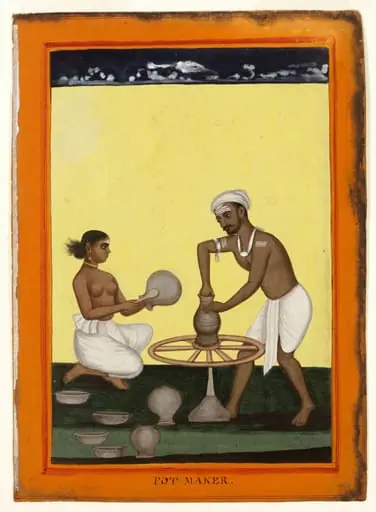
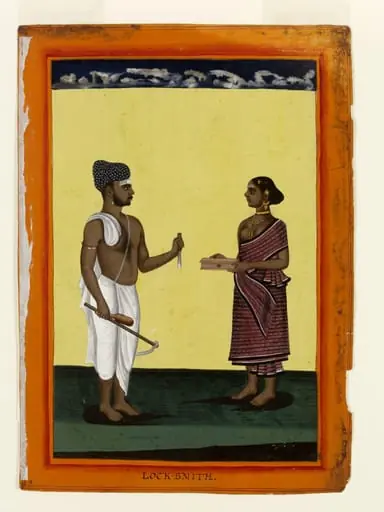
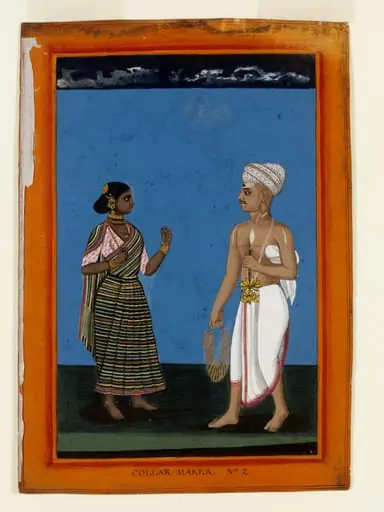
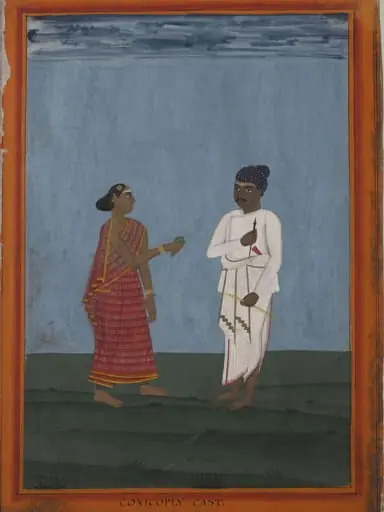
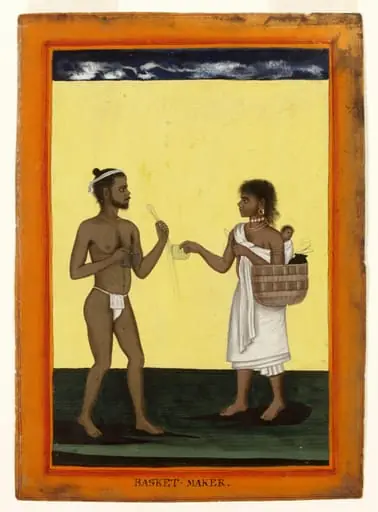
Two women dancing and clapping is a paint painting by the Rococo painting artist Unknown. It dates from 1770 and is held in the collection of the Victoria and Albert Museum. This small panel is one of a series of thirty‑six paintings documenting the various castes and occupations of South India.
About this work
Overview
This small panel is one of a series of thirty‑six paintings documenting the various castes and occupations of South India. Each image pairs a male figure with his wife, identified by the tools and dress of their trade, and is framed by a red border with a cloud motif at the top. The work is executed in oil on board and bears an English inscription naming the depicted caste.
Subject & Meaning
The particular scene portrays two women engaged in a lively dance, clapping their hands while wearing traditional regional attire. Their expressive posture and interaction suggest a moment of communal celebration, offering a visual record of everyday leisure activities among South Indian women within the broader occupational context of the series.
Technique & Style
The painter employs chiaroscuro to model the figures, creating depth through strong contrasts of light and shadow, especially the heavy looped shadows at the feet. A dark green ground supports the composition, while the background varies among series members—some use yellow, others deep blue—indicating the hand of multiple artists.
History & Provenance
All panels were bound in an album bearing the watermark J. Ruse, dated 1799, and a bookplate of Joseph Whatley inscribed with the Latin motto "Pelle Timorem" (banish fear). The English labels on the lower border identify each caste, linking the work to early colonial documentation of Indian social structures.
Context
Created during the late eighteenth century, the series reflects European interest in cataloguing Indian society for administrative and ethnographic purposes. The inclusion of domestic scenes such as dancing women provides insight into the cultural practices that accompanied occupational identities, complementing the more formal depictions of male laborers.
Artist & collection

 Domestic Scene
 Giacomo and Cardinal Marco, investing Andrea, Abbot of San Zeno, with his Benefice
 The Nymph of Fontainebleau
 Portrait of a Woman
 Madonna and Child with Saints in the Enclosed Garden
 Venus and Minerva
 Family Group of Four on Sofa
 Wall painting from Room H of the Villa of P. Fannius Synistor at Boscoreale