Artwork
A blacksmith with his equipment
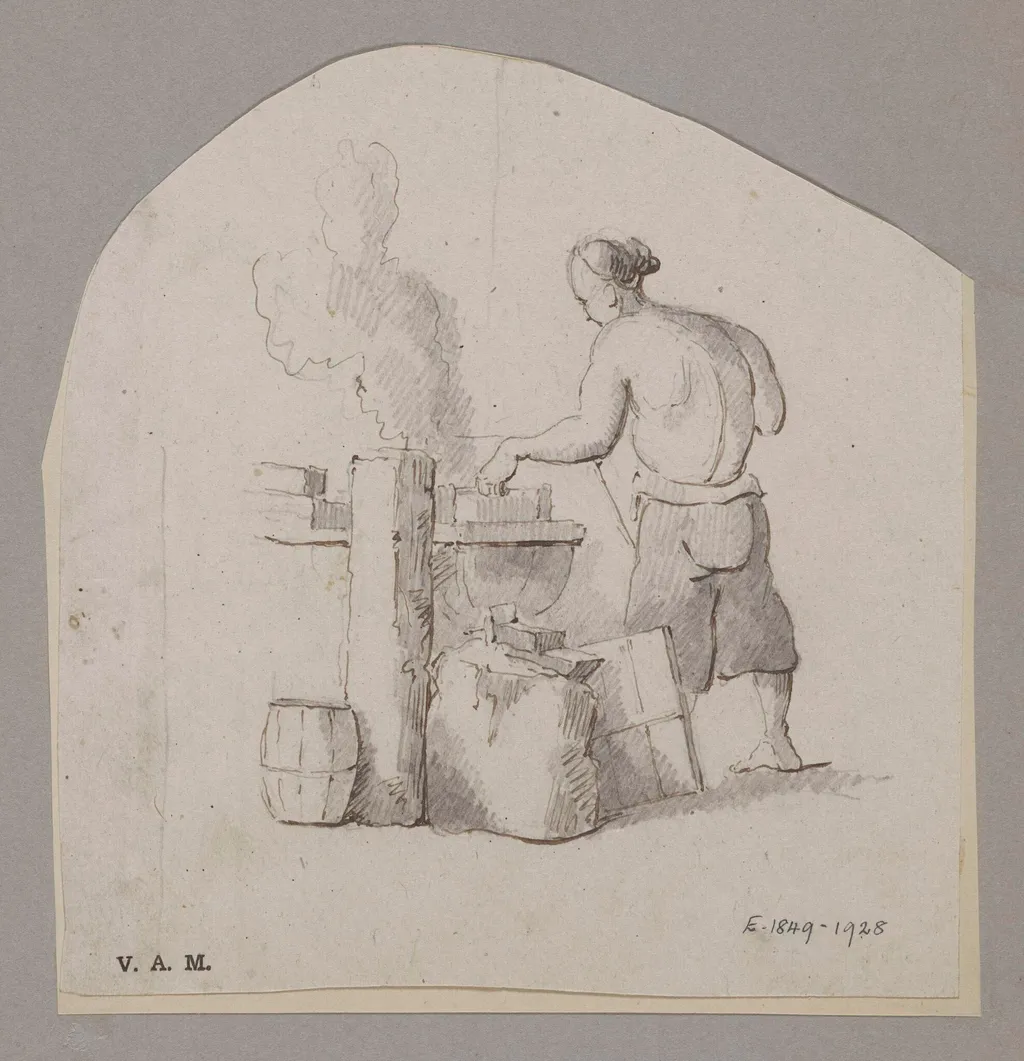
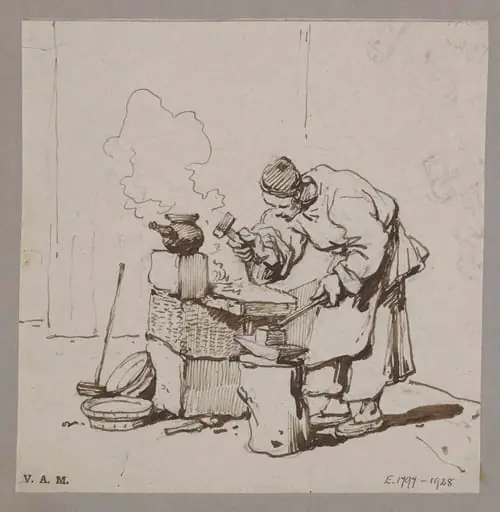
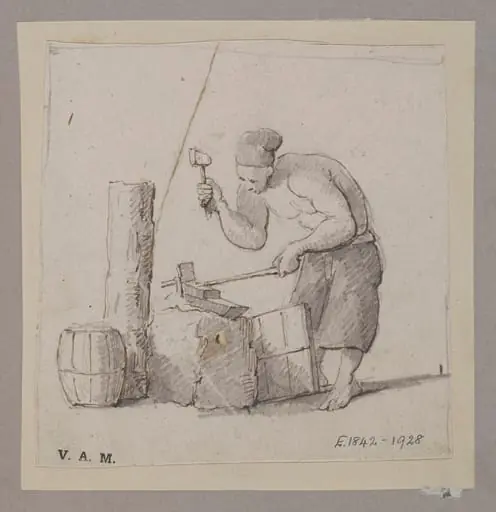
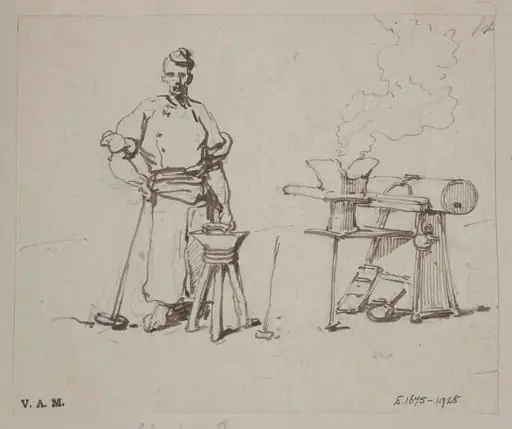
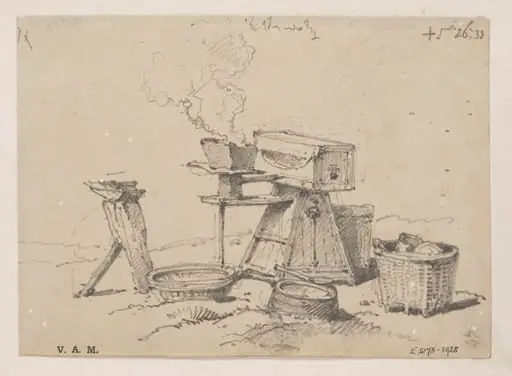
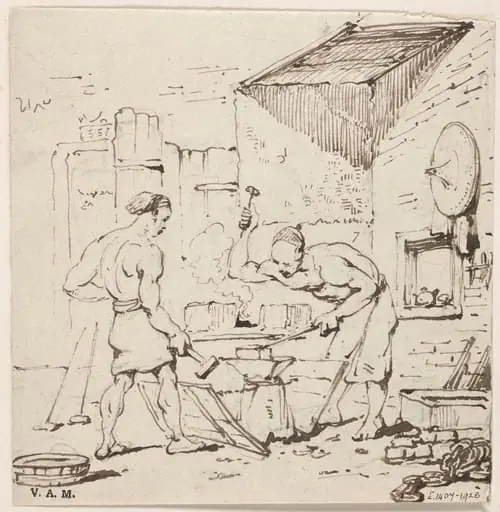
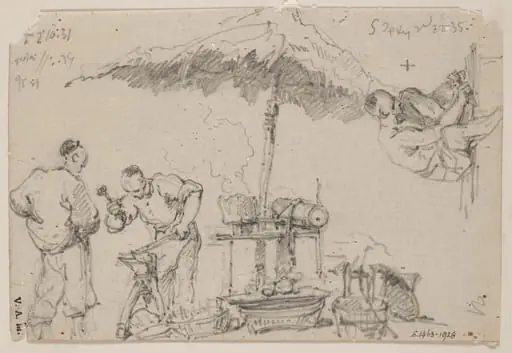
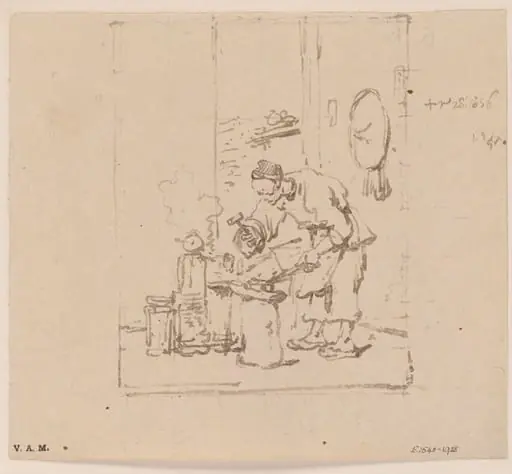
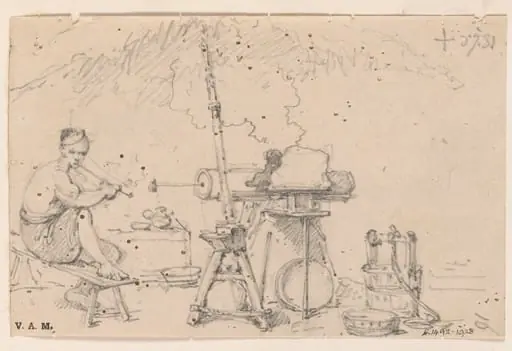
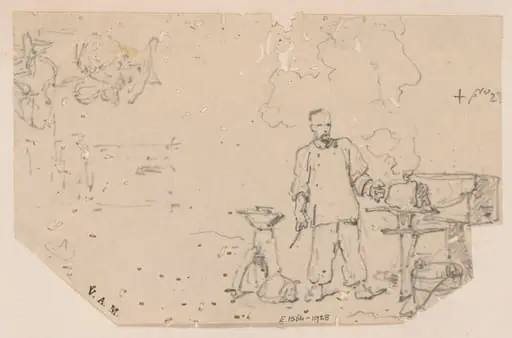
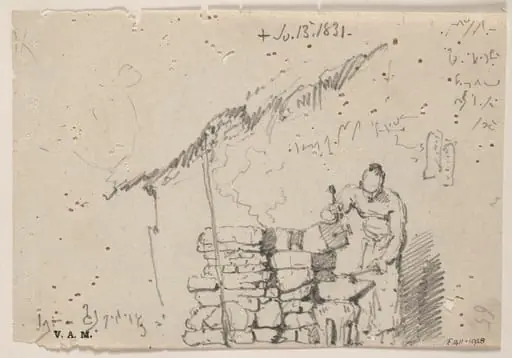
A blacksmith with his equipment is a drawing by Unknown. It dates from 1850 and is held in the collection of the Victoria and Albert Museum. This drawing depicts a blacksmith at work, positioned beside his anvil and furnace, with smoke curling upward from the hearth.
About this work
Overview
This drawing depicts a blacksmith at work, positioned beside his anvil and furnace, with smoke curling upward from the hearth.
This drawing depicts a blacksmith at work, positioned beside his anvil and furnace, with smoke curling upward from the hearth. The composition is unadorned, focusing on the figure and essential tools. It is believed to be a copy of a lost original, possibly by George Chinnery, though attribution remains uncertain. The work belongs to a tradition of observational sketches documenting labor in the early 19th century.
Subject & Meaning
The blacksmith is portrayed not as an idealized figure but as a working artisan, surrounded by the instruments of his trade. His presence anchors the scene, emphasizing the physicality of manual labor. The rising smoke suggests ongoing activity, reinforcing the immediacy of the moment. The image conveys dignity in routine work, without romanticizing or dramatizing the setting.
Technique & Style
The drawing employs cross-hatching to model form and suggest texture, particularly in the blacksmith’s clothing and the furnace’s sooty surface. Lines are deliberate but unrefined, indicating a working sketch rather than a polished finish. The sparse use of tone and absence of background detail focus attention on the figure and his tools, characteristic of observational draftsmanship of the period.
History & Provenance
The drawing’s origin is unclear, but it is thought to derive from a lost work by George Chinnery, known for his sketches of Asian and colonial life. Whether made by Chinnery himself or by a student or copyist remains unverified. Its survival suggests it was valued as a study or record, though its path from creation to current ownership is undocumented.
Context
In the early 1800s, artists increasingly turned to everyday labor as subject matter, moving away from grand historical or mythological themes. Drawings like this reflect a growing interest in documenting real life, particularly in colonial and port communities. Chinnery’s circle often recorded such scenes, contributing to a visual archive of industrial and artisanal work in Asia and beyond.
Legacy
This drawing contributes to a broader body of 19th-century observational sketches that preserved the appearance of skilled labor before industrialization transformed workshops. Though not widely known, it exemplifies how artists used drawing as a tool for recording social reality. Its existence invites consideration of the many undocumented works by lesser-known hands that once circulated in artistic circles.
Artist & collection

 Domestic Scene
 Giacomo and Cardinal Marco, investing Andrea, Abbot of San Zeno, with his Benefice
 The Nymph of Fontainebleau
 Portrait of a Woman
 Madonna and Child with Saints in the Enclosed Garden
 Venus and Minerva
 Family Group of Four on Sofa
 Wall painting from Room H of the Villa of P. Fannius Synistor at Boscoreale