Artwork
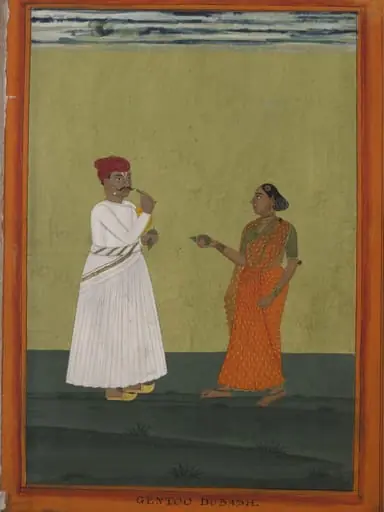
A Brahmin fortune-teller and his wife
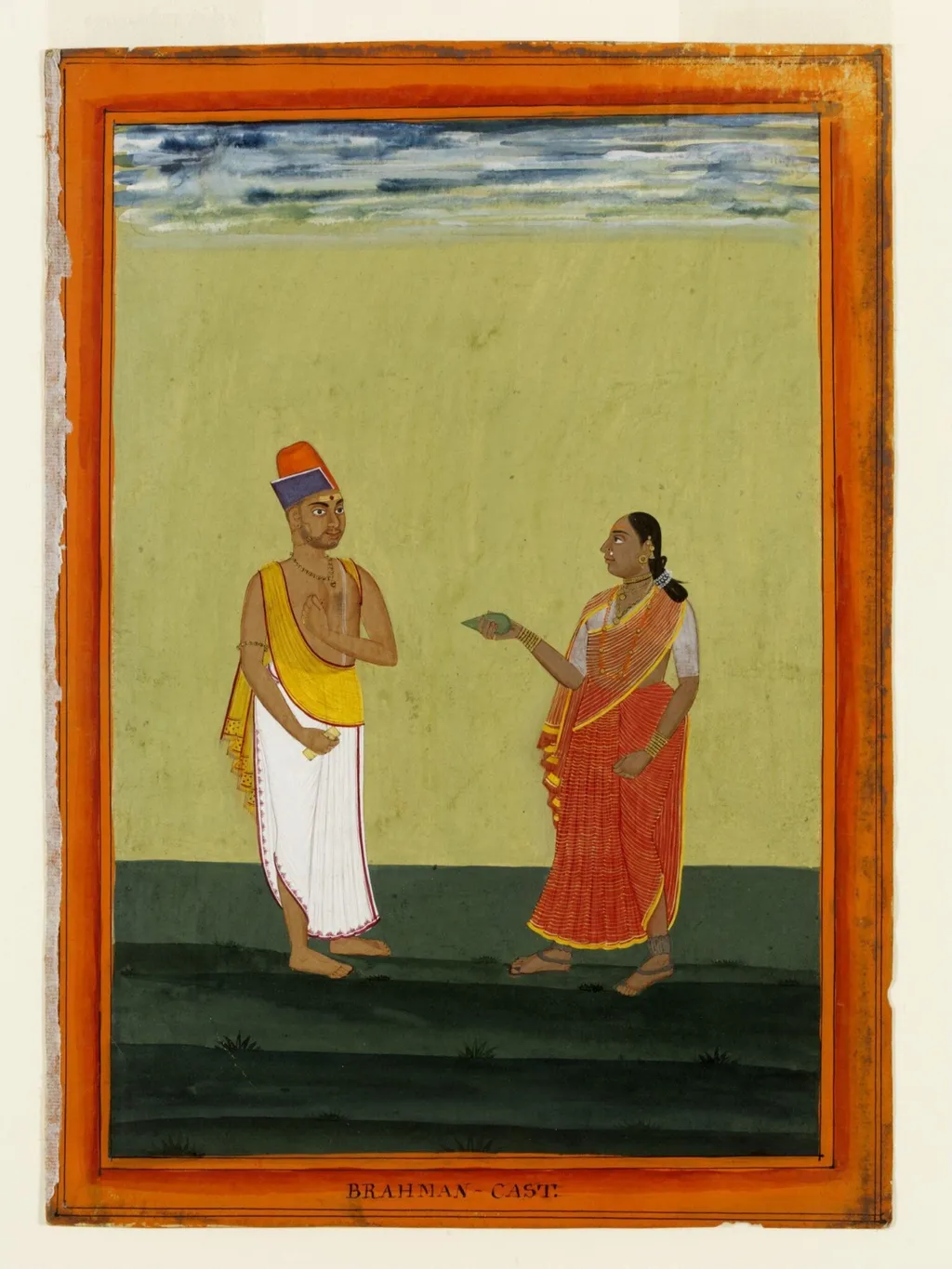
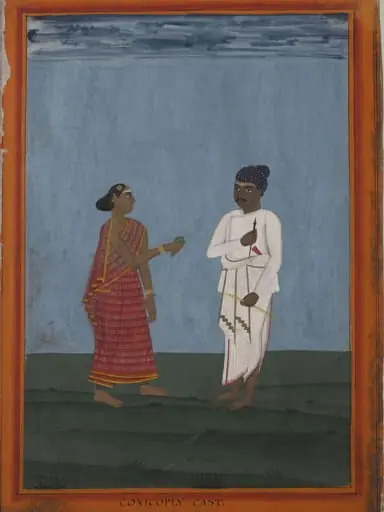
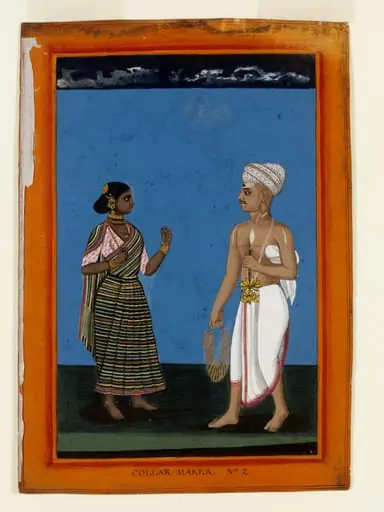
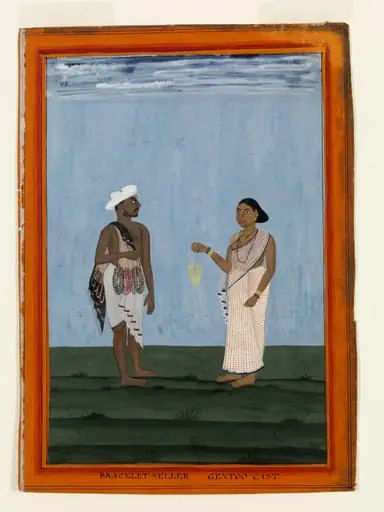
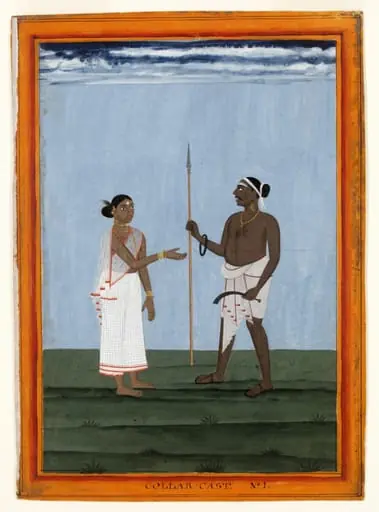
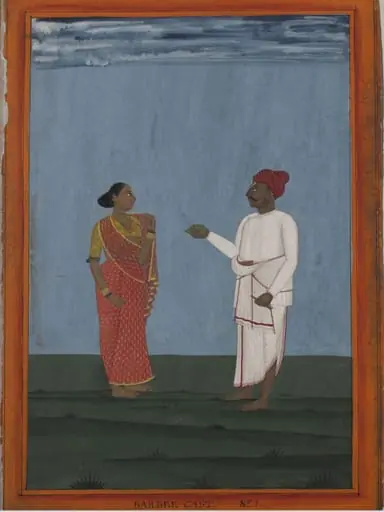
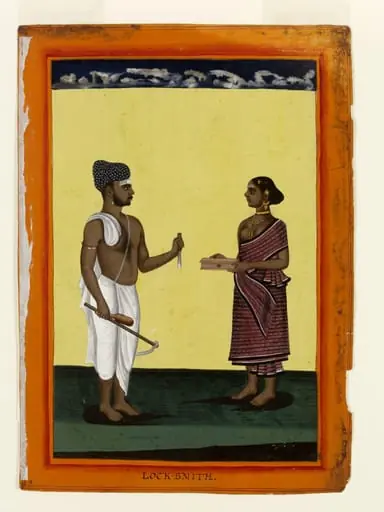
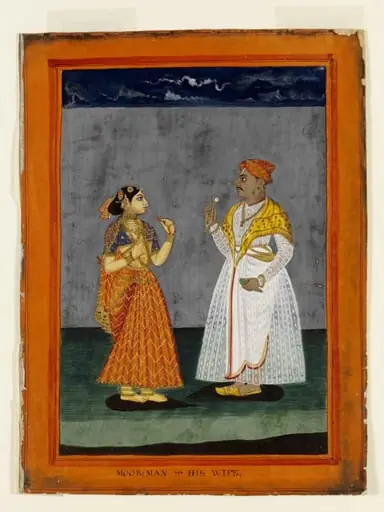
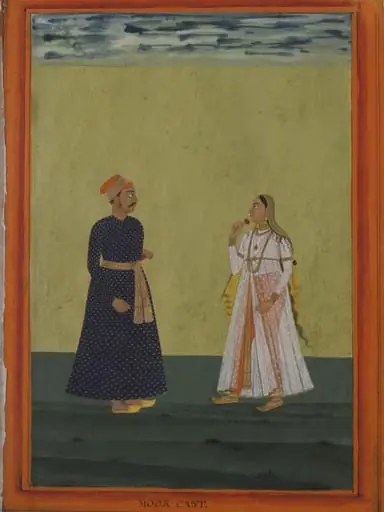
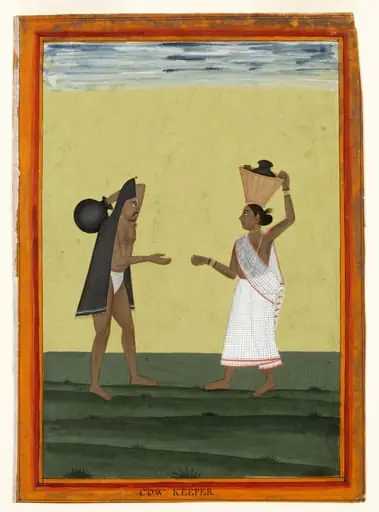
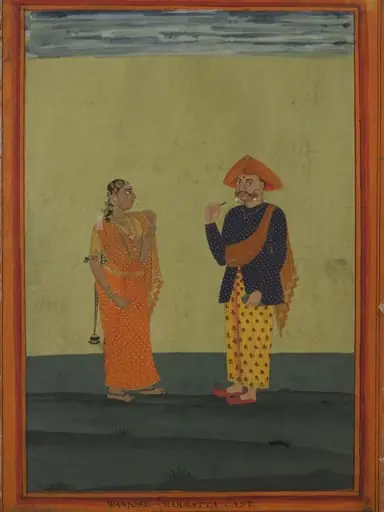
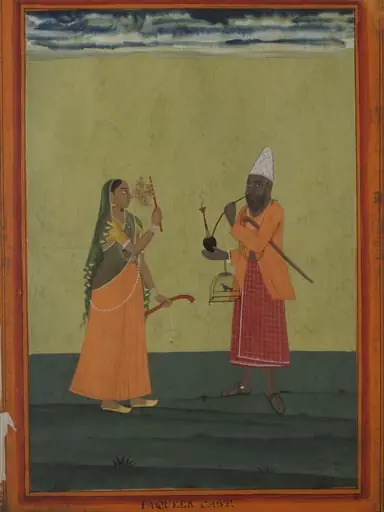
A Brahmin fortune-teller and his wife is a paint painting by the Rococo painting artist Unknown. It dates from 1770 and is held in the collection of the Victoria and Albert Museum. This work forms part of a series of thirty‑six miniature paintings that depict various South Indian castes and occupations.
About this work
Both wear traditional white clothing and hold objects tied to their trade.
This painting shows a Brahmin fortune-teller seated beside his wife. Both wear traditional white clothing and hold objects tied to their trade. The man cradles a brass pot, while the woman balances a small mirror.
The artist used deep red borders and tangled cloud strips at the top. Heavy shadows stretch from the figures’ feet, grounding them in the scene. These touches make the work feel alive, like a snapshot from 1770.
Look for more like this at the Victoria and Albert Museum.
Overview
This work forms part of a series of thirty‑six miniature paintings that depict various South Indian castes and occupations. Executed in the late eighteenth century, the image presents a Brahmin fortune‑teller and his wife, each rendered in traditional white attire and holding objects that identify their profession.
Subject & Meaning
The male figure cradles a brass pot, a conventional attribute of a Brahmin diviner, while his spouse balances a small mirror, an item linked to feminine aspects of the same vocation. Together they convey the domestic partnership of a specific social group, emphasizing the ritual and material culture of their trade.
Technique & Style
The composition is framed by a vivid red border and a strip of stylised cloud at the top. Dark green ground and heavy, looped shadows extend from the figures’ feet, anchoring them within the pictorial space. The painting’s palette and brushwork suggest it was executed by one of three hands distinguished by background colour—yellow, deep blue, or a mix of green and blue.
History & Provenance
Each panel bears an English inscription naming the depicted caste, and the entire series was bound in an album dated 1799, bearing the watermark J. Ruse. A bookplate on the album records the ownership of Joseph Whatley, together with the Latin motto “Pelle Timorem” (banish fear).
Context
The series reflects a colonial‑era interest in cataloguing Indian social structures for European audiences. Such visual taxonomies were often compiled for administrative or scholarly purposes, providing a systematic visual record of occupational groups across South India.
Legacy
The paintings remain valuable documentary sources for scholars of Indian social history and visual culture. Their detailed iconography and consistent format have informed later comparative studies of caste representation in art.
Artist & collection

 Domestic Scene
 Giacomo and Cardinal Marco, investing Andrea, Abbot of San Zeno, with his Benefice
 The Nymph of Fontainebleau
 Portrait of a Woman
 Madonna and Child with Saints in the Enclosed Garden
 Venus and Minerva
 Family Group of Four on Sofa
 Wall painting from Room H of the Villa of P. Fannius Synistor at Boscoreale