Artwork
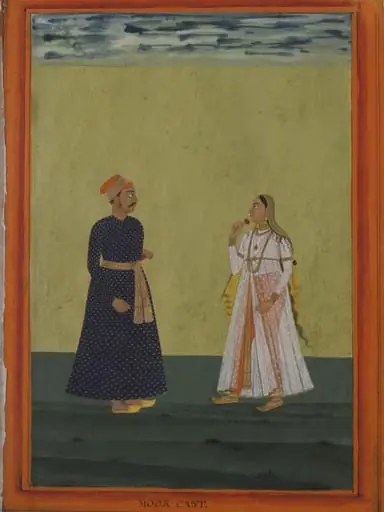
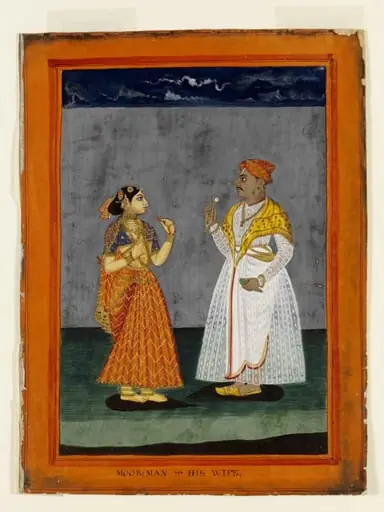
A Muslim ascetic and his wife
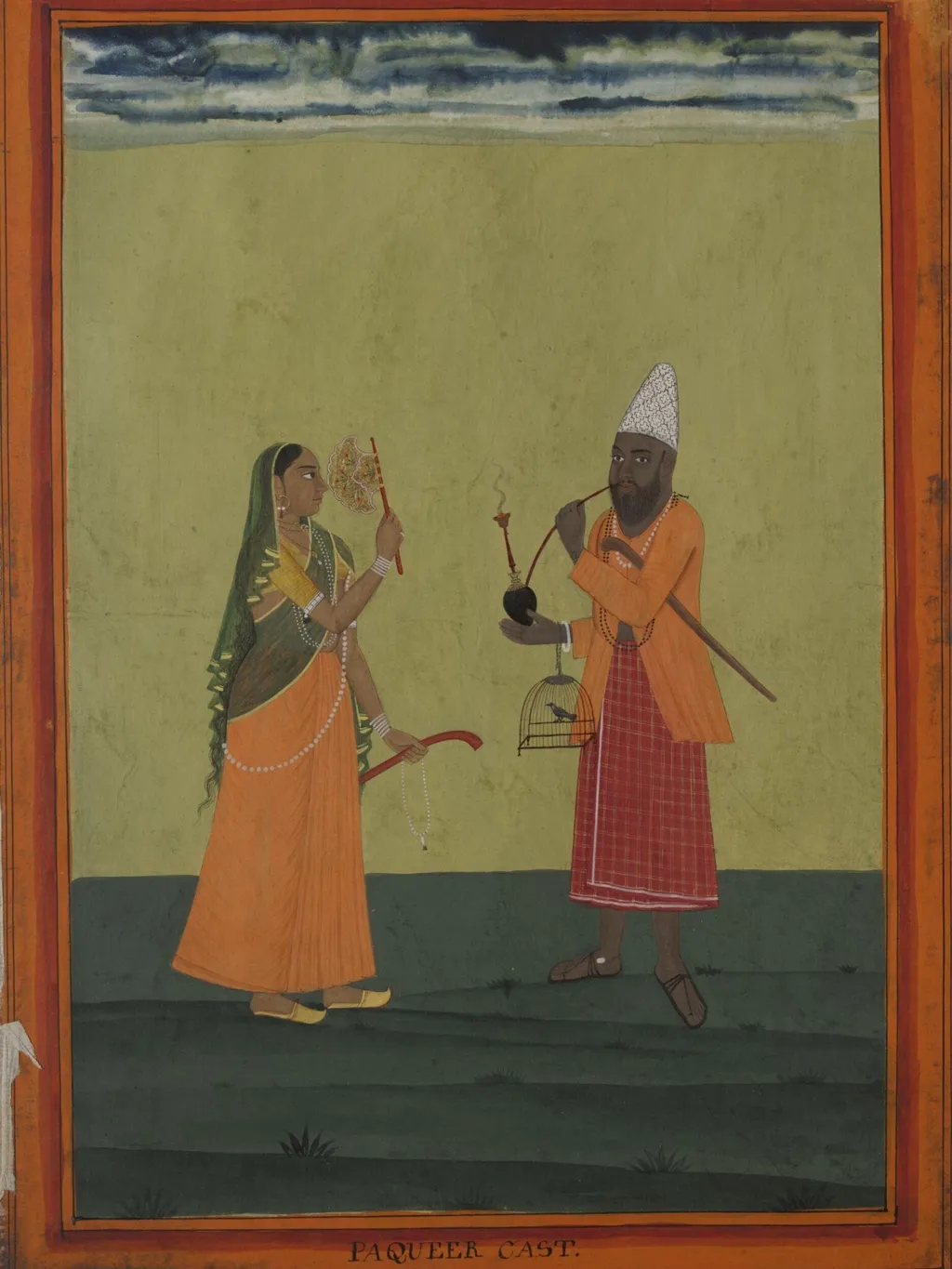
A Muslim ascetic and his wife is a paint painting by the Patna School of Painting artist Unknown. It dates from 1770 and is held in the collection of the Victoria and Albert Museum. This small panel is one of a series of thirty‑six paintings that document the various castes and occupations of South India.
About this work
Overview
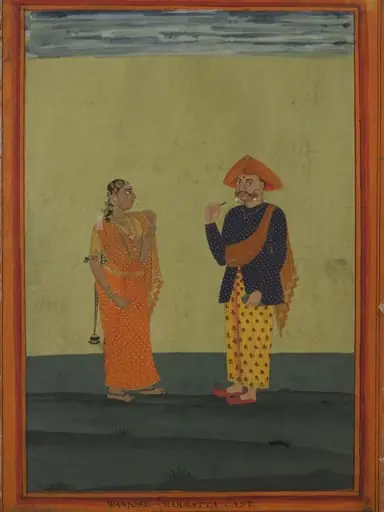
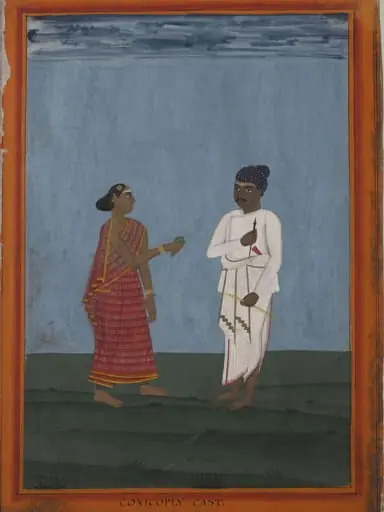
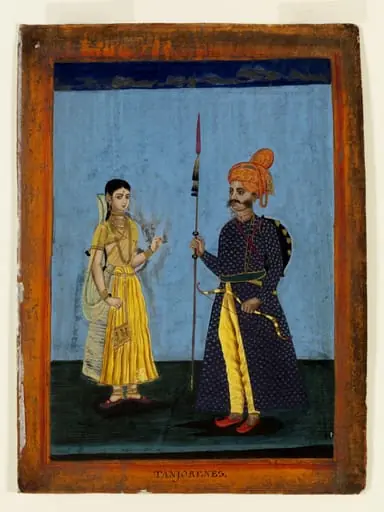
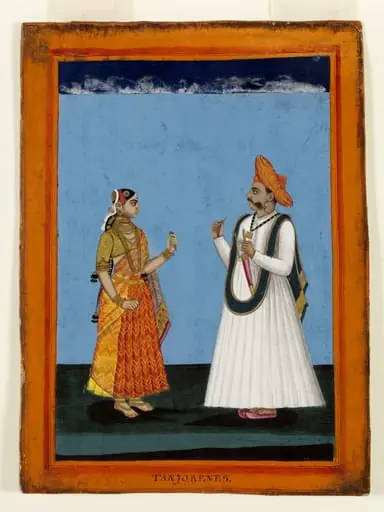
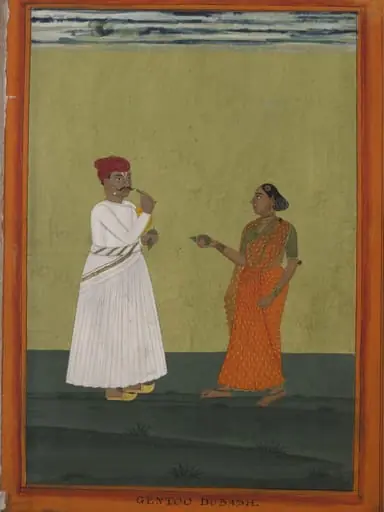
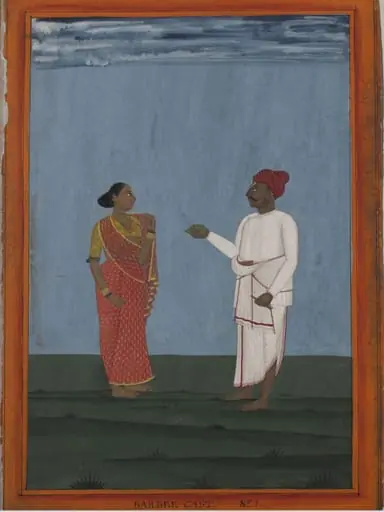
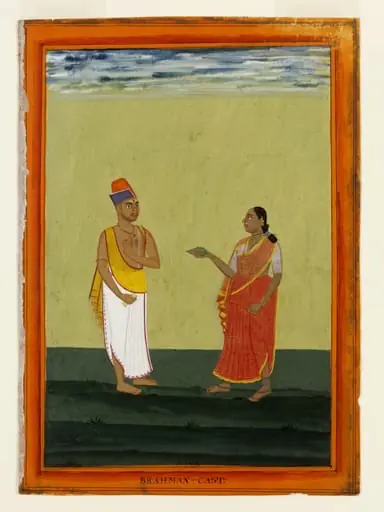
This small panel is one of a series of thirty‑six paintings that document the various castes and occupations of South India. Each image pairs a male figure with his spouse, set against a dark green ground and framed by a red border. The series was compiled in an album dated 1799, bearing the watermark J. Ruse and a bookplate of Joseph Whatley with the Latin motto “Pelle Timorem.”
Subject & Meaning
The particular work portrays a Muslim ascetic and his wife, both attired in modest garments and surrounded by minimal possessions. Their attire and the objects they hold identify their religious and occupational status, offering a visual record of everyday life for a specific social group within the broader caste tableau of the region.
Technique & Style
All panels share compositional elements: a tangled cloud motif at the top, heavy looped shadows beneath the feet, and a consistent red border.
All panels share compositional elements: a tangled cloud motif at the top, heavy looped shadows beneath the feet, and a consistent red border. Yet stylistic differences suggest three hands at work—one renders figures boldly on a yellow field, another provides finer detail on a deep‑blue background, and a third employs softer outlines on green‑blue tones, reflecting varied approaches to chiaroscuro and color.
History & Provenance
The album containing these paintings was assembled in the late eighteenth century, as indicated by the 1799 watermark. The inclusion of an English inscription naming each caste or occupation points to a colonial audience. The bookplate of Joseph Whatley, a collector active in the period, links the work to private ownership and suggests it circulated among European scholars interested in Indian social structures.
Artist & collection

 Domestic Scene
 Giacomo and Cardinal Marco, investing Andrea, Abbot of San Zeno, with his Benefice
 The Nymph of Fontainebleau
 Portrait of a Woman
 Madonna and Child with Saints in the Enclosed Garden
 Venus and Minerva
 Family Group of Four on Sofa
 Wall painting from Room H of the Villa of P. Fannius Synistor at Boscoreale