Artwork
A clerk and his wife
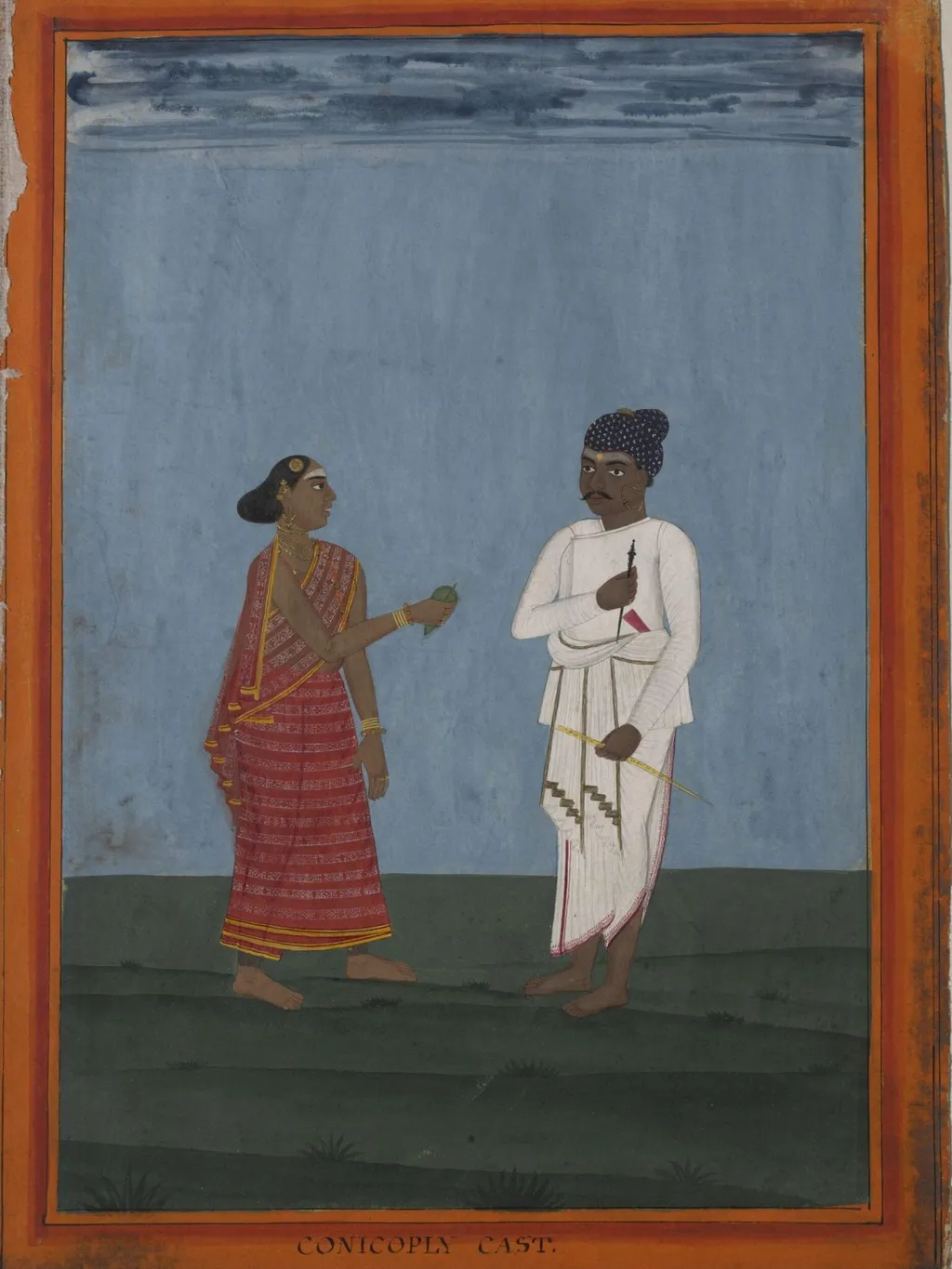
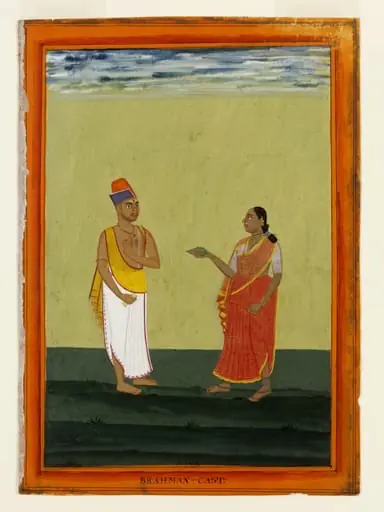
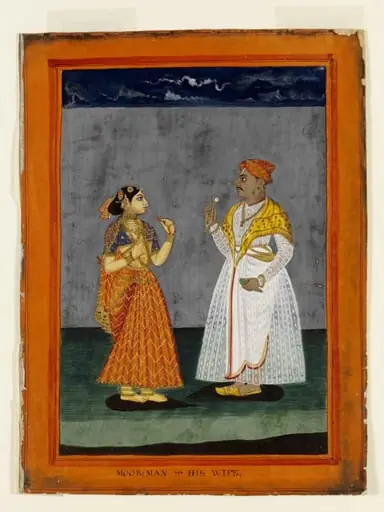
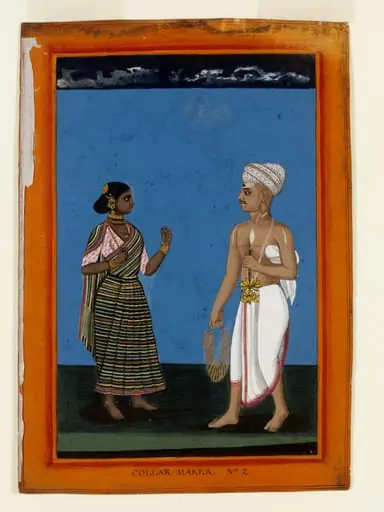
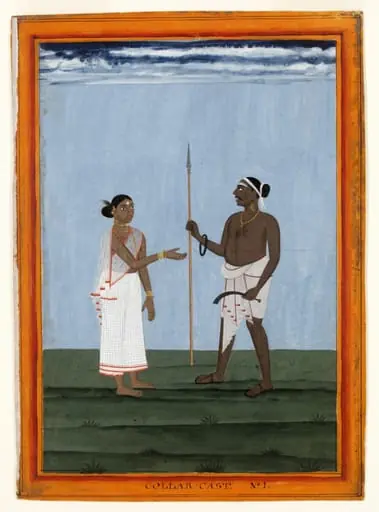
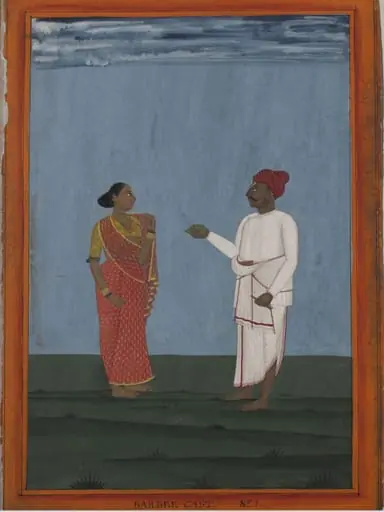
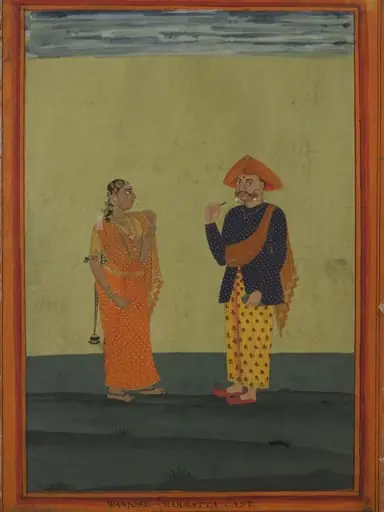
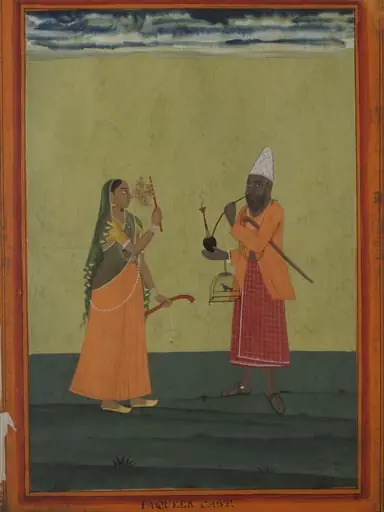
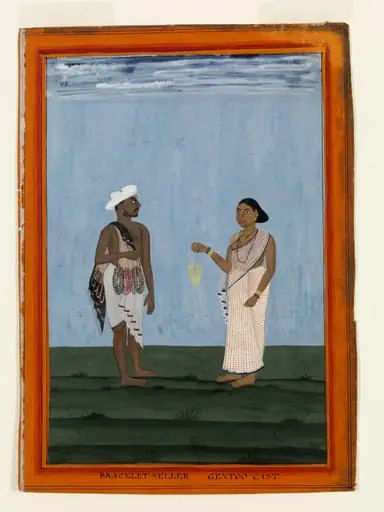
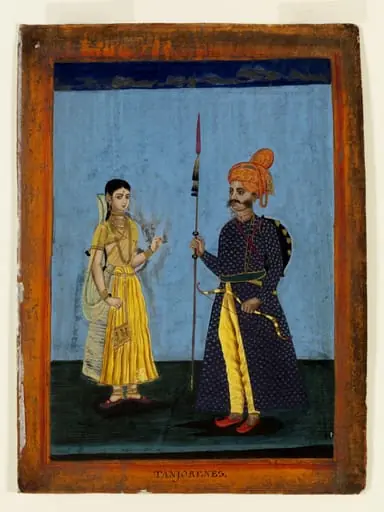
A clerk and his wife is a paint painting by the Patna School of Painting artist Unknown. It dates from 1770 and is held in the collection of the Victoria and Albert Museum. This painting is one of thirty-six works documenting South Indian occupational groups, created around the late 18th century.
About this work
Overview
The album they belonged to was bound with a watermark dated 1799 and bore the bookplate of Joseph Whatley, with the Latin motto 'Pelle Timorem.
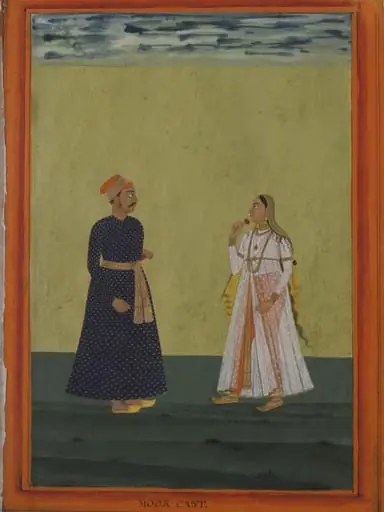
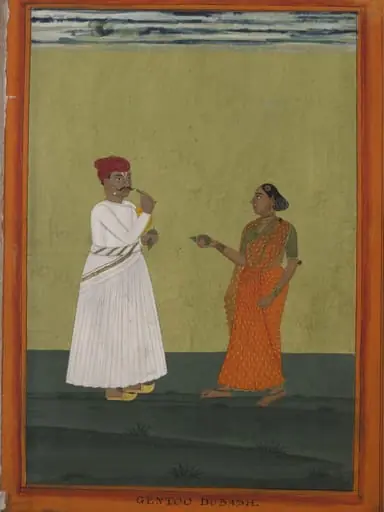
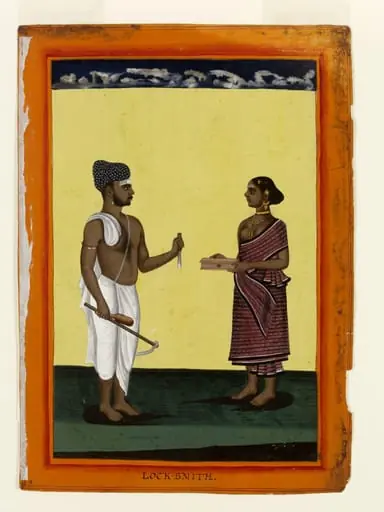
This painting is one of thirty-six works documenting South Indian occupational groups, created around the late 18th century. It depicts a clerk and his wife seated together on a bench, a rare pairing in a series that typically features individuals alone. Each piece shares formal traits: a red border, stylized cloud strips above, heavy shadows beneath the figures, and a dark green ground. The album they belonged to was bound with a watermark dated 1799 and bore the bookplate of Joseph Whatley, with the Latin motto 'Pelle Timorem.'
Subject & Meaning
The couple represents a literate administrative class, likely a record-keeper or scribe and his spouse. The man holds a stylus or writing tool, while the woman clutches a small object possibly related to household management or ritual duties. Their joint portrayal suggests a domestic unit tied to professional identity, unusual in a series focused on solitary laborers. The inclusion of jewelry and attire signals social standing within their caste, reinforcing the album’s purpose as a visual catalog of regional social structure.
Technique & Style
The figures are rendered with flat, outlined forms against a muted green ground, their shadows exaggerated and elongated, almost abstract in their weight. The man’s white turban and loose shirt contrast with the woman’s red sari and gold adornments, drawing attention to their roles through color rather than detail. The style diverges from other works in the album, showing less precision in anatomy and a more decorative use of color, suggesting it may stem from a different artist within the workshop producing the set.
History & Provenance
The painting was part of a bound album commissioned by British officials in South India, likely for ethnographic documentation. It carried the watermark of J. Ruse, dated 1799, and later passed into the collection of Joseph Whatley, whose bookplate was affixed. The album’s consistent format and inscriptions indicate a coordinated project, possibly for a European audience seeking to classify Indian society. Its survival in the Victoria and Albert Museum reflects its early acquisition by colonial institutions.
Context
These paintings emerged during a period of British administrative expansion in South India, when cataloging local customs and labor divisions served both bureaucratic and curiosities-driven interests. The series reflects an early attempt at ethnographic recording, though filtered through colonial frameworks. Unlike later anthropological studies, these works prioritize visual typology over individual narrative, reducing complex social roles to standardized iconography.
Legacy
The album remains a key resource for understanding how 18th-century colonial observers interpreted Indian caste and occupation. While stylistically uneven, the set preserves details of dress, gesture, and material culture otherwise undocumented. Its presence in major collections underscores its role as both artifact and instrument of colonial classification, offering insight into how identity was visually codified during a period of imperial consolidation.
Artist & collection

 Domestic Scene
 Giacomo and Cardinal Marco, investing Andrea, Abbot of San Zeno, with his Benefice
 The Nymph of Fontainebleau
 Portrait of a Woman
 Madonna and Child with Saints in the Enclosed Garden
 Venus and Minerva
 Family Group of Four on Sofa
 Wall painting from Room H of the Villa of P. Fannius Synistor at Boscoreale