Artwork
Untitled
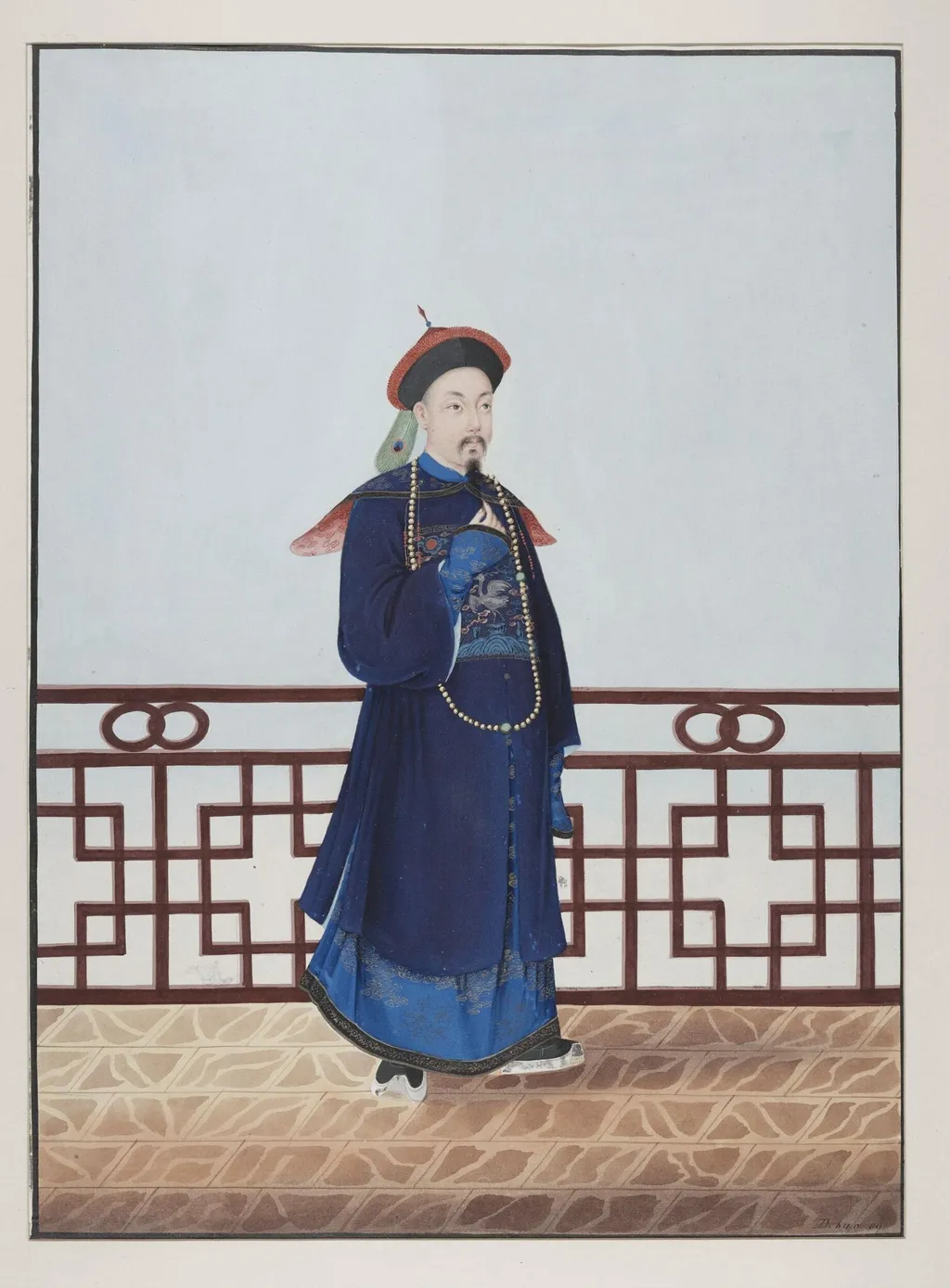
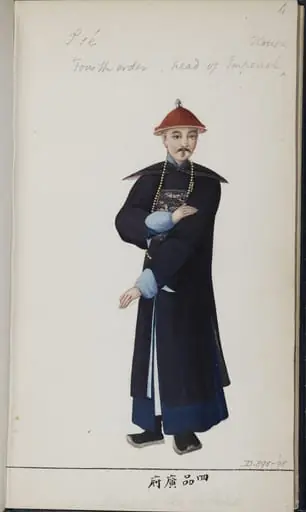
Untitled is a paint painting by the Orientalist artist Unknown. It dates from 1830 and is held in the collection of the Victoria and Albert Museum.
About this work
Overview
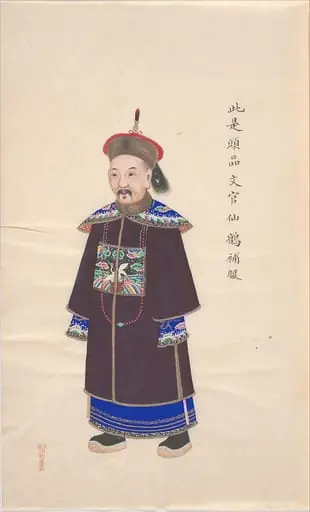
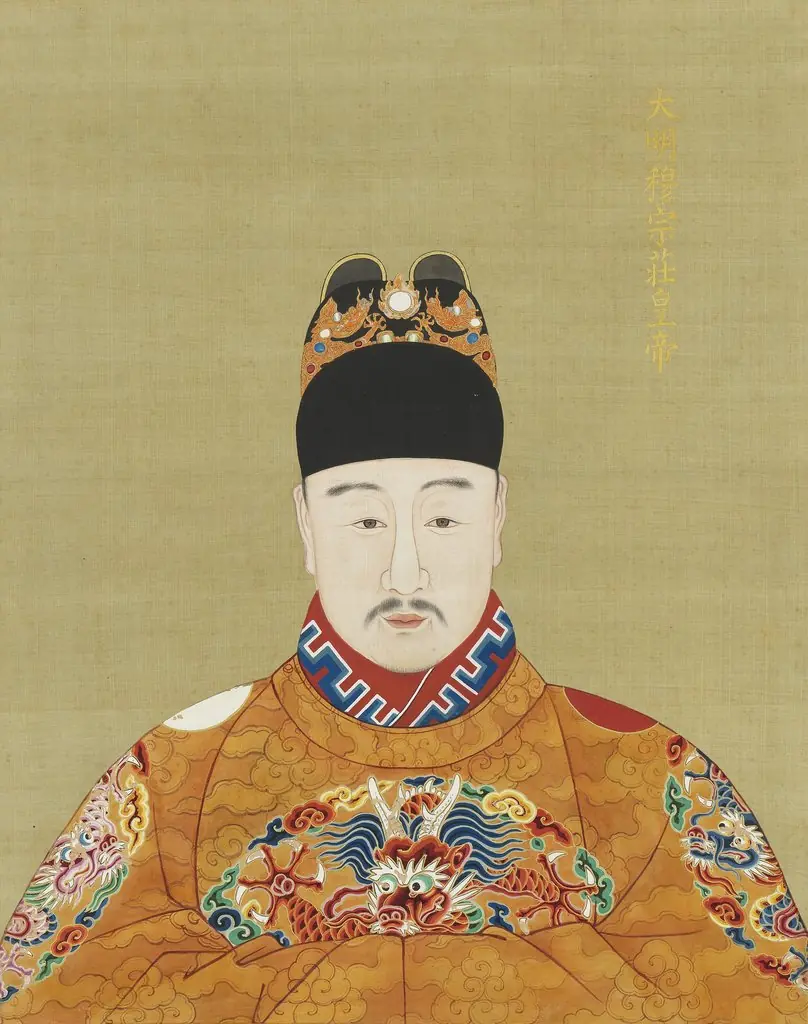
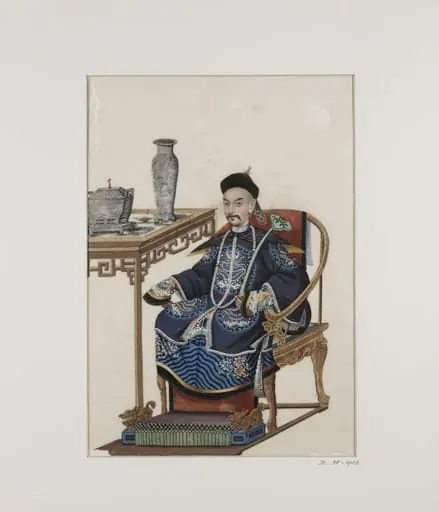
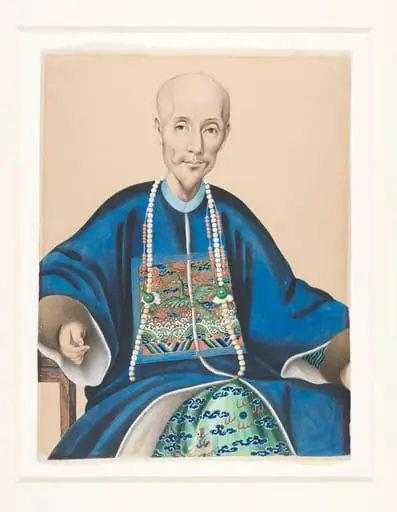
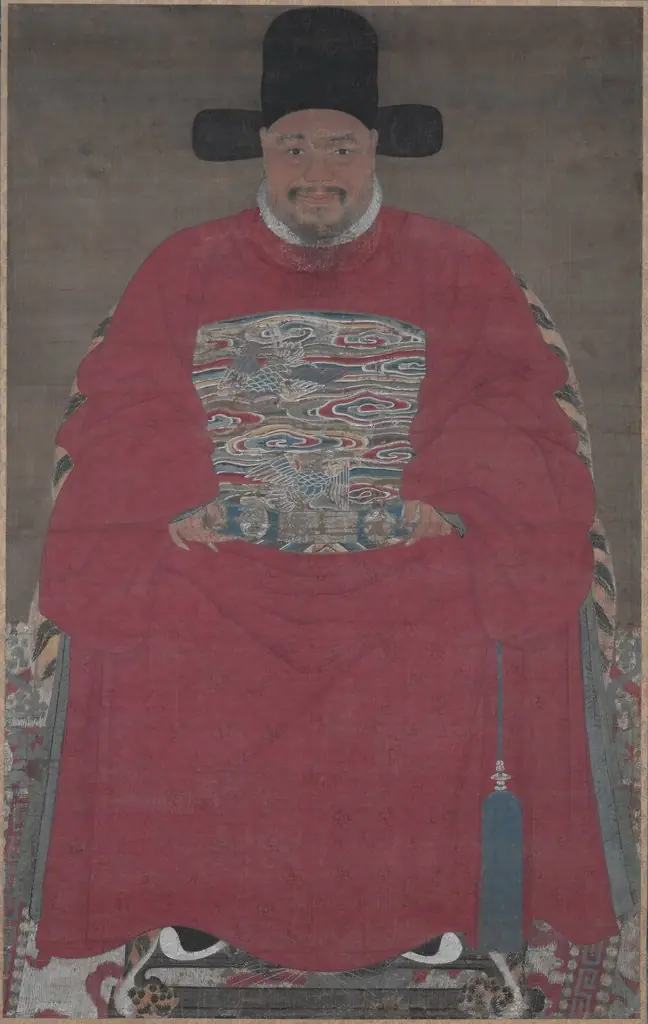
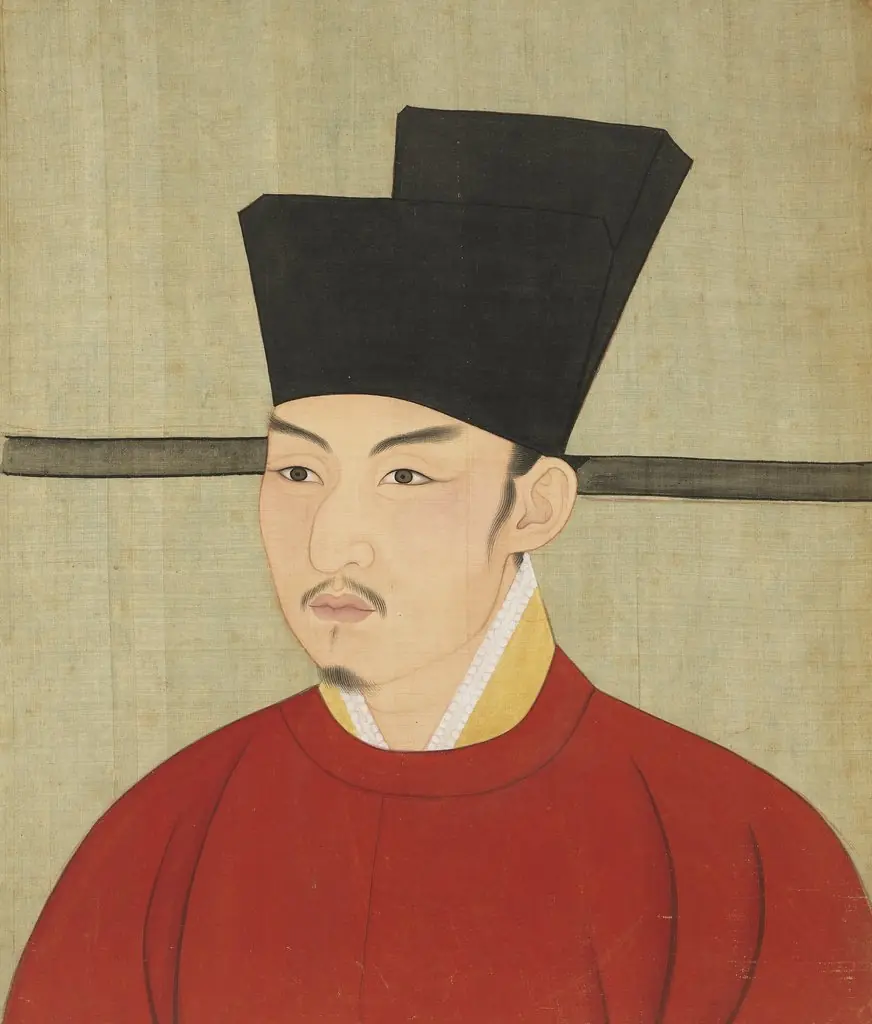
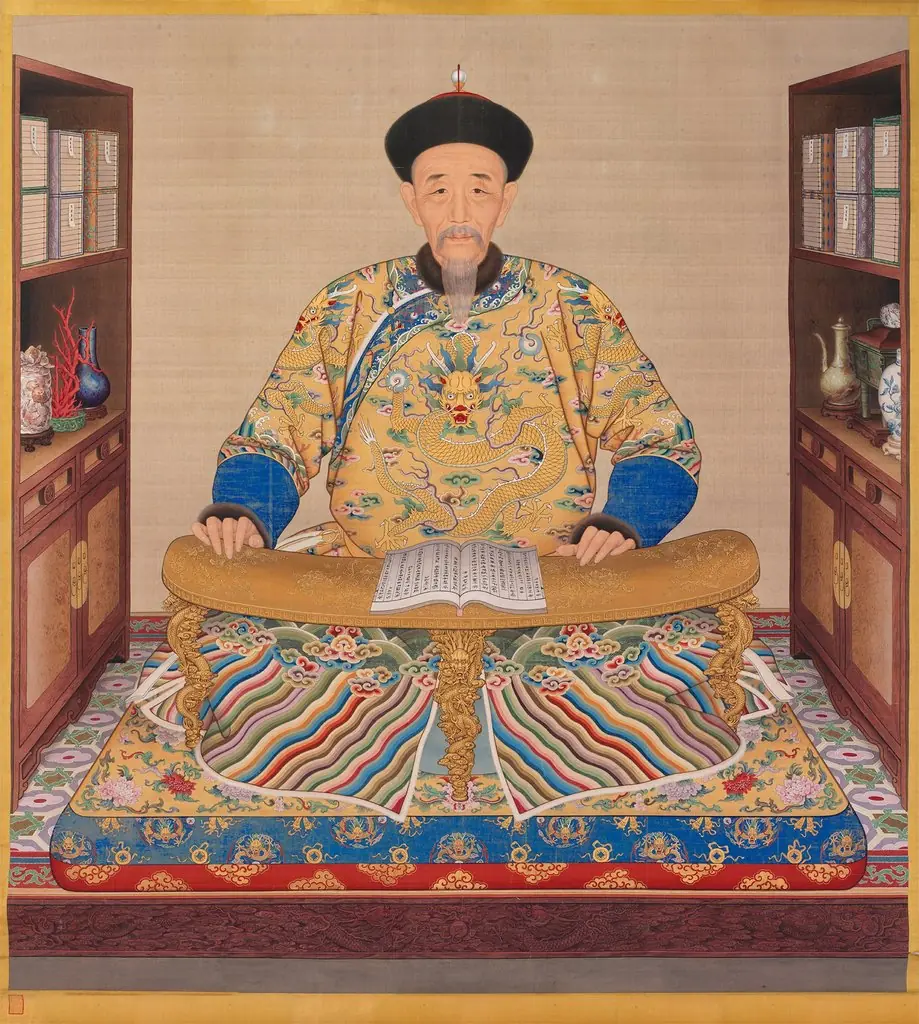
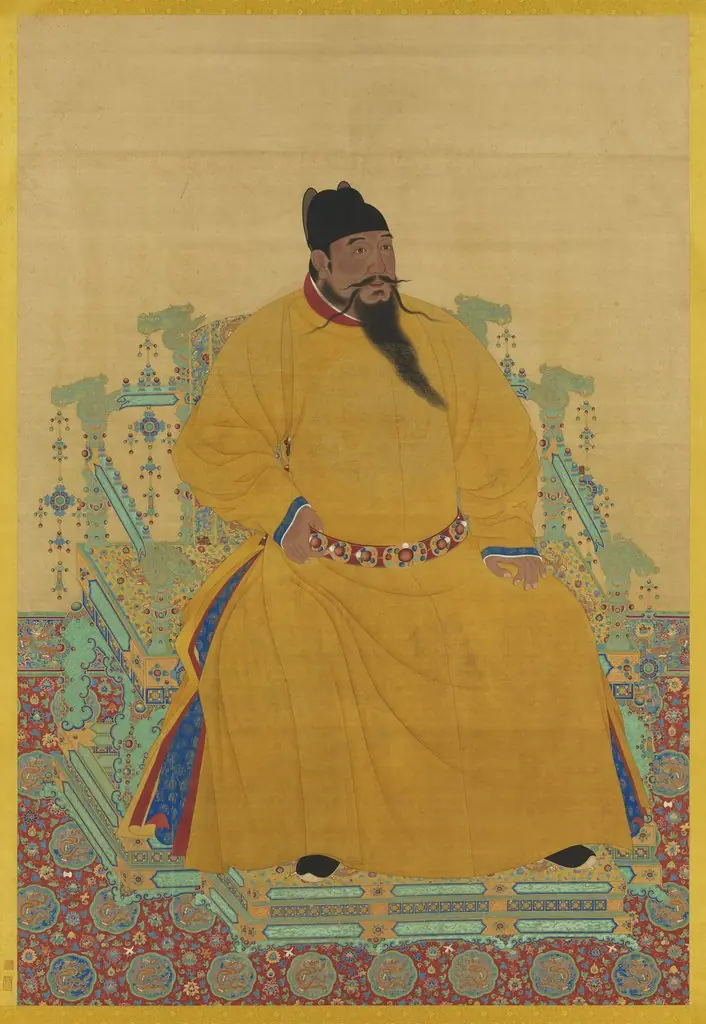
This oil painting depicts a Chinese civil official in formal court attire, rendered with precise detail to emphasize status and ceremonial dress.
This oil painting depicts a Chinese civil official in formal court attire, rendered with precise detail to emphasize status and ceremonial dress. The figure stands rigidly, clad in richly colored robes and a tall, ornate hat, elements that would have appeared foreign to European viewers in the early 19th century. The work was likely created for an audience unfamiliar with Qing dynasty customs, serving as a visual record of perceived exoticism.
Subject & Meaning
The subject is a high-ranking mandarin, identified by his elaborate robes, jade necklace, and elongated fingernails—symbols of leisure and bureaucratic rank, not manual labor. His posture and attire convey authority and adherence to imperial protocol. The painting does not depict action or emotion, but rather the static ideal of official dignity, reinforcing European notions of an orderly, distant Eastern hierarchy.
Technique & Style
The painting employs a realistic, almost documentary style with careful rendering of textures: silk embroidery, polished jade, and the sheen of lacquered hat material. Colors are vivid but controlled, avoiding dramatic lighting or expressive brushwork. The composition is frontal and symmetrical, prioritizing clarity of costume over psychological depth or spatial context.
History & Provenance
Created likely in the 1820s, the work emerged from a broader trend of Chinese export art produced for Western markets. Artists in Guangzhou, often working for foreign traders, painted officials, landscapes, and daily scenes to satisfy curiosity about China. This piece was probably commissioned by a European merchant or collector seeking to display cultural knowledge through material objects.
Context
During the early 1800s, European access to China was limited to the Canton trade system. While tea, porcelain, and silk flowed westward, direct cultural understanding remained sparse. Paintings like this filled a gap in perception, offering visual proxies for a society shrouded in mystery. They reflected more about European curiosity than accurate ethnographic detail.
Legacy
Such works contributed to the Western visual lexicon of 'Chinoiserie'—a stylized, often romanticized interpretation of Chinese culture. Though now recognized as artifacts of cross-cultural misapprehension, they remain valuable as historical documents of how global trade shaped aesthetic imagination. Similar examples are held in collections like the Victoria and Albert Museum, where they continue to prompt reflection on representation and exchange.
Artist & collection

 Domestic Scene
 Giacomo and Cardinal Marco, investing Andrea, Abbot of San Zeno, with his Benefice
 The Nymph of Fontainebleau
 Portrait of a Woman
 Madonna and Child with Saints in the Enclosed Garden
 Venus and Minerva
 Family Group of Four on Sofa
 Wall painting from Room H of the Villa of P. Fannius Synistor at Boscoreale