Artwork
A chaprasi
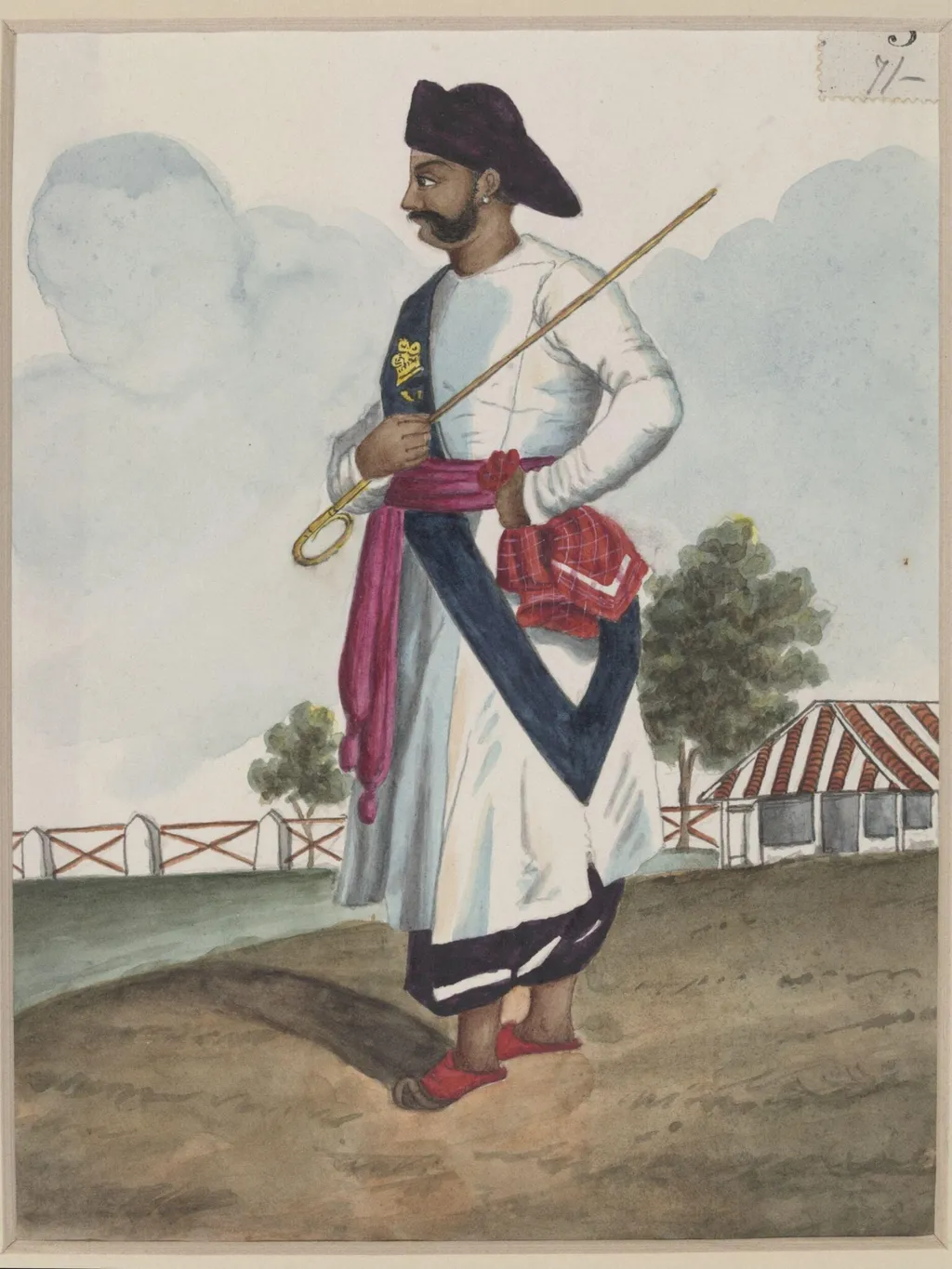
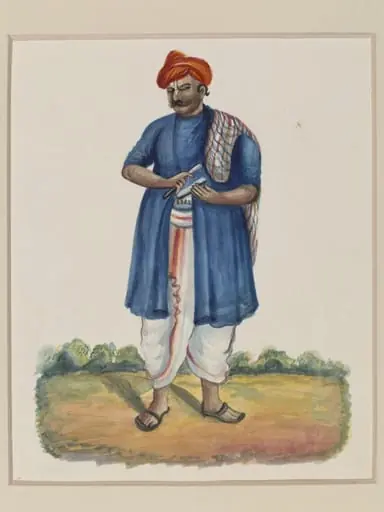
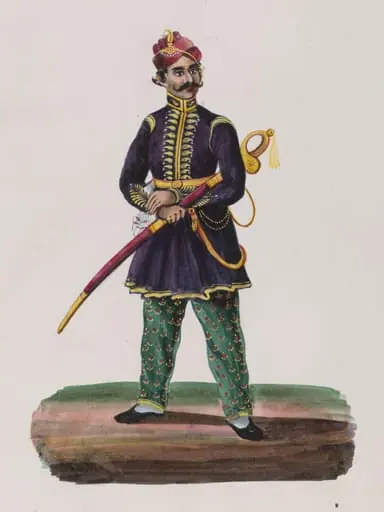
A chaprasi is a paint painting by the Patna School of Painting artist Unknown. It dates from 1860 and is held in the collection of the Victoria and Albert Museum.
About this work
Overview
This painting belongs to a series of fifteen works created by Indian artists for British patrons during the colonial period, known as Company paintings.
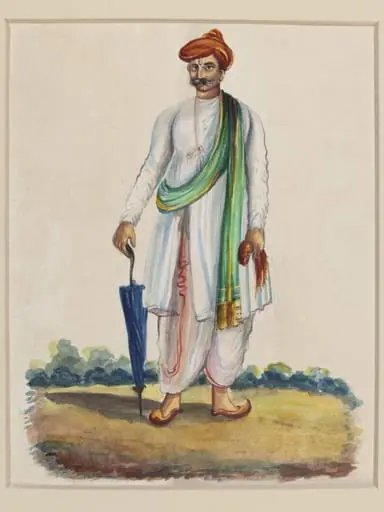
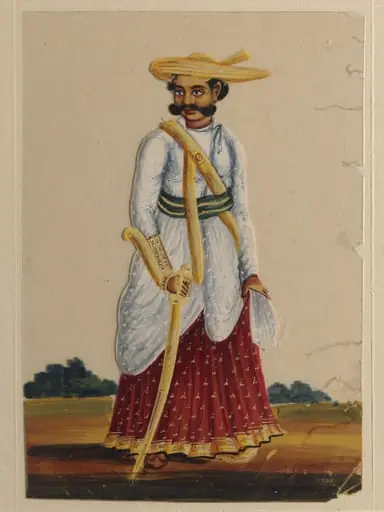
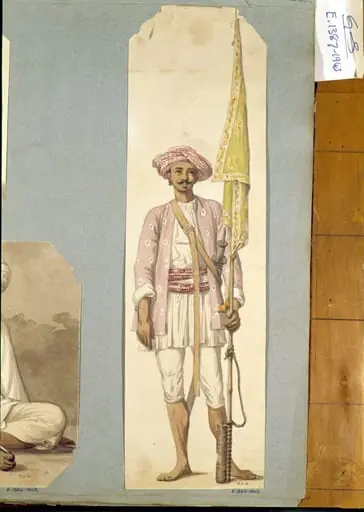
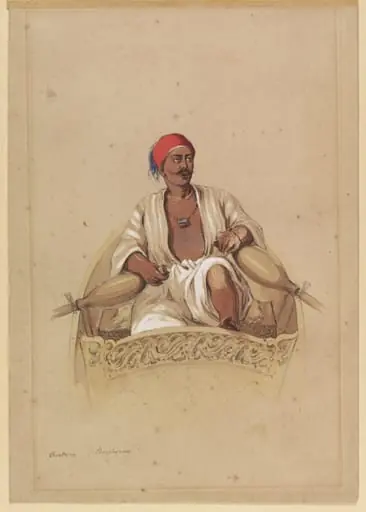
This painting belongs to a series of fifteen works created by Indian artists for British patrons during the colonial period, known as Company paintings. It portrays a chaprasi, a local messenger or attendant, as part of a broader effort to document everyday roles in Indian society. The format is straightforward, resembling a visual record rather than a decorative piece, reflecting the commercial intent behind these works.
Subject & Meaning
The subject is a chaprasi, a figure who served as a messenger or orderly in colonial administrative settings. His presence highlights the intersection of Indian labor and British institutional structures. While his uniform incorporates European elements like white breeches and black shoes, the red turban preserves a distinct cultural identity, suggesting a negotiated sense of self within a colonial hierarchy.
Technique & Style
The artist employed flat areas of unmodulated color and precise, unbroken outlines, avoiding shading or perspective to create depth. This stylistic choice aligns with traditional Indian miniature painting practices, adapted to suit European tastes for clarity and detail. The result is a clean, almost schematic representation, prioritizing recognition over naturalism, as if intended for cataloging rather than artistic expression.
History & Provenance
Created in early 19th-century India, this painting was likely commissioned by a British official or East India Company employee seeking to document local life. Such works were often collected as ethnographic curiosities. The series of fifteen occupational portraits suggests systematic documentation, possibly for personal use or to share with audiences back in Britain.
Context
Company paintings emerged as a distinct genre when Indian artists adapted their techniques to meet the demands of British patrons. These works served both as souvenirs and as visual records of colonial India’s social fabric. Depictions of laborers, artisans, and officials were especially popular, offering foreigners a curated glimpse into a world they did not fully understand.
Legacy
These paintings now serve as historical documents, revealing how Indian artists navigated cultural expectations under colonial rule. While once viewed as mere commercial products, they are increasingly studied for their hybrid aesthetics and the subtle agency of their creators. Collections such as those at the Victoria and Albert Museum preserve them as evidence of cross-cultural exchange in art.
Artist & collection

 Domestic Scene
 Giacomo and Cardinal Marco, investing Andrea, Abbot of San Zeno, with his Benefice
 The Nymph of Fontainebleau
 Portrait of a Woman
 Madonna and Child with Saints in the Enclosed Garden
 Venus and Minerva
 Family Group of Four on Sofa
 Wall painting from Room H of the Villa of P. Fannius Synistor at Boscoreale