Artwork
A cook holding a chicken
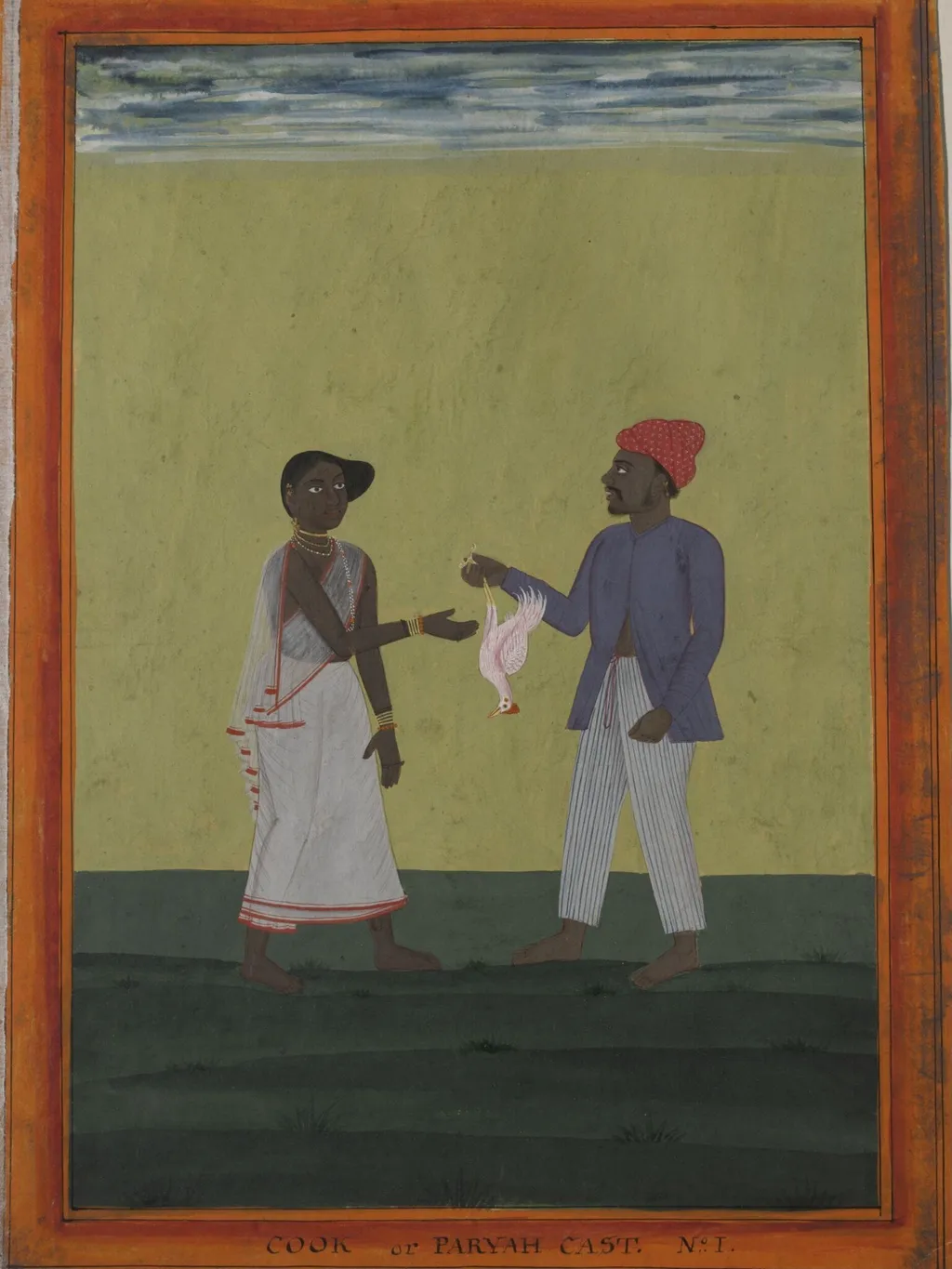
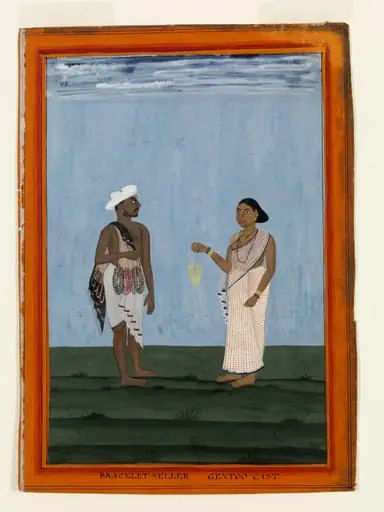
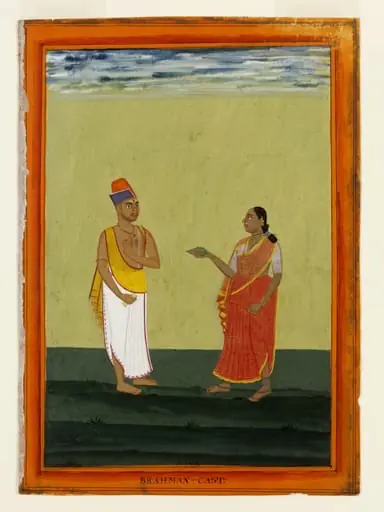
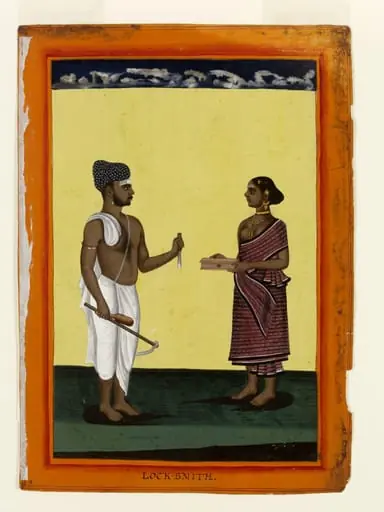
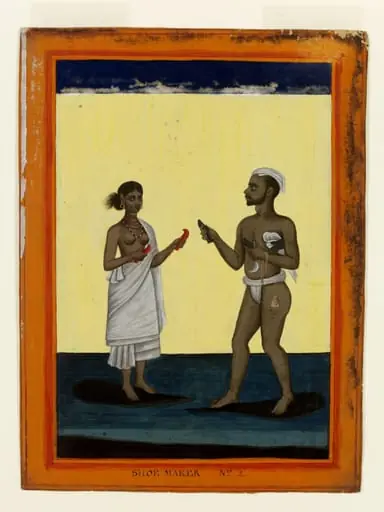
A cook holding a chicken is a paint painting by the Rococo painting artist Unknown. It dates from 1770 and is held in the collection of the Victoria and Albert Museum. This painting is one of thirty-six works depicting occupational roles in South India, created around 1799.
About this work
This painting shows a cook holding a chicken. He wears simple clothes, and a red border frames the scene. A strip of cloud floats at the top above his head.
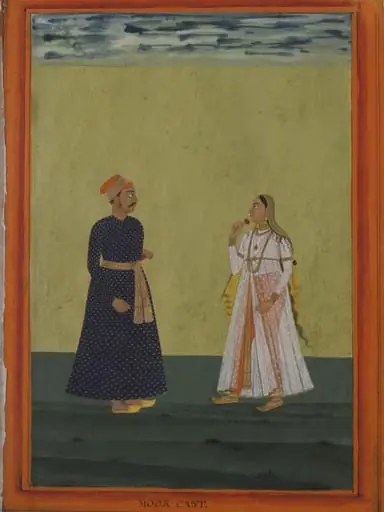
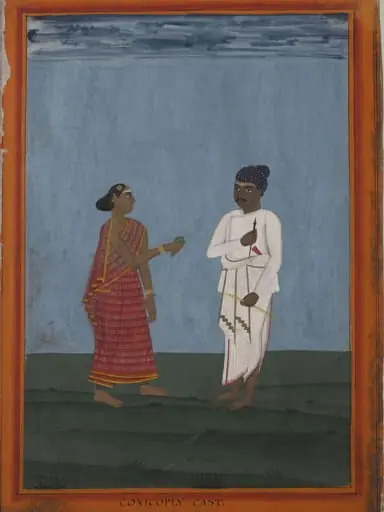
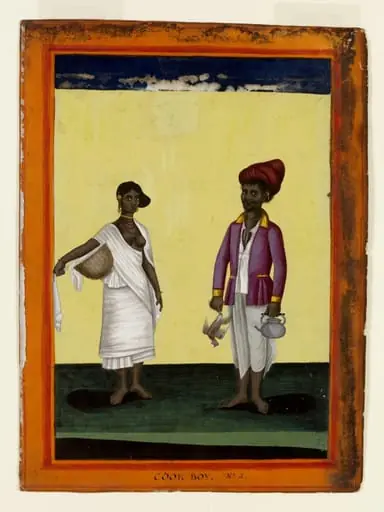
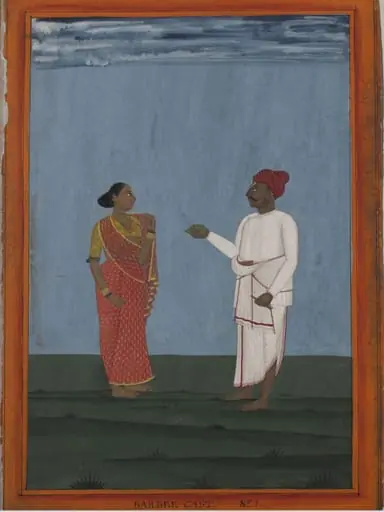
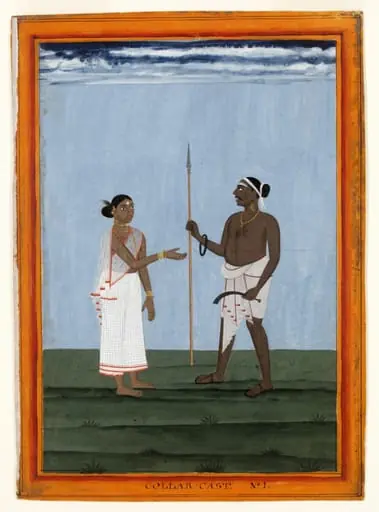
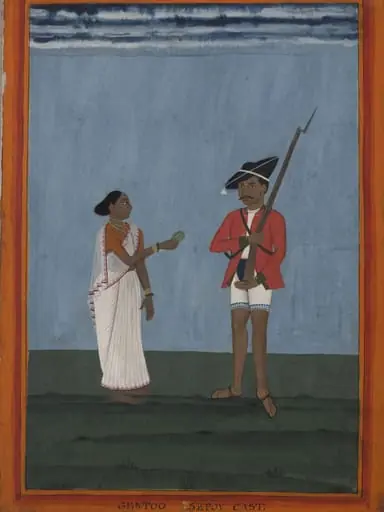
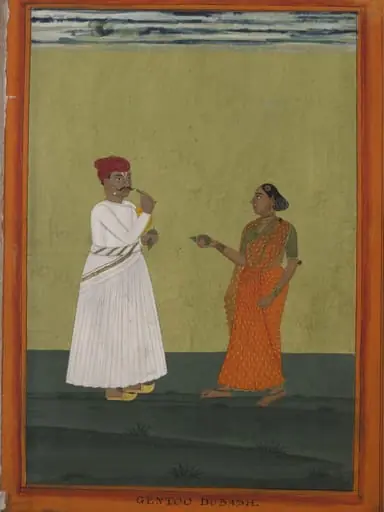
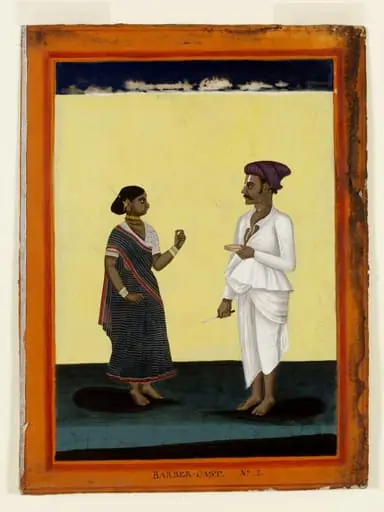
These thirty-six paintings show Indian castes and trades. Each one has the worker’s name written below in English. A watermark from 1799 appears on the back.
Look at the heavy shadows on the cook’s feet. They feel almost solid. See more like it at the Victoria and Albert Museum.
Overview
' All images share a consistent formal structure: a red border, a thin cloud band at the top, and pronounced, looped shadows beneath the figures.
This painting is one of thirty-six works depicting occupational roles in South India, created around 1799. Each piece portrays an individual engaged in their trade, accompanied by an English inscription identifying their caste or profession. The series was compiled into an album bearing a watermark from J. Ruse and a bookplate belonging to Joseph Whatley, with the Latin motto 'Pelle Timorem.' All images share a consistent formal structure: a red border, a thin cloud band at the top, and pronounced, looped shadows beneath the figures.
Subject & Meaning
The subject is a cook holding a live chicken, a direct reference to his daily labor. His simple attire and focused posture convey the practicality of his role without embellishment. The inclusion of the chicken, still alive, suggests the immediacy of food preparation in domestic or commercial kitchens of the time. These portraits were not idealized but documented, serving as ethnographic records of social structure and labor in late 18th-century South India.
Technique & Style
The painting employs a flat, decorative style with minimal spatial depth. The figure is rendered with clear outlines against a dark green ground, while heavy, solid-looking shadows extend from the feet, anchoring the form to the ground. A strip of stylized clouds hovers above, framing the scene without suggesting atmosphere. The use of color and line varies across the series, indicating contributions from multiple artists, possibly working under a shared commission but with distinct handwritings.
History & Provenance
The paintings were assembled into a bound album around 1799, bearing the watermark of J. Ruse, a known papermaker of the period. The album’s bookplate identifies Joseph Whatley as its owner, suggesting British colonial interest in documenting Indian society. The works likely originated in Madras or nearby regions, produced for European patrons seeking ethnographic records. Their survival in institutional collections, such as the Victoria and Albert Museum, reflects their early acquisition as cultural artifacts.
Context
Created during the height of British colonial administration in South India, these paintings reflect a growing European interest in cataloging local social hierarchies and economic roles. They align with broader 18th-century practices of visual ethnography, where occupation and caste were visually codified for administrative and curatorial purposes. Unlike religious or mythological subjects, these works focus on secular labor, offering rare insight into everyday life from a colonial perspective.
Legacy
The series remains a valuable resource for understanding how Indian social roles were visually interpreted during colonial rule. Though stylistically uneven, the consistency of format and intent reveals a deliberate effort to systematize cultural knowledge. Today, they are studied not as art in the traditional sense, but as historical documents—evidence of how identity, labor, and power were recorded and preserved through imagery under colonial oversight.
Artist & collection

 Domestic Scene
 Giacomo and Cardinal Marco, investing Andrea, Abbot of San Zeno, with his Benefice
 The Nymph of Fontainebleau
 Portrait of a Woman
 Madonna and Child with Saints in the Enclosed Garden
 Venus and Minerva
 Family Group of Four on Sofa
 Wall painting from Room H of the Villa of P. Fannius Synistor at Boscoreale