Artwork
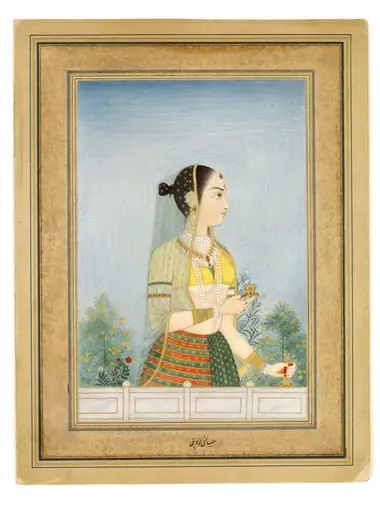
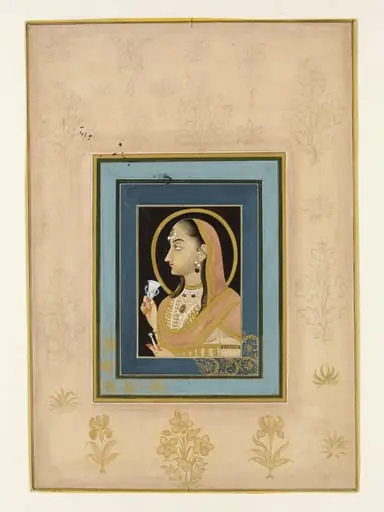
a lady holding a blossom
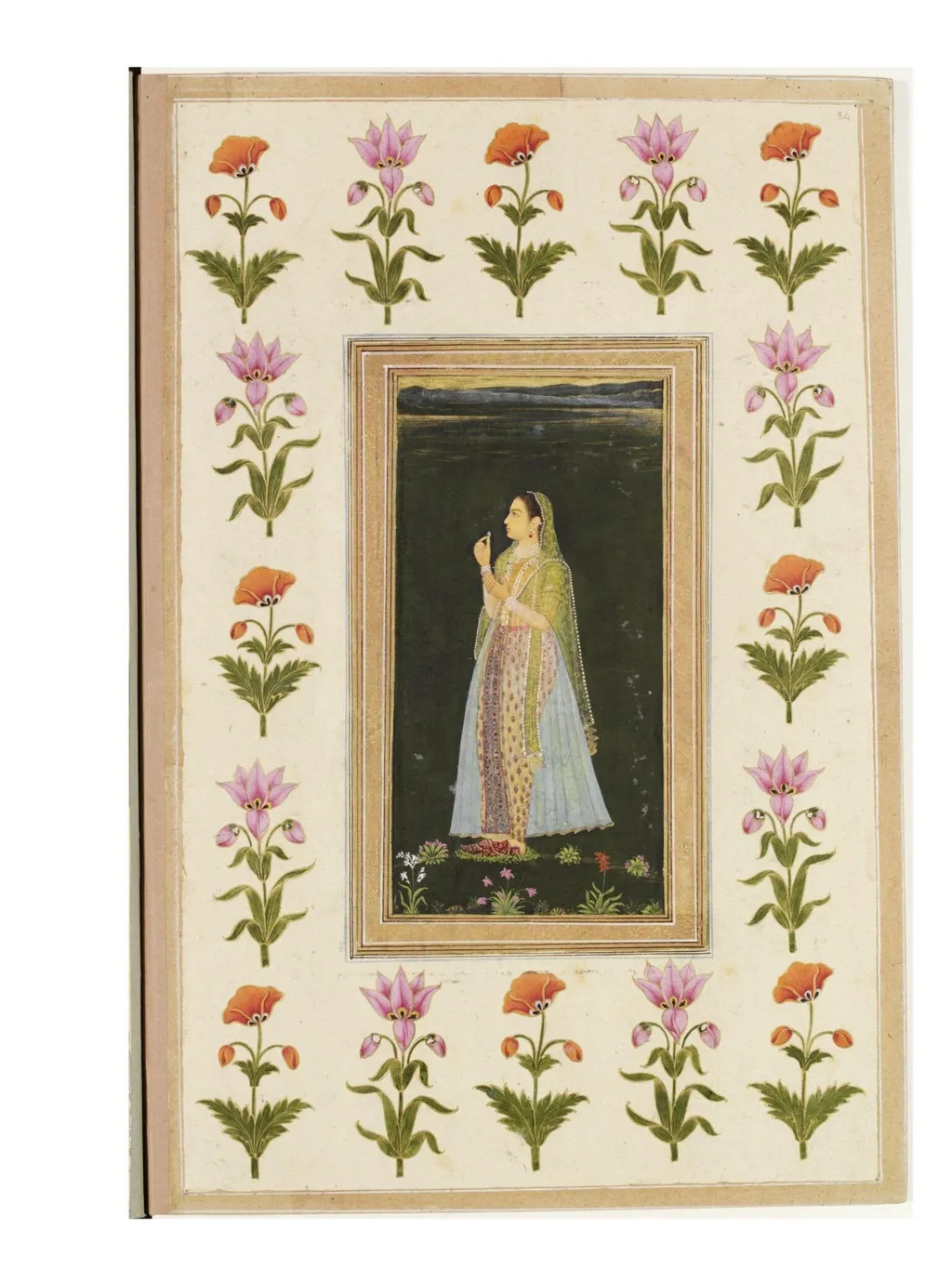
a lady holding a blossom is a paint painting by the Baroque artist Unknown. It dates from 1650 and is held in the collection of the Victoria and Albert Museum.
About this work
Overview
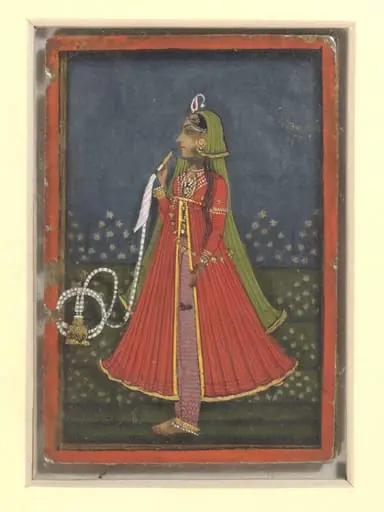
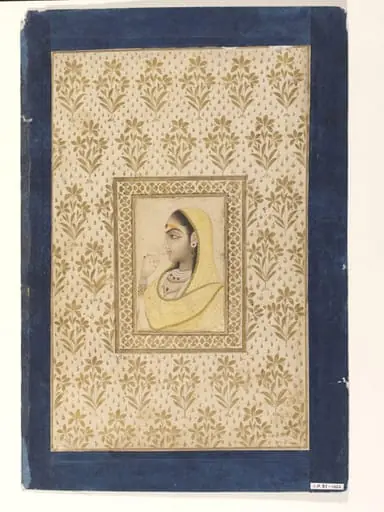
The work portrays a seated woman viewed in profile, her right hand lifting a small white blossom toward her face while the left hand rests lightly on her torso.
The work portrays a seated woman viewed in profile, her right hand lifting a small white blossom toward her face while the left hand rests lightly on her torso. She is dressed in a sheer, floor‑length peshwaz over a golden paijama patterned in red and grey, a grey patka at her waist, and a green odhani draped over dark hair. The figure is set against a deep, almost black background that suggests a night sky, framed by a gold‑leafed scroll with floral motifs.
Subject & Meaning
The composition emphasizes the intimate gesture of the woman holding the flower, a motif often associated with notions of beauty, purity or contemplation in South Asian visual culture. Her elaborate jewelry—multiple pearl necklaces, bracelets, rings, gemstone‑set earrings, and crimson slippers—underscores status and adornment, while the surrounding blossoms add a decorative, possibly symbolic, floral environment.
Technique & Style
Rendered in fine brushwork, the painting contrasts the luminous, detailed rendering of the figure’s skin tones and textiles with the dark, atmospheric backdrop. The surrounding small flowers are painted in vivid pinks, oranges and greens, their precise outlines creating a decorative border that frames the central figure. The gold‑leafed mount enhances the luxurious visual effect.
Context & Provenance
The artwork reflects the aesthetic of Mughal‑influenced court painting, where luxurious garments, intricate jewelry, and floral motifs were common. Though the specific origin and date are not recorded here, the use of peshwaz, paijama, and odhani points to a South Asian context, likely from a period when such attire denoted aristocratic or royal identity.
Artist & collection

 Domestic Scene
 Giacomo and Cardinal Marco, investing Andrea, Abbot of San Zeno, with his Benefice
 The Nymph of Fontainebleau
 Portrait of a Woman
 Madonna and Child with Saints in the Enclosed Garden
 Venus and Minerva
 Family Group of Four on Sofa
 Wall painting from Room H of the Villa of P. Fannius Synistor at Boscoreale