Artwork
Rani Golapati
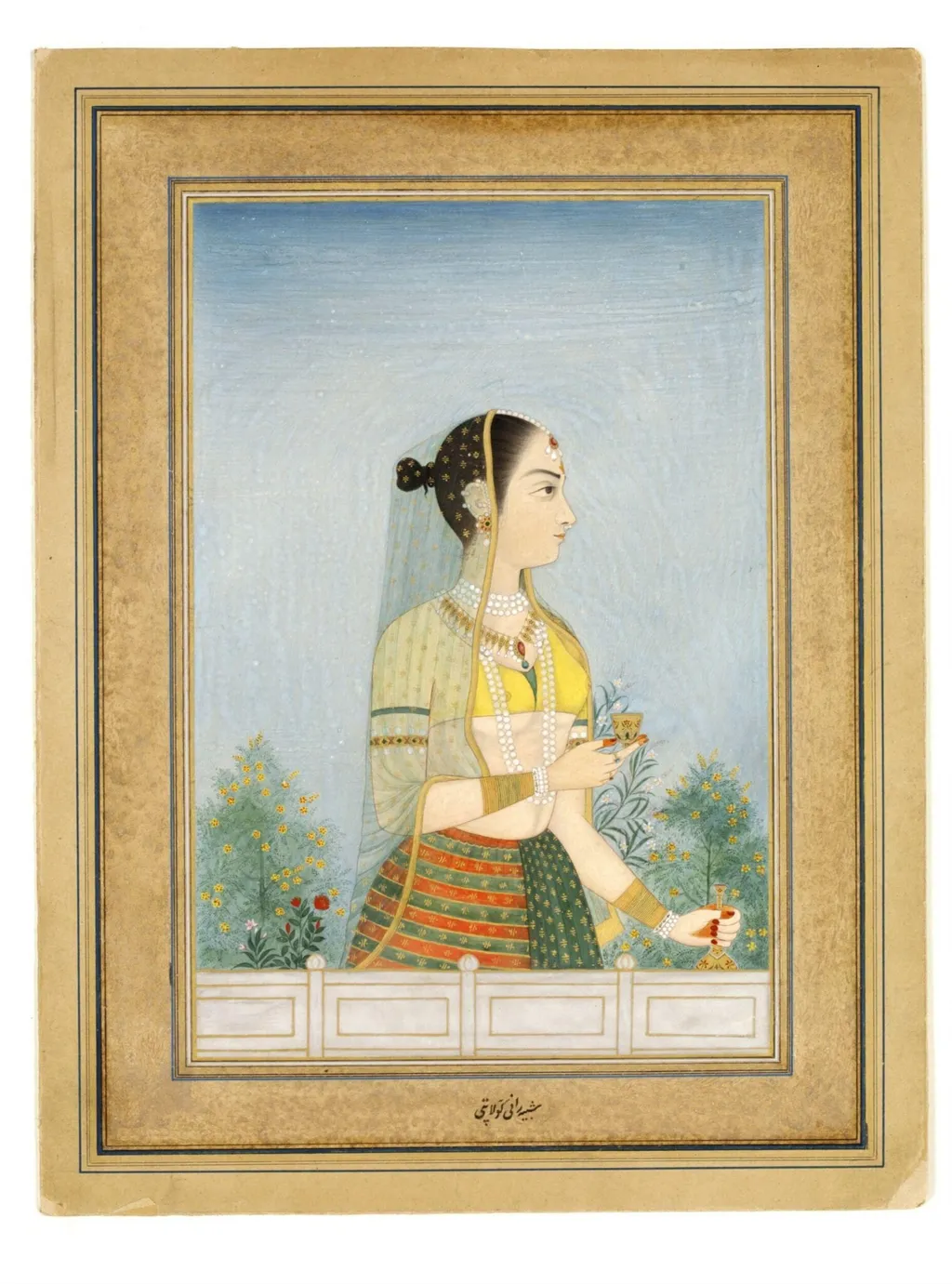
Rani Golapati is a paint painting by Unknown. It dates from 1850 and is held in the collection of the Victoria and Albert Museum.
About this work
Overview
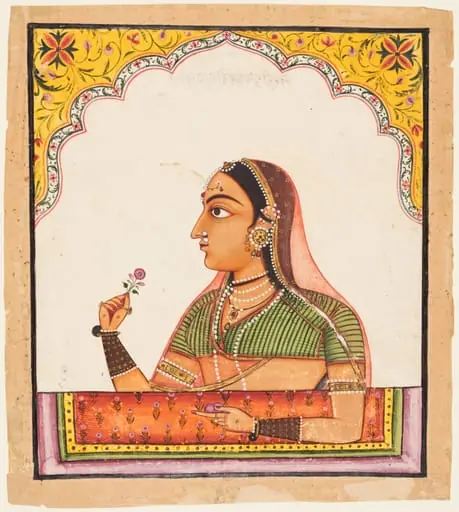
This opaque watercolour and gold painting on paper presents a half-length portrait of Rani Golapati, facing right against a softly rendered garden backdrop.
This opaque watercolour and gold painting on paper presents a half-length portrait of Rani Golapati, facing right against a softly rendered garden backdrop. The work is executed with fine detail, emphasizing textile patterns and metallic accents. Her posture and attire suggest aristocratic status, typical of Rajput court portraiture from the late 18th to early 19th century. The composition balances personal presence with symbolic elements of wealth and refinement.
Subject & Meaning
Rani Golapati is depicted as a noblewoman, likely a royal consort or queen, identified by her elaborate dress and the objects she holds: a gold enamelled cup and a slender flask, possibly for perfume or water. The inclusion of flowering trees and a balustrade implies a private, cultivated space, reinforcing her elevated social role. Her restrained expression and composed stance convey dignity rather than overt display, aligning with ideals of royal femininity in regional courts.
Technique & Style
The artist employed opaque watercolour with gold leaf to achieve luminous textures, particularly in the embroidery of her skirt and the edges of her head-shawl. Fine brushwork defines the intricate patterns of her garments and the delicate petals of the background flora. The use of gold highlights and precise line work reflects the influence of Mughal miniaturist traditions, adapted to regional Rajput aesthetics that favored rich detail and symbolic color.
History & Provenance
The painting originates from a Rajput court, likely in Rajasthan or nearby regions, during the late 1700s or early 1800s. It entered the collection of the Victoria and Albert Museum through documented acquisitions of South Asian art in the 19th century. Its survival in good condition suggests it was preserved within royal or aristocratic circles before being transferred to institutional custody, where it remains part of a broader corpus of courtly portraiture.
Context
Portraits of royal women in this period often served to affirm lineage, status, and cultural identity within regional courts. Unlike Mughal imperial portraits, Rajput depictions emphasized personal adornment and intimate settings, reflecting localized values. The presence of floral motifs and architectural elements like balustrades connects the subject to idealized notions of domestic grace and natural harmony, common themes in Deccan and Rajput painting traditions.
Legacy
This work contributes to the understanding of how female agency and identity were visually constructed in pre-colonial India. While not widely known outside specialist circles, it exemplifies the sophistication of regional painting schools that blended Mughal techniques with indigenous aesthetics. Its preservation allows ongoing study of textile representation, gendered symbolism, and the material culture of South Asian royalty.
Artist & collection

 Domestic Scene
 Giacomo and Cardinal Marco, investing Andrea, Abbot of San Zeno, with his Benefice
 The Nymph of Fontainebleau
 Portrait of a Woman
 Madonna and Child with Saints in the Enclosed Garden
 Venus and Minerva
 Family Group of Four on Sofa
 Wall painting from Room H of the Villa of P. Fannius Synistor at Boscoreale
 Beauty Holding a Flower
 Untitled
 Court Lady Pouring Wine (recto)
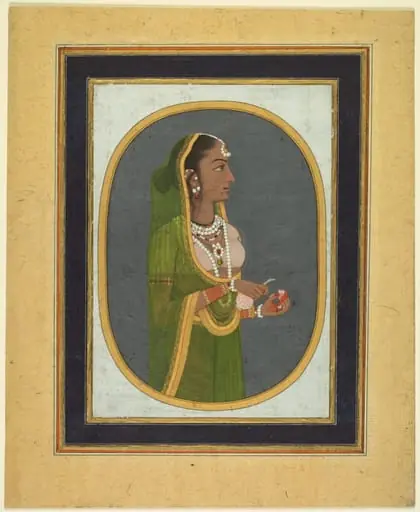 Court Lady Pouring Wine (recto); Calligraphy of Lyrical Quatrains (verso)
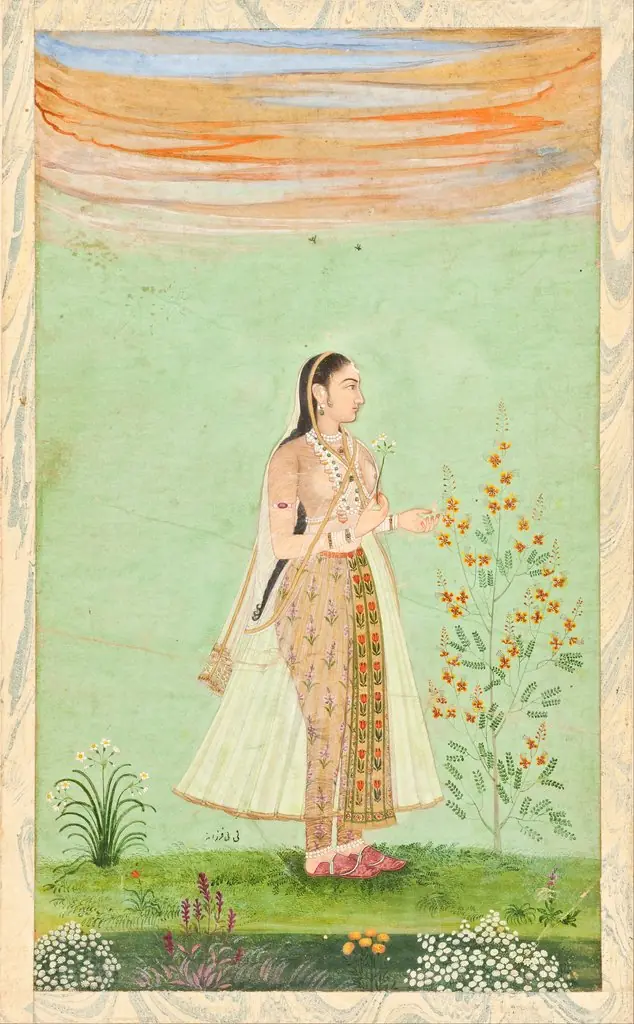 Bibi Ferzana
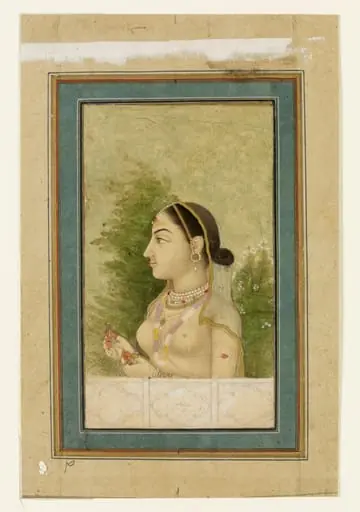 Untitled
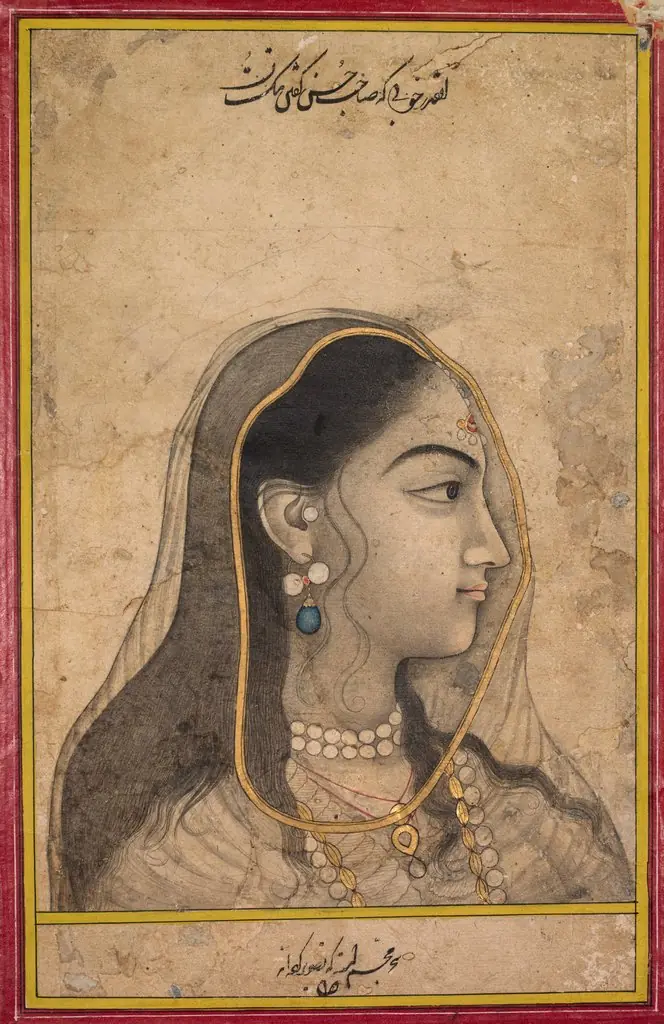 Head of a Beauty
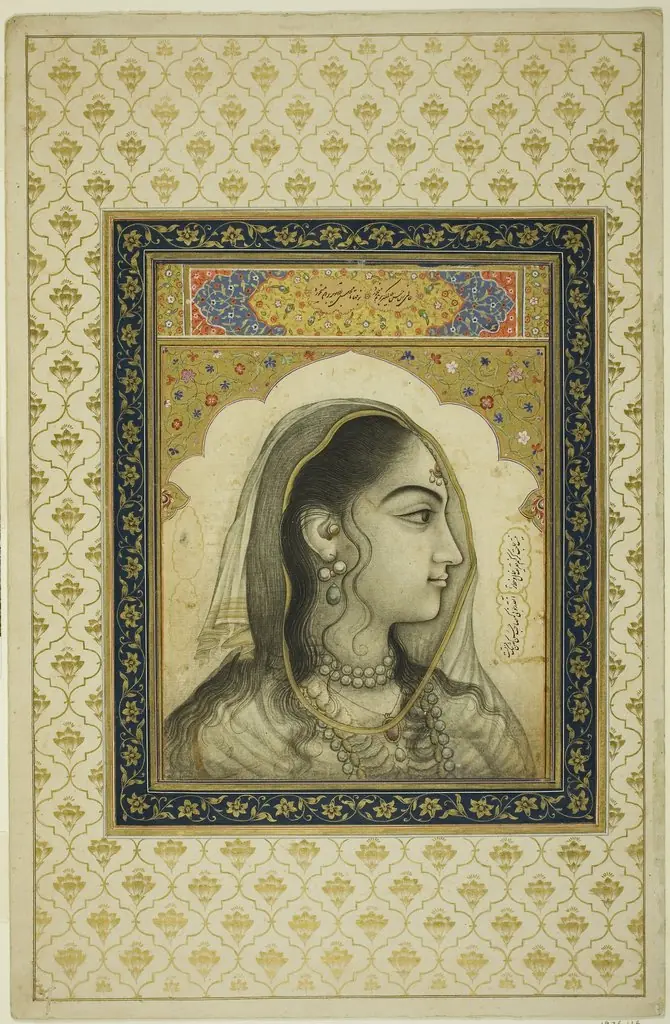 Portrait of a Beauty
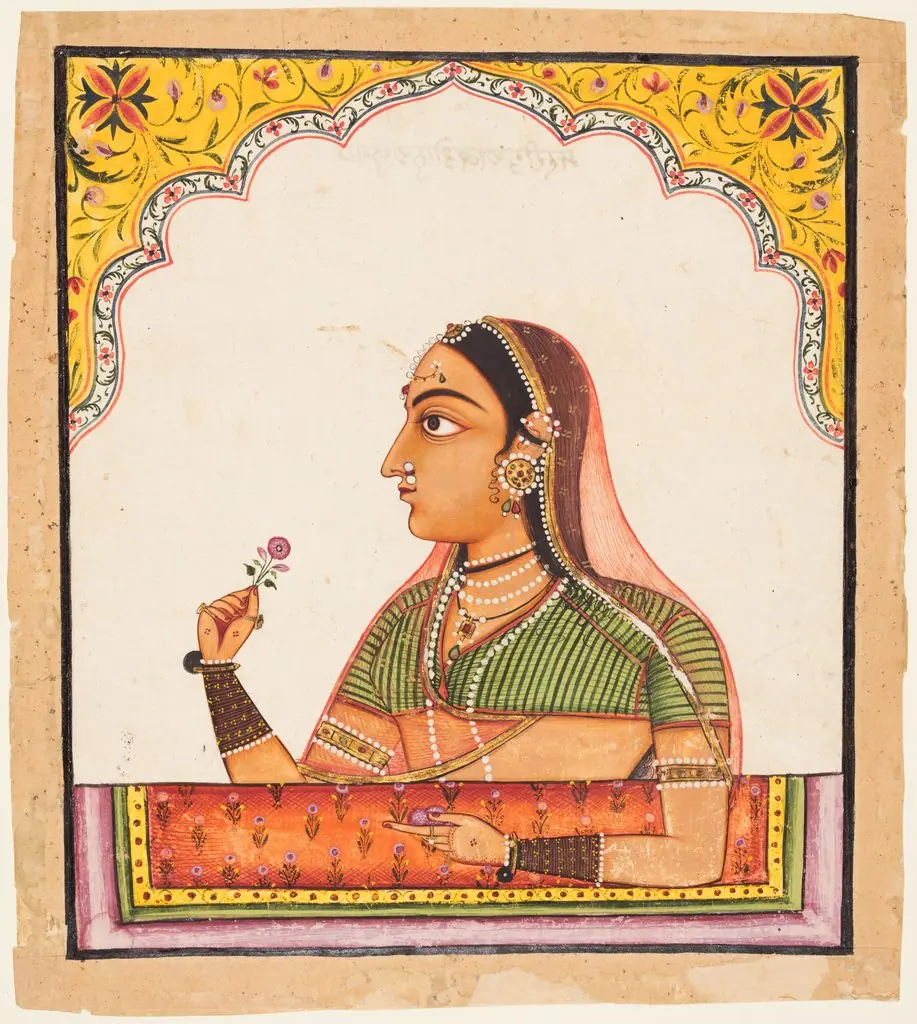 Noblewoman at a Jharokha Window Holding a Rose, from a Portraits of Women series
 Court lady singing and playing the vina
 Court lady singing and playing the vina (recto)
 Noblewoman at a Jharokha Window Holding a Rose, from a Portraits of Women series