Artwork
Untitled
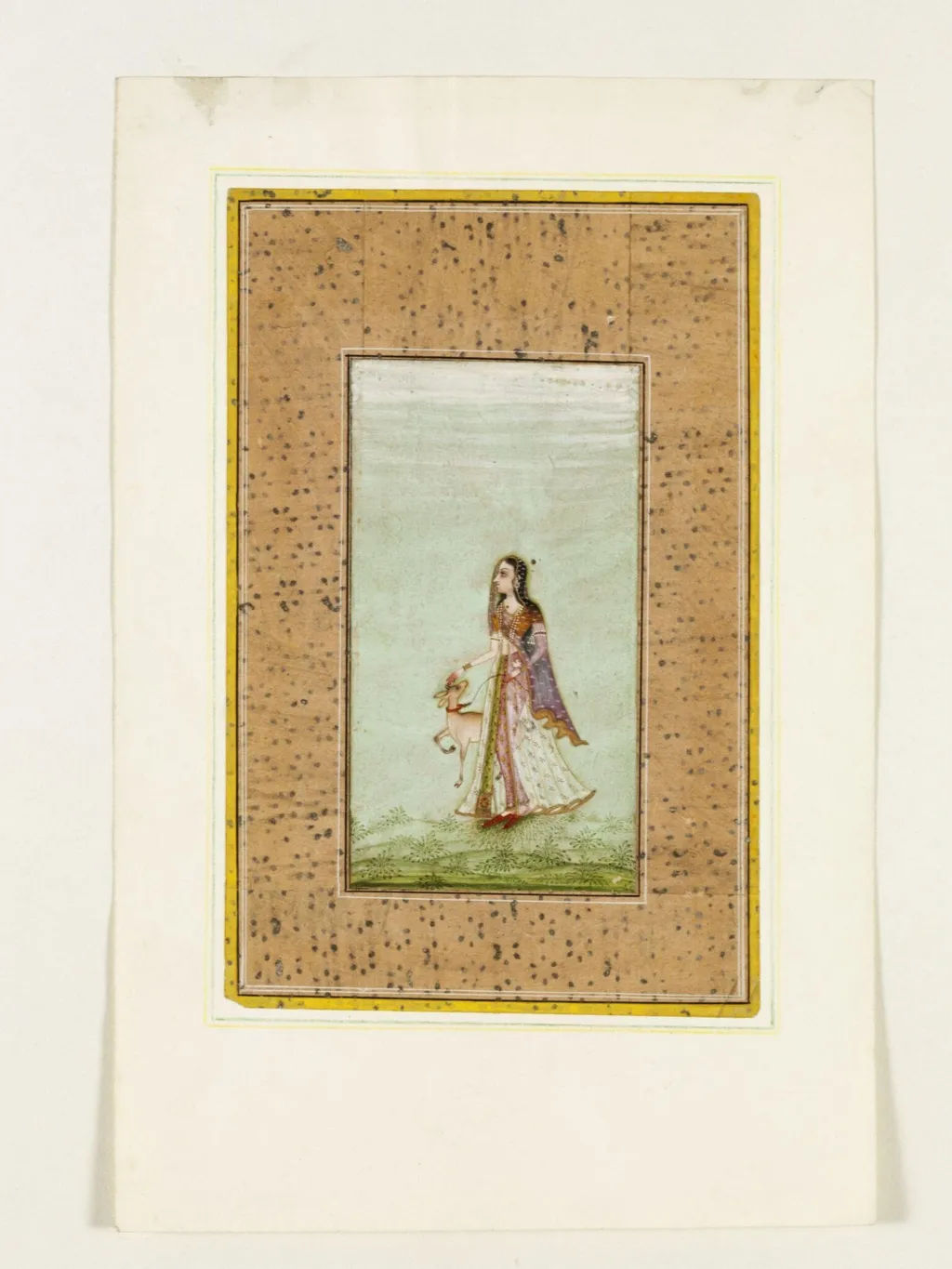
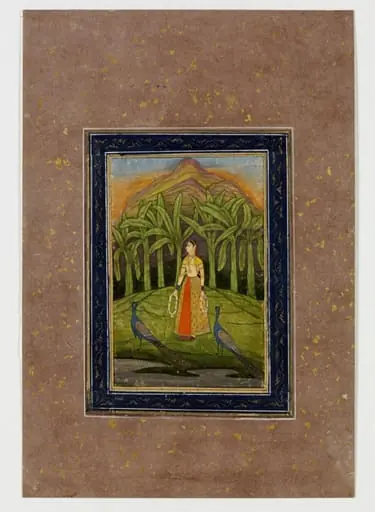
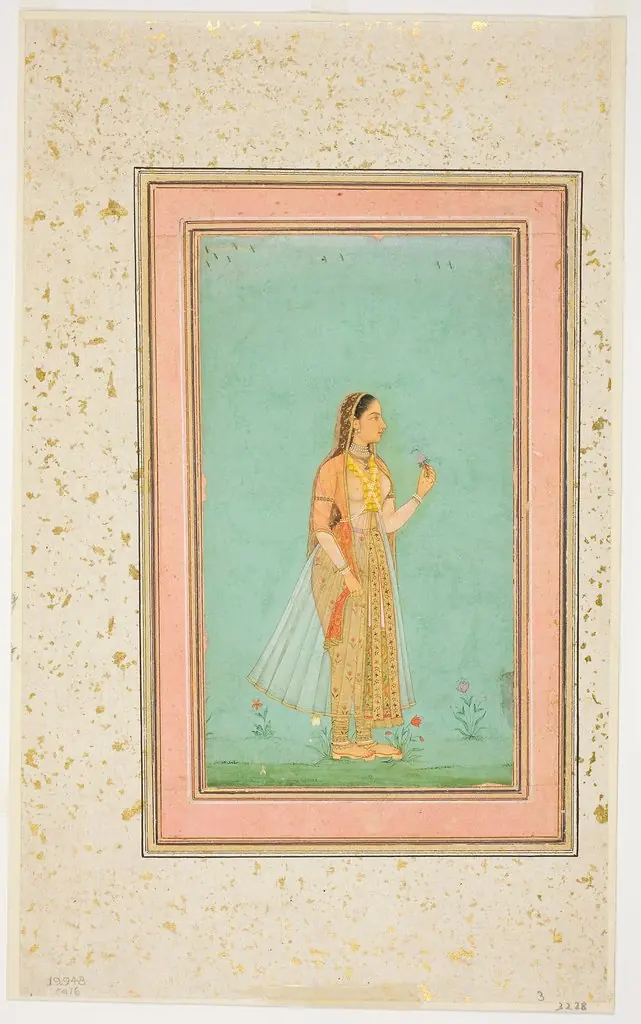
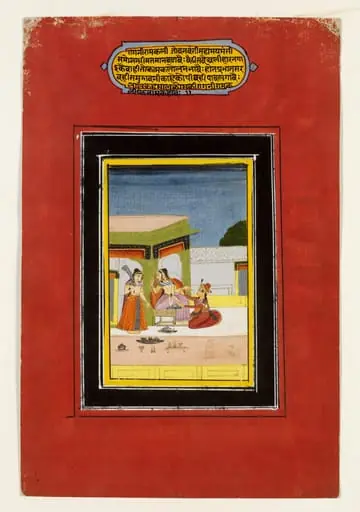
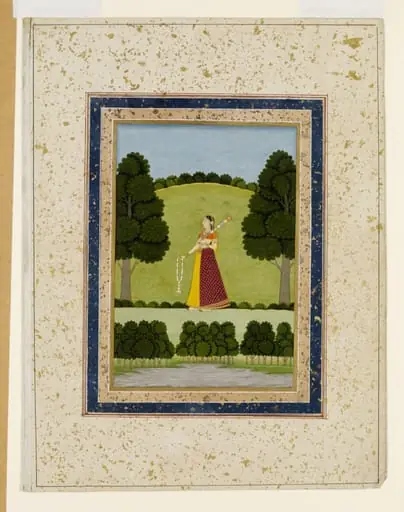
Untitled is a paint painting by the Baroque artist Muhammad Ahmad. It dates from 1731 and is held in the collection of the Victoria and Albert Museum.
About this work
Overview
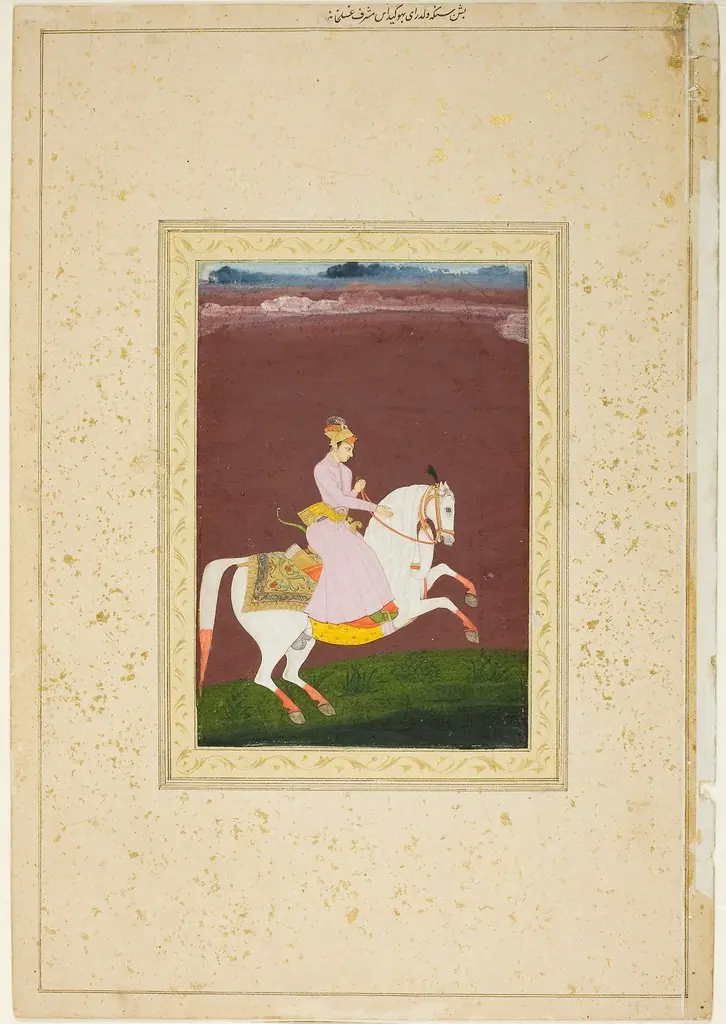
The composition centers on movement, with the rider and horse aligned diagonally across a flattened field, framed by a decorative gold border.
Created in 1731 by Muhammad Ahmad, this opaque watercolor on paper presents a solitary equestrian figure in a stylized landscape. The work belongs to a tradition of Indian courtly painting, where figures are rendered with rhythmic line and saturated pigments. The composition centers on movement, with the rider and horse aligned diagonally across a flattened field, framed by a decorative gold border.
Subject & Meaning
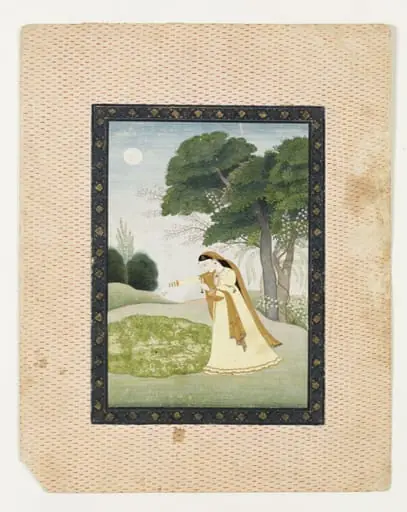
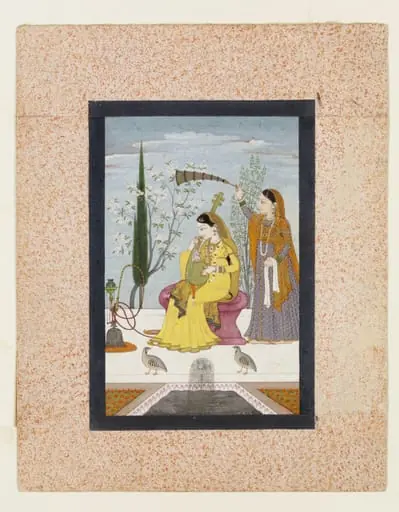
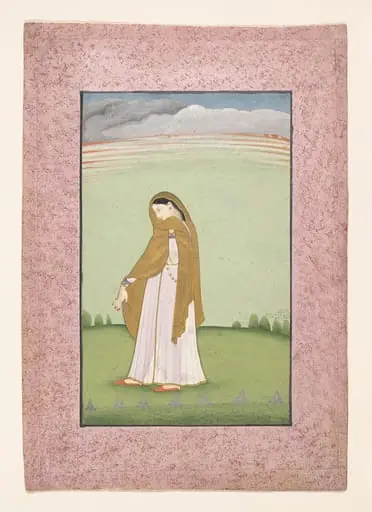
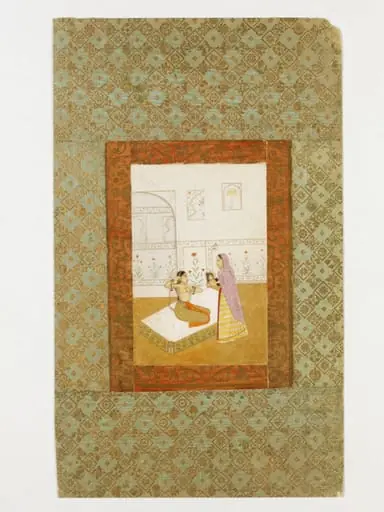
The woman, depicted in layered garments of crimson, muslin, and gold accents, rides a white horse with relaxed control. Her attire suggests nobility, while the absence of narrative context implies a focus on grace and presence rather than story. The horse, symbolizing power and refinement, moves effortlessly through a sparse, natural setting, evoking an idealized moment of poise rather than a specific event.
Technique & Style
The artist employed bold, flat areas of color—crimson, turquoise, and gold—to define form without shading. Details like the translucent muslin skirt and delicate foliage are rendered with fine brushwork, contrasting with the simplified shapes of the landscape. The gold border, speckled with earth tones, frames the scene like a textile, reinforcing the work’s connection to decorative arts.
History & Provenance
The painting originates from a regional atelier in northern India during the early 18th century, a period when local courts patronized artists to document courtly life. Its survival in the Victoria and Albert Museum’s collection suggests it was acquired during British colonial-era cataloging of South Asian art, likely through purchase or donation from a private collection.
Context
This work reflects the fusion of Mughal precision and regional stylistic freedom common in post-Mughal painting centers. While Mughal miniatures emphasized detail and realism, this piece favors rhythmic composition and symbolic color. Similar subjects appear in other works from the Punjab hills and Deccan courts, where equestrian portraits celebrated aristocratic identity.
Legacy
The painting exemplifies how Indian artists adapted traditional forms to express individual elegance amid political change. Its emphasis on movement and textile detail influenced later regional styles and remains a reference in studies of South Asian visual culture. It continues to inform contemporary understandings of gender, status, and aesthetics in pre-colonial art.
Artist & collection
Artist
This 18th-century painter worked in small, sunlit studios along Cairo’s Khan al-Khalili bazaar, where he mixed pigments from crushed lapis and pomegranate skins.